 Bellingham
 Metal Roofing for Columbia Homes: A Climate That Doesn't Forgive Shortcuts
Columbia sits close enough to Bellingham Bay that salt-laden air is simply part of daily life for homes in this part of town. Add in Whatcom County's long wet season, driving rain off the water, and the shaded, moisture-heavy conditions that let moss take hold for months at a time, and you've got a roofing environment that's genuinely tougher than what most manufacturers design for in their glossy brochures. A roof here doesn't just need to look good on install day — it needs to shed water fast, resist corrosion, and keep moss from finding a foothold, year after year.
Metal roofing, installed correctly, handles all three of those demands better than most alternatives. But "installed correctly" is doing a lot of work in that sentence, and it's the part that separates a roof that performs for decades from one that causes problems within a few winters.
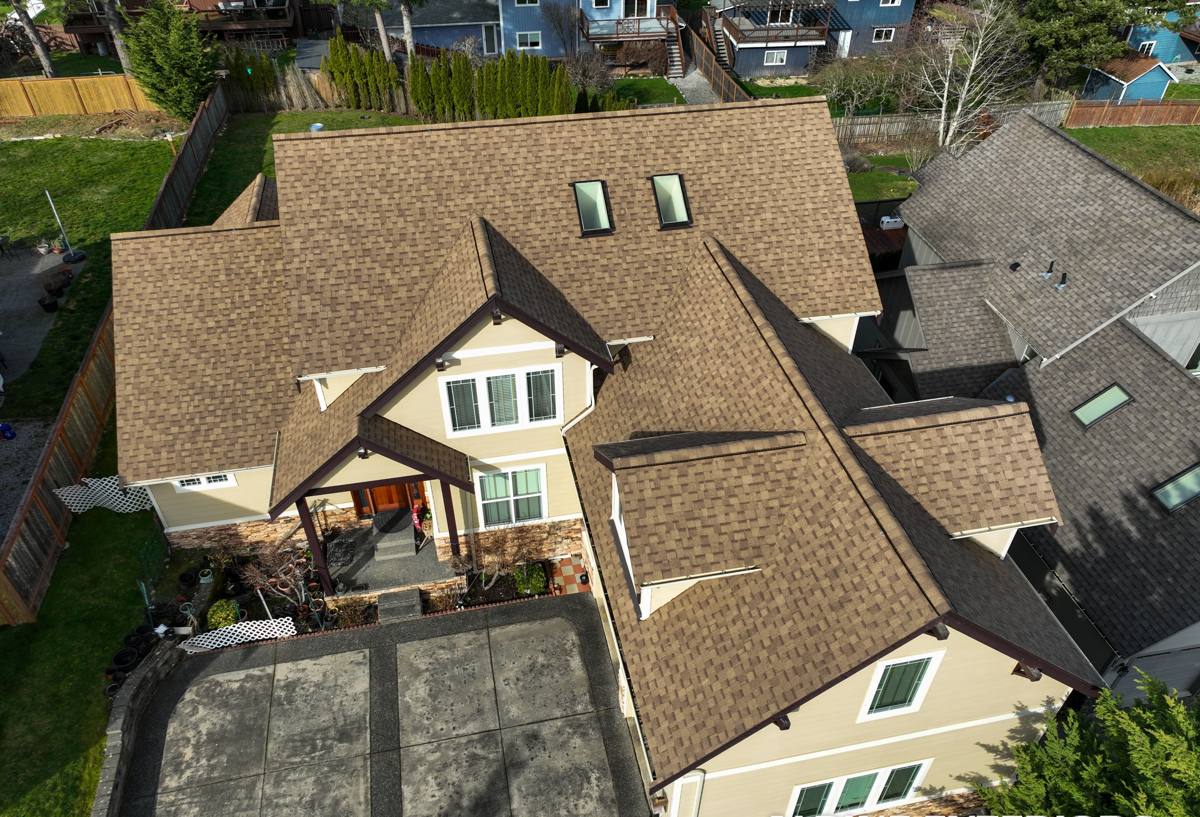
Why Metal Makes Sense in This Part of Bellingham
Metal roofing isn't the right fit for every home or every budget, and we'll say that plainly during an estimate rather than push it where it doesn't make sense. But for Columbia homes dealing with coastal exposure and heavy seasonal rain, metal solves problems that other materials struggle with:
- Steep runoff, less standing moisture. Metal panels shed water quickly with almost no surface texture for moss spores or debris to grip, which matters a lot given how long the wet season runs here.
- No granule loss. Unlike asphalt shingles, there's no granular surface that wears thin over time and leaves the underlying material exposed to UV and moisture.
- Better wind and rain resistance at seams. A correctly installed standing seam panel has far fewer exposed penetration points than a shingle roof, which matters when driving rain comes in sideways off the bay.
- Long service life relative to maintenance. When the coating system and fasteners are matched to a coastal environment, metal roofing goes decades between major service needs.
None of that means metal is maintenance-free — nothing on a coastal roof is — but it shifts the maintenance burden from "replace failing material" to "periodic inspection and upkeep," which is a better trade for most homeowners in this area.
Choosing the Right Metal Roofing System
Not all metal roofing is the same product wearing different colors. The panel type, gauge, and coating all affect how a roof performs under salt exposure and constant moisture. Here's how the common options compare for a home in Columbia:
| System | Best For | Coastal Considerations |
|---|---|---|
| Standing seam (concealed fastener) | Homes wanting maximum weathertightness and long-term low maintenance | Hidden fasteners mean fewer penetration points for salt air and moisture to work into over time |
| Exposed-fastener panels | Budget-conscious projects, outbuildings, secondary structures | Fastener washers and screw heads are exposed to weather and need periodic inspection and eventual replacement |
| Stone-coated steel | Homeowners wanting a traditional shingle or shake look with metal's durability | Coating and underlayment quality matter more here since the profile creates more surface texture |
For most Columbia homes with meaningful exposure to bay-driven weather, we lean toward standing seam because it minimizes the number of places water and salt air can find a way in. That said, the right call depends on your roof's pitch, existing structure, and budget — which is exactly what we walk through on-site rather than over the phone.
Gauge and Coating Matter More Than the Color
Two roofs can look identical from the street and perform completely differently over ten years. Panel gauge (thickness) affects dent resistance and how the panel handles thermal movement. Coating type affects how well the metal resists the combination of salt, UV, and constant moisture that defines this climate. We spec materials rated for coastal exposure rather than the lowest-cost option on a supplier's list, because the difference shows up in year eight, not year one.
What a Correct Metal Roof Installation Actually Involves
A metal roof is only as good as what's underneath it and how it's fastened down. This is where a lot of the long-term problems on coastal homes actually start — not with the panels themselves, but with shortcuts taken in the layers most homeowners never see.
- Deck inspection and repair. Any soft, rotted, or moisture-compromised decking gets identified and replaced before a single panel goes down. Installing over a bad deck just hides a problem that gets worse.
- Underlayment matched to the climate. A high-quality synthetic or self-adhered underlayment gives you a second line of defense against wind-driven rain, which matters given how often weather here comes in sideways off the water.
- Ice-and-water protection at vulnerable areas. Valleys, eaves, and low-slope transitions get extra membrane protection where water is most likely to back up or pool.
- Ventilation that actually works. Proper intake and exhaust airflow keeps moisture from condensing in the attic space — a real risk in a climate this wet, and one that causes rot and mold problems that have nothing to do with the roof surface itself.
- Fasteners and flashing rated for corrosion resistance. Salt air degrades mismatched or low-grade metal components faster than people expect. Flashing, fasteners, and trim all need to be compatible with the panel material to avoid galvanic corrosion.
- Correct panel fastening and seam work. Standing seam panels are only weathertight if the seams are formed and locked correctly — this is a skill-dependent step, not a product feature.
Salt Air, Moss, and Coastal Corrosion: What to Actually Watch For
Homeowners in Columbia often ask what actually goes wrong on a coastal roof if it's not maintained. It's rarely dramatic — it's usually slow and easy to miss until it isn't.
Salt-Driven Corrosion
Airborne salt accelerates corrosion on any exposed metal component — fasteners, flashing, gutters, and trim — especially where dissimilar metals meet. This is why matching your panel material to compatible flashing and fastener systems isn't a minor detail; it's one of the main things that determines whether a metal roof lasts 20 years or 50.
Moss and Organic Growth
Whatcom County's long, damp, shaded stretches of the year are close to ideal conditions for moss. On a metal roof, moss has a much harder time establishing itself than on textured shingles, but it can still take hold in valleys, at panel overlaps, or anywhere debris collects and holds moisture. Left unchecked, moss traps water against the panel surface and can accelerate coating breakdown over time.
Debris in Valleys and Gutters
Driving rain moves a lot of organic debris — needles, leaves, moss fragments — into valleys and gutters quickly. On a coastal property, clogged drainage paths combined with constant rain is one of the fastest routes to water intrusion, regardless of what roofing material is on top.
Our Process, Start to Finish
- On-site assessment. We look at your existing roof, deck condition, ventilation, and exposure to prevailing weather before recommending a system.
- Honest system recommendation. We'll tell you which metal system fits your roof and budget, and we'll say so if metal isn't the best fit for your situation.
- Written estimate. Clear scope, materials, and pricing — no vague allowances that turn into surprise costs later.
- Deck and underlayment prep. Any deck repairs happen before panels go down, with underlayment and flashing matched to coastal exposure.
- Installation. Panels, seams, flashing, and trim installed to manufacturer spec and matched-metal fastener systems.
- Final walkthrough and cleanup. We review the finished roof with you and clear the site of debris and old material.
What Affects the Cost of a Metal Roof in Columbia
| Factor | Why It Matters Here |
|---|---|
| Panel system chosen | Standing seam typically costs more up front than exposed-fastener panels but requires less long-term maintenance in a coastal environment |
| Roof pitch and complexity | Steeper roofs and more valleys, dormers, or penetrations mean more flashing work, which is where coastal weathertightness is won or lost |
| Deck condition | Homes with prior moisture damage may need deck repair before installation, which isn't always visible until tear-off |
| Coating and gauge specification | Coastal-rated coatings and adequate panel thickness cost more than base-grade material but hold up better against salt exposure |
| Ventilation upgrades | Older Columbia homes sometimes need intake or exhaust ventilation improvements to prevent attic moisture issues |
We don't publish blanket per-square pricing because these factors genuinely change the number from one roof to the next — a full assessment gives you an accurate figure, not a guess.
Maintenance That Actually Protects Your Investment
Metal roofing is low-maintenance, not no-maintenance. A little attention twice a year goes a long way in this climate:
- Clear gutters and valleys of moss, needles, and debris, especially heading into the wet season
- Check for moss establishing at overlaps or shaded areas and remove it gently — avoid pressure washing, which can damage coatings and force water under panels
- Inspect flashing around chimneys, vents, and skylights for signs of lifting or corrosion
- Confirm attic ventilation isn't blocked by insulation or debris
- Have fasteners checked periodically if your roof uses an exposed-fastener system, since washers degrade faster than the panels themselves
Why It Matters That We Already Work in Columbia
A roofing crew that mostly works inland doesn't run into the same problems as one that works this specific stretch of Bellingham regularly. Knowing how a bay-facing roof actually behaves under sustained wet weather, which flashing details tend to fail first, and how aggressively moss establishes on shaded pitches in this neighborhood isn't something you learn from a spec sheet — it's something you learn by doing the work here, roof after roof, season after season. That experience shows up in the details: fastener choices, flashing sequencing, and ventilation decisions that a generic installation crew might not think twice about.
If you're weighing metal roofing for your Columbia home, we're happy to take a look and give you a straight assessment — what your roof actually needs, what it would cost, and whether metal is the right call for your situation. Reach out for a free, no-pressure estimate using the form below.