 Bellingham
 Lynden Roofs Face Whatcom County's Full Weather Cycle
Lynden sits inland from Bellingham Bay, but it doesn't escape the marine weather that defines this corner of Washington. Moisture-laden air moves in off the Salish Sea and settles over the valley for days at a time, bringing driving rain, heavy dew, and long stretches where a roof simply never gets a chance to fully dry out. Add the salt-tinged air that rides those same weather systems inland, and you get a slow, steady form of wear that's different from what a roof in a dry climate deals with. It's not one big storm that ages a Lynden roof — it's the accumulation of hundreds of wet-dry cycles a year.
On top of the rain, Whatcom County's mild, damp winters create ideal conditions for moss and algae to take hold, especially on north-facing slopes and roofs shaded by mature trees, which are common on the larger lots around Lynden. A roof replacement done right in this area has to account for all of this — not just the shingles on top, but everything underneath them.
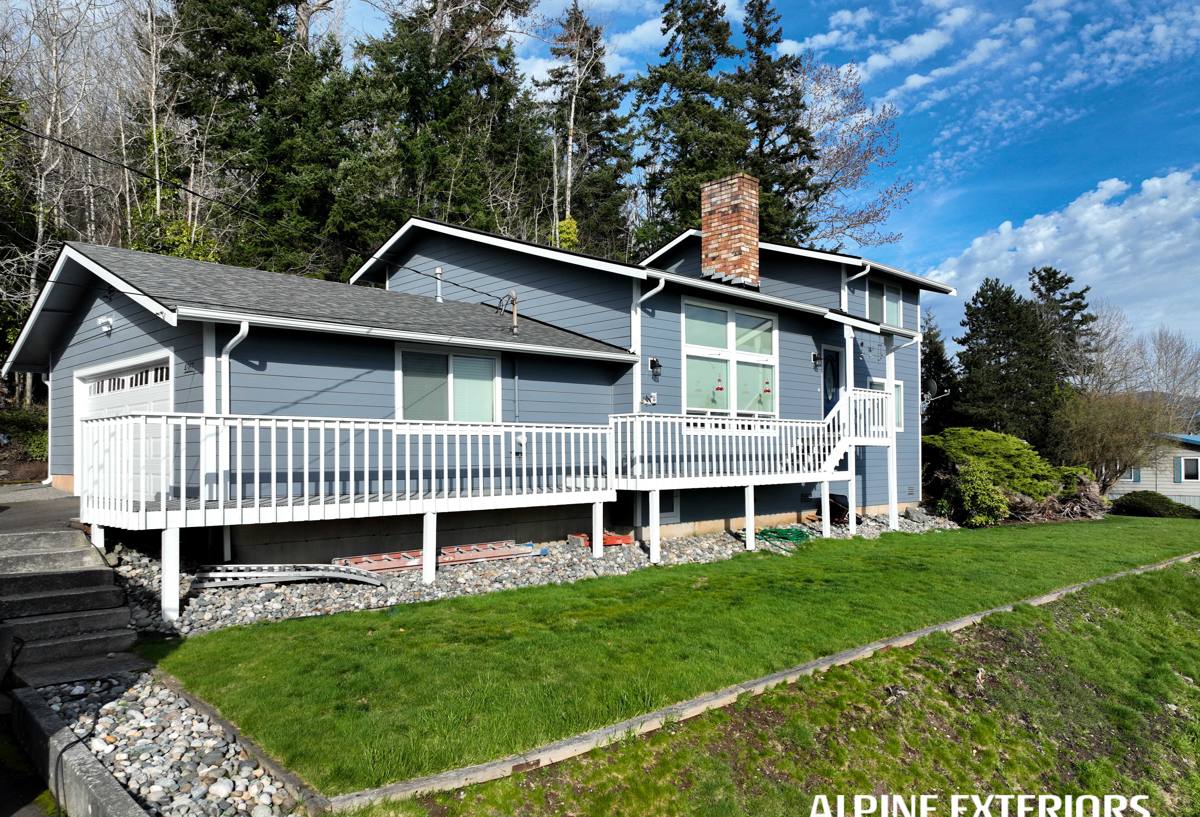
How to Tell a Roof Needs Replacing, Not Just Repairing
Not every roof problem calls for a full replacement, and a straight answer about repair versus replacement is part of an honest estimate. That said, there are signs that usually point toward replacement being the smarter long-term move rather than another round of patching:
- Granule loss heavy enough that you're finding grit in the gutters every season, not just after a new roof settles
- Shingles that are curling, cupping, or cracking across multiple slopes rather than in one isolated spot
- Soft or spongy decking felt underfoot during an inspection, which usually means water has been getting past the surface layer for a while
- Daylight visible through the roof deck from inside the attic, or staining on attic framing and insulation
- A roof that's already had two or more repair visits for leaks in different spots within a few years
- Moss and algae that keep coming back within a season or two of cleaning, which often signals the roof's surface is degrading underneath the growth
A roof approaching the end of its expected service life combined with any of these signs is usually a better candidate for replacement than continued patching, since repeated repairs on an aging roof rarely fix the underlying moisture path — they just move it.
What a Correct Roof Replacement Actually Involves
Tear-Off and Deck Inspection
A full tear-off, not an overlay, is the only way to see what's actually happening at the deck level. Overlaying new shingles on top of old ones traps moisture, hides rot, and shortens the life of the new roofing material. Once the old roofing is off, every section of decking gets checked for soft spots, delamination, and water staining, and any compromised sheathing gets replaced before anything new goes down.
Underlayment Built for Wet Climates
In a climate that stays damp as long as this one does, underlayment choice matters more than it does in drier regions. Synthetic underlayment or a self-adhered ice-and-water membrane in vulnerable areas — valleys, eaves, around penetrations — gives the roof a real second line of defense if wind-driven rain gets under the shingles, which happens more often here than homeowners expect.
Flashing at Every Transition
Chimneys, skylights, dormers, and roof-to-wall transitions are where most leaks actually start, not out in the open field of the roof. New flashing at every one of these points — not reused old flashing tucked under new shingles — is a non-negotiable part of a correct replacement.
Ventilation That Matches the Assembly
Balanced intake and exhaust ventilation keeps the attic close to outdoor temperature and humidity, which reduces condensation on the underside of the deck and helps shingles last their full expected life. Replacing a roof without addressing inadequate or unbalanced ventilation is a missed opportunity that shows up later as premature wear.
Choosing a Roofing Material for This Climate
There's no single "best" roofing material for every home in Lynden — the right choice depends on the roof's pitch, the home's style, the budget, and how much long-term maintenance the homeowner wants to take on. Here's how the common options compare under Whatcom County conditions:
| Material | Moisture & Moss Behavior | Maintenance | Typical Lifespan |
|---|---|---|---|
| Asphalt composition shingle (architectural) | Good drainage when properly installed; algae-resistant granule options help slow moss/algae staining | Periodic soft washing recommended in shaded areas | 25–30 years |
| Metal (standing seam or panel) | Sheds water fast, minimal moss growth on smooth panels | Low; occasional fastener and sealant checks | 40–50+ years |
| Cedar shake/shingle | Attractive but holds moisture longer, more prone to moss without diligent upkeep | Higher; regular treatment and cleaning needed | 20–30 years with upkeep |
| Synthetic composite shake | Mimics cedar's look with better moisture resistance | Low to moderate | 30–50 years |
We install a mix of these depending on the home, and we'll walk through the honest trade-offs of each — not just which one costs less up front, but which one fits how much roof maintenance you actually want to do in a climate that doesn't give a roof much of a break.
Our Roof Replacement Process, Step by Step
- On-site inspection and estimate. We look at the existing roof, attic, and ventilation, not just count squares from the ground.
- Material selection. We go over options and pricing based on your roof's pitch, sun/shade exposure, and how the home is used.
- Scheduling around weather. Tear-off and dry-in are planned to minimize the time your home is exposed to open sky, with contingency plans for Whatcom County's unpredictable stretches of rain.
- Tear-off and deck repair. Old roofing comes off completely; any damaged decking is replaced before underlayment goes down.
- Underlayment, flashing, and ventilation installation. These get done to spec, not shortcut to save time.
- New roofing installation. Manufacturer specifications are followed for nail pattern, exposure, and starter/ridge details — the details that determine whether a warranty actually holds up.
- Cleanup and final walkthrough. Job site debris and stray fasteners get cleared from the yard and gutters before we call it done.
Moss, Algae, and the Long Moss Season
Whatcom County's moss season runs long — mild wet winters followed by cool, damp springs give moss months to establish itself, especially under tree cover, which is common on Lynden's larger residential lots. During a replacement, we account for this in a few practical ways: choosing algae-resistant shingle products where they fit the home, making sure valleys and low-slope sections drain properly instead of holding standing moisture, and confirming that any overhanging branches aren't dropping debris straight onto the new roof. None of this eliminates moss entirely — nothing does in this climate — but it slows it down and makes routine maintenance far more manageable than fighting moss on a roof that was never set up to shed water well in the first place.
What Roof Replacement Costs Depend On
Every roof is different, so a real number only comes from an on-site look. In general, cost is driven by a handful of factors:
| Factor | Why It Matters |
|---|---|
| Roof size and number of slopes/valleys | More material and more flashing detail work |
| Pitch and accessibility | Steeper or harder-to-access roofs take longer and require more safety setup |
| Current deck condition | Rotted or soft sheathing found during tear-off adds material and labor |
| Material choice | Asphalt, metal, and composite products carry different material and labor costs |
| Ventilation and flashing scope | Bringing an older roof's ventilation up to a proper standard adds work but pays off in roof life |
We'll break these out clearly in a written estimate so you know exactly what you're paying for and why, rather than a single lump number with no explanation behind it.
Why a Crew That Already Works in Lynden Matters
A roofing crew that regularly works Whatcom County homes already knows how local weather patterns behave — which slopes hold moisture longest, how far moss tends to creep before a homeowner notices, and how to schedule a tear-off around a forecast that can change fast in this region. That familiarity shows up in small decisions during a replacement: where to add extra underlayment even if it's not strictly required, which ventilation setup actually performs in a damp climate versus one that just looks correct on paper, and how to sequence the job so your home isn't sitting exposed to the next system rolling in off the water. It's the difference between a roof that's technically installed to code and one that's actually built for where it sits.
Before You Hire: A Quick Checklist
- Get a written, itemized estimate — not just a total price
- Confirm the crew does a full tear-off, not an overlay, for your situation
- Ask what underlayment and flashing materials are included, not just the shingle brand
- Ask how attic ventilation will be evaluated and addressed
- Confirm licensing, bonding, and insurance, and ask to see current documentation
- Ask about the manufacturer warranty and what installation standards are required to keep it valid
- Get a clear timeline, including how weather delays will be handled
If your roof in Lynden is showing its age or you just want an honest read on what condition it's really in, we're happy to take a look. Fill out the form below for a free, no-pressure estimate — we'll tell you straight whether you need a replacement, a repair, or just some time.