 Bellingham
 Window Replacement Built for Birchwood's Climate, Not Just Its Style
Birchwood homes cover a wide range of ages and styles, but they all share the same weather. Bellingham's marine climate means moisture is a near-constant presence — not just rain, but the humid, low-light stretches of fall and winter when moss creeps up siding and roof edges and everything stays damp longer than it should. Windows sit right at the center of that exposure. They're the first place water tries to get in, the first place air leaks out, and often the first sign that a home's exterior needs attention. A window replacement here isn't just a cosmetic upgrade; it's a chance to correct decades of small compromises in how a home was sealed and flashed.
This page focuses specifically on window replacement for Birchwood properties in Bellingham, Whatcom County — what the local climate actually does to windows over time, what a correct installation involves, and why a crew that already works in this part of town tends to get better, longer-lasting results.
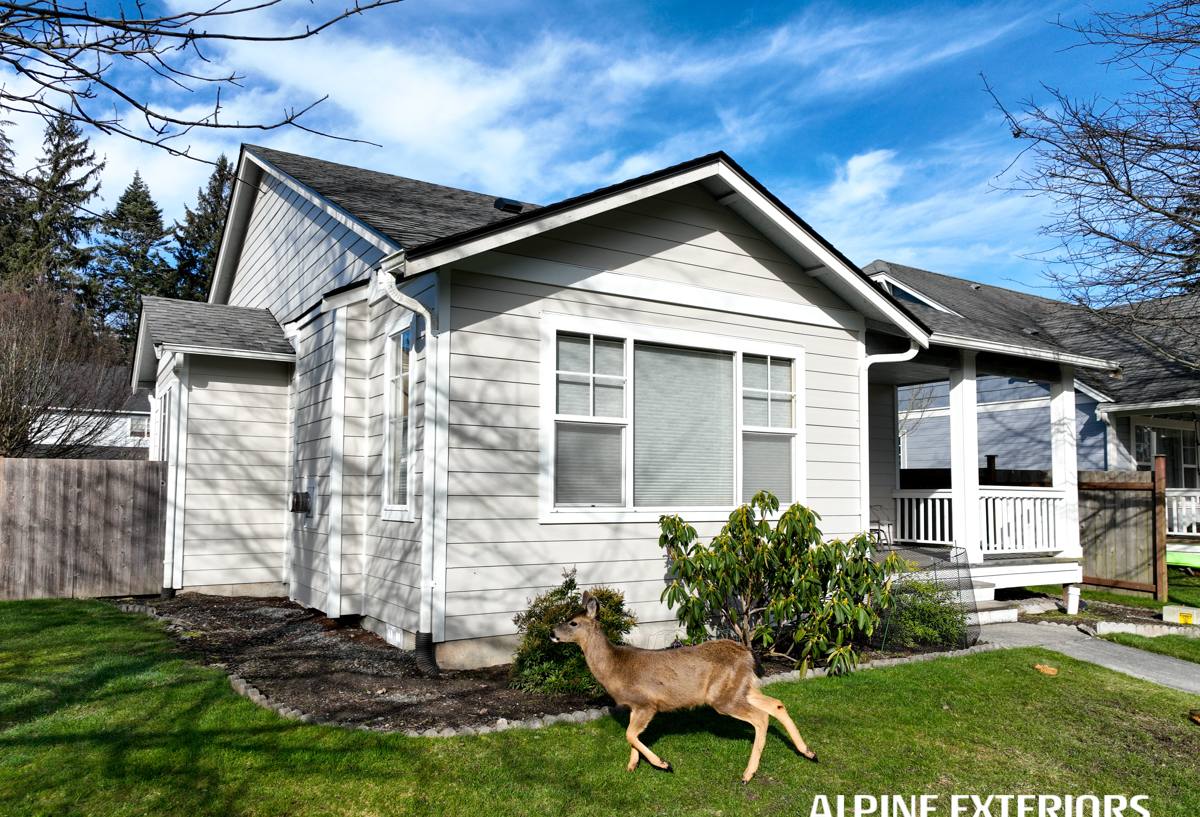
What Whatcom County Weather Does to Windows Over Time
Coastal Northwest weather is slow and persistent rather than dramatic, which is exactly why window damage here tends to sneak up on homeowners. A few specific patterns show up again and again on Bellingham-area homes:
Salt-influenced marine air
Homes throughout the greater Bellingham area sit within reach of marine air off the Salish Sea. That air carries fine salt and moisture that accelerates corrosion on metal window hardware, fasteners, and older aluminum frames. Locks stiffen, cranks on casement windows seize up, and unprotected metal components pit and discolor years before they would in a drier inland climate.
Driving, wind-driven rain
Bellingham doesn't just get rain — it gets rain pushed sideways by wind off the water, especially during fall and winter storm systems. Wind-driven rain finds gaps that vertical rain never would: poorly lapped flashing, dried-out caulk lines, and butt joints where the original installer assumed water would simply run straight down. This is the single biggest reason older windows in this area develop hidden rot before any visible leak ever shows up inside.
A long moss and mildew season
Because temperatures stay mild and humidity stays high for much of the year, moss and mildew have a long growing season here compared to drier climates. On windows, that shows up as green growth or black mildew staining in corners, sills, and anywhere water sits instead of draining. It's also a sign that the surrounding wood trim or sheathing is staying wet longer than it should — a condition that speeds up rot even when the window itself is intact.
Signs a Birchwood Home Needs Window Replacement, Not Just Repair
Not every window problem means a full replacement. But in this climate, certain signs almost always point to a failure that repair or re-caulking won't fix:
- Soft or spongy wood at the sill, jamb, or trim when pressed with a finger
- Persistent fogging or a visible haze between panes of double-pane glass (a sign the seal has failed)
- Windows that won't stay open, won't latch, or have warped enough to bind in the frame
- Visible daylight or a draft around the frame even when the window is fully closed and locked
- Paint that bubbles or peels specifically around the window opening, rather than the wall in general
- Moss, algae, or black mildew staining that returns within weeks of cleaning
- A noticeable rise in heating costs that coincides with older, single-pane or early-generation double-pane windows
If a home shows two or more of these signs on the same window, that's usually a sign the water intrusion has moved past the glass and hardware into the surrounding framing — which changes the scope of the job from a swap-out to a full frame and flashing repair.
What a Correct Window Replacement Involves
The window unit itself is only part of the job. In a climate that pushes rain sideways for months at a time, the installation details around the window matter as much as the product going into the opening.
Removing and inspecting, not just covering over
Old trim and the surrounding wall material need to come off far enough to actually see the condition of the framing, sheathing, and any existing flashing. Installing a new window over hidden rot just seals the problem inside the wall, where it keeps spreading unseen.
Flashing and water management
Every opening needs a flashing sequence that directs water down and out, never behind the housewrap or siding. That means proper sill pan flashing at the bottom of the opening, side flashing lapped correctly, and head flashing or a drip cap integrated with whatever is above the window — siding, trim, or a roofline. This is the step most often shortcut on older or budget installations, and it's the one that causes the most expensive problems years later.
Air sealing and insulation
Gaps around the new frame need to be sealed with the right materials — low-expansion foam or backer rod and sealant, not just caulk smeared over a wide gap. Done correctly, this cuts drafts and moisture infiltration at the same time.
Matching the opening to the home
Many Birchwood homes have openings sized for older window standards. A correct replacement either uses a unit built to match that exact opening or properly resizes the opening — it doesn't force an ill-fitting window in and rely on trim to hide the gap.
Choosing Window Materials and Glazing for This Climate
Frame material and glass type both affect how well a window holds up against sustained moisture and salt-influenced air. There's no single right answer for every home, but the trade-offs are worth understanding before deciding.
| Frame Material | Moisture Resistance | Maintenance | Typical Fit For |
|---|---|---|---|
| Vinyl | Very good — won't rot or corrode | Low | Most Birchwood homes, cost-conscious full replacements |
| Fiberglass | Excellent — very stable in wet/dry cycling | Low | Homes wanting durability with a narrower frame profile |
| Wood-clad | Good on the exterior clad side; interior wood needs care | Moderate to high | Homes prioritizing interior wood appearance |
| Aluminum | Poor in salt-influenced air without upgraded finishes | Moderate | Rarely our first recommendation in this climate |
We generally steer homeowners away from bare or standard-finish aluminum frames for this area — not because the material can't work anywhere, but because unprotected aluminum corrodes and conducts cold faster than the alternatives, and it's a harder material to seal well against wind-driven rain over the long run. That's a maintenance and performance trade-off, not a knock on any one manufacturer.
On glazing, double-pane windows with a low-E coating and argon gas fill are the practical standard for this climate — they balance cost with real performance against both heat loss and condensation. Triple-pane glass adds further insulation value and can help with street noise, but it's a heavier, more expensive unit that makes the most sense for street-facing rooms or homes pushing for the lowest possible energy use, not a requirement for every opening.
A quick pre-decision checklist
- Confirm the frame material fits your maintenance expectations, not just your budget
- Ask what glazing package (low-E coating, gas fill, pane count) is actually being quoted
- Get the flashing and water-management plan in writing, not just the window brand and size
- Ask how the crew will handle any rot or damage found once old trim is removed
- Confirm whether permits are being pulled and who is responsible for scheduling inspection
Our Process for Birchwood Window Replacement Projects
- On-site assessment — We look at each window opening individually, not just the glass. That includes checking the sill, jamb, surrounding siding, and any existing signs of moisture damage.
- Honest scoping — We tell you up front if a window is a straightforward swap or if it's likely to reveal hidden rot once opened up, so there are no surprise change orders halfway through.
- Material selection — We walk through frame and glazing options based on the specific exposure of each opening — a window facing prevailing wind and rain gets treated differently than a sheltered one.
- Removal and inspection — Old units and enough surrounding trim come out to expose the framing, so any rot or past water intrusion gets addressed, not covered over.
- Installation with proper flashing — New sill pan, side, and head flashing integrated correctly with the existing wall assembly, sealed and insulated around the frame.
- Exterior finish and cleanup — Trim, caulking, and paint or finish work completed to match the surrounding exterior, with the site left clean.
- Final walkthrough — We check operation, seals, and locking hardware on every window before calling the job done.
Cost Factors for Window Replacement in Birchwood
Every home is different, so we won't quote a number without seeing the actual openings, but the factors that most often move the price up or down are consistent:
| Factor | Why It Affects Cost |
|---|---|
| Number of windows and sizing | Larger or non-standard sizes may require custom manufacturing rather than stock units |
| Condition of the existing opening | Rot or water damage found during removal adds repair scope beyond the window itself |
| Frame material chosen | Vinyl, fiberglass, and wood-clad carry different material costs and labor requirements |
| Glazing package | Double-pane low-E vs. triple-pane vs. specialty coatings for sound or heat |
| Access and story height | Second-story or hard-to-access windows require more setup time and equipment |
| Trim and exterior finish work | Matching existing siding or trim profiles can add finish carpentry time |
As a general guide, full-frame replacement of a standard window with a mid-grade vinyl or fiberglass unit typically runs from the low thousands per window down to less once you're doing several at once, with premium materials, custom sizing, or extensive rot repair pushing costs higher. A written, itemized estimate after an on-site look is the only reliable way to know your actual number.
Why Local Experience in Birchwood Matters
A crew that works regularly in Bellingham and Whatcom County has already seen how this specific climate treats windows over years, not just at the moment of installation. That means recognizing which openings are most exposed to wind-driven rain based on their orientation, knowing which older flashing details tend to fail first in homes of a certain age, and understanding that a moss-friendly, humid season means water-management details can't be an afterthought. It also means being available for warranty follow-up and future maintenance without a long drive across the county — something that matters more than it seems until you actually need it.
Window replacement done right in this climate is as much about the flashing, sealing, and framing work you don't see as it is about the window you do. That's the standard we hold every Birchwood project to.
If you're noticing drafts, fogged glass, sticking sashes, or moisture damage around your windows, we're happy to take a look and walk you through your options. Fill out the form below for a free, no-pressure estimate on your Birchwood home.