 Bellingham
 Roofing in Happy Valley: Built for Bellingham's Weather, Not Against It
Happy Valley sits close enough to the water and the tree line that its homes take a different kind of beating than roofs further inland. Salt-laden air off Bellingham Bay works on fasteners, flashing, and granule coatings year after year. Driving rain off the Sound doesn't just fall straight down here — wind pushes it sideways under poorly lapped shingles and around weak flashing details. And the long, wet moss season that Whatcom County is known for doesn't wait for a roof to be old before it starts colonizing north-facing slopes and shaded valleys. A roof replacement here isn't a generic job. It's a decision about materials, ventilation, and workmanship that has to account for all three of those forces working on the house at once, month after month.
This page covers what a correct roof replacement looks like specifically for a Happy Valley home — what to watch for, what the job should actually involve, and how our process works from first look to final walk-through.
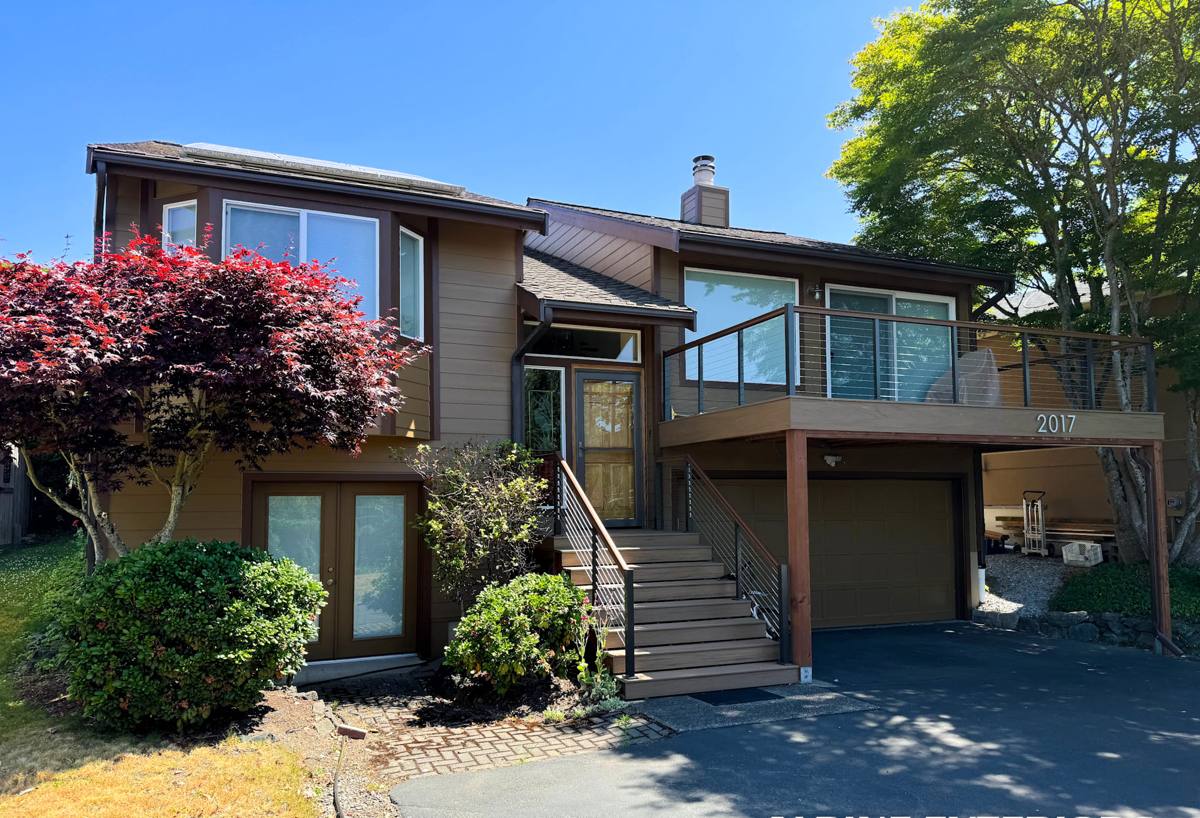
Signs a Happy Valley Roof Has Moved Past Repair
Most roofs don't fail all at once. They give you signals for months, sometimes years, before a leak actually shows up inside the house. In this climate, those signals show up a little differently than they would in a dry region.
What to look for
- Granule loss showing up in gutters or at the base of downspouts — a sign the shingle surface is thinning and losing its ability to shed water
- Dark streaking or thick moss growth concentrated on shaded, north-facing slopes
- Curling, cupping, or lifted shingle edges, especially on slopes that catch prevailing wind and rain
- Soft or spongy decking felt underfoot in the attic, particularly near valleys or old flashing points
- Rusted, corroded, or separating flashing around chimneys, vents, and skylights — salt air accelerates this
- Daylight visible through the roof deck from inside the attic
- A roof that's already had multiple patch repairs in the last few years
If you're seeing two or more of these at once, that's usually the point where continued patching stops being cost-effective and a full replacement becomes the more honest recommendation.
Choosing Roofing Materials for Salt Air, Rain, and Moss
There's no single "best" roofing material — there's the right material for this house, this exposure, and this budget. In Happy Valley, the material decision should weigh moss resistance and moisture tolerance as heavily as upfront cost, because the climate here punishes shortcuts on both.
| Material | Typical Lifespan | Moss / Moisture Behavior | Approximate Cost Position |
|---|---|---|---|
| Standard 3-tab asphalt shingle | 15–20 years | Lower granule mass; more prone to moss anchoring over time | Lowest |
| Architectural (laminate) asphalt shingle | 25–30 years | Heavier profile sheds water better; still needs moss control on shaded slopes | Mid-range |
| Metal (standing seam or panel) | 40–50+ years | Smooth surface resists moss anchoring well; excellent water shedding | Higher upfront |
| Cedar shake | 20–30 years with upkeep | Naturally attractive but absorbs moisture and needs regular moss/algae maintenance | Mid-to-higher, plus ongoing care |
We'll walk you through the real trade-offs for your roof's pitch, shade exposure, and how long you plan to stay in the house — not just push whatever has the best margin. A steep, sun-exposed south roof and a shaded, low-pitch north roof on the same house can sometimes justify different products.
What a Correct Roof Replacement Actually Involves
A roof replacement is more than swapping old shingles for new ones. The parts you don't see are usually what determine whether the roof lasts 15 years or 30.
Tear-off and deck inspection
Full tear-off to bare decking lets us actually see what's underneath — something a "layover" job never reveals. In a wet climate like ours, hidden decking rot from years of slow moisture intrusion is common enough that skipping this step is a real risk, not just a formality.
Underlayment
Underlayment is the roof's backup layer if wind-driven rain ever gets past the shingles — which, given how weather moves through this area, it eventually will at some point over the roof's life. We use synthetic or ice-and-water underlayment at vulnerable points like eaves, valleys, and low-slope transitions, not just a single layer of felt across the whole deck.
Flashing
Chimneys, skylights, vent pipes, and roof-to-wall transitions are where the large majority of leaks actually originate — not the open field of shingles. Flashing needs to be replaced, not reused, and formed to shed water correctly rather than rely on sealant to do the work sealant was never meant to do alone.
Ventilation
A roof that can't breathe traps moisture in the attic, which accelerates decking rot from the inside and can worsen moss and algae growth on the surface. Intake and exhaust ventilation should be balanced, not just present.
Our Roof Replacement Process, Start to Finish
Homeowners generally want to know two things: what's going to happen, and how long it's going to disrupt the property. Here's the sequence.
1. On-site assessment
We walk the roof (weather permitting) and inspect the attic from inside, looking at decking condition, current ventilation, flashing points, and any signs of past leaks or repairs.
2. Written estimate and material selection
You get a clear, itemized estimate — not a vague lump sum — so you can see what you're actually paying for: tear-off, decking repair allowance, underlayment, material, flashing, and disposal.
3. Scheduling around Bellingham's weather
Roofing needs a dry window to do correctly. We plan installation dates with the regional forecast in mind and won't rush a tear-off into a stretch of rain just to hold a date.
4. Tear-off, deck repair, and installation
Old material comes off, decking is inspected and repaired where needed, then underlayment, flashing, and the new roofing material go on in that order — with daily site cleanup so debris and nails don't sit in the yard overnight.
5. Final walk-through
We review the completed roof with you, cover warranty details in plain language, and make sure you know what basic upkeep, if any, is expected going forward.
Ventilation and Moisture Control for Whatcom County Homes
Because Whatcom County stays damp for a large part of the year, attic moisture management deserves more attention here than it would in a dry climate. Poor ventilation shows up as premature shingle aging from the underside, musty attic odors, and sometimes visible condensation on the underside of the decking in cold months. When we replace a roof, we check existing intake (soffit) and exhaust (ridge or box vent) balance and recommend corrections if the current setup is undersized or blocked — often a cheap fix relative to the value it protects.
Moss, Algae, and Keeping a New Roof Looking Right
Moss isn't just cosmetic in this climate — left unchecked, it holds moisture against the shingle surface and can work its way under tabs and edges over time. A new roof buys you a clean start, but shaded, north-facing, and low-pitch sections of Happy Valley homes will still be more moss-prone than sunnier slopes for as long as the surrounding trees stay in place.
What actually helps
- Zinc or copper strips installed near the ridge on moss-prone slopes, which release trace metal ions that discourage regrowth over time
- Periodic gentle cleaning — never high-pressure washing, which strips granules and shortens shingle life
- Keeping overhanging branches trimmed back to let more light and airflow reach the roof surface
- Clear gutters and downspouts so water isn't sitting against the roof edge
Why Local Experience in Happy Valley Matters
A roofing crew that regularly works this specific part of Bellingham already knows how prevailing wind and rain direction tend to hit homes in this pocket of Whatcom County, which slope orientations collect the most moss, and which flashing details tend to fail first on houses of this area's typical age and construction. That's not something a crew unfamiliar with the region picks up on the first visit — it comes from doing the work here repeatedly. It shows up in small decisions during the job: where to add extra underlayment, which vents actually need upgrading, and how to sequence work around a weather window that can turn quickly.
Before You Sign a Roofing Contract: A Quick Checklist
- Is the estimate itemized (tear-off, decking, underlayment, material, flashing, disposal) rather than one flat number?
- Does the contractor carry current Washington state licensing and liability insurance, and will they provide proof?
- Is full tear-off to bare decking included, or is this a layover job?
- Are flashing points (chimney, skylights, vent pipes) explicitly called out for replacement, not just re-sealing?
- Is attic ventilation being assessed, or only the visible shingle surface?
- What's covered under workmanship warranty versus manufacturer material warranty, and for how long?
- Is there a written timeline, including how weather delays will be handled?
If a contractor can't answer these clearly and in writing, that's worth treating as a warning sign before any deposit changes hands.
If your roof is showing wear, or you just want an honest read on how many years it has left, we're happy to take a look. Request a free, no-pressure estimate using the form below and we'll walk you through exactly what your Happy Valley home needs.