 Bellingham
 New Roof Installation Built for Happy Valley's Climate
Homes in Happy Valley sit close enough to the water and the tree line that a roof here works harder than a roof in a drier inland town. Salt-laden air off the bay corrodes exposed metal faster than most manufacturers' warranties assume. Driving rain, pushed sideways by winter storms, finds every weak lap and undersized flashing detail. And a long, wet moss season keeps shaded slopes damp for months at a stretch, which shortens the life of any roofing material that isn't installed with drainage and airflow in mind. A new roof installation in this neighborhood isn't just about swapping old shingles for new ones — it's about correcting whatever let the old roof fail early in the first place.
We install roofs across Bellingham and the rest of Whatcom County, and Happy Valley's mix of older single-family homes and newer infill construction gives us a good cross-section of what actually holds up here versus what looks fine on installation day and fails in year eight.
What Actually Wears Out a Roof Here
Salt Air and Metal Fatigue
Fasteners, flashing, and vent components that aren't rated for coastal exposure corrode from the inside of a lap joint outward, long before the corrosion is visible from the ground. Once a fastener head starts to go, the seal around it goes with it, and that's how leaks start at penetrations rather than in the open field of the roof.
Wind-Driven Rain
Bellingham doesn't get the sustained heavy wind of more exposed coastal towns, but it gets enough sideways rain in winter storms to push water up and under shingles that were nailed correctly for a still-air rainstorm but not for wind-loaded rain. Underlayment quality and lap direction matter more here than in a dry climate, where a roof can tolerate more sloppiness and still shed water fine.
Moss and Shade
North-facing slopes and anything shaded by mature conifers stay damp longer after every rain. Moss doesn't just sit on top of shingles — its root structure lifts shingle edges and holds moisture against the granule surface, which accelerates granule loss and, eventually, mat degradation underneath.
What a Correct Installation Includes
A new roof is only as good as what happens before the new material ever goes down. On every tear-off we do, the sequence is the same regardless of the final product chosen:
- Full tear-off to the decking — no roofing over an existing layer, which traps moisture and voids most manufacturer warranties.
- Deck inspection and repair — soft, delaminated, or water-stained sheathing gets replaced before anything else happens.
- Ice-and-water shield or a comparable self-adhered membrane at eaves, valleys, and any low-slope transition, since these are the spots wind-driven rain attacks first.
- Synthetic underlayment across the full field, lapped and fastened to shed water even if the top layer is ever compromised.
- New flashing at every penetration, chimney, and wall intersection — reusing old flashing is one of the most common shortcuts that leads to a callback within two years.
- Balanced intake and exhaust ventilation, sized to the attic, not just "a ridge vent because that's standard."
- Final material installation with manufacturer-specified fastening patterns, not shortcuts for speed.
Choosing a Roofing Material for Happy Valley
There's no single "best" material for every home — it depends on the roof's slope, how much shade it gets, and what the homeowner wants to maintain over time. Here's how the common options compare against this specific climate:
| Material | Moss/moisture resistance | Salt air durability | Typical lifespan here | Maintenance |
|---|---|---|---|---|
| Standard asphalt composition shingle | Fair — needs periodic cleaning on shaded slopes | Good with corrosion-resistant fasteners | 20-25 years | Low, occasional moss treatment |
| Algae-resistant laminate shingle | Better — copper-infused granules slow moss/algae growth | Good | 25-30 years | Low |
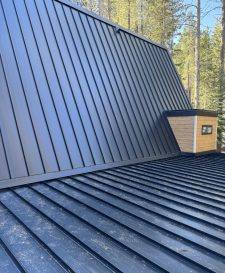
| Standing-seam metal | Very good — sheds moisture fast, little surface for moss to grip | Depends heavily on coating and fastener spec | 40-50+ years | Low, but coastal-grade materials matter |
| Wood shake/shingle | Poor in shaded, damp conditions without diligent upkeep | Fair | Highly variable | High |
For most Happy Valley homes with any tree cover, we steer people toward algae-resistant laminate shingles or a properly detailed metal roof, and we'll say so plainly rather than upsell a product that doesn't fit the site. Wood shake can look great, but on a shaded lot in this climate it demands a maintenance schedule most homeowners don't want to keep up with — that's a fair trade-off to weigh going in, not a defect we're implying about the material itself.
Ventilation: The Detail Most Roofs Get Wrong
An attic that can't breathe traps the moisture that condenses off a damp roof deck all winter, which rots sheathing from underneath long before the shingles above show any sign of trouble. Correct ventilation balances intake at the eaves with exhaust at the ridge or through properly spaced roof vents, sized to the square footage of the attic space — not just "however many vents were there before." On a lot of Happy Valley's older homes, we find the original ventilation was undersized for the roof's current size after additions, and we correct that as part of the install rather than leaving the same shortfall in place.
Signs a Repair Won't Cut It Anymore
Not every roof problem means a full replacement, but there's a point where patching starts costing more than it's worth. Watch for:
- Granule loss heavy enough that you can see bare mat on multiple shingles, not just one or two spots
- Soft spots or visible sag when you walk the roof or view it from a ladder
- Daylight visible through the roof deck from inside the attic
- Moss so established that it's lifting shingle edges rather than just sitting on the surface
- Repeated leaks in different locations after past patch repairs
- A roof already past 20-25 years old with no major work done
If you're only seeing one of these and the roof is otherwise sound, a repair may genuinely be the right call — we'll tell you that during an inspection rather than push a full replacement that isn't needed yet.
Permits and Local Code
New roof installations in Bellingham and unincorporated Whatcom County typically require a building permit, and inspectors here pay particular attention to underlayment and flashing details given how much weather-driven moisture the region sees. We pull permits as part of the job and schedule inspections at the right points in the process, so there's no gap between what went up and what's documented as installed.
Why Local Installation Experience Matters
A crew that only occasionally works this far north can get the shingle nailed on straight and still miss the details that matter here — the extra course of ice-and-water shield at a valley that stays wet longer than it would inland, the fastener grade that won't corrode in salt air within a few winters, the ventilation math that accounts for how long moisture actually sits on a shaded Whatcom County roof. We work Happy Valley and the surrounding Bellingham area regularly enough that these aren't special considerations for us — they're just what a correct install here looks like.
That local familiarity also means faster response if something needs a look after a big storm, and a crew that already knows which details on a given street's housing stock tend to need extra attention.
What to Check Before You Hire Anyone
Whether you go with us or someone else, a new roof is a major investment and worth vetting carefully:
- Current Washington state contractor license and liability insurance, verifiable directly, not just claimed
- A written estimate that specifies materials, underlayment type, and ventilation plan — not just a lump-sum price
- A clear tear-off and deck-inspection process, not "roof over what's there if it looks okay"
- Manufacturer certification if you want the extended warranty tied to a specific product line
- A real local presence and reachable references, not just a truck with an out-of-area business address
- A permit process included in the scope, not left for the homeowner to sort out
Get a Straight Answer on Your Roof
If your roof is showing its age or you just want an honest read on how much life it has left, we're glad to come out, walk it, and give you a clear picture of what's going on — no pressure, no inflated urgency. Use the form below to request a free estimate for your Happy Valley home.