 Bellingham
 Why Ferndale Siding Wears Out Faster Than the Brochure Says
Ferndale sits close enough to Bellingham Bay and the Strait of Georgia that salt-laden air is a constant, low-grade stress on anything nailed to the outside of a house. Add Whatcom County's long wet season — months of driving rain off the water, followed by shoulder seasons where shade and damp air never quite dry out — and you get a climate that punishes siding in three specific ways: moisture intrusion behind the cladding, corrosion of fasteners and trim, and moss and algae growth that holds water against the wall assembly far longer than it should sit there.
None of this is unique to any one street or subdivision in Ferndale — it's a function of being this close to the water and this far north, with tree cover that keeps north- and west-facing walls shaded and slow to dry. Siding that was installed without real attention to water management — thin house wrap, missing flashing, caulk used as a substitute for proper detailing — tends to show problems here years before it would in a drier inland climate.
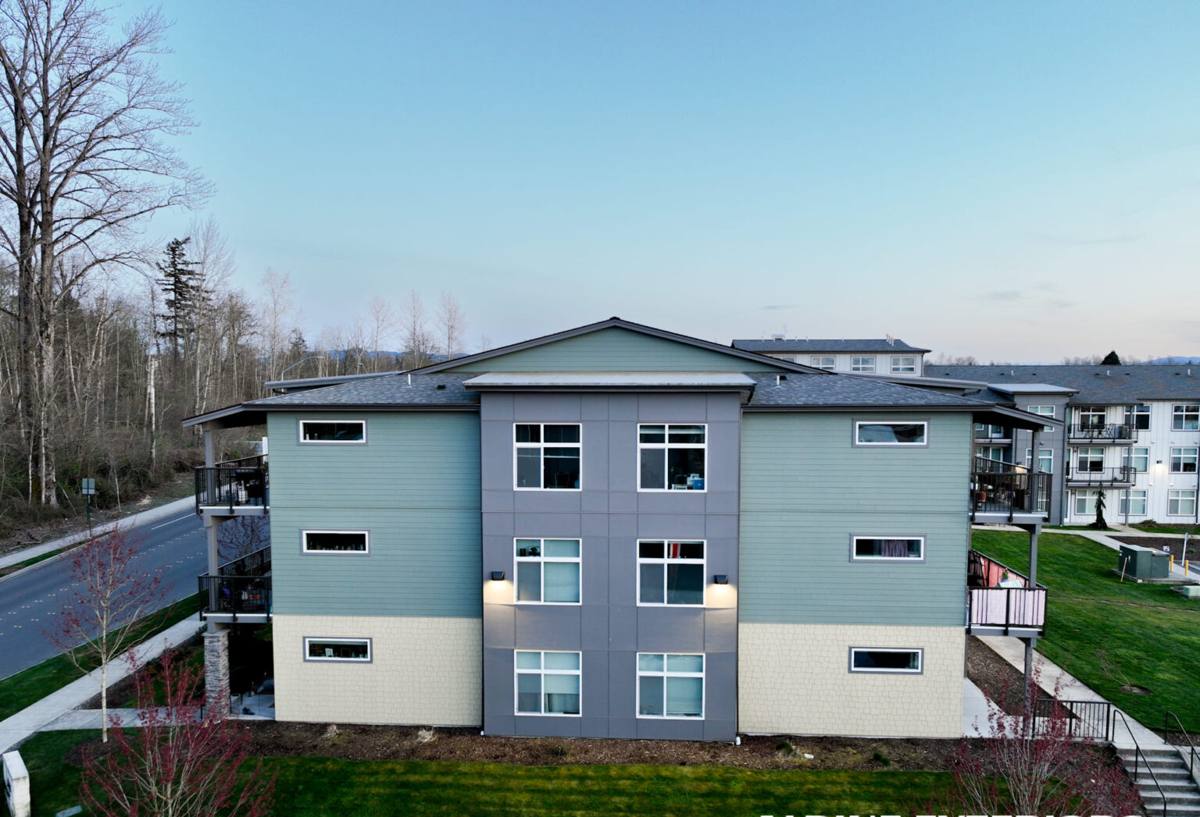
Signs a Ferndale Home Actually Needs Replacement, Not Repair
Not every siding problem calls for a full tear-off. Part of doing this job honestly is telling a homeowner when a repair or a partial re-side will hold up, and when patching is just delaying a bigger bill. Look for these signs before assuming the whole house needs new siding:
- Soft or spongy spots when you press on siding, especially near the bottom courses, around window trim, or below decks and porch roofs where water sheds directly onto the wall.
- Persistent moss or dark streaking that comes back within a season or two of cleaning, particularly on shaded north and west elevations — a sign the surface is staying wet longer than it should.
- Bubbling, peeling, or chalky paint that returns quickly after repainting, which usually means moisture is moving through the siding from behind, not just weathering the top coat.
- Visible gaps, warping, or cupping in individual boards or panels, especially on older wood or engineered wood siding that's had years of wet-dry cycling.
- Rust staining around fasteners or corroded trim pieces, which is common near the water where salt air accelerates corrosion on anything less than a stainless or coated fastener.
- Interior signs — musty smells, discolored drywall, or soft trim near exterior walls — that point to water already past the siding and into the wall assembly.
If more than one or two of these show up across multiple elevations, or if a contractor pulls a board and finds wet sheathing underneath, that's usually the point where full replacement is the honest recommendation rather than a spot repair.
What a Correct Siding Replacement Job Actually Involves
It Starts Underneath the Siding, Not With the Siding
The siding itself is the least important part of keeping water out of a wall. What matters more is everything underneath it: the water-resistive barrier (house wrap or building paper), the flashing at windows, doors, and roof-to-wall intersections, and the drainage plane that lets any moisture that does get past the cladding find its way back out instead of soaking into the sheathing. A full replacement is the one chance to fix all of that at once — which is exactly why it's worth doing right rather than treating it as a cosmetic swap.
What We Check and Correct During Tear-Off
- Sheathing condition once old siding is off — any rot or delamination gets identified and repaired before anything new goes on.
- Proper house wrap installation with correct overlaps and taped seams, shingled to shed water downward.
- Window and door flashing integrated with the water-resistive barrier, not just caulked at the trim.
- Kick-out flashing where roof lines meet walls — a detail that's frequently missing on older Ferndale homes and a common source of hidden rot.
- Proper clearance between the bottom of the siding and grade, decks, and roof surfaces, so water and debris don't sit against the material.
Skipping any of this and simply re-cladding over the existing barrier is faster and cheaper — and it's how a house ends up needing the same repair again in ten years instead of thirty.
Why We Install Only James Hardie Fiber Cement
We standardized on James Hardie fiber cement siding for every job we do, including here in Ferndale, and we don't install vinyl, LP SmartSide, cedar, or primed wood products as alternatives. That's a deliberate call, not a lack of options. Fiber cement is non-combustible, it doesn't rot or delaminate the way wood-based products can when they take on moisture, and it holds paint and factory finish far longer in a wet, salt-air climate than wood or engineered wood siding does. Hardie's ColorPlus factory finish is baked on under controlled conditions and backed by a real finish warranty — a meaningful difference from field-painted siding, which is the first thing to fail when it's exposed to driving rain and shade year after year.
We're not going to tell you every other product is worthless — vinyl is inexpensive and low-maintenance in the right application, and engineered wood has genuinely improved over the years. But for a climate that combines salt exposure, sustained moisture, and long moss seasons, we've found fiber cement is the material that holds up with the least ongoing maintenance and the fewest callbacks, and it's what we're willing to stand behind with our own installation.
Matching the Product Line to the Site
James Hardie makes several product lines, and the right one depends on the specific exposure of the home:
| Hardie Product | Best Fit | Why It Matters Here |
|---|---|---|
| HardiePlank lap siding | Most single-family homes | Traditional lap profile, wide color range, engineered for the Pacific Northwest's HZ5 climate zone |
| HardieShingle | Accent gables, dormers | Cedar-shake look without the moisture maintenance of real cedar shingle |
| HardiePanel | Modern facades, garages | Clean vertical lines, works well with board-and-batten detailing |
| HardieTrim | Corners, window and door surrounds | Matches the siding's finish life so trim doesn't fail years before the field siding does |
Every one of these lines is engineered for regional climate zones, which matters more in a wet coastal county than in a lot of the country — the HZ5 formulation is built around freeze-thaw and moisture cycling like what Whatcom County actually sees.
Our Process, Start to Finish
- On-site assessment. We look at every elevation, note shaded and high-exposure areas, and check for existing moisture damage before quoting anything.
- Written scope and estimate. You get a clear breakdown of what's being replaced, what product lines are used where, and what the water-management details will be — not just a lump-sum number.
- Tear-off and sheathing inspection. Old siding comes off, sheathing is inspected, and any rot or damage is repaired and documented before we move forward.
- Water-resistive barrier and flashing. House wrap, window/door flashing, and kick-out flashing are installed or corrected to current best practice.
- Hardie installation to manufacturer spec. Correct fastener type and spacing, proper clearances, and factory-finished panels installed per Hardie's published installation requirements — the details that actually determine whether the manufacturer's warranty holds up.
- Final walkthrough. We go over the finished work with you directly, elevation by elevation.
Why Hiring a Crew That Already Works Ferndale Matters
Installation quality is the single biggest factor in whether siding performs for thirty years or ten, and installation quality is inseparable from understanding the specific conditions a home sits in. A crew that works Whatcom County regularly already knows which elevations in this area tend to hold moss, how much clearance to leave near grade given the region's rainfall, and where salt air makes stainless or coated fasteners worth the extra cost rather than an upsell. That's not something you get from a general contractor working from a national installation manual with no local context — it comes from doing the work here, repeatedly, and seeing what actually holds up.
It also matters for warranty support. James Hardie's product warranty is strong, but it's tied to correct installation — a contractor unfamiliar with the manufacturer's specific requirements can unknowingly void coverage through small mistakes in fastening, clearance, or flashing integration. Working with an installer who does this routinely, and who backs their own labor separately from the manufacturer's material warranty, gives you two layers of protection instead of one.
What Ferndale Siding Replacement Typically Costs
Every home is different, but the factors that move the price are consistent. We won't quote a number without seeing the house, but here's what actually drives cost:
| Factor | Why It Affects Price |
|---|---|
| Amount of sheathing repair needed | Hidden rot found during tear-off adds material and labor beyond the original scope |
| Home size and number of stories | More square footage and taller walls mean more material, staging, and labor time |
| Product line and profile mix | Shingle accents and trim detailing cost more per square foot than straight lap siding |
| Existing siding removal complexity | Multiple layers of old siding or asbestos-era materials require extra handling |
| Trim, fascia, and flashing scope | Full trim replacement alongside siding adds cost but avoids mismatched finish life |
| Access and site conditions | Steep lots, limited staging area, or extensive landscaping protection add labor time |
Questions to Ask Before You Hire
Whoever you choose for a siding replacement in Ferndale, these are worth asking directly:
- Do you inspect and repair sheathing before installing new siding, or install over what's already there?
- What water-resistive barrier and flashing details do you use, and can you explain why?
- Are you a certified or trained installer for the specific product you're proposing?
- Does your labor come with its own warranty, separate from the manufacturer's material warranty?
- Can you show examples of the specific product lines and profiles you're recommending for my home?
- How do you handle unexpected rot or damage found once old siding comes off?
A contractor who answers these clearly and specifically, without hedging, is generally one who does this work as their standard practice rather than as a one-off.
If your Ferndale home is showing signs of siding trouble — or you're just planning ahead before the next wet season sets in — we're happy to take a look and walk you through what we'd recommend, with no pressure to commit. Reach out for a free estimate using the form below.