 Bellingham
 Siding That Has to Work Harder in Ferndale
Ferndale sits close enough to the water and the Nooksack lowlands that homes here take a different kind of weather beating than siding built for a dry climate was ever designed to handle. Salt-laden air moving in off the coast, long stretches of driving rain through the fall and winter, and a moss season that can run eight or nine months out of the year all work against whatever material is on your walls. Add in the shade cover from mature trees on a lot of Ferndale properties, and you get siding that rarely gets a full day of direct sun to dry out between storms.
That combination is exactly why we install James Hardie fiber cement siding and nothing else. Wood-based products swell, wick moisture, and eventually rot in these conditions. Vinyl can hold up physically but does nothing to stop moss and mildew from taking hold in its seams and laps. Hardie's fiber cement composition doesn't feed mold the way wood-based sidings can, and it doesn't warp or buckle from repeated wet-dry cycling the way vinyl and some composite products do over time.
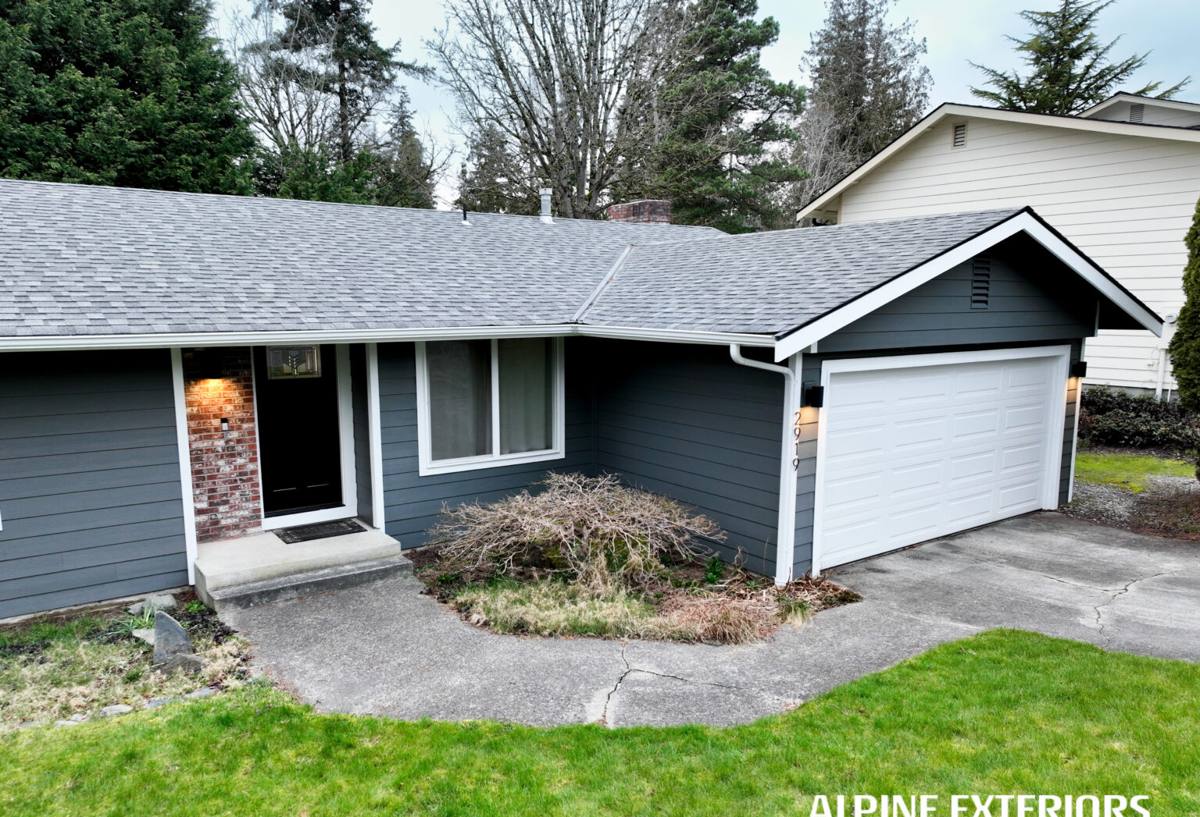
What Ferndale's Climate Actually Does to Siding
Salt Air and Corrosion
Homes closer to Bellingham Bay and the surrounding coastline deal with airborne salt that accelerates corrosion on fasteners, trim, and any exposed metal flashing. Over years, that corrosion can compromise the very hardware holding a siding system together, regardless of what the siding panels themselves are made of. Correct installation with corrosion-resistant fasteners and properly lapped flashing matters more here than in inland parts of the county.
Driving Rain and Wind-Driven Moisture
Whatcom County's weather doesn't just rain straight down — wind off the water pushes moisture sideways into wall assemblies, testing every seam, joint, and butt edge in a siding installation. A siding product that performs fine in calm rain can still fail if the installation behind it doesn't account for wind-driven water finding its way behind panels.
Moss, Mildew, and Shade
Between tree cover and the long gray season, many Ferndale homes stay damp on their north and west-facing walls for months at a time. That's prime conditions for moss and algae growth, which not only look bad but can trap moisture against the siding surface if left unaddressed.
Why We Install Only James Hardie Here
James Hardie fiber cement is manufactured from cement, sand, and cellulose fiber — materials that don't rot, don't feed fungal growth the way organic wood fibers do, and don't expand and contract with moisture the way vinyl and untreated wood do. For a community dealing with Ferndale's specific mix of salt air, prolonged dampness, and shade, that composition is a genuine functional advantage, not just a marketing point.
Hardie's HZ5 product line is engineered for the kind of freeze-thaw and moisture-cycling conditions common in the Pacific Northwest, and the ColorPlus factory-applied finish resists the fading and chalking that can happen when a field-applied paint job takes on years of damp, low-light weather. That finish also holds up better against the mildew staining that plagues lighter-colored sidings in shaded, humid spots.
How James Hardie Compares to Other Common Sidings in This Climate
| Factor | James Hardie Fiber Cement | Vinyl | Wood / Engineered Wood |
|---|---|---|---|
| Moisture and rot resistance | Non-organic, does not rot | Won't rot, but traps moisture behind panels | Vulnerable to rot without diligent maintenance |
| Moss and mildew resistance | Factory finish resists staining | Seams collect grime and moss | Organic surface feeds fungal growth |
| Performance in wind-driven rain | Strong when correctly flashed and lapped | Can flex and gap over time | Seams and edges are vulnerable points |
| Finish longevity | Factory ColorPlus finish, long warranty | Color is baked into the panel but can fade | Needs repainting/staining every few years |
| Fire resistance | Non-combustible | Combustible | Combustible |
What a Correct James Hardie Installation Involves
The siding material is only part of the equation. A large share of siding failures we get called out to inspect in this region trace back to installation shortcuts, not the product itself. For Ferndale homes specifically, we pay close attention to:
- Proper weather-resistive barrier and rain screen detailing behind the siding to manage the moisture that gets past the surface
- Correct fastener placement and spacing per James Hardie's published installation specs, using fasteners rated for coastal, high-moisture conditions
- Flashing and kick-out details at every roofline, window, and door penetration, since wind-driven rain finds these weak points first
- Proper clearance between the bottom of the siding and grade, decks, or patios to prevent wicking and splash-back moisture
- Caulking and sealant only where James Hardie specifies it — over-caulking traps moisture just as badly as leaving a true gap unsealed
- Panel joints and butt seams staggered and sealed correctly, since these are the first place moss and algae take hold in a damp climate
Installed off-spec, even the best siding product in the world will underperform. Installed correctly, James Hardie siding is built to handle exactly the conditions Ferndale throws at it year after year.
Our Process for a Ferndale Siding Project
1. On-Site Assessment
We walk the property and look specifically at moisture history — staining, moss buildup, soft spots, and areas where shade or tree cover keeps walls damp longer than others. This tells us where extra flashing or rain screen attention is needed before a single panel goes up.
2. Removal and Sheathing Check
Once old siding comes off, we inspect the sheathing and weather barrier underneath. In a climate like this, it's common to find moisture damage hidden behind siding that looked fine from the outside. We address any compromised sheathing before moving forward, rather than covering a problem back up.
3. Weather Barrier and Rain Screen Installation
We install a proper weather-resistive barrier and, where appropriate, a rain screen gap that lets any moisture that does get behind the siding drain and dry out instead of sitting against the wall assembly.
4. James Hardie Panel Installation
Panels, fasteners, and trim go in to James Hardie's published specifications for our climate zone, with particular attention to flashing at every penetration and correct clearances at grade.
5. Final Walkthrough
We review the completed work with the homeowner, including basic care guidance specific to Ferndale's conditions — what to expect from the ColorPlus finish over time and simple steps that help keep moss and algae from taking hold on shaded walls.
Why Hiring a Crew That Already Works in Ferndale Matters
Siding installation looks similar on paper in any climate, but the details that actually matter shift by region. A crew that mostly works drier inland areas may not default to the flashing, rain screen, and fastener choices that a coastal, high-moss climate demands. We work throughout Whatcom County, including Ferndale, and we build our installation approach around what actually happens to siding here — not a generic national spec sheet.
That local familiarity also means we can spot the early warning signs of moisture problems on existing homes: staining patterns, moss concentration in certain areas, or soft trim that signals bigger issues underneath. Catching those early, before a full siding job even starts, saves homeowners from surprises mid-project.
What to Look for When Hiring for a Job Like This
- Ask whether the crew is a certified James Hardie installer and can explain the specific HZ product line recommended for our climate zone
- Ask how they handle rain screen and weather barrier detailing — a vague answer is a red flag in a climate this wet
- Ask to see how they handle flashing at windows, doors, and rooflines, since these are the most common failure points
- Confirm the fastener and hardware specs they use, especially for homes closer to the water
- Ask about their process for inspecting sheathing once old siding is removed, not just installing over whatever is there
- Get a clear explanation of what's covered under the James Hardie product warranty versus the installer's workmanship warranty
Cost Factors for a Ferndale James Hardie Project
Every home is different, but the factors that most commonly move the price on a Ferndale siding job include the condition of the existing sheathing once old siding is removed, the amount of trim and detail work around windows and rooflines, the size and complexity of the home's footprint, and whether additional rain screen or drainage detailing is needed based on the home's exposure and shade conditions. We provide a detailed, itemized estimate after an in-person assessment rather than a rough number over the phone, since the moisture-related surprises common in this climate can meaningfully affect scope.
Ready to Talk About Your Home
If you're dealing with aging, moss-covered, or moisture-damaged siding on a Ferndale home, we're happy to come take a look and give you a straight answer about what's going on and what it would take to fix it right. There's no pressure and no obligation — just a clear assessment and a detailed estimate using the James Hardie products we trust to hold up in this climate. Fill out the form below to get started.