 Bellingham
 Why Fairhaven Roofs Wear Differently Than Roofs Inland
Fairhaven sits close to Bellingham Bay, under a canopy of mature fir and cedar, on a landscape of older homes with steeper, more complex rooflines than you'll find in newer subdivisions further from the water. That combination changes how a roof ages here. Salt-laden air off the bay accelerates corrosion on exposed metal fasteners and flashing. Driving rain, pushed sideways by wind off the water, finds weaknesses at valleys, chimneys, and wall-to-roof transitions that a straight-down rain never would. And the tree cover that gives the neighborhood its character also means shade, moisture, and organic debris sit on the roof deck for months at a stretch — which is exactly what moss and moisture-loving growth need to take hold.
None of this means Fairhaven homes need exotic materials or gimmicks. It means the installation details that get skipped on an easier job — fastener choice, flashing sequencing, ventilation, moss-resistant underlayment strategy — actually matter here, and skipping them shows up as a problem within a few years instead of a couple decades.
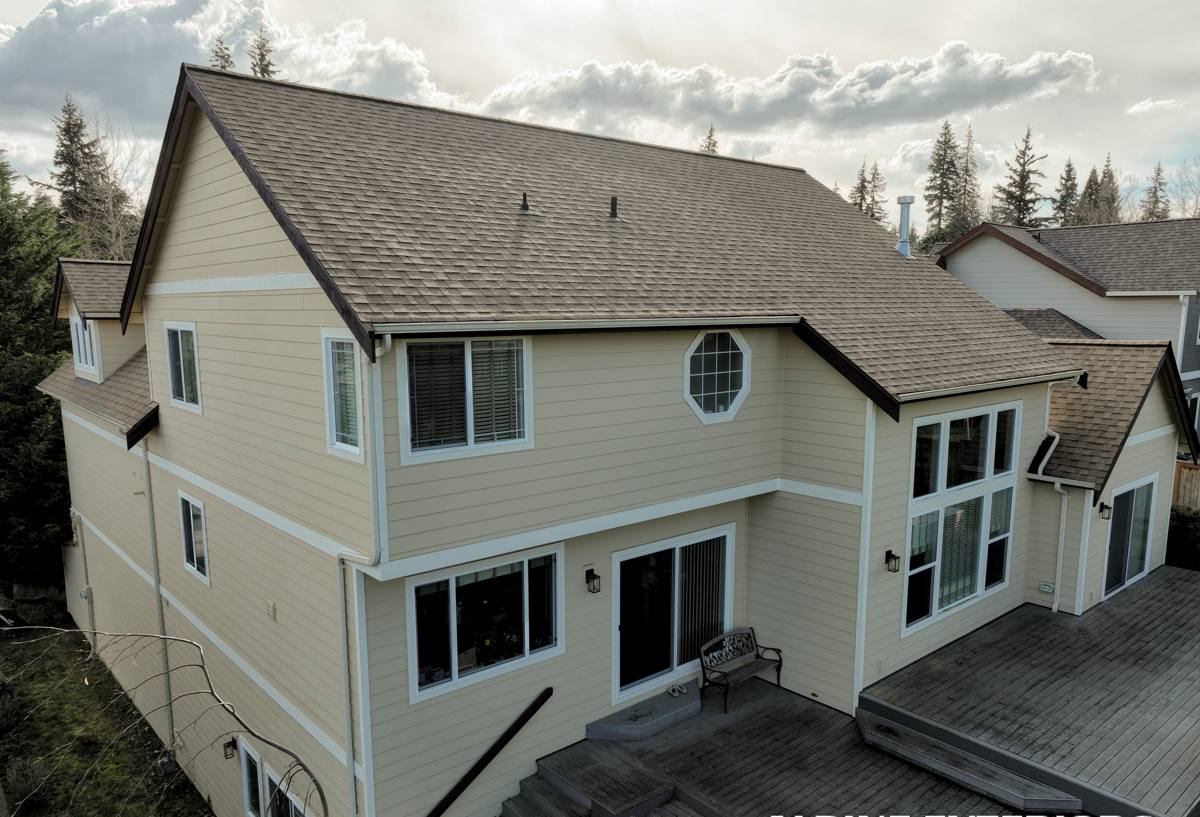
What a Correct New Roof Installation Actually Involves
A new roof is more than shingles nailed over old ones. Done right, it's a system, and every layer has a job to do against Whatcom County's wet, marine climate.
Tear-Off and Deck Inspection
We remove the old roofing down to bare decking rather than layering over it. That's the only way to see what's actually happening underneath — soft spots, rot around old flashing, or decking that's been slowly absorbing moisture from a roof that was failing longer than anyone realized. Any damaged decking gets replaced before anything new goes down; installing new roofing over a compromised deck just hides the problem and shortens the life of the new roof.
Underlayment and Ice-and-Water Protection
In a climate with as much sustained rain as Bellingham gets, underlayment is doing real work, not just serving as a formality. We use synthetic underlayment across the field of the roof and self-adhering ice-and-water shield at eaves, valleys, and around penetrations — the spots where wind-driven rain is most likely to work its way backward under the shingles.
Flashing
Flashing failures, not shingle failures, cause most of the leaks we get called out to fix on older roofs. Chimneys, skylights, sidewalls, and roof-to-wall transitions all need new, properly lapped flashing — never just caulked over old metal. In a salt-air environment, we pay close attention to fastener and flashing material compatibility so we're not setting up galvanic corrosion between dissimilar metals.
Ventilation
A roof deck that can't breathe traps moisture, which shortens shingle life and feeds moss growth from underneath. Balanced intake and exhaust ventilation is part of a correct installation, not an upsell.
Material Options for Fairhaven's Marine Climate
There's no single "best" roofing material for every home — the right choice depends on your roof's pitch, your home's age and style, your budget, and how much long-term maintenance you want to take on. Here's how the common options stack up for a home in a salt-air, high-moss-pressure environment like Fairhaven.
| Material | Performance in Salt Air & Rain | Moss Resistance | Maintenance |
|---|---|---|---|
| Architectural asphalt shingle | Good, with corrosion-resistant fasteners and flashing | Moderate — benefits from algae/moss-resistant granules | Low to moderate |
| Standing seam metal | Very good with proper coatings and fastener selection | High — sheds debris and dries fast | Low |
| Synthetic/composite shingle | Good, resists moisture absorption | Moderate to high, depending on product | Low |
| Cedar shake | Fair — natural material, sensitive to sustained moisture | Low without diligent upkeep | High |
We install traditional cedar shake selectively and only when a homeowner understands the maintenance commitment involved. In a shaded, damp, salt-air environment, cedar holds moisture longer than it would on an open, sunny roof, which means more frequent treatment and inspection to keep moss and rot at bay. That's not a knock on the material — it's simply the honest trade-off, and for many Fairhaven homes an architectural asphalt or synthetic product with moss-resistant granules delivers similar curb appeal with far less upkeep.
Ventilation and Moss Prevention Built Into the Job
Moss doesn't cause failure by itself — it causes failure by holding water against the roof surface and working under shingle edges as it grows. On a roof shaded by fir and cedar for much of the day, moss pressure is simply higher than on an open roof across town, so we build moss resistance into the installation instead of treating it as an afterthought:
- Algae- and moss-resistant shingle granules where the product line supports it
- Zinc or copper strips at the ridge on request, which release trace metals that inhibit moss growth as rain washes over them
- Proper deck ventilation so moisture doesn't linger in the roof assembly
- Attention to valleys and low-slope sections where debris and standing moisture collect first
These steps reduce moss pressure — they don't eliminate the need for periodic roof cleaning and gutter maintenance, especially under heavy tree cover.
Fairhaven's Older Homes and Historic Character
A lot of Fairhaven's housing stock predates modern building conventions — steeper pitches, more roof planes, dormers, and details that a production-built roof crew isn't used to working around. That complexity is exactly where installation quality separates itself: more valleys and transitions mean more flashing details to get right, and a steep, multi-plane roof takes more care to tear off and dry-in without exposing your home to weather mid-job. We treat older, architecturally distinctive homes as the norm here, not the exception, and plan the job — sequencing, weather protection, material handling — around that reality from the estimate forward.
Our Installation Process
1. On-Site Inspection and Estimate
We walk the roof and attic, not just the ground-level view, so the estimate reflects the actual condition of your decking, flashing, and ventilation — not just square footage.
2. Material Selection
We go through the trade-offs in plain terms — cost, appearance, maintenance, expected lifespan in this specific climate — so you're choosing based on what fits your home and budget, not a sales pitch.
3. Tear-Off and Dry-In
Old roofing comes off, the deck gets inspected and repaired where needed, and the roof is dried in with underlayment the same day whenever weather allows — we don't leave a Fairhaven roof exposed overnight if we can help it.
4. Flashing, Ventilation, and Roofing Installation
Flashing and ventilation go in first, since they're the components a finished roof will hide. Roofing material follows, installed to manufacturer specification so your warranty stays intact.
5. Cleanup and Final Walkthrough
We magnet-sweep for stray fasteners, clear debris, and walk the finished roof with you before calling the job done.
What a New Roof Costs, and What Moves the Number
Every roof is different, and giving a firm number without seeing your roof wouldn't be honest. What we can tell you is what actually drives the price up or down, so an estimate makes sense when you get one.
| Factor | Why It Matters |
|---|---|
| Roof pitch and complexity | Steeper, multi-plane roofs (common in Fairhaven) take longer and require more flashing detail |
| Deck condition | Rot or soft decking found during tear-off adds repair costs beyond the base estimate |
| Material choice | Asphalt, synthetic, metal, and cedar carry different material and labor costs |
| Access and tree cover | Tight lots and overhanging trees affect staging, protection, and cleanup time |
| Layers to remove | Multiple existing layers add tear-off labor and disposal cost |
Broadly, a full asphalt shingle tear-off and replacement runs in the range of most residential roofs nationally, with metal and cedar running higher for material and labor; the only way to get a real number is a roof-specific inspection, which is free and comes with no pressure to sign anything on the spot.
Why a Crew That Already Works Fairhaven Matters
Roofing crews that mostly work newer, simpler subdivisions can be caught off guard by Fairhaven's steeper older rooflines, tighter lots, and tree-heavy sites. A crew that regularly works this neighborhood already knows how to stage material on a hillside lot, protect landscaping under a tight canopy, and sequence a tear-off around Bellingham's rain windows so your home isn't sitting open when a squall rolls in off the bay. That local familiarity isn't a marketing point — it's the difference between a job that goes smoothly and one that runs into surprises halfway through.
We also pull the appropriate City of Bellingham and Whatcom County permits as part of the job, so you're not left to navigate that process yourself, and we carry the licensing and insurance a homeowner should always confirm before letting any crew on their roof.
After Installation: Keeping a New Roof Performing
A correctly installed roof still needs basic upkeep in this climate, especially under tree cover near the water. A short annual routine goes a long way:
- Clear gutters and downspouts before the fall rains set in
- Remove needles and debris from valleys where moisture collects
- Have moss growth treated early, before it works under shingle edges
- Check attic ventilation isn't blocked by insulation or storage
- Have flashing and roof penetrations inspected every few years, especially after major windstorms
If you're planning a new roof for a home in Fairhaven, we're happy to take a look and give you a straightforward, no-pressure estimate — just fill out the form below and we'll get in touch.