 Bellingham
 Why Edgemoor's Waterfront Climate Is Hard on a Roof
Edgemoor sits on a bluff above Bellingham Bay, and that setting is part of what makes the neighborhood so desirable — and part of what makes roofing here more demanding than it looks. Homes on or near the bluff catch salt-laden air coming off the water, which accelerates corrosion on any metal component that isn't properly rated or protected. Add in Whatcom County's long wet season, driving rain that comes in sideways during winter storms, and heavy tree canopy that shades roof surfaces for months at a time, and you have a combination that punishes roofing shortcuts fast.
A roof that would hold up fine in a drier inland climate can start showing problems within a few years in Edgemoor if it wasn't detailed for coastal conditions. That's not a scare tactic — it's just what salt air, standing moisture, and shade do to a building envelope over time. Metal roofing, done correctly, handles this environment better than most other materials. Done incorrectly, it can fail in the exact spots — fasteners, flashing, valleys — where the climate is working hardest against it.
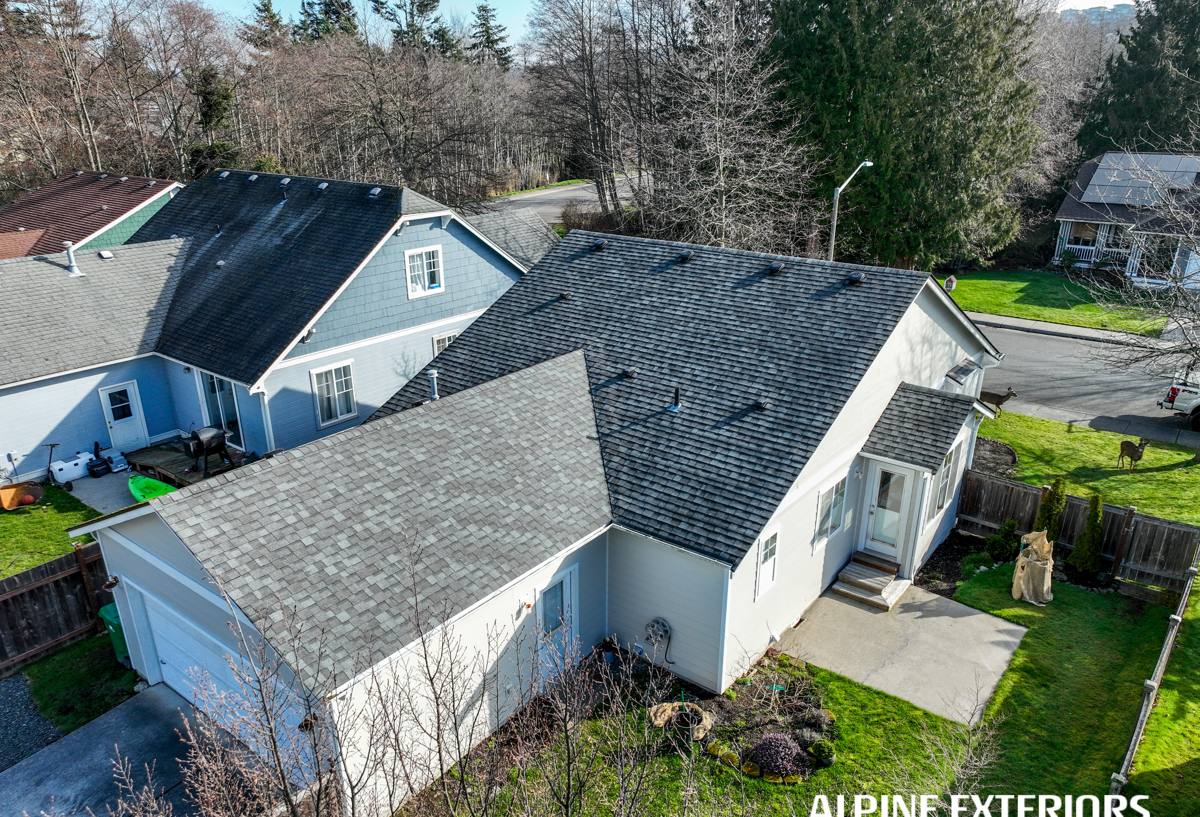
What a Correctly Installed Metal Roof Needs in This Climate
Metal roofing has a reputation for being low-maintenance and long-lived, and that reputation is earned — but only when the installation accounts for where the house sits. In Edgemoor, that means paying close attention to a handful of details that get glossed over on cheaper jobs:
- Underlayment built for wind-driven rain — a high-quality synthetic or self-adhered underlayment at eaves, valleys, and penetrations, not just felt paper, so wind-driven moisture that gets past the panels still has somewhere safe to go.
- Corrosion-appropriate fasteners and flashing — matched metals and coated fasteners so you don't get galvanic corrosion between dissimilar metals, which shows up faster in salt air than almost anywhere else.
- Proper panel fastening and seam design — correct clip spacing and seam type for the roof's exposure, since a roof facing open water sees more uplift pressure during storms than a sheltered inland roof.
- Ventilation that accounts for tree shade — balanced intake and exhaust airflow so moisture doesn't get trapped under a roof deck that stays cool and shaded most of the day.
- Valley and penetration detailing — the majority of leaks on any roof start at a valley, chimney, skylight, or vent boot, and that's doubly true where rain comes in at an angle instead of straight down.
None of this is exotic. It's standard trade knowledge — but it only gets applied consistently by a crew that treats it as non-negotiable rather than optional.
Choosing the Right Metal Roofing System for an Edgemoor Home
Not every metal roofing system is a good fit for a bluff-adjacent, tree-shaded property. We generally steer Edgemoor homeowners toward standing seam systems for primary roof surfaces, with exposed-fastener panel systems reserved for outbuildings, garages, or budget-driven projects where the trade-offs make sense.
| System | Best Fit | Coastal Considerations |
|---|---|---|
| Standing seam (concealed fastener) | Primary residential roofs, especially bluff or waterfront-facing homes | No exposed screw heads to corrode or work loose over time; handles thermal movement and wind-driven rain well |
| Exposed-fastener panel | Outbuildings, garages, budget re-roofs | Lower upfront cost, but exposed fasteners need periodic inspection and eventual replacement as gaskets age in salt air |
| Stone-coated steel | Homes wanting a shingle or shake profile with metal durability | Good moss and impact resistance; still needs coastal-rated fasteners and flashing underneath the coating |
The right choice depends on the home's exposure, roof pitch, existing structure, and what the homeowner wants the roof to look like from the street. We walk through this with you before any estimate is final — there's no single "best" system, only the best fit for that specific roof.
How Our Metal Roofing Process Works
Inspection and Estimate
We start with a full roof and attic inspection — not just a look from the ground. On Edgemoor properties that means checking for existing moss and moisture damage, assessing tree cover and drainage paths, and confirming deck condition before we ever talk numbers. The estimate reflects what your roof actually needs, not a generic package price.
Tear-Off and Deck Preparation
If a tear-off is required, we remove the old roofing down to the deck, replace any damaged sheathing, and address ventilation before a single panel goes down. Skipping this step is one of the most common ways metal roofs fail early — a good panel over a bad deck is still a bad roof.
Installation
Panels, flashing, and fasteners go in matched to the system and the exposure the home actually faces. Valleys, chimneys, and skylights get extra attention, since that's where most future leaks would start if the detailing were rushed.
Cleanup and Walkthrough
We clear the site of debris and fasteners, then walk the finished roof with you so you know what was done and what routine maintenance, if any, to expect going forward.
Salt Air, Corrosion, and Fastener Choices
Salt air is the detail that separates a roofing job built for Edgemoor from a generic install. Salt accelerates oxidation on unprotected steel, and it can cause galvanic corrosion when two incompatible metals touch — for example, the wrong fastener against the wrong panel coating. This is why we're deliberate about matching fastener composition and coating to the panel system on every coastal or bluff-facing job, and why we don't cut corners on flashing material just to save a few dollars per linear foot. It's a small line item on an estimate that has an outsized effect on how the roof performs ten and twenty years down the road.
Moss, Tree Cover, and Ongoing Maintenance
Bellingham's long wet season and Edgemoor's tree canopy are a near-perfect environment for moss growth. Metal roofing resists moss far better than asphalt shingles or wood shakes because there's no porous surface for spores to root into, but it isn't completely immune — moss and organic debris can still build up in valleys, at panel laps, and anywhere leaves and needles collect and hold moisture. A little seasonal attention goes a long way:
- Clear leaves, needles, and debris from valleys and gutters at least twice a year, more often under heavy tree cover.
- Watch for moss or algae buildup at panel seams and low-slope sections where debris tends to collect.
- Keep overhanging branches trimmed back to reduce shade, debris load, and the risk of limb damage during winter storms.
- Check gutters and downspouts before the fall rains ramp up so water has a clear path off the roof.
- Have flashing and sealant at penetrations inspected periodically — these age faster than the panels themselves.
What Metal Roofing Costs in Edgemoor
Metal roofing carries a higher upfront cost than asphalt shingles, but it typically outlasts shingle roofing by decades and holds up better against the specific conditions this neighborhood deals with. Final pricing depends on roof size, pitch, complexity, and system chosen — we don't quote off square footage alone.
| Cost Factor | Why It Matters Here |
|---|---|
| Roof pitch and complexity | Steeper or more cut-up rooflines take longer to flash correctly, which matters more in a driving-rain climate |
| System type | Standing seam costs more upfront than exposed-fastener panel but needs less long-term fastener maintenance |
| Deck condition | Older Edgemoor homes may need deck repair or replacement before panels go on, especially after long-term moss or moisture exposure |
| Access and tree cover | Bluff lots and mature trees can affect staging, equipment access, and job timeline |
| Ventilation upgrades | Adding or correcting ventilation adds cost but protects the deck and panels over the life of the roof |
Why It Matters That We Already Work in Edgemoor
A crew that's worked Edgemoor roofs before isn't guessing at how the neighborhood behaves. We know that a home on the bluff needs different fastener and flashing choices than one set back under a stand of mature trees a few blocks inland, and we know what that long wet season and salt exposure do to a roof over ten or twenty years. That local pattern recognition shows up in small decisions — where we add extra underlayment, how we detail a valley, which fastener spec we use — that a crew unfamiliar with Bellingham's coastal conditions might not think to make.
It also matters for practical logistics: access on sloped or wooded lots, coordinating around tree cover, and understanding typical Whatcom County permitting and inspection expectations. None of that is complicated, but it's the difference between a roof that gets installed once, correctly, and one that needs revisiting sooner than it should.
Get a Free, No-Pressure Estimate
If you're weighing a metal roof for your Edgemoor home — whether it's a full replacement, a repair, or just a second opinion on a quote you already have — we're happy to take a look and walk you through your options honestly. Use the form below to request a free estimate; there's no pressure and no obligation.