 Bellingham
 Puget Decks Take More Punishment Than Most
If you own a deck in the Puget area near Bellingham, you already know it doesn't age like a deck in a drier part of the state. Being this close to the water means salt-laden air moving through every fastener and joint, day after day. Add Whatcom County's long stretch of driving rain each fall and winter, plus a moss season that can run from October well into spring, and you've got three separate forces working against the same structure at the same time. A deck repair here isn't just "fix the board that's soft" — it's understanding which of those forces caused the damage and making sure the repair doesn't just get eaten by the same conditions in another two or three years.
We work on decks throughout the Puget neighborhood and the surrounding Bellingham area regularly, which means we're not guessing at how local weather behaves on a roofline or a deck surface — we're looking at the same rain patterns and the same moss growth cycle on job after job.
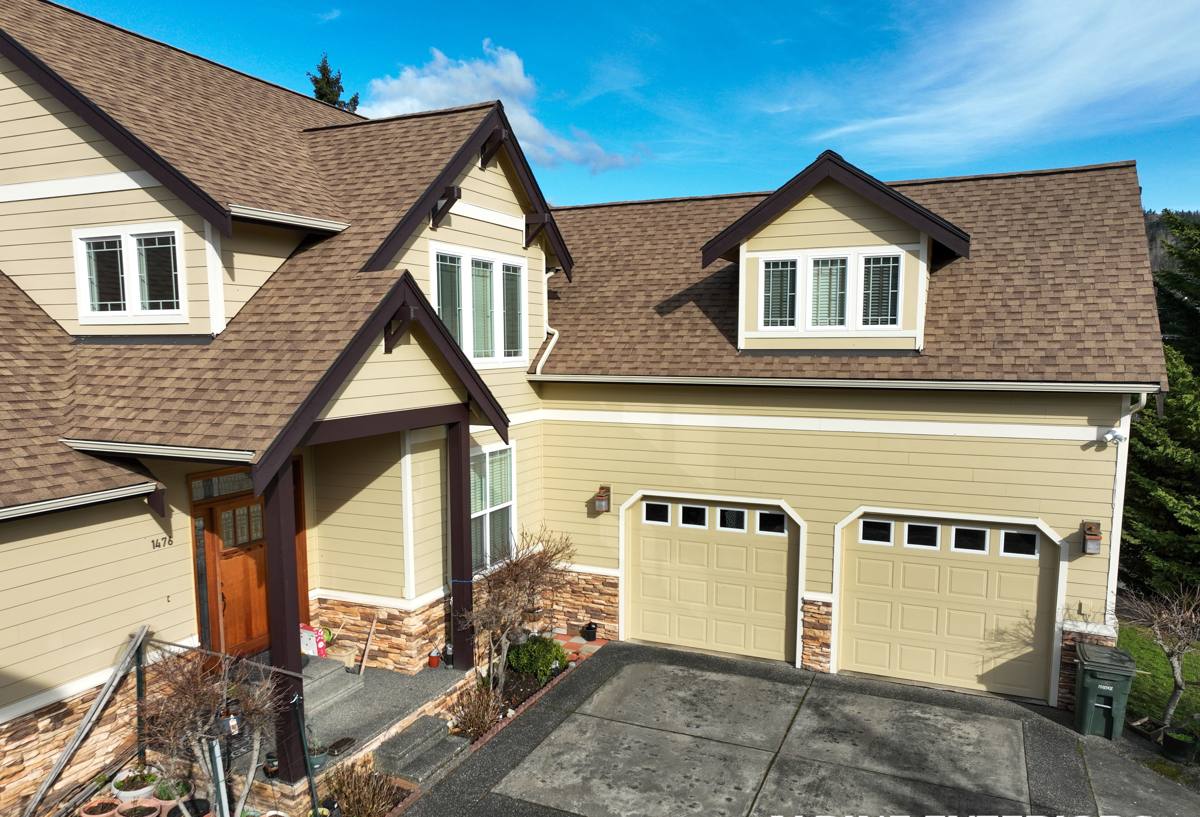
How Salt Air, Rain, and Moss Actually Damage a Deck
Salt Air and Fastener Corrosion
Salt in the air accelerates corrosion on anything metal — nails, screws, joist hangers, bolts, and railing hardware. Corrosion doesn't always show on the surface first. A fastener can look fine from above while it's losing structural strength underneath, in the wood, or where two metals are in contact with each other. That's why a proper deck repair here always includes a hardware check, not just a visual pass over the decking boards.
Driving Rain and Water Intrusion Points
Wind-driven rain doesn't fall straight down — it gets pushed sideways, up under railings, and into any gap where the deck meets the house. The most common failure point on any deck, anywhere, is the ledger board — the piece that bolts the deck to the house framing. When flashing at that connection is missing, undersized, or was never properly lapped with the house's water-resistive barrier, rain works its way behind it year after year. In a climate with as much sustained wet weather as this one, that slow intrusion adds up fast.
The Long Moss Season
Moss doesn't just look bad. It holds moisture directly against the wood surface, blocks the wood from drying out between rain events, and creates a slick, slippery walking surface. On decking boards, moss growth is usually the first visible sign that a board's finish has broken down and water is starting to soak in rather than shed. Left alone through a full moss season, that moisture retention is what turns a board that needs cleaning into a board that needs replacing.
Common Deck Repair Needs We See in the Puget Area
Most of the repair calls we get in this part of Whatcom County fall into a fairly consistent pattern. If you're checking your own deck, here's what to look for:
- Soft, spongy, or discolored decking boards, especially near the house or in shaded corners that don't dry out
- Rust staining running down from screw heads or bolt holes
- Gaps, cracks, or missing caulk/flashing where the deck meets the house wall
- Moss or dark green-black staining building up on boards, stair treads, or the underside of the deck
- Wobbly, loose, or bouncy railings and posts
- Stair stringers that feel soft underfoot or show cracking near the base
- Visible gaps or separation between joists and the ledger board
- Standing water that doesn't drain within a few hours after rain stops
Any one of these on its own might just need a targeted repair. Several of them together usually means the deck's overall drainage or flashing was never quite right, and that's worth addressing at the source rather than patching symptom by symptom.
What a Correct Deck Repair Actually Involves
A repair that holds up in this climate has to deal with structure first and appearance second. That generally means:
- Ledger and flashing correction — confirming the deck's connection to the house is properly flashed and lapped so water sheds away from the house framing, not into it
- Framing and joist inspection — checking joists, beams, and posts for soft spots, especially anywhere hardware or fasteners have been corroding
- Fastener replacement — swapping corroded or undersized fasteners for hardware rated for the exposure this deck actually sees
- Decking board replacement — replacing individual boards that have gone soft or cupped, matched as closely as possible to the surrounding material
- Railing and guardrail security — this is a safety item, not a cosmetic one; loose railings get fixed at the post connection, not just tightened at the surface
- Drainage correction — making sure water has somewhere to go instead of pooling against ledger boards or post bases
Skipping any one of these to save time on a repair usually means the same problem reappears in a season or two, just in a slightly different spot.
Repair vs. Replace: How We Help You Decide
Not every damaged deck needs to come out entirely, but not every repair is worth doing either. Here's roughly how we think through it:
| Condition Found | Usually Repair | Usually Replace |
|---|---|---|
| A few soft or stained boards, framing solid | Yes — spot-replace boards | Not needed |
| Corroded fasteners, framing still sound | Yes — hardware upgrade | Not needed |
| Rot at ledger board or house connection | Sometimes — depends on how far it's spread | Often, if rot has moved into house framing |
| Widespread soft framing across multiple joists | Rarely cost-effective | Usually the better long-term value |
| Deck is structurally sound but original build lacked proper flashing/drainage | Yes — correct the flashing and drainage during repair | Not needed if caught early |
The honest answer is usually somewhere in the middle: repair what's sound, replace what isn't, and fix the underlying water or drainage issue so you're not back in the same spot. We'll walk you through what we're actually seeing on your deck rather than defaulting to the most expensive option.
Decking Material Considerations for This Climate
If boards are being replaced anyway, it's worth thinking about what goes back in, given what this area's weather does to a deck over time.
| Material | Moisture Behavior Here | Maintenance | Notes |
|---|---|---|---|
| Pressure-treated lumber | Resists rot well if sealed regularly; still needs a dry, ventilated underside | Periodic sealing/staining recommended | Lowest upfront cost, most common repair match |
| Cedar | Naturally rot-resistant but softer surface; can weather gray without treatment | Higher — benefits from regular finish maintenance | Good appearance match on older decks |
| Composite decking | Doesn't absorb water into the board itself; moss can still grow on the surface film | Low — occasional cleaning | Higher upfront cost, longer board life if installed with proper venting |
None of these materials is maintenance-free in a climate this wet — the difference is where the maintenance burden shows up. We'll size the board's expected life against how it's actually installed (spacing, ventilation underneath, fastener type) rather than just the marketing on the product itself.
Our Deck Repair Process
- On-site inspection of decking, framing, ledger connection, railings, and drainage
- Straightforward explanation of what's failing and why — including whether it's a repair or a replacement situation
- A written scope and estimate before any work begins, with material options laid out plainly
- Repair work: framing and hardware correction first, then decking, then railings and finish details
- Final walkthrough so you can see exactly what was done and why
We don't upsell a full rebuild when a targeted repair will genuinely hold up — and we won't patch over a structural issue just to keep the job small.
Why a Crew That Already Works in Puget Matters
A deck repair here isn't the same job as a deck repair fifty miles inland. A crew that regularly works the Puget area and greater Bellingham already knows what the salt air does to hardware over a few winters, how far moss tends to creep before a homeowner notices it, and how much water a fall storm off the Sound can actually drive sideways into a wall connection. That's less time spent diagnosing and more time spent fixing the actual problem. It also means we're familiar with how Whatcom County and City of Bellingham permitting typically applies to deck work, so there are no surprises partway through the job if permits or inspections come into play.
If your deck is showing soft boards, rust staining, moss buildup, or just doesn't feel as solid as it used to, we're glad to take a look. We offer free, no-pressure estimates — use the form below to get one scheduled.