 Bellingham
 Deck Repair Built for Fairhaven's Marine Climate
Fairhaven sits close enough to the water that its decks take a different kind of beating than decks a few miles inland. Salt-laden air, driving rain off the bay, and a moss season that can run from October through May all work on wood, fasteners, and finishes at a faster clip than most homeowners expect. A deck that would need attention every eight to ten years in a drier climate often needs it every four to six here in Bellingham. That's not a knock on any particular build — it's just what Whatcom County weather does to an exterior structure that sits low, flat, and exposed to the sky.
We repair decks in Fairhaven regularly, and the failure patterns repeat themselves house after house: ledger boards that trap moisture against the house band joist, joists and posts that rot from the inside out before the surface shows anything, and railings that loosen because the fasteners were never rated for a coastal environment. Knowing what to look for — and where — is most of the job.
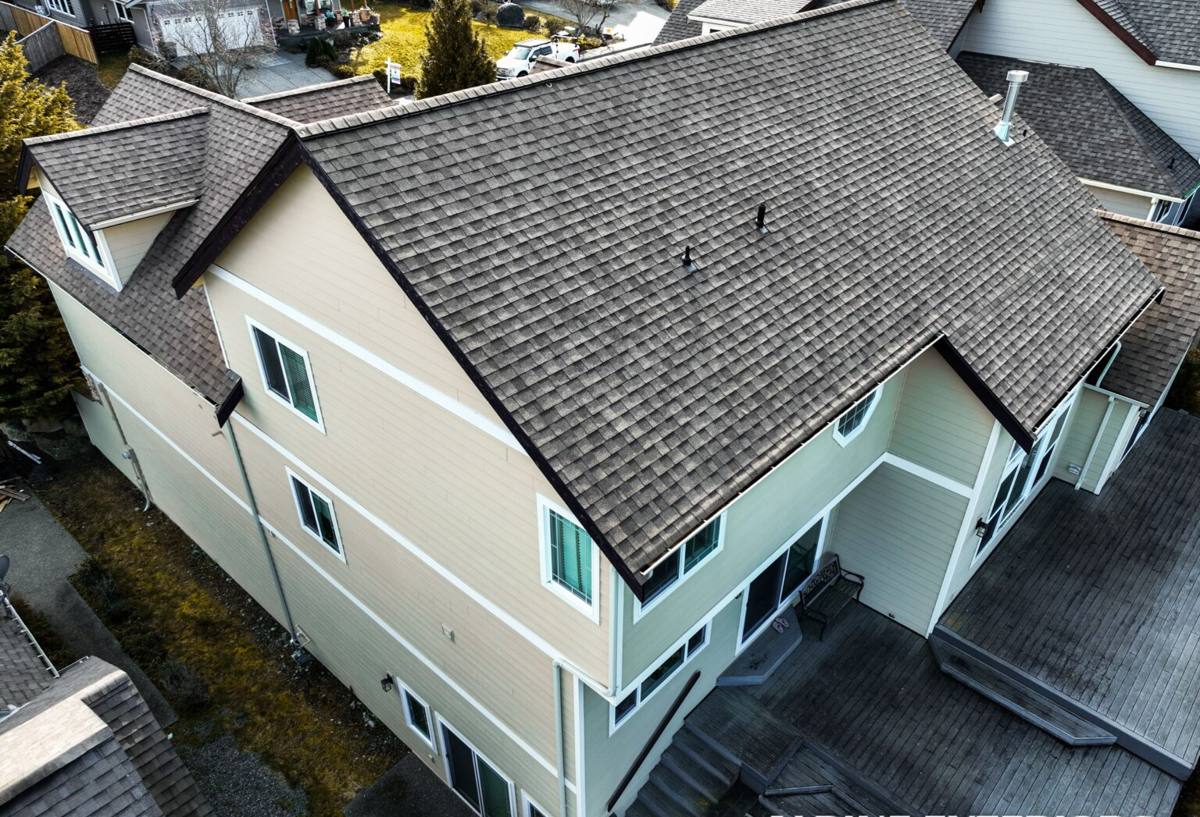
What Bellingham's Climate Does to a Deck
Salt Air and Metal Fasteners
Homes near the water deal with airborne salt that accelerates corrosion on anything less than a marine-grade fastener. Standard galvanized nails and screws can start rusting from the inside of the wood outward, which means the corrosion is often worse than it looks from the surface. Rusted fasteners lose their holding strength long before they visibly fail, which is part of why a deck can feel "soft" or springy without any obvious rot.
Driving Rain and Trapped Moisture
Wind-driven rain off the water doesn't fall straight down — it gets pushed sideways into ledger connections, under railing posts, and into any gap where flashing wasn't detailed correctly. Water that gets in doesn't dry out quickly in our climate, since humidity stays high for much of the year. That's the single biggest reason decks rot from framing outward rather than from the decking boards down.
Moss, Algae, and Surface Wear
A long, wet moss season means organic growth gets a foothold on any horizontal wood surface that doesn't get regular sun. Moss and algae aren't just cosmetic — they hold moisture against the boards constantly, which softens wood fiber and breaks down finishes far faster than UV exposure alone would.
Common Deck Problems We Find in Fairhaven Homes
- Ledger board rot where the deck attaches to the house — often hidden until boards are pulled
- Rusted or failing joist hangers and structural fasteners
- Loose or wobbly railing posts, sometimes a genuine safety issue rather than cosmetic
- Soft or spongy decking boards, especially near stairs and low-traffic corners
- Missing or failed flashing at the house connection, letting water track into the wall framing
- Moss and algae buildup that's begun to soften the wood surface, not just stain it
- Stair stringers weakened by standing water at the base
What a Correct Repair Actually Involves
A lot of deck "repairs" amount to swapping a few obviously rotten boards and calling it done. That approach treats the symptom, not the cause, and in a climate like Bellingham's, the same failure tends to reappear within a season or two. A repair done right starts with finding out why that section failed in the first place.
Our Inspection Process
- Walk the full deck surface, checking for soft spots, movement, and separation at board edges
- Probe the ledger board connection and rim joist — the most common hidden rot location
- Check railing posts for movement and test fastener integrity, not just visual condition
- Inspect under the deck where accessible: joists, beams, post bases, and any flashing details
- Identify moisture sources — flashing gaps, missing kickout diverters, grading issues, or plumbing/gutter runoff landing near the structure
Once we know what's actually failing and why, we scope a repair that addresses the cause: correcting flashing details, upgrading to fasteners and hardware rated for coastal exposure, and replacing framing members rather than just the decking that sits on top of them. Surface-only repairs get offered when that's genuinely all a section needs — we're not going to sell a full framing rebuild on a deck that just needs new boards.
Repair vs. Replacement: How We Help You Decide
Not every deck problem calls for a full rebuild, and not every deck is worth patching indefinitely. The decision usually comes down to how much of the structural framing — versus just the surface — is affected.
| Condition | Usually Repairable | Usually Needs Replacement |
|---|---|---|
| Decking boards | Isolated soft or cracked boards | Widespread cupping, splitting, or rot across most boards |
| Railings | Loose posts, worn balusters | Rot at multiple post bases, code-non-compliant spacing |
| Framing (joists/beams) | One or two localized rotten members | Rot at the ledger board or multiple structural members |
| Fasteners/hardware | Spot upgrades during other repair work | Original build used non-rated hardware throughout |
| Age | Under 12-15 years, isolated issues | Original deck approaching or past typical service life for this climate |
Cost is the other half of that decision. Repairs to isolated boards, hardware, or railing sections are a modest expense. Framing repairs that require pulling decking to reach joists or the ledger cost more because of the labor to expose the problem area. A full deck replacement is a larger investment but resets the clock on everything at once, including bringing older railing and fastener details up to current code. We'll walk you through the real cost drivers for your specific deck rather than quoting a flat number that doesn't reflect what we actually find.
Why Local Experience in Fairhaven Matters
A crew that works Fairhaven regularly already knows what to expect before we pull the first board. We know how exposure to weather off the water tends to concentrate damage on certain sides of a deck, we know which fastener specs hold up here and which ones we replace on sight, and we know the moss and drainage patterns that are common in this part of Bellingham. That familiarity means a faster, more accurate diagnosis and fewer surprises once work is underway — surprises still happen with older structures, but we've usually seen the pattern before.
It also means we're not learning coastal Whatcom County conditions on your project. A contractor based somewhere drier or inland may do fine work generally but hasn't necessarily built the habit of over-specifying fasteners, flashing, and ventilation details for a marine environment the way a local crew does by default.
Maintenance That Extends the Life of a Fairhaven Deck
Repair work lasts longer when it's paired with maintenance suited to this climate. A few habits make a real difference:
- Clean moss and algae off the deck surface at least once a year, ideally before the wettest months set in
- Keep gutters and downspouts clear so runoff isn't landing on or near the deck structure
- Reseal or refinish wood decking on the schedule the product actually calls for in a wet climate — often shorter than the label's general recommendation
- Check railing posts and stair connections for movement once a year, especially after a hard winter
- Keep planters, rugs, and furniture from sitting in one spot long enough to trap moisture against the boards
Materials We Use for Coastal Repairs
For framing and structural repairs, we use fasteners and hardware rated for coastal or marine exposure rather than standard galvanized products, since the fastener is usually what fails first in this environment. For decking material, the right choice depends on the homeowner's priorities: pressure-treated lumber and cedar both have a place, and composite decking is worth considering where lower long-term maintenance matters more than upfront cost. Each option has real trade-offs in appearance, upkeep, and how it handles constant moisture — we'll go through those honestly rather than push whatever's easiest to install.
What to Expect When You Call Us
We start with a straightforward on-site look at the deck — no obligation, no pressure. We'll tell you plainly what we find, including if a section is fine and doesn't need work yet. If repair is the right call, we'll explain what's driving the damage, what the fix involves, and roughly what it costs before any work begins. If a full replacement makes more sense given the age and condition of the structure, we'll say so and explain why, rather than stringing along a series of patch repairs on a deck that's past the point of it making sense.
If you're dealing with a soft spot, a wobbly rail, or just want an honest read on how much life is left in a Fairhaven deck, we're happy to come take a look. Reach out for a free, no-pressure estimate using the form below.