 Bellingham
 Building Decks That Actually Hold Up in Columbia
The Columbia neighborhood sits close enough to the water and to the hillside tree cover that decks here take a beating most inland homes never see. Salt-tinged air off Bellingham Bay, driving rain that comes in sideways for months at a stretch, and a moss season that can run from October through May all work against wood, fasteners, and finishes. A deck that would hold up fine in a drier climate can start showing rot, corrosion, or slick moss growth within a couple of seasons here if it wasn't built with this specific environment in mind.
We build and rebuild decks for homes throughout Bellingham, and Columbia's mix of older houses and infill construction means we see a wide range of existing conditions — some solid, some hiding real problems under old boards. The right approach depends on what's already there, what the site drainage looks like, and how much sun versus shade the deck actually gets, which in a lot of Columbia yards is more shade than owners expect.
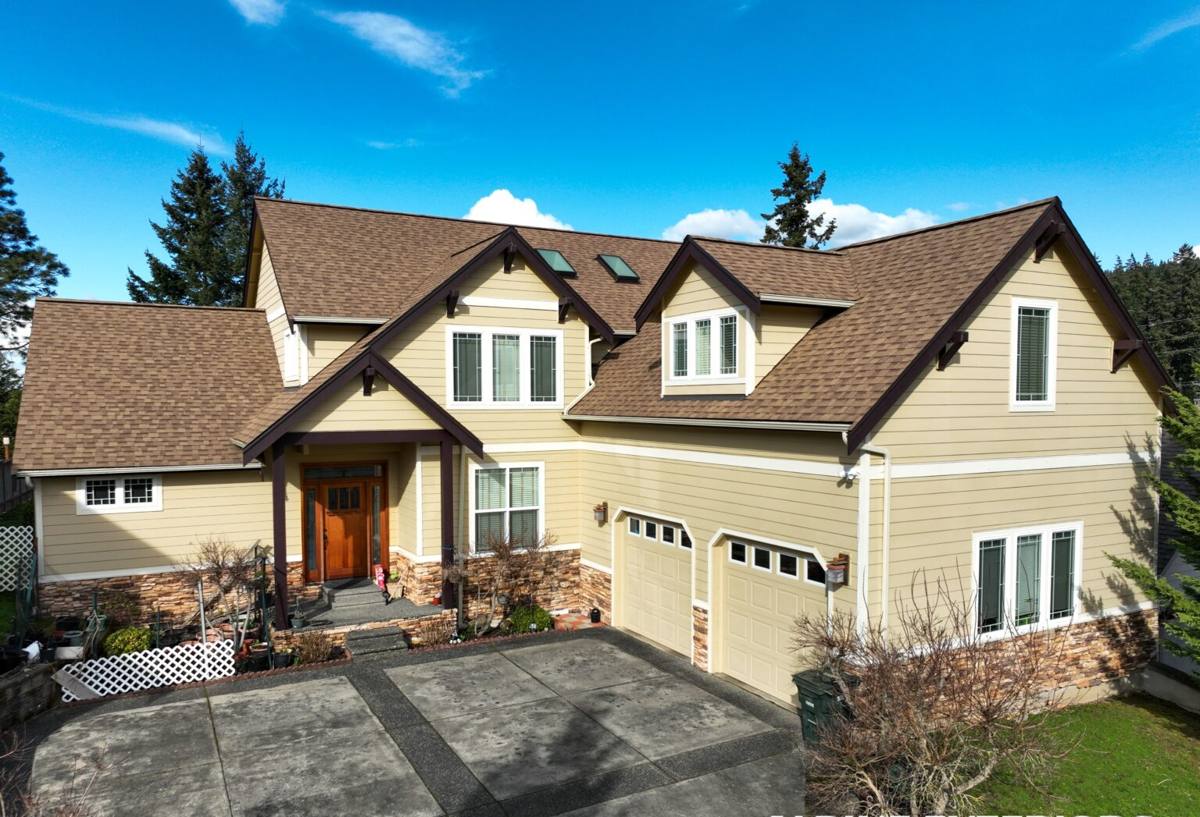
What Whatcom County's Climate Does to a Deck
Before getting into materials and process, it's worth being specific about the failure modes we actually see, because they drive every decision that follows.
Moisture That Never Fully Leaves
Bellingham's rainy season isn't just about total rainfall — it's the duration. Wood and fasteners can stay damp for days or weeks at a time, which is what accelerates rot at joints, ledger boards, and anywhere water pools instead of shedding. A deck built with tight board spacing or poor under-deck airflow will trap moisture even after the rain stops.
Salt Air and Metal Fatigue
Homes closer to the bay deal with airborne salt that accelerates corrosion on fasteners, brackets, and hardware. Standard interior-grade screws and joist hangers will rust and weaken well before the wood around them fails, which is a common reason older decks develop soft spots at the connections long before the boards themselves look bad.
Moss, Algae, and Slip Risk
Shaded, damp decking grows moss and algae fast, and it's not just cosmetic — it makes stairs and walking surfaces genuinely slippery for a good chunk of the year. Deck orientation, board choice, and surface texture all affect how much of a moss problem a homeowner ends up managing.
UV and Freeze-Thaw Cycling
It's a smaller factor here than in drier climates, but Whatcom County still sees enough freeze-thaw swings in winter to stress joints and finishes that weren't installed with proper expansion gaps.
What a Correctly Built Deck Needs in This Climate
A deck that's going to last in Columbia isn't built differently in dramatic ways — it's built with more attention to the details that matter in a wet, coastal-influenced climate.
- Corrosion-resistant, coastal-rated fasteners and joist hangers rather than standard galvanized hardware
- Proper flashing at the ledger board connection to the house, which is the single most common point of hidden rot on older decks
- Adequate spacing between boards and enough clearance underneath for real airflow, not just code-minimum
- Footings sized and set below frost depth with attention to how the specific lot drains
- A deck surface and stair tread choice that accounts for moss and slip risk given the site's sun exposure
- Finish or sealant appropriate to the decking material, applied and maintained on a realistic schedule for this climate
Decking Material Options for This Climate
There's no single "best" decking material for every Columbia property — it depends on budget, how much upkeep the homeowner wants to do, and how shaded the site is. Here's how the common options actually perform under Bellingham conditions.
| Material | Moisture & Moss Behavior | Maintenance | Typical Lifespan Here |
|---|---|---|---|
| Pressure-treated wood | Prone to moss in shaded spots; needs sealing to resist moisture uptake | Annual cleaning, resealing every 2-3 years | 15-20 years with upkeep |
| Cedar | Naturally rot-resistant but still needs finish maintenance in this rainfall | Regular cleaning and periodic oil or stain | 20-25 years with upkeep |
| Composite decking | Sheds moisture well; still grows surface algae/moss if shaded and not cleaned | Periodic washing, no sealing or staining | 25-30+ years |
| PVC decking | Best moisture resistance; low organic content limits moss growth | Occasional washing | 30+ years |
Composite and PVC products cost more upfront but remove most of the seasonal maintenance burden that wood decking creates here. That said, plenty of homeowners in Columbia want the look and feel of real wood, and a well-built, well-maintained cedar deck can absolutely go the distance — it just requires a homeowner willing to keep up with cleaning and refinishing on schedule. We'll walk through the honest trade-offs for your specific site rather than push one product line.
Substructure and Hardware: Where Decks Actually Fail
Most deck failures we see aren't about the decking boards — they're about what's underneath. The framing, footings, and hardware determine whether a deck is structurally sound long after the surface starts to look dated.
Footings and Framing
Footings need to be sized for the load and set to the proper depth for this region's frost line, and framing lumber should be rated for ground contact or exterior use wherever it's within a few inches of grade or in a location that stays damp. On rebuilds, we frequently find undersized or shallow footings from earlier construction that were never adequate to begin with.
Ledger Board Attachment
The ledger board — where the deck attaches to the house — is the most common source of hidden water damage. Proper flashing, correct fastener type and spacing, and a small gap or flashing detail to keep water from tracking behind the siding are non-negotiable in this climate, not optional upgrades.
Hardware Grade
Given the salt air common to homes near the bay, we default to hardware rated for coastal or wet-climate exposure rather than standard galvanized products, which corrode faster here than their published ratings might suggest for a drier region.
Our Process for Columbia Deck Projects
- On-site assessment — we look at the existing structure (if there is one), grade and drainage around the deck footprint, sun/shade exposure, and how the deck ties into the house.
- Honest scope discussion — repair, partial rebuild, or full replacement, with the reasoning behind the recommendation explained plainly.
- Material selection — walking through decking and hardware options against your budget and how much maintenance you actually want to take on.
- Permitting — most deck work in Bellingham requires a permit depending on height and size; we handle that process rather than leaving it to the homeowner.
- Construction — footings, framing, ledger flashing, decking, railings, and stairs, built to hold up through the wet season, not just look good when it's dry.
- Final walkthrough — checking fastener finish, board spacing, railing security, and drainage before we consider the job done.
Repair, Rebuild, or Replace?
Not every aging deck needs to be torn out. When we assess a deck in Columbia, we're checking a few specific things to figure out which category it falls into.
- Soft or spongy spots in decking boards, especially near the house or at stair landings
- Rust staining or visible corrosion at fastener heads and brackets
- Ledger board separation or gaps where the deck meets the house
- Wobble in railings or posts, which often points to footing or post-base problems, not just loose hardware
- Heavy, persistent moss or algae that cleaning doesn't resolve, which can indicate a drainage or airflow issue rather than just a surface problem
Sometimes the framing is sound and only the decking surface needs replacing — a meaningfully cheaper project than a full rebuild. Other times, what looks like a cosmetic issue on the surface turns out to be a framing or footing problem underneath. We'll tell you honestly which situation you're in before quoting anything.
Why Local Experience with Columbia Homes Matters
Columbia's housing stock includes a real mix of ages and construction styles, and the lots vary in how much shade, slope, and drainage they deal with. A crew that's worked in this specific neighborhood already knows what tends to go wrong here — where older decks were typically under-flashed, which lots hold moisture longest, and how much moss pressure to plan around based on tree cover. That local knowledge shortens the assessment process and helps us build something sized correctly for your actual site conditions rather than a generic spec.
We're also familiar with Bellingham's permitting requirements for residential decks, which keeps the project moving instead of stalling on paperwork issues that a crew unfamiliar with the city might not anticipate.
Get a Straightforward Estimate
If you're dealing with an aging deck in Columbia, or planning a new one, we're happy to take a look and give you an honest read on what it needs — no pressure, no inflated scope. Use the form below to request a free estimate.