 Bellingham
 Decking Built for Sehome's Specific Conditions
Sehome sits close enough to Bellingham Bay that salt air is a real factor in how outdoor materials age, and it's tree-covered enough that shade, moisture, and moss are a year-round maintenance issue rather than a seasonal one. Add in Whatcom County's long stretch of driving rain from fall through spring, and a deck in this neighborhood is under more stress than the same deck would face on the dry side of the state. None of that makes composite decking a bad choice here — it's actually one of the better-suited materials for this climate when it's installed correctly. But "installed correctly" is doing a lot of work in that sentence, and it's the part that separates a deck that looks good for fifteen years from one that starts showing problems in three.
What the Climate Actually Does to a Deck
Salt-laden air accelerates corrosion on any exposed metal fastener, bracket, or screw head that isn't rated for it. Standing water from sustained rain finds every low spot in a deck surface and every gap in flashing, and it doesn't dry out quickly under a shaded canopy. Moss and algae take hold anywhere sunlight is limited and moisture lingers, which describes a lot of yards in this part of Bellingham. None of these are dramatic, one-time failures — they're slow, cumulative problems that show up as a soft spot, a stained board, a squeaky railing post, or a slick, moss-covered surface a couple of years after the fact.
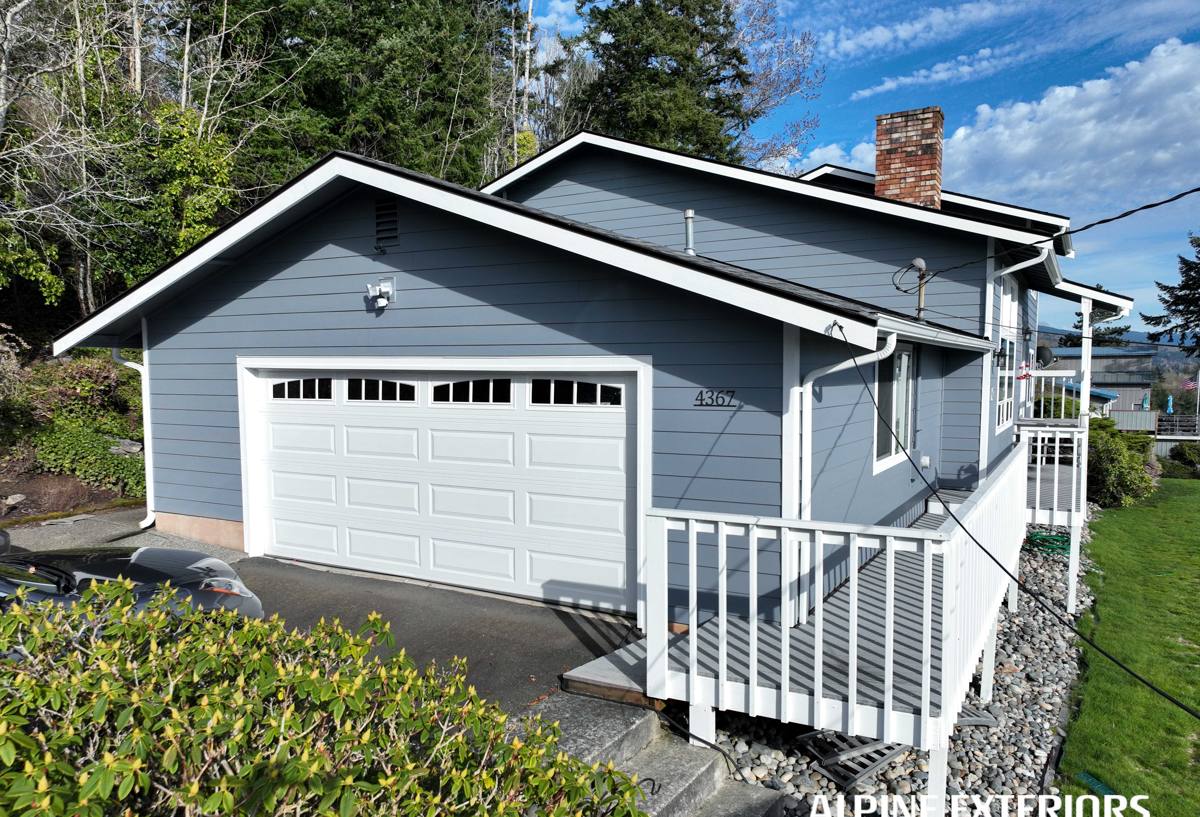
What a Correct Composite Deck Install Involves
Composite boards themselves are engineered to resist rot, splintering, and moisture absorption far better than wood, which is the main reason they hold up well in a climate like this one. But the board is only part of the system. The framing underneath, the fasteners holding it together, and the way water is directed off and away from the structure matter just as much — and they're the parts a homeowner can't easily inspect once the deck is finished.
The Structure Under the Boards
- Pressure-treated or naturally durable framing lumber, sized correctly for the span and load
- Joist tape or a similar moisture barrier on top of every joist, so the framing isn't sitting in standing water under the decking
- Proper ledger board flashing where the deck attaches to the house, so water is directed away from the wall assembly rather than into it
- Post bases and hardware rated for outdoor, coastal-adjacent exposure — not standard interior-grade fasteners
- Adequate airflow underneath the deck so the framing can dry out between rain events instead of staying damp
The Composite Surface Itself
Board spacing, fastening method, and orientation all affect how well a composite deck sheds water and resists staining. Hidden fastener systems generally perform better long-term than face-screwed boards because they leave fewer penetration points for water to work into, and consistent, code-correct gapping lets water and debris pass through rather than pool on the surface. Cutting corners on any of this doesn't usually show up on day one — it shows up two or three wet seasons later.
Composite vs. Wood vs. PVC: An Honest Comparison
There's no single "best" decking material for every home — each comes with real trade-offs, especially in a wet, shaded, salt-air environment like Sehome. Here's how the three most common options actually compare for this kind of setting.
| Material | Moisture Behavior | Maintenance | Typical Lifespan Here |
|---|---|---|---|
| Wood (cedar/treated) | Absorbs moisture, prone to cupping, splintering, and rot at fastener points over time | Annual sealing/staining recommended; moss and mildew need regular cleaning | 10–15 years before major repair or replacement |
| Composite | Resists moisture absorption; capped boards resist staining better than uncapped | Periodic washing to control moss/algae; no sealing or staining needed | 20–25+ years with correct installation |
| PVC | Fully moisture-resistant, will not absorb water or rot | Low; occasional washing | 25+ years, but can be more sensitive to installation temperature and expansion |
We install composite decking most often in this neighborhood because it strikes a practical balance: it holds up to the rain and salt air far better than wood without the tighter installation tolerances and higher material cost of PVC. That said, we'll walk through the honest trade-offs of each option for your specific site — sun exposure, tree cover, and how the deck attaches to your home all factor into which material makes the most sense.
How We Handle a Sehome Composite Deck Project
Our Process, Step by Step
- Site assessment — we look at drainage, shade patterns, existing structure (if any), and how the new deck ties into the house
- Design and material selection — board color, railing style, and layout based on your home and how you actually use the space
- Permitting — decks attached to the home or above a certain height typically require a permit in Bellingham; we handle that paperwork
- Demolition (if replacing an old deck) — removal and proper disposal of old material
- Framing and flashing — the structural work that determines how the deck performs for the next 20+ years
- Composite installation — hidden fastener systems, correct board spacing, and finish trim
- Railing and final details — post caps, stair treads, lighting if requested
- Final walkthrough — we go over the finished deck with you and explain basic care before we leave
Railing, Fascia, and Finish Choices That Hold Up
The finish details on a deck are where a lot of the visible wear shows up first, since railings and fascia boards see more direct weather exposure than the walking surface. Composite or aluminum railing systems generally outperform wood in this climate for the same reasons the decking boards do — they don't need repainting or resealing, and they resist the swelling and cracking that wood railings develop after repeated wet-dry cycles. Fascia boards, which wrap the visible edge of the deck framing, are worth matching to composite as well; a wood fascia against composite decking will weather at a different rate and end up looking mismatched within a few years even if the field of the deck still looks new.
Maintenance in a Moss-Prone Climate
Composite decking doesn't need staining or sealing, but "low maintenance" doesn't mean "no maintenance" — especially in a shaded, damp neighborhood where moss and algae growth is a normal part of the year, not an occasional problem.
A Realistic Seasonal Checklist
- Sweep debris (leaves, needles, seed pods) off the deck regularly — trapped organic matter holds moisture against the boards and speeds up moss growth
- Wash the deck surface once or twice a year with a mild deck cleaner and a soft-bristle brush; avoid high-pressure washing directly into board seams
- Check that gaps between boards stay clear so water can drain through rather than pool
- Inspect railing posts and stair connections annually for movement, since loose hardware is usually the first sign of a fastener issue
- Keep nearby vegetation trimmed back where practical to reduce shade and improve airflow across the deck surface
- Address any standing water or slow-draining spot promptly — it's usually a sign of a leveling or drainage issue worth having looked at
What Composite Decking Typically Costs
Composite decking costs more upfront than pressure-treated wood, but the total cost of ownership tells a different story once you factor in staining, repairs, and earlier replacement for wood. Every project is different, but here are the broad factors that move the price.
| Cost Factor | Why It Matters |
|---|---|
| Deck size and shape | More square footage and more cuts/corners increase both material and labor |
| Height and access | A deck requiring stairs, additional framing, or difficult site access takes more labor |
| Board tier and brand | Composite lines range from entry-level capped boards to premium multi-tone finishes |
| Railing system | Composite/aluminum railing costs more than basic wood but needs no ongoing finishing |
| Removal of existing deck | Demo and disposal of an old wood deck adds labor before the new build starts |
| Permitting | Attached and elevated decks generally require permits, which adds time and a fee |
We'll always give you a written estimate broken down by these factors rather than a vague lump sum, so you know what you're actually paying for.
Why It Matters That We Already Work in Sehome
A crew that regularly works this neighborhood already understands its specific pressures — how close the salt air reaches, how much shade the tree cover creates, and how long moisture tends to sit on a north-facing deck compared to one that gets more sun. That's not a substitute for a proper site assessment on your specific property, but it does mean we're not guessing at framing decisions or fastener choices that matter in this climate. We're a Bellingham-based crew, and Whatcom County's weather is the baseline we build every deck around, not an exception we have to think twice about.
If you're considering a new composite deck or replacing an aging one in Sehome, we're happy to come take a look and put together a free, no-pressure estimate — just fill out the form below.