 Bellingham
 Siding Installation in Columbia: A Job That Has to Match the Climate
Columbia is one of Bellingham's older, established neighborhoods, and the homes here span everything from early-20th-century construction to more recent remodels. What nearly every house in Columbia has in common is exposure to the same weather pattern that defines exterior work across Whatcom County: salt-laden air moving in off Bellingham Bay, long stretches of driving rain, and a moss season that can run most of the year. Siding installation done right in this neighborhood isn't just about attaching panels to a wall — it's about building a system that holds up to that specific combination of conditions for decades, not years.
This page covers what siding installation actually involves for a Columbia home: what the local climate does to siding over time, why we install James Hardie fiber cement exclusively, what a correct installation looks like beneath the surface, and how our process works from the first visit to the final walkthrough.
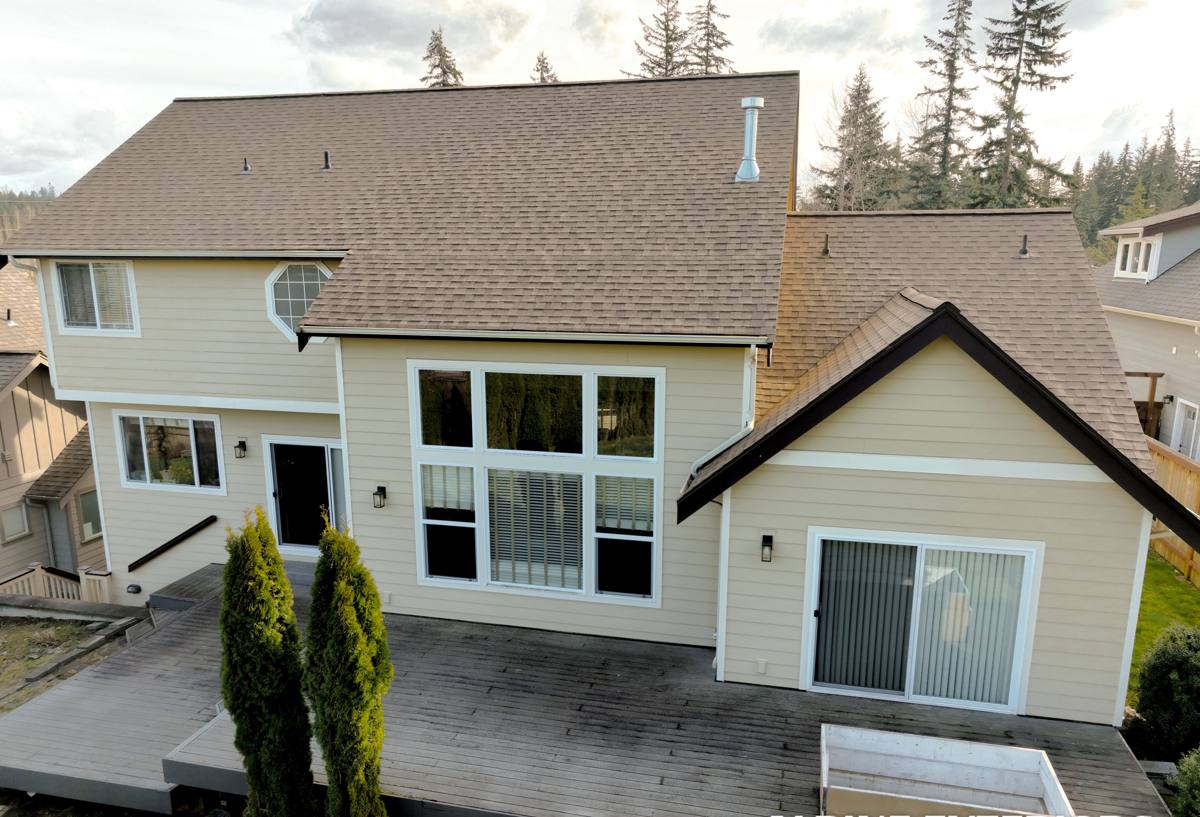
What Bellingham's Climate Does to Siding Over Time
Most siding failures we see in this area aren't sudden — they're the slow result of moisture and organic growth working on a product that wasn't installed, or wasn't engineered, to handle it. Understanding the specific stresses at play is the first step in choosing a product and an installation approach that actually lasts.
Salt Air and Coastal Exposure
Columbia's proximity to Bellingham Bay means homes here are regularly exposed to salt-carrying air, especially during winter storms. Salt air accelerates corrosion of exposed metal fasteners and trim, and it can degrade certain paint and coating systems faster than manufacturers' standard warranties assume. Siding materials and finishes that aren't engineered for coastal exposure tend to show fading, chalking, or fastener staining well ahead of schedule.
Driving Rain and Wind-Driven Moisture
Whatcom County doesn't just get a lot of rain — a good share of it arrives sideways, driven by wind off the water. That matters because siding isn't actually the primary barrier against water; it's the first line of defense in a system that includes weather-resistant barriers, flashing, and properly lapped joints behind it. Driving rain finds every gap in that system, which is why installation details around windows, doors, and horizontal trim matter more here than they would in a drier climate.
A Long Moss and Algae Season
Cool, damp, and shaded conditions for much of the year make Columbia — like most of Bellingham — prime territory for moss and algae growth on exterior surfaces. North-facing walls, areas under tree canopy, and spots with poor airflow are especially prone. Moss holds moisture against the siding surface, and over time that constant dampness can compromise substrates that aren't dimensionally stable or properly finished, even when the underlying structure is otherwise sound.
Why We Install Only James Hardie Fiber Cement Siding
We don't install vinyl siding, LP SmartSide, Cemplank, Allura, primed spruce, or cedar. That's a deliberate standard, not a limitation on what we're capable of installing. Every one of those products has legitimate uses and loyal fans, but each comes with a trade-off — moisture sensitivity, a recurring maintenance schedule, a shorter or more conditional warranty structure, or an appearance that fades faster — that we don't think holds up well against Bellingham's specific combination of salt air, driving rain, and moss over the long run.
James Hardie fiber cement is non-combustible, dimensionally stable through wet-dry cycling, and available in HZ5 formulations engineered specifically for Pacific Northwest moisture conditions. Its ColorPlus factory finish is baked on under controlled conditions rather than applied on site, which gives it a more consistent, longer-lasting color than field-painted alternatives — a real advantage in an area where north-facing walls stay damp and shaded for months at a stretch. Backed by a strong transferable warranty and a long track record of holding up when installed to spec, it's the product we're willing to put our name behind on every job in Columbia.
What a Correct Siding Installation Involves
The visible panels are the smallest part of the story. Most of what determines whether a siding job lasts ten years or forty happens in layers a homeowner never sees once the job is finished.
Moisture Management Comes First
A correct installation starts with a continuous weather-resistant barrier over the sheathing, with every seam, penetration, and transition properly taped or lapped in the right order. Every window, door, and utility penetration needs flashing detailed to shed water outward and downward — never trapping it behind the cladding. This is the step that gets rushed on lower-quality jobs, and it's the step that determines whether a home stays dry through a wet Whatcom County winter.
Fastening, Clearances, and Joints
Fiber cement siding has specific fastening requirements — nail type, placement, spacing, and depth all affect both performance and warranty coverage. Manufacturer-specified clearances from grade, roofing, and decks keep siding from sitting in standing water or catching splashback. Butt joints need to be caulked or flashed correctly, and panels need room to move slightly with humidity and temperature changes without cracking the finish over time.
Trim, Flashing, and Transitions
Corners, water tables, and roof-to-wall transitions are where most leaks actually start. These details take longer to install correctly, and they're the parts of a job that separate a crew that understands Pacific Northwest construction from one that's simply following a generic installation guide written for a different climate.
Our Installation Process for Columbia Homes
We follow the same disciplined sequence on every job, adjusted for the specific conditions of the home in front of us:
- Site assessment: We inspect the existing siding, sheathing, and trim to identify moisture damage, rot, or structural issues that need to be addressed before new siding goes on.
- Removal and prep: Old siding comes off, sheathing is inspected and repaired as needed, and the wall is prepped for a new weather-resistant barrier system.
- Weather barrier and flashing: We install a continuous barrier with detailed flashing at every window, door, and penetration — the step that determines long-term moisture performance.
- Siding installation: James Hardie panels or planks go on per manufacturer fastening and clearance specifications, with close attention to joints, corners, and transitions.
- Trim and finish work: Corner boards, water tables, and trim are installed and sealed where appropriate to shed water away from the wall assembly.
- Final walkthrough: We review the completed job with the homeowner and address any questions before calling the project done.
Signs Your Columbia Home May Need New Siding
Not every issue means a full replacement is necessary, but these are worth having looked at by someone who can tell the difference between cosmetic and structural:
- Visible warping, buckling, or gaps between siding panels
- Soft or spongy spots when siding is pressed near the base of walls
- Persistent moss or algae growth that returns quickly after cleaning
- Peeling, bubbling, or chalking paint that keeps recurring in the same spots
- Rising energy bills that suggest a compromised weather barrier
- Visible rot or staining around windows, doors, or trim boards
- Siding that's original to a home built more than 20-25 years ago
Cost Factors for Siding Installation
Every home is different, but these are the main variables that affect the scope and cost of a siding installation project in Columbia:
| Factor | Why It Matters |
|---|---|
| Home size and wall complexity | More square footage, corners, and roof lines mean more material and labor time |
| Condition of existing sheathing | Rot or moisture damage found during tear-off adds repair scope before new siding can go on |
| Siding profile and trim details | Lap siding, panel systems, and trim complexity affect both material choice and installation time |
| Accessibility | Multi-story sections, tight lot lines, or limited staging area all affect labor time |
| Existing siding removal | A full tear-off versus working with a simpler substrate changes the overall scope |
Why Hiring a Crew That Already Works in Columbia Matters
A siding crew that regularly works in Columbia and the rest of Bellingham already understands how this specific climate behaves — which elevations take the worst of the driving rain, how much moss pressure to expect on shaded walls, and what kind of moisture problems tend to turn up once older Whatcom County homes are opened up. That kind of judgment doesn't come from a generic installation manual; it comes from having done this work, on homes like yours, in this weather, more than once.
Local experience also means familiarity with Bellingham's permitting requirements and inspection expectations, so the job moves through those steps without unnecessary delays. And because we stand behind James Hardie exclusively, every Columbia homeowner we work with gets the same product, the same installation standards, and the same warranty backing — not a mix of materials chosen to fit a budget at the expense of long-term performance.
If your Columbia home needs new siding, or you'd like a second opinion on what's actually going on behind your existing walls, we're happy to take a look. Reach out for a free, no-pressure estimate using the form below.