 Bellingham
 Why Blaine Homes Wear Out Windows Faster
Blaine sits right at the water's edge in the northwest corner of Whatcom County, and that location comes with a specific set of demands on a home's exterior. Salt-laden air off the Strait of Georgia and Semiahmoo Bay works its way into metal hardware, window frames, and fasteners year-round. Combine that with driving rain that comes in sideways during winter storms, and a long stretch of the year where moss and mildew have every reason to take hold on shaded or north-facing walls, and you have a climate that is genuinely harder on windows than most inland parts of Washington.
Homeowners in Blaine often notice window problems earlier than homeowners just a few miles inland — not because the windows were installed poorly, but because the environment is more aggressive. Corrosion on hardware, seal failure, and wood rot at the sill all show up sooner near the water. A window replacement here isn't just about swapping old glass for new; it's about choosing materials and installation details that are built for a coastal, marine-influenced climate.
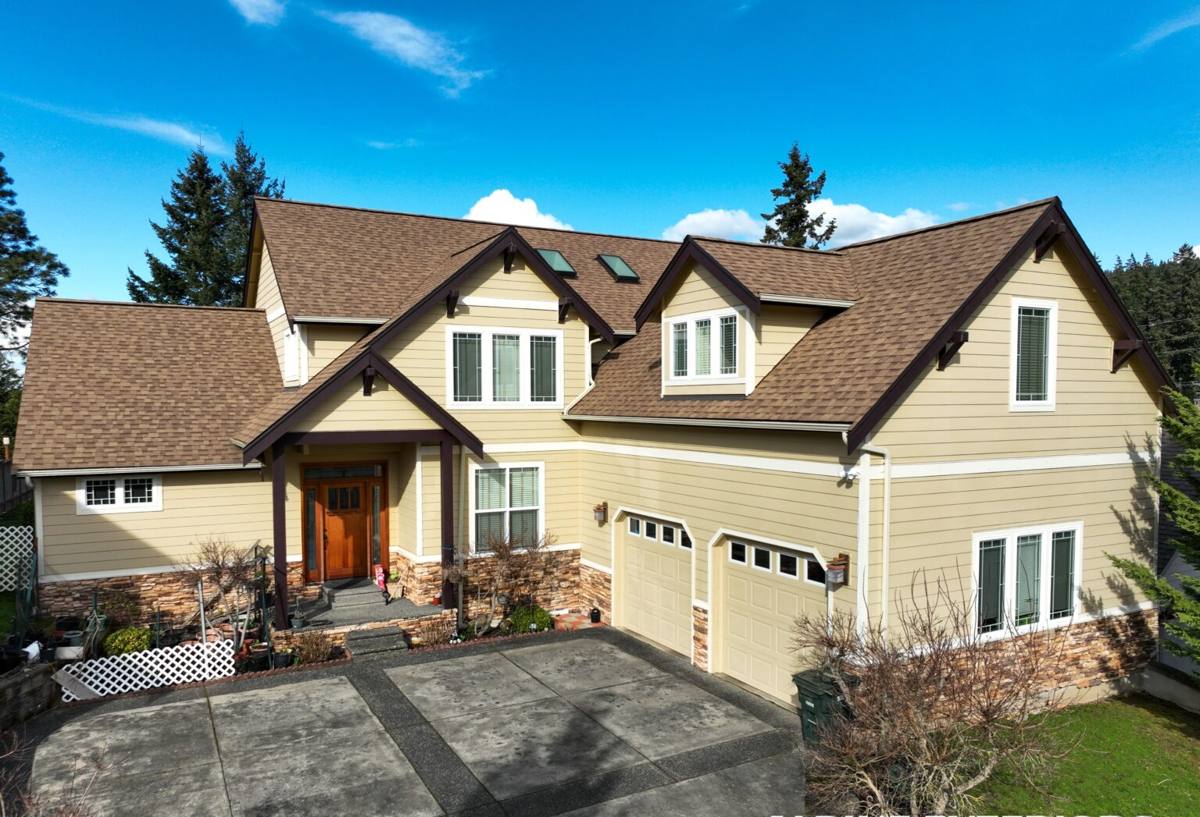
Signs a Blaine Home Needs Window Replacement
Windows rarely fail all at once. Usually there's a slow accumulation of small problems that eventually add up to real energy loss, water intrusion, or a window that's simply unpleasant to use. Some of the most common signs we see on service calls in Blaine include:
- Fog or moisture trapped between panes of double-pane glass — a sign the seal has failed
- Visible corrosion or pitting on aluminum or steel hardware from salt exposure
- Soft, discolored, or crumbling wood at the sill or bottom corners of the frame
- Drafts you can feel with a hand near the frame on a windy day
- Windows that are difficult to open, close, or lock, especially after damp weather
- Moss, algae, or black staining building up on the frame or nearby trim
- A noticeable rise in heating costs without any other explanation
- Condensation forming on the inside of the glass during cold snaps
Any one of these on its own might just call for a repair or a re-caulk. Several of them together, especially on a home more than 15-20 years old, usually mean the windows have reached the end of their practical service life.
What a Correct Window Replacement Involves Here
Flashing and Water Management
In a climate that gets driving rain off the water, how a window is flashed matters as much as the window itself. Water needs a clear path to shed away from the opening rather than sitting against the sill or working its way behind the siding. That means proper sill pans, correctly lapped flashing tape, and sealant placed only where it's supposed to trap water out — not where it accidentally traps water in. This is one of the most common places we find shortcuts on older or lower-bid installations, and it's usually the reason a homeowner ends up with soft framing around a window that's only a few years old.
Material Choice for Salt Air
Not every window product holds up equally well a short distance from saltwater. Hardware finish, frame material, and even fastener choice all affect how long a window performs before corrosion or UV exposure starts to show. We factor in a home's exposure — how close it sits to the water and how much weather it takes directly — when recommending frame material and hardware for a Blaine project.
Air Sealing and Insulation
A new window is only as good as the gap around it. Foam backer rod and low-expansion window foam, installed correctly around the full perimeter, stop the drafts and moisture intrusion that plague older installations where the gap was just stuffed with fiberglass insulation or left loose.
Choosing Window Materials for a Coastal Climate
There isn't one "best" window material for every home — it depends on the home's style, budget, and exposure to weather. Here's how the common options compare specifically for a marine, salt-air environment like Blaine's:
| Material | Coastal Performance | Maintenance | Typical Fit |
|---|---|---|---|
| Vinyl | Resists corrosion well; won't rot or rust | Low — occasional cleaning | Most homes, strong value |
| Fiberglass | Very stable in temperature swings and salt exposure | Low | Higher-end replacements, larger openings |
| Wood-clad | Attractive but cladding seams and hardware need monitoring near salt air | Moderate to high | Historic or traditional-style homes where wood interior is wanted |
| Aluminum | Prone to corrosion and thermal transfer in this climate | Higher, and performance drops over time | Rarely our recommendation for direct water exposure |
We're upfront with homeowners about these trade-offs. A wood-clad window can be beautiful, but it asks more of the owner in upkeep near saltwater. Aluminum-framed windows conduct heat and cold efficiently, which works against you in our climate and can accelerate corrosion issues close to the water. Vinyl and fiberglass tend to be the most forgiving choices for homes with real salt air and wind exposure, which is why they're what we recommend most often in Blaine.
New Construction vs. Retrofit (Pocket) Replacement
Full-Frame (New Construction) Replacement
This method removes the window down to the rough framing, including exterior trim and flashing. It's more involved and more expensive, but it gives us full access to check the sheathing and framing underneath for hidden water damage — something that matters more in a wet, salt-exposed climate where problems can hide behind the trim for years. We recommend this approach whenever there's any sign of water intrusion, soft wood, or when the siding around the window is being addressed anyway.
Retrofit (Pocket) Replacement
This method fits a new window into the existing frame without disturbing the surrounding siding or trim. It's faster and less invasive, and it's a reasonable option when the existing frame is solid, dry, and square. The trade-off is that any hidden moisture damage in the old frame stays hidden. We'll tell you honestly which category your windows fall into after a hands-on inspection, not a sales pitch.
Energy Efficiency in a Whatcom County Winter
Bellingham and the surrounding area, including Blaine, deal with a long heating season and persistent damp cold rather than extreme temperature swings. That changes what actually matters in a window's performance specs. U-factor (how well the window resists heat loss) tends to matter more here than solar heat gain coefficient, which is a bigger factor in sunnier, hotter climates. Well-sealed, properly insulated double-pane or triple-pane glass reduces both energy loss and the interior condensation that leads to mold and mildew on sills and trim — a real concern given how much of the year runs damp in this region.
Triple-pane glass costs more upfront but can be worth considering for homes with a lot of west- or north-facing glass exposed to wind, or for owners planning to stay long-term and wanting to minimize heating bills over the life of the window.
Why Local Experience in Blaine Matters
Window replacement done by a crew that hasn't worked this specific stretch of coastline tends to miss the details that matter here — under-flashing details that account for wind-driven rain, hardware and fastener choices that hold up to salt air, and realistic expectations about how fast moss and algae will return on shaded elevations. We've worked on homes throughout Whatcom County, and Blaine's direct water exposure puts it toward the higher end of what this region throws at a building envelope. That experience shapes the products we recommend and the installation details we insist on, even when they take a little more time than a shortcut version would.
We also understand the practical side of working in a smaller coastal community — coordinating around weather windows, protecting landscaping and interiors during the swap, and leaving a job site clean each day, not just at the end of the project.
What to Expect From Our Process
- An on-site inspection where we assess your current windows, framing condition, and exposure to wind and water
- A straightforward recommendation on materials and replacement method (full-frame vs. retrofit), with the reasoning explained
- A written estimate with no pressure to decide on the spot
- Scheduling that accounts for weather, since window openings are exposed during installation
- Careful removal and disposal of old windows, with attention to protecting siding, trim, and interior finishes
- Proper flashing, air sealing, and insulation around every new window — not just the visible caulk line
- A final walkthrough so you can see the completed work and ask questions before we consider the job done
Protecting Your Investment After Installation
New windows still need some basic upkeep in a climate like this. Rinsing salt residue off frames and glass periodically, keeping gutters and downspouts clear so water doesn't back up against window openings, and checking caulk lines once a year go a long way toward getting the full service life out of a new window. If moss or algae starts forming on frames or nearby trim, addressing it early is much easier than dealing with buildup that's had a season or two to set in.
If your Blaine home has windows showing any of the wear signs above, or you're simply planning ahead, we're happy to take a look and give you an honest read on where things stand. Reach out for a free, no-pressure estimate using the form below.