 Bellingham
 Why Blaine's Climate Is Hard on Windows
Blaine sits right on the water, tucked against Semiahmoo Bay and Drayton Harbor at the northern edge of Whatcom County. That location is part of what makes it a great place to live, and part of what makes it tough on exterior building materials. Salt-laden air moves off the bay and settles on everything facing the water, including window frames, hardware, and exposed fasteners. Add in the driving rain that comes with winter storms off the Salish Sea, and you've got wind-driven moisture finding its way into any gap in a window's seal, not just running straight down the glass like it would in a drier climate.
Then there's the long moss and mildew season that Whatcom County deals with for a good chunk of the year. Constant dampness, mild temperatures, and limited direct sun on north- and west-facing walls create ideal conditions for organic growth around window trim, sills, and the gaps where old caulking has started to fail. None of this means windows in Blaine are doomed — it means they need to be selected and installed with this specific combination of salt exposure, wind-driven rain, and persistent moisture in mind, not treated like a generic window job you'd do somewhere inland.
What "Energy-Efficient" Actually Means Here
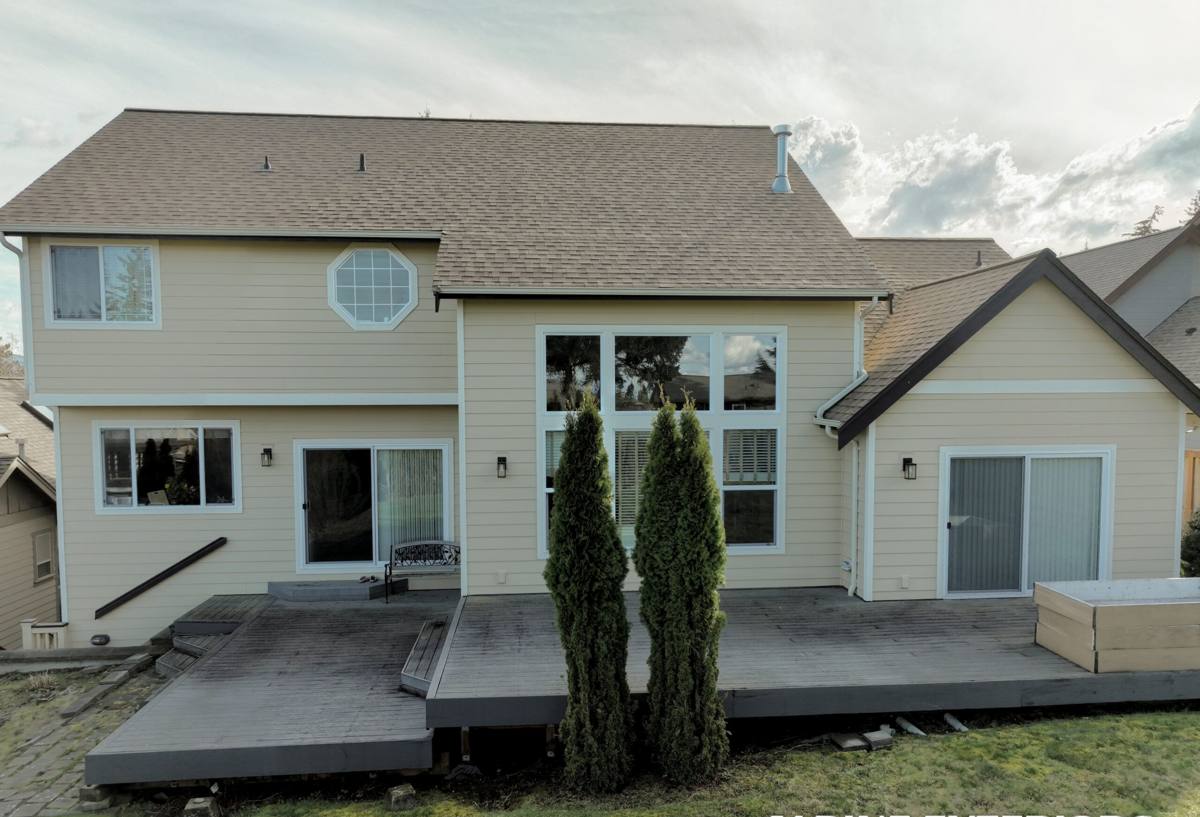
Energy-efficient windows aren't just about a lower heating bill, though that's a real benefit in a climate where the furnace runs a lot of the year. In Blaine, efficiency and durability are tied together. A window that's properly sealed against air and moisture infiltration is also the window that resists the salt air corrosion and wood rot that shorten a window's life near the coast. When we talk about energy performance, we're looking at a few specific numbers and features, not marketing language.
The Numbers That Matter
U-factor measures how well a window resists heat transfer — lower is better for our cool, damp winters. Solar Heat Gain Coefficient (SHGC) measures how much solar heat passes through the glass — this matters less in our cloudy climate than it would somewhere sunnier, but it still affects comfort on the west side of a house in summer. Air leakage ratings tell you how much outside air sneaks through the assembly itself, separate from any installation defects. For most Whatcom County homes, a dual-pane window with a low-E coating and an argon gas fill hits a good balance of performance and cost, though triple-pane is worth discussing for homes with direct bay exposure or a lot of west-facing glass.
Frame Materials That Hold Up Near Salt Water
Frame material choice matters more in Blaine than it would twenty miles inland. Some materials handle salt air and constant moisture cycling better than others, and the wrong choice shows up as pitting, discoloration, or seal failure years earlier than it should.
| Frame Material | Salt Air / Moisture Performance | Maintenance | Typical Trade-Off |
|---|---|---|---|
| Vinyl | Good — won't corrode or rot | Low | Can look less premium on higher-end homes |
| Fiberglass | Excellent — very stable, resists warping | Low | Higher upfront cost |
| Aluminum | Fair — needs a marine-grade or coated finish near the water | Moderate | Conducts heat and cold without a thermal break |
| Wood / Wood-clad | Poor to fair without diligent upkeep | High | Best look for some homes, but demands regular painting/sealing near salt air |
We're not going to tell a homeowner that wood windows are junk — plenty of people love how they look, and a well-maintained wood window can last decades. But we'll be honest about the maintenance commitment a wood frame requires this close to the water, and we'll tell you when a fiberglass or vinyl option gets you the same look with a lot less upkeep.
Signs Your Current Windows Are Underperforming
Homeowners often assume a window is fine as long as it opens and closes and isn't visibly broken. In this climate, the real damage is usually happening where you can't see it. Fogging or a permanent haze between panes means the seal has failed and the insulating gas has escaped — that window is no longer doing its job even if the glass looks intact. Soft or discolored trim around the frame, especially on the sides that face prevailing weather, usually points to water intrusion behind the casing. Drafts near the sash, condensation forming on the inside of the glass during cold snaps, and visible moss or black staining on the sill are all signs that moisture is getting past the original seal and the window's efficiency has already declined, whether or not the energy bill has caught up yet.
What a Correct Installation Involves
The window unit itself only accounts for part of how well a window performs. Installation quality — especially flashing and sealing — determines whether that performance actually holds up in Blaine's weather, or fails within a few winters.
Flashing and Moisture Management
Every opening needs to be flashed so that any water that gets past the exterior siding or trim is directed back out, not into the wall cavity. This is standard practice everywhere, but it matters more here because wind-driven rain pushes water into gaps that would stay dry in a calmer climate. A rushed install that skips proper flashing tape or reuses old, brittle flashing is one of the most common causes of hidden rot we find behind window trim on older Whatcom County homes.
Sealing and Insulation
Gaps around the window frame need to be insulated and air-sealed correctly — not overpacked with expanding foam that can bow the frame, and not left with hollow spots that create cold zones and condensation risk. Exterior caulking needs to be a product rated for the temperature swings and constant damp cycling we get here, applied to a clean, dry surface, not slapped over old failed caulk.
Our Process
We start with an on-site assessment of your existing windows, looking at frame condition, signs of past water intrusion, and how exposed each elevation of the house is to prevailing wind and rain. From there we talk through product options that fit your home's style and your budget, being upfront about where a lower-cost option is genuinely fine and where it's a false economy given your home's exposure. Once you approve a plan, we handle removal of the old units, proper flashing and air-sealing at each opening, installation of the new windows, and exterior trim and caulk work finished to shed water correctly. We clean up the job site and walk the finished work with you before we consider the job done.
Why a Local Blaine Crew Matters
A crew that regularly works in Blaine and the surrounding Whatcom County waterfront neighborhoods has already seen how salt air, wind exposure, and drainage issues play out on homes built in different eras and different construction styles found around here. That matters when deciding which frame material fits a specific elevation of a specific house, or when spotting early water damage that an out-of-area crew might miss because they're not used to looking for it. Local knowledge also means understanding Whatcom County permitting requirements and knowing how weather windows work here — scheduling exterior work around the wetter months so caulk and sealants can cure properly, rather than racing a job in conditions that won't let the materials perform as intended.
Cost Factors to Expect
Window project costs vary a lot based on size, frame material, glass package, and how much repair work is needed once old windows come out. Rather than quote a number that won't match your house, here's what actually drives the price up or down.
- Number of windows and their size — larger or custom-shaped openings cost more per unit
- Frame material — vinyl is typically the most budget-friendly, fiberglass and wood-clad cost more
- Glass package — dual-pane low-E is standard; triple-pane or upgraded coatings add cost
- Condition of the existing opening — hidden rot or damaged framing found during removal adds labor
- Full-frame replacement versus insert replacement — full-frame costs more but is often the right call when the old frame or flashing is compromised
- Trim and exterior finish work needed to match your home's existing siding and trim
We provide a written estimate that breaks these factors out so you know what you're paying for and why, rather than a single lump number.
Keeping Your New Windows Performing
Even a well-installed, well-built window benefits from some basic upkeep in this climate. A little attention twice a year goes a long way toward protecting the investment.
- Rinse salt residue off frames and hardware a few times a year, especially on water-facing elevations
- Check and clean weep holes on vinyl and aluminum frames so they can drain properly
- Inspect exterior caulk lines each spring and fall for cracking or separation
- Wipe down sills and tracks to prevent moss and mildew buildup during the wet months
- Operate locks and hardware periodically so moving parts don't seize from disuse
- Watch for early condensation between panes, which signals a seal starting to fail
If you're dealing with drafty, foggy, or aging windows and want a straight answer about what your home actually needs, we're happy to take a look. Reach out for a free, no-pressure estimate using the form below — we'll walk your home's specific exposure and give you honest options, not a one-size-fits-all pitch.