 Bellingham
 Decks in Blaine Face a Different Set of Problems
Blaine sits right up against the water at the northern edge of Whatcom County, and that location shapes what happens to an outdoor deck here. Salt-laden air off the coast works differently on wood and fasteners than the drier air inland. Combine that with the long, wet stretch of fall through spring that Whatcom County sees every year, and a deck that isn't built or maintained correctly starts showing problems years before it should. We repair decks throughout the Bellingham area, but Blaine jobs tend to have their own signature: corroded hardware, moss-driven surface rot, and moisture trapped in places a homeowner can't easily see.
None of this means a Blaine deck is doomed to fail. It means the repair has to account for the actual conditions the deck lives in, not just patch what's visibly broken and hope for the best.
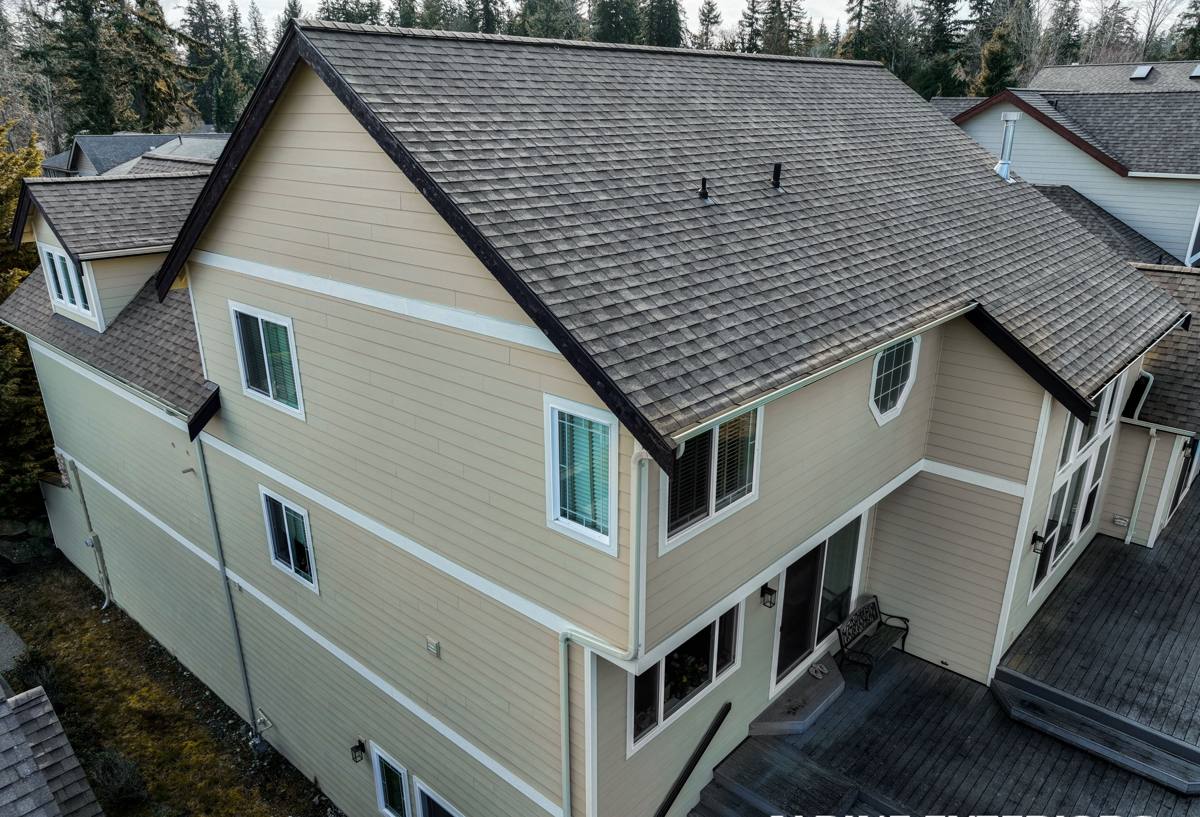
What the Climate Actually Does to a Deck
Salt Air and Metal Fasteners
Coastal air carries fine salt particles that settle on exposed metal. Over time this accelerates corrosion on nails, screws, joist hangers, and structural brackets — even ones rated for exterior use. Corroded fasteners lose holding strength gradually, which is why a deck can feel solid one season and develop soft spots, loose railings, or squeaky boards the next. We check fastener condition as a standard part of every repair, not an upsell, because a deck is only as strong as the hardware holding it together.
Driving Rain and Water Intrusion
Rain in this region rarely falls straight down. Wind-driven rain pushes water sideways into gaps, ledger connections, and any spot where flashing is missing or has failed. Water that gets behind a ledger board or under a rim joist doesn't dry out quickly in our climate, and that's where the most serious structural rot tends to start — often invisible from the deck surface itself.
Moss and the Long Wet Season
Whatcom County's moss season stretches far longer than most homeowners expect, and a deck's horizontal surfaces — boards, stair treads, anywhere water can sit — are prime real estate for moss and algae growth. Beyond making a deck slippery and unsafe, moss holds moisture directly against the wood surface for extended periods, which speeds up surface decay and finish breakdown on both wood and composite decking.
Signs a Blaine Deck Needs Repair
- Boards that feel spongy, springy, or soft underfoot, especially near the house or in shaded corners
- Visible rust streaks or corrosion around fasteners, brackets, or post bases
- Railings or stair stringers that wobble or flex when leaned on
- Persistent green or black staining that returns quickly after cleaning
- Gaps opening up where the deck meets the house, or daylight visible under ledger flashing
- Cracked, splitting, or delaminating boards, particularly on older wood or lower-grade composite
- A musty smell coming from underneath the deck or from crawl space access points
Any one of these on its own might be minor. Several together usually mean water has been getting into the structure for a while.
What a Correct Deck Repair Actually Involves
Start With the Structure, Not the Surface
It's tempting to replace a few bad boards and call it done, but boards are the easiest part of a deck to inspect — they're what you can see. The parts that fail first in this climate are usually underneath: ledger connections, joists, posts, and footings. We pull boards where needed to actually look at the framing rather than guessing at its condition from above.
Fastener and Hardware Upgrades
Given how hard coastal air is on standard hardware, repairs in Blaine often include upgrading to fasteners and connectors with better corrosion resistance than what was originally installed, especially on decks more than a decade old. This is a case where matching the original spec isn't always the right call — the original spec is often part of why the repair is needed.
Flashing and Water Management
Ledger flashing is one of the most common failure points we find, and one of the most important to get right, since it's what keeps wind-driven rain from working its way behind the deck and into the house's rim joist. A repair that doesn't correct failed or missing flashing is a repair that will need to be revisited.
Addressing the Cause of Moss and Moisture Retention
Where moss or standing water is a recurring issue, the fix isn't just cleaning — it's looking at drainage, board spacing, and slope to see why water is sitting there in the first place. Sometimes that means adjusting gaps between boards; sometimes it means correcting a low spot in the framing underneath.
Repair or Replace? A Practical Comparison
| Factor | Repair Usually Makes Sense | Replacement Usually Makes Sense |
|---|---|---|
| Structural framing | Posts, joists, and footings are sound | Widespread rot in framing or footings |
| Age of deck | Under 10-15 years, built to a reasonable spec | Original construction is dated or undersized |
| Extent of damage | Isolated boards, hardware, or flashing | Damage spread across most of the deck |
| Ledger condition | Ledger board and flashing are intact or easily corrected | Ledger rot has spread into the house rim joist |
| Homeowner goals | Keep the current layout and size | Wanting a different size, layout, or material |
We'll always tell you honestly which category a deck falls into. A repair that's really a temporary patch on failing structure isn't a good use of your money, and we're not going to sell it to you as one.
Materials: What We Recommend and Why
For repairs, we generally match or upgrade the existing material rather than mixing systems that behave differently. Pressure-treated framing lumber remains the standard for structural repairs because it's designed for ground and moisture exposure. For decking surfaces, both quality wood and composite boards can perform well in this climate — the difference comes down to maintenance commitment.
Wood decking needs periodic cleaning, sealing, and moss treatment to hold up through repeated wet seasons; skip that maintenance for a couple of years in a row and you'll see it in the wood. Composite decking asks less of the homeowner day to day, but it isn't maintenance-free — it still needs regular cleaning to prevent surface algae and moss buildup, and board quality varies a lot between manufacturers. We'll walk through the honest trade-offs for your specific deck rather than pushing one material as a blanket answer.
Our Repair Process
- Inspection. We assess the deck surface, framing, fasteners, ledger connection, and drainage — not just the parts you flagged as a concern.
- Honest diagnosis. We tell you what's actually wrong, what's causing it, and whether repair or replacement is the sound long-term call.
- Clear scope and estimate. You get a plain-English explanation of what work is needed and why, before anything is scheduled.
- The repair itself. Structural issues get addressed first, followed by hardware, flashing, and surface work in that order of priority.
- Final check. We confirm the repair holds up structurally and that water management — flashing, slope, drainage — is actually correct, not just cosmetically fine.
Why It Matters That We Already Work in Blaine
A crew that regularly works Blaine and the surrounding Whatcom County coastline has already seen how this specific environment ages decks — which fastener types hold up, which flashing details fail first, and which spots on a property tend to collect moisture longer than others because of wind exposure or shade patterns near the water. That's a different body of experience than general deck repair, and it shows up in fewer callbacks and repairs that actually address the root cause instead of the symptom.
It also means we're not guessing at permitting or built practices for the area — we know what a solid, code-appropriate repair looks like for homes in this part of the county, and we bring that same standard to every job whether it's a small board replacement or a full structural repair.
Get a Straight Answer About Your Deck
If your deck in Blaine has soft spots, rusting hardware, persistent moss, or just doesn't feel as solid as it used to, it's worth having someone look at it before another wet season goes by. We offer free, no-pressure estimates — we'll tell you honestly what we find and what it would take to fix it, whether that's a straightforward repair or something more involved. Fill out the form below to get started.