 Bellingham
 Storm Damage Roof Repair Built for a Waterfront Community
Birch Bay sits right where Whatcom County's weather does its worst work on a roof. Homes here catch wind straight off the water with almost nothing to slow it down, which means storms that barely register a few miles inland can strip shingles, drive rain sideways under flashing, and put real pressure on roof edges that a more sheltered home would never feel. Add in the salt-tinged marine air that speeds up corrosion on exposed metal, and a long moss season that keeps roofs damp for months at a stretch, and you've got a combination of stresses that shows up on Birch Bay roofs faster and more visibly than it does elsewhere in the county.
This page covers what storm damage roof repair actually looks like when it's done right for a Birch Bay home — how to tell real storm damage from cosmetic wear, what a correct repair involves, and why it matters to hire a crew that already understands this stretch of coastline instead of learning it on your roof.
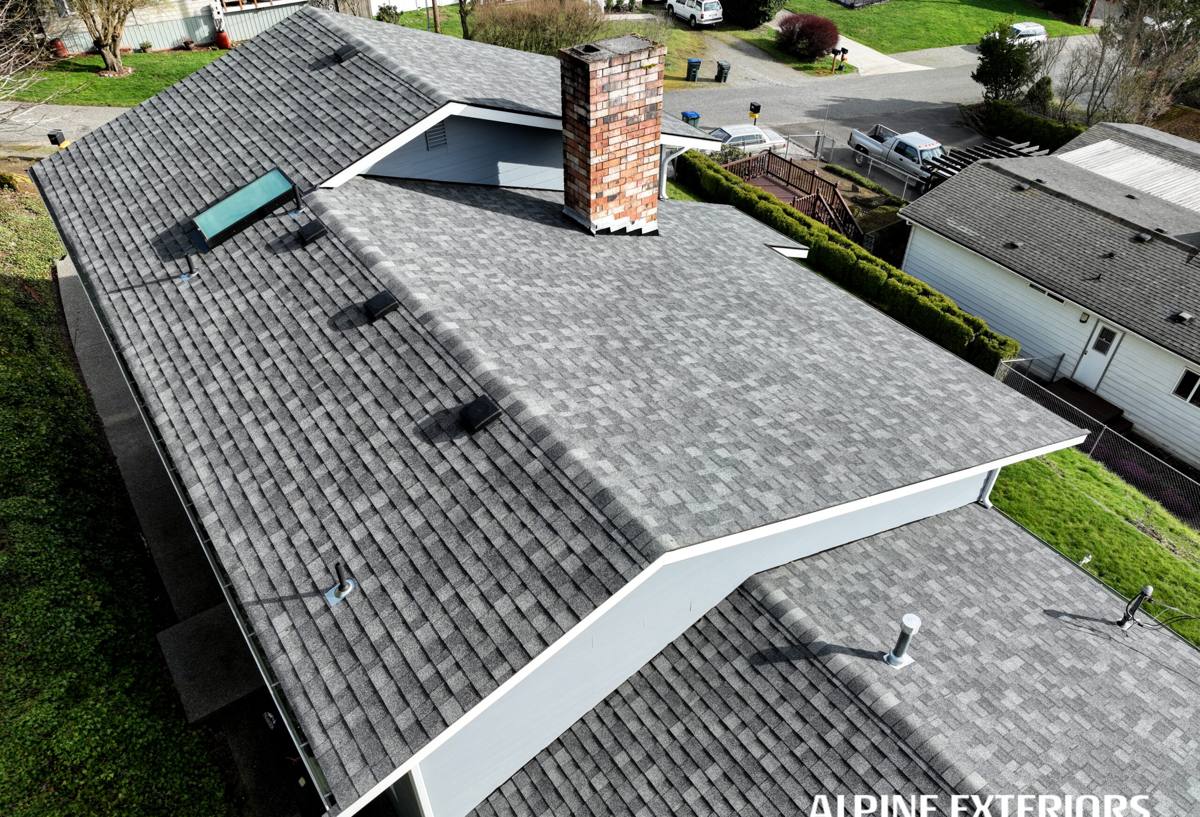
What Makes Storm Damage Different in Birch Bay
Not all storm damage looks the same, and not all of it happens the way people expect. A single bad windstorm off the water can lift shingle tabs, crease them, or tear them off outright — but just as often, the damage that causes the most trouble is the kind that isn't obvious from the ground. Wind-driven rain gets forced upward and sideways under shingle edges and around flashing details in a way that straight-down rain never does. Once water finds a gap, it doesn't necessarily show up as a ceiling stain the next day. It can travel along the underlayment or roof deck for weeks before it surfaces somewhere inside the house, often far from where it actually entered.
The salt air common to Birch Bay's shoreline compounds this. Fasteners, flashing, and any exposed metal on the roof corrode faster here than on a home even a short distance inland. A flashing detail that would hold up for many years elsewhere can weaken sooner near the water, and a storm is often what finally pushes an already-compromised detail past its limit. That's why we treat every storm call in Birch Bay as two separate questions: what did this specific storm damage, and what was already weakened by salt exposure and moss growth that the storm simply exposed.
Common Storm Damage We See in This Area
- Lifted, creased, or missing shingles: Wind gusts off the water catch shingle edges and either tear them loose or crease the seal strip so it no longer lies flat, even if the shingle itself is still on the roof.
- Flashing pulled loose or corroded through: Valleys, chimney flashing, and wall intersections take the brunt of wind-driven rain, and salt-accelerated corrosion can weaken these details well before a storm finally opens a gap.
- Granule loss on exposed slopes: Wind and driving rain strip protective granules off shingles facing the water, leaving the asphalt underneath exposed to UV and moisture years earlier than it should be.
- Debris impact: Branches and wind-thrown debris are common in coastal storms and can crack shingles, dent metal roofing, or puncture underlayment in ways that aren't always visible without a close inspection.
- Moisture intrusion around roof penetrations: Vent boots, skylight flashing, and pipe jacks are frequent failure points once a storm stresses a seal that moss and salt air had already been working on.
Storm Damage vs. Ongoing Wear — Telling Them Apart
One of the most useful things we do on a storm damage call is separate what the storm actually caused from damage that was building for a while and simply became visible afterward. This matters for a few reasons: it affects how a repair is scoped, it affects what an insurance claim will and won't cover, and it affects whether a "storm repair" ends up being a real fix or a patch over a bigger problem.
| Sign | Likely Storm Damage | Likely Ongoing Wear |
|---|---|---|
| Shingle condition | Torn, creased, or missing in a pattern matching wind direction | Curling, granule loss spread evenly across older sections of roof |
| Flashing | Bent, dislodged, or pulled away from a wall or valley | Rust streaks, thinning metal, or gaps that developed gradually |
| Leak timing | Appears during or immediately after a specific storm | Recurs seasonally, especially during the long wet stretch of fall and winter |
| Moss and debris | Present but not the primary cause of the failure | Heavy moss buildup holding moisture against the roof surface |
| Roof age | Can happen on a roof of any age given enough wind | More common on roofs past two-thirds of their expected service life |
In practice, most Birch Bay storm calls are a mix of both. A roof weakened by years of salt exposure and moss growth often needs a smaller push from a storm to finally fail. We document both the acute damage and the underlying condition so a homeowner has an accurate picture, not just a patched leak that reopens with the next system that comes through.
What a Correct Storm Repair Actually Involves
A storm repair done right starts well before anyone gets on the roof. We walk the property, check the interior for signs of water intrusion, and inspect the roof itself from the ground and up close before deciding on a scope of work. From there, a correct repair generally includes:
- Full damage assessment, not a spot check. We look at the whole roof plane affected by the storm, not just the spot where a leak showed up inside, since wind and water damage rarely stay contained to one area.
- Matching materials, not approximate ones. Shingle color, profile, and weight vary by manufacturer and product line. A repair using close-enough materials stands out visually and can create a weak seam where old and new meet.
- Underlayment inspection at the repair area. If water reached the underlayment or roof deck, replacing shingles alone without checking what's underneath just seals a problem back in.
- Flashing rebuilt, not just resealed. Caulk over a damaged flashing detail is a short-term fix. A correct repair replaces or properly re-forms the flashing so water is shed the way it was designed to be, not just plugged.
- Fastener and seal-strip check on surrounding shingles. Wind that damaged one section often loosened the seal on neighboring shingles that haven't failed yet. Leaving those alone just means a return trip after the next storm.
- Documentation for insurance. Photos and a written scope of the damage, separate from any pre-existing wear, so a claim reflects what the storm actually did.
Our Process for Birch Bay Storm Calls
1. Fast, Honest Assessment
After a storm, we prioritize inspections for homes with active leaks or visible damage. We tell you plainly what we find — including when something looks worse than it is, or when a repair rather than a full re-roof is the right call. Not every storm-damaged roof needs to be replaced, and we're not going to tell you it does.
2. Temporary Protection When It's Needed
If a roof has an active leak or exposed decking and a full repair can't happen immediately, we'll get temporary protection in place to stop further water intrusion while materials or scheduling are sorted out. This step matters most during Birch Bay's wetter months, when even a short delay can let moisture spread.
3. Scoped, Written Repair Plan
Before any work starts, you get a clear scope: what's being repaired, what materials are being used, and why. If we find that salt-accelerated corrosion or a long-neglected moss problem contributed to the failure, we'll say so and explain what it means for the repair and for the roof's condition going forward.
4. Repair Work Done to Match the Existing Roof
We use materials that match your existing roof as closely as possible and rebuild flashing and underlayment details to the same standard we'd use on a full installation — not a lower bar because it's "just a repair."
5. Final Walkthrough and Cleanup
We walk the completed repair with you, clear debris and old materials from the property, and make sure gutters and downspouts near the repair area are clear so water is actually moving off the roof the way it should.
Why a Crew That Already Works Birch Bay Matters
Storm damage repair isn't just about swapping out broken shingles. It's about understanding why a particular roof failed in a particular spot, and that understanding comes from experience with this specific stretch of coastline. A crew that regularly works Birch Bay knows which roof orientations take the worst of the wind off the water, how fast salt air degrades unprotected flashing metal in this area, and which moss patterns signal a moisture problem versus a cosmetic one. That's not something a contractor coming from outside the area picks up on a single job.
There's also a practical benefit after a widespread storm event: a local crew can often respond faster, because we're not driving in from across the county or beyond. When multiple homes in the same neighborhood are dealing with damage from the same storm, being nearby and familiar with the area helps us prioritize and schedule efficiently instead of starting from zero on every call.
What to Do Right After a Storm
- Check the interior first. Look at ceilings, attic spaces, and around chimneys or skylights for staining, dampness, or a musty smell — these often show up before any exterior damage is obvious from the ground.
- Look at the roof from the ground, not from a ladder. Binoculars or a zoomed-in phone photo can reveal missing or lifted shingles without you needing to climb up in unstable post-storm conditions.
- Note the date and conditions of the storm. This detail matters for insurance claims and helps a contractor separate storm damage from pre-existing wear.
- Avoid DIY repairs on a wet or damaged roof. A compromised roof surface is more dangerous to walk than it looks, and a well-meaning patch can sometimes make a proper repair more complicated later.
- Get an inspection before small problems spread. A gap that seems minor right after a storm can let in significantly more water during the next system, especially heading into Whatcom County's wetter stretch of the year.
Insurance and Storm Repairs
Many storm repairs in Birch Bay are covered in whole or in part by homeowners insurance, though coverage details vary by policy and by how clearly the damage can be tied to a specific storm event. We're not an insurance company and won't promise a particular outcome on a claim, but we do provide the kind of documentation — photos, a written scope, and a clear separation between storm damage and pre-existing wear — that makes a claim easier to process. If you're not sure whether damage is worth filing a claim over, an honest inspection is a reasonable first step before you decide.
If you're dealing with storm damage on a Birch Bay roof, or you just want a professional opinion after a rough system came through, we're happy to take a look. Reach out for a free, no-pressure estimate using the form below.