 Bellingham
 Birch Bay's Coastal Climate and What It Does to a Shingle Roof
Birch Bay sits right on the water along the Whatcom County coastline, and that location shapes everything about how a roof ages here. Homes facing the bay take salt-laden air directly off the Strait of Georgia, and that salt air is corrosive to unprotected metal — fasteners, flashing, and vent housings all wear faster on a waterfront lot than they do a few miles inland. Add in driving rain that comes in sideways during winter storms, and every shingle course, valley, and penetration on the roof gets tested for a real seal, not just a dry-day seal.
Then there's moss. Whatcom County's long wet season, combined with tree cover and shaded north-facing slopes common on Birch Bay lots, gives moss and algae months at a time to take hold. A shingle roof that's fine on paper can still fail early here if it wasn't installed with this specific combination of salt exposure, wind-driven rain, and moss pressure in mind. That's the gap we build for — not a generic asphalt shingle job, but one sized to Birch Bay conditions specifically.
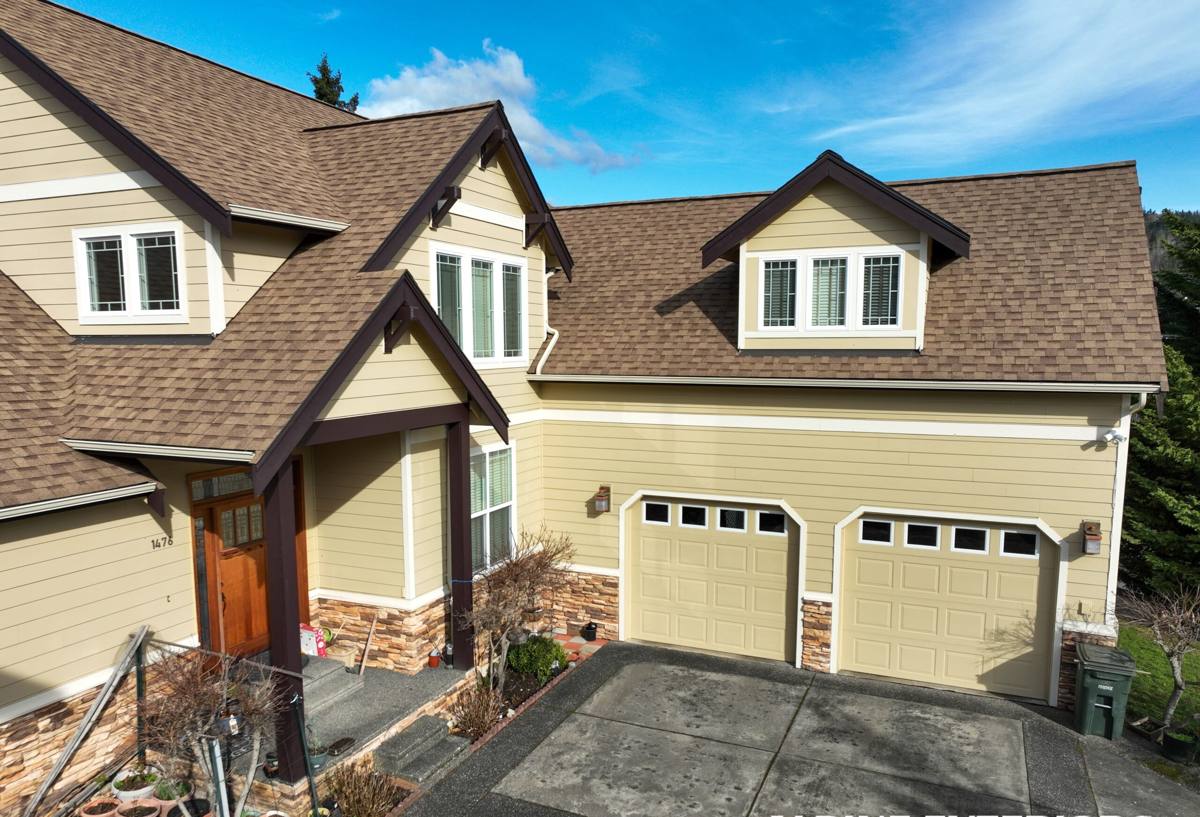
What a Correctly Installed Shingle Roof Looks Like in This Environment
"Correct" isn't just shingles nailed to a deck in the right pattern. In a coastal, high-moisture climate, the underlayment, fasteners, and ventilation matter as much as the shingle itself — often more, since those are the parts that fail silently while the roof still looks fine from the ground.
Underlayment and Ice-and-Water Barrier
We run synthetic underlayment across the full deck rather than older felt products, because synthetic holds up better under sustained moisture and doesn't wick water the way felt can once it's saturated. At eaves, valleys, and around every penetration — the spots where wind-driven rain actually finds a way in — we add a self-adhering ice-and-water membrane. On a bay-facing slope, we treat that membrane as mandatory, not optional, because horizontal rain will push water uphill under a shingle edge that isn't backed properly.
Fasteners and Flashing That Won't Corrode
Salt air is hard on ordinary galvanized fasteners and thin flashing over time. We use corrosion-resistant nails and step, valley, and pipe flashing rated for coastal exposure, and we make sure every flashing lap is oriented so water sheds over it rather than into it. This is one of the most common shortcuts on a rushed roofing job, and it's also one of the most expensive to fix later, since flashing failures usually show up as rot in the decking underneath before they show up as a visible leak.
Ventilation Sized for a Damp Climate
A shingle roof that traps moisture in the attic will grow moss and mildew from the inside out just as easily as from weather hitting it outside. We check intake at the eaves and exhaust at the ridge as part of every job, and we size or upgrade ventilation where the existing setup is undersized — a common finding on older Birch Bay homes that were built or re-roofed before current airflow standards were common practice.
Choosing the Right Shingle for Birch Bay
Not every asphalt shingle is a good match for a bay-facing roof. Wind rating, algae resistance, and how forgiving the product is during installation all matter more here than they would on a sheltered inland lot. The table below reflects how we talk through options with Birch Bay homeowners.
| Shingle Type | Wind Rating (typical) | Algae/Moss Resistance | Best Fit |
|---|---|---|---|
| Standard 3-tab | Lower wind rating | Standard granules only | Budget-conscious, sheltered structures away from direct bay exposure |
| Architectural (laminated) | Higher wind rating | Available with algae-resistant granules | Most Birch Bay homes, especially bay-facing or exposed slopes |
| Algae-resistant architectural | Higher wind rating | Copper- or zinc-treated granules built in | Shaded, north-facing, or heavy tree-cover roofs with a moss history |
| Impact-rated architectural | Higher wind rating | Available with algae-resistant option | Homes prioritizing long-term durability over lowest upfront cost |
For most homes directly exposed to the bay, we lean toward architectural shingles with algae-resistant granules as the practical baseline, not an upsell — the added cost is modest relative to the whole project, and it directly addresses the two things that shorten roof life fastest out here: wind and moss.
Our Asphalt Shingle Roofing Process
The steps themselves aren't unusual, but the details inside each one are where a roof either holds up on the coast or doesn't.
- On-site inspection and estimate — we look at existing wind and moisture damage, deck condition where visible, ventilation setup, and how exposed the roof is to bay-direction weather.
- Tear-off — full removal down to the deck, not a layover, so we can actually see the wood underneath.
- Deck inspection and repair — any soft, rotted, or delaminated sheathing gets replaced before anything new goes down. This is the step that catches problems a layover would hide.
- Underlayment, ice-and-water membrane, and flashing — installed as described above, with extra attention at valleys, eaves, and any wall or chimney penetration.
- Shingle installation — correct nailing pattern and exposure per manufacturer spec, which is also what keeps the wind-rating warranty valid.
- Ventilation check — intake and exhaust confirmed or upgraded before we close the job out.
- Cleanup and walk-through — magnetic sweep for stray fasteners, debris hauled off, and a walk-through so you know what was done and what to watch for going forward.
Moss and Algae Management After Installation
A well-installed, algae-resistant shingle roof still benefits from basic upkeep in a climate this wet. None of this requires a contractor visit every time — most of it is homeowner-level maintenance that protects the investment.
- Keep overhanging branches trimmed back so the roof gets more sun and airflow, which slows moss growth on shaded slopes.
- Clear gutters at least twice a year — clogged gutters hold standing water against the lower shingle courses and accelerate both moss growth and granule loss.
- Have moss physically removed (not power-washed, which can strip granules) rather than left to spread once it appears.
- Walk the roofline visually from the ground after major windstorms and note any lifted or missing shingles for follow-up.
- Schedule a professional inspection every couple of years, more often if the roof sits under heavy tree cover or takes direct bay wind.
Signs a Birch Bay Roof Needs Attention Now
Because wind and salt exposure work on a roof gradually, early warning signs are often easy to miss until they turn into a repair bill. Watch for:
- Granules collecting in gutters or at downspout outlets — a sign shingles are wearing faster than expected.
- Dark streaking or thickening moss patches, especially on north-facing or shaded slopes.
- Curling, cupping, or lifted shingle edges, particularly on bay-facing slopes exposed to driving rain.
- Rust staining around flashing, vents, or fasteners — an early flag for coastal corrosion.
- Any soft spot, sag, or stain on interior ceilings after a heavy storm, which usually points to a flashing or underlayment failure rather than the shingles themselves.
Why Hire a Crew That Already Works Birch Bay
A roofing crew that mostly works inland, sheltered neighborhoods doesn't run into wind-driven rain and salt exposure often enough to build habits around it. We work this stretch of the Whatcom County coastline regularly, so decisions like which flashing to use, how much ice-and-water membrane to run, and where to prioritize ventilation upgrades aren't guesswork — they're based on what actually holds up on bay-facing roofs versus what fails early. We're also familiar with the permitting expectations that apply to roofing work in unincorporated Whatcom County, so that part of the job doesn't slow the project down.
Being Bellingham-based also matters for the parts of the job that happen after installation — warranty service, a follow-up inspection, or a fast response after a windstorm doesn't mean waiting on a crew that has to travel in from out of the area.
Cost Factors for a Birch Bay Asphalt Shingle Project
Every roof is priced individually after an on-site look, but a few factors consistently move the number for homes in this area:
- Roof pitch and access — steep slopes or homes with limited access on bluff or waterfront lots take longer to work safely.
- Tear-off scope — one layer of existing shingles versus multiple layers changes labor time significantly.
- Deck condition — hidden rot found during tear-off means sheathing replacement, which is priced once it's actually visible, not guessed at beforehand.
- Shingle tier — standard architectural versus algae-resistant or impact-rated product changes material cost.
- Ventilation and flashing upgrades — bringing an older roof's airflow or flashing up to current standards adds a modest cost but pays off in roof lifespan.
We'd rather walk your roof and give you real numbers than throw out a broad range that doesn't reflect your actual home. If you're weighing a repair versus a full replacement, or just want an honest read on how much life is left in your current roof, we're happy to take a look — the estimate is free, and there's no pressure either way.