 Bellingham
 Windows Built for Barkley's Climate, Not Just Its Curb Appeal
Barkley sits close enough to Bellingham Bay and the surrounding wetlands that homes here deal with a specific mix of weather stress: salt-tinged air rolling in off the water, long stretches of driving rain through fall and winter, and a moss season that seems to start earlier every year and hang on later. None of that is dramatic on any given day. It's the cumulative effect that wears windows down — seals that soften a little each winter, frames that hold moisture a little longer each season, glass that fogs between panes because the seal finally gave out. Energy-efficient window replacement in this neighborhood isn't just about a lower heating bill, though that's real. It's about installing a window system that's actually built to handle Whatcom County's specific weather pattern instead of a generic install that happens to work fine somewhere drier.
We approach Barkley homes the way we approach every job in this part of Bellingham: assume the wind will drive rain sideways at some point every winter, assume moisture will find any gap that's left for it, and build the install so that doesn't matter.
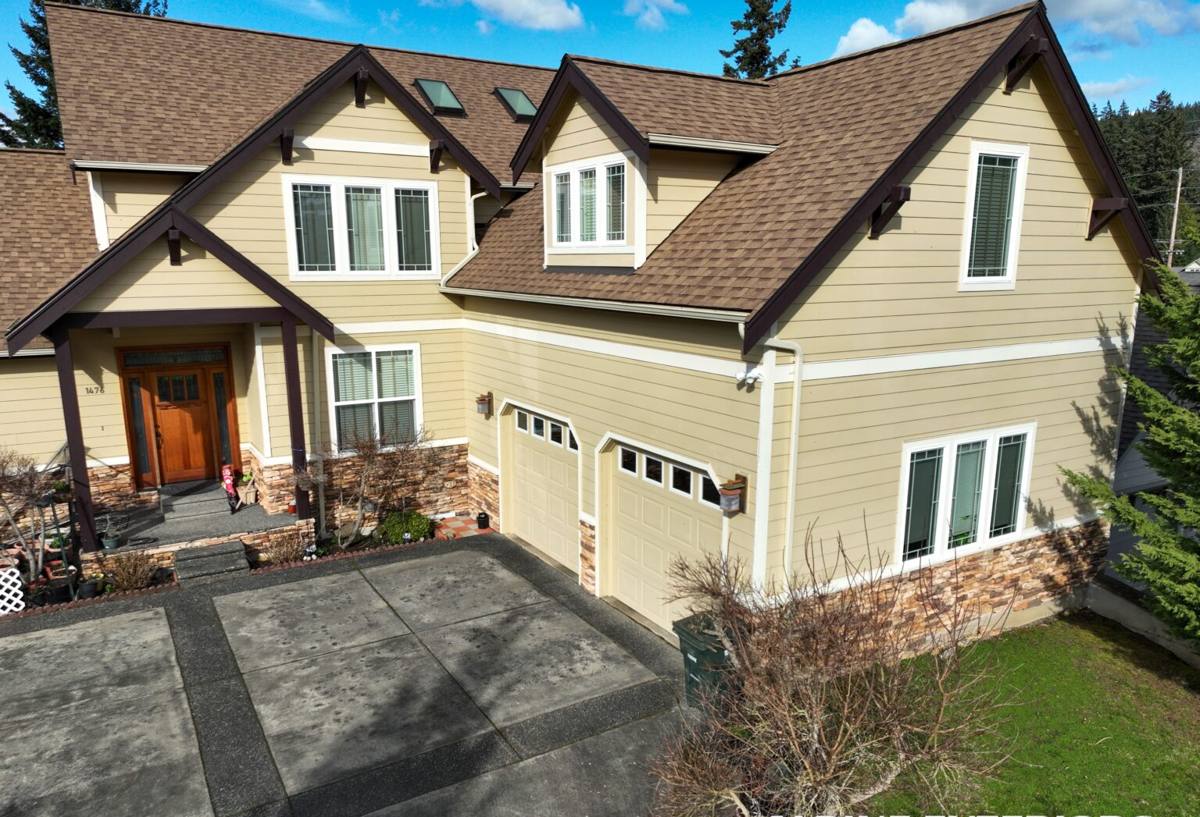
What "Energy-Efficient" Actually Means Here
Energy efficiency in a window comes from three things working together: the glass package, the frame material, and — most overlooked — the quality of the installation. A high-performance window installed with a poor seal will still leak air and moisture. A modest window installed correctly will often outperform it. In Bellingham's climate, we weight all three, but installation quality is where most window problems actually originate.
Glass Package
Double-pane, low-E (low-emissivity) glass with argon gas fill is the standard baseline for this region now, and for good reason. Low-E coatings reduce heat loss in winter and heat gain in summer, while argon fill improves the insulating value between panes. Triple-pane glass is available and does perform better thermally, but for most Barkley homes the added cost doesn't pencil out against a quality double-pane low-E unit — we'll tell you honestly when triple-pane is worth it (a north-facing wall that catches wind, a room that's always cold) and when it isn't.
Frame Material
Vinyl, fiberglass, and clad-wood frames all show up in this market. Each has real trade-offs in moisture behavior, expansion/contraction, and long-term maintenance — we'll walk through those with you against your specific home rather than pushing one product line. What matters most for a salt-air, high-rain climate is how the frame handles repeated wet-dry cycling and whether the manufacturer's warranty structure actually covers seal failure, not just glass breakage.
Installation Detail
This is where energy efficiency is won or lost in practice. Proper flashing integration with the existing wall assembly, correct shimming so the window isn't racked, sealed and backed-up joints rather than caulk alone, and insulation in the gap between frame and rough opening — these details determine whether a window performs to its rating for fifteen years or starts drafting and fogging in three.
How Salt Air, Rain, and Moss Specifically Attack Windows
Coastal proximity, county-wide moisture, and shaded exposure each create a distinct failure pattern. Knowing which one is affecting a given window changes how we approach the replacement.
- Salt air accelerates corrosion on metal hardware — hinges, cranks, and lock mechanisms — and can degrade certain sealants and coatings faster than they'd wear inland. We spec hardware and sealants rated for coastal exposure.
- Driving rain tests the flashing and drainage path around a window far more than a light, straight-down rain would. If water is pushed sideways against the wall, any gap in the flashing detail becomes an entry point. This is the single biggest cause of hidden rot we find behind old window frames in this area.
- Moss and prolonged shade keep moisture sitting against north- and west-facing walls longer after a storm passes. Sills and lower frame sections in shaded spots stay damp longer, which is exactly the condition wood rot and vinyl seal failure need to take hold.
Signs a Barkley Home Needs Window Replacement
Homeowners in this neighborhood usually notice one of these first, well before the window fails outright:
- Fogging or a permanent haze between the panes — the seal has failed and the gas fill is gone
- Visible condensation on the inside of the glass during cold snaps
- A noticeable draft near the frame even when the window is fully latched
- Soft or discolored wood on the sill, especially on north- or west-facing windows
- Hardware that's stiff, corroded, or hard to operate
- A room that's noticeably harder to heat or cool than the rest of the house
- Paint or finish peeling around the frame, often a sign moisture is getting behind it
Any one of these is worth a look. Several together usually means the window has been quietly losing performance for a few seasons.
Our Process for a Barkley Window Replacement
1. On-Site Assessment
We walk the exterior and interior of each window being considered, checking sill condition, frame square, existing flashing, and any signs of moisture intrusion already underway. This tells us whether we're doing a straightforward retrofit or need to address rot or flashing issues as part of the job.
2. Product Recommendation
Based on the wall's exposure — full weather, partial shade, sheltered — we recommend a glass and frame combination suited to that specific opening, not a one-size answer for the whole house. A south-facing window and a shaded north window often don't need the same spec.
3. Removal and Opening Prep
Old windows are removed carefully to protect interior and exterior finishes. Any soft wood, failed flashing, or damaged sheathing found in the opening is addressed before the new window goes in — installing a new window into a compromised opening just hides the problem.
4. Flashing and Installation
Proper flashing integration is non-negotiable on our installs, particularly given how often wind-driven rain hits this area. The window is shimmed level and square, mechanically fastened per manufacturer spec, and sealed with backer rod and sealant rather than caulk alone bridging a gap.
5. Insulation and Finish
The gap between the window frame and rough opening is insulated properly — not overpacked, which can bow the frame, and not left empty, which creates a cold spot and air leak. Interior and exterior trim is finished to match the home.
6. Final Walkthrough
We test operation, check the seal, and walk the job with you before considering it done.
Frame Material Comparison for This Climate
| Frame Type | Moisture Resistance | Maintenance | Typical Fit for Barkley |
|---|---|---|---|
| Vinyl | Good — doesn't rot, but seams need quality welds | Low | Common, cost-effective choice for most homes |
| Fiberglass | Very good — dimensionally stable in wet-dry cycling | Low | Strong option for full-exposure walls |
| Clad-Wood | Good on exterior face, wood core needs a sound seal | Moderate | Best where interior wood look matters |
| Aluminum | Poor thermal performance, prone to condensation | Low | We generally steer away from it for this application |
These are general patterns, not guarantees — actual performance depends heavily on the specific product line and, again, the quality of the installation. We're happy to talk through the specific brands we install and why.
Cost Factors Homeowners Should Understand
Every Barkley job is priced around the specific home, but a few factors consistently move the number:
| Factor | Why It Matters |
|---|---|
| Number and size of openings | Straightforward — more and larger windows means more material and labor |
| Glass package | Double-pane low-E vs. triple-pane changes both material cost and long-term energy savings |
| Frame material | Vinyl, fiberglass, and clad-wood carry different price points and warranty structures |
| Existing rot or flashing damage | Openings with hidden water damage need repair before the new window goes in |
| Wall exposure | Full-weather walls sometimes justify a higher-spec window than sheltered ones |
| Trim and finish work | Matching existing interior/exterior trim adds labor beyond the window unit itself |
We'll never quote a number without seeing the actual openings — anyone quoting sight-unseen over the phone is guessing.
Why Local Installation Experience Matters
A crew that's done window replacements elsewhere in the state can still do competent work, but a crew that already works in and around Bellingham and Whatcom County has seen how this specific weather pattern treats these specific openings over time. We know what a Barkley sill looks like after a decade of driving rain, what moss buildup does to a shaded frame, and where salt-air corrosion tends to show up first on hardware. That's not something you pick up from a spec sheet — it comes from doing the work here, season after season, and seeing which details actually hold up.
It also means we're not guessing at permitting or code requirements for the area, and we're a known, findable crew if you ever have a question about the install years down the road.
Maintaining Your New Windows
A properly installed energy-efficient window is low-maintenance, but "low" isn't "none" — especially in this climate:
- Clear moss and debris from sills and tracks a couple of times a year, more often on shaded walls
- Check weep holes (the small drainage openings at the base of the frame) stay clear so water can escape
- Wipe down hardware periodically to slow salt-air corrosion, especially near the water
- Inspect exterior caulking annually and touch up if it's cracking or pulling away
- Address any soft trim or paint failure promptly — it's cheaper to fix early than after water gets behind it
If your Barkley home has windows that are drafty, fogged, or just past their prime, we're glad to come take a look and give you an honest read on what's going on — no pressure, no obligation. Reach out using the form below for a free estimate.