 Bellingham
 Sehome's Roofs Work Harder Than Most People Realize
Sehome sits close enough to Bellingham Bay to catch salt-laden air off the water, and close enough to the hillside tree canopy near Sehome Hill to stay shaded and damp for long stretches of the year. That combination is tough on a roof. Salt air accelerates corrosion on exposed metal fasteners and flashing. Shade from mature trees keeps shingles wet longer after every rain, which is exactly what moss and algae need to take hold. Add Whatcom County's driving, wind-pushed rain — the kind that doesn't fall straight down but gets pushed sideways under poorly lapped shingles and loose flashing — and you have a neighborhood where a roof that would last two decades somewhere drier can start showing problems in half that time if it wasn't installed with this climate in mind.
None of this means asphalt shingle roofing is a bad fit for Sehome. It's still the most practical, cost-effective option for the vast majority of homes here. It just means the installation details matter more in this neighborhood than they do in a lot of places, and cutting corners on underlayment, ventilation, or flashing shows up faster here than it would somewhere with a shorter wet season.
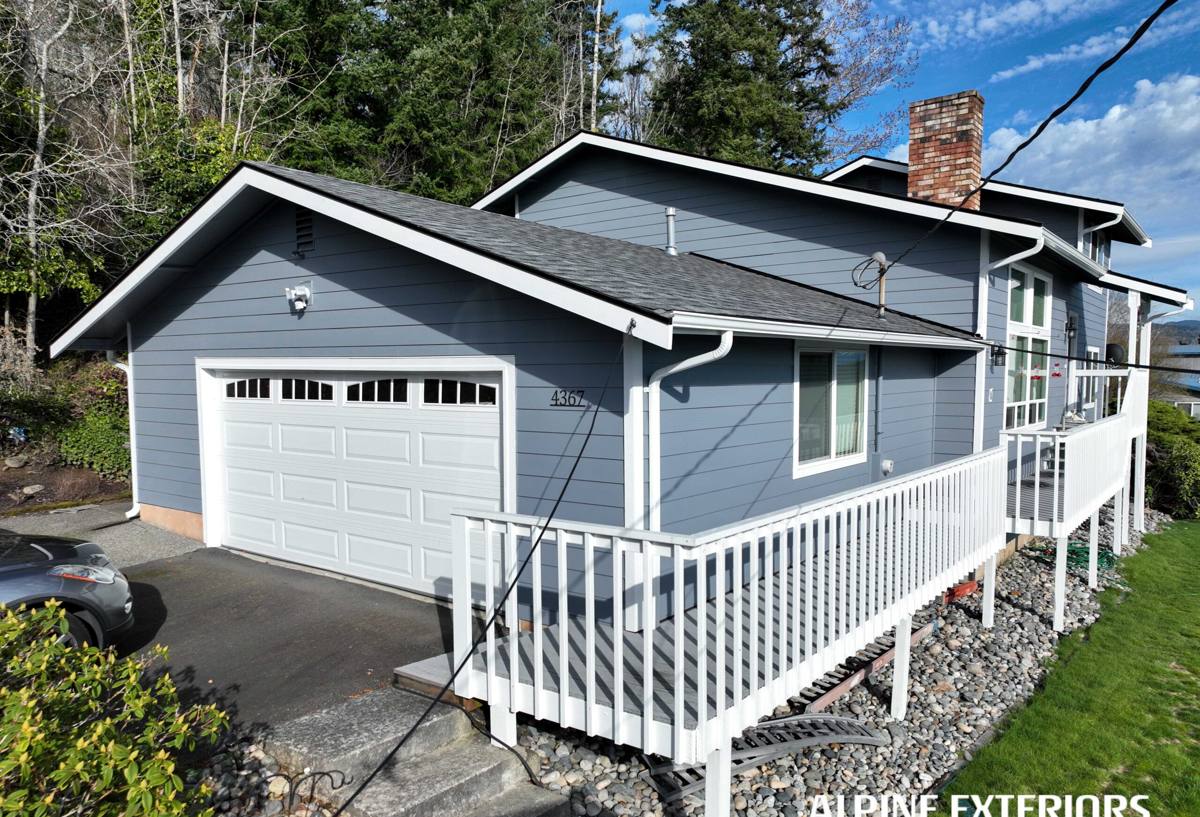
What Bellingham's Climate Actually Does to a Shingle Roof
Moisture That Never Fully Dries Out
Western Washington doesn't get the extreme heat that bakes shingles brittle the way it does in hotter climates. Instead, roofs here deal with a different kind of wear: months of low-intensity dampness. Shingles in shaded or north-facing sections of a Sehome roof can stay damp for days after a storm, especially under tree cover. That constant moisture is what feeds moss, lichen, and algae growth, and it's also what causes premature granule loss if the underlying materials weren't rated for sustained wet exposure.
Wind-Driven Rain
Storms coming off the Strait of Georgia and Bellingham Bay often push rain sideways rather than straight down. That matters because standard shingle installation assumes gravity is doing most of the work moving water off the roof. Wind-driven rain can find its way under shingles with weak seals, shallow overlaps, or flashing that wasn't properly integrated at valleys, walls, and penetrations — even on a roof that looks fine from the ground.
A Long Moss Season
Moss doesn't just look bad. Once it establishes on a shingle roof, it holds moisture against the shingle surface, lifts shingle edges as it grows, and can work its way under tabs and flashing over a few seasons. In Sehome's shaded, moisture-retentive microclimate, moss isn't an occasional nuisance — it's a recurring maintenance issue that has to be planned for from the day a roof is installed, not treated as an afterthought once it's already a problem.
Signs a Sehome Roof Needs a Closer Look
Most asphalt shingle roofs give warning signs well before they leak. In a neighborhood with this much shade and moisture exposure, it's worth checking for these more often than the "once a year" advice you'll see elsewhere.
- Moss or dark algae streaking on north-facing or shaded slopes, especially near the eaves
- Granules collecting in gutters or at the base of downspouts
- Shingle edges that look curled, cupped, or lifted rather than lying flat
- Soft or discolored patches on interior ceilings, particularly after a wind-driven storm
- Visible rust streaking from nail heads or flashing, a sign the metal is corroding
- Daylight visible through the roof deck from inside an attic space
- Shingles that are missing entirely or clearly cracked after a windstorm
What a Correct Asphalt Shingle Installation Involves Here
A shingle roof is a system, not just a layer of shingles nailed to plywood. In a climate like Bellingham's, every layer underneath the shingles is doing real work, and skipping or shortcutting any of them is where premature failures usually start.
Underlayment and Water Barrier
A synthetic underlayment provides the roof's secondary water barrier, and along eaves, valleys, and any low-slope transitions, a self-adhered ice-and-water membrane gives extra protection against wind-driven rain finding a way through. These are the areas most exposed to the sideways rain common to this area, so they get the most robust treatment.
Flashing at Every Transition
Chimneys, skylights, sidewalls, and valleys are where roofs actually fail — the open field of shingles rarely leaks on its own. Properly formed and integrated metal flashing at these transitions, rather than relying on caulk or roof cement as a substitute, is what keeps water out for the life of the roof.
Ventilation
Balanced intake and exhaust ventilation keeps the attic space closer to outdoor temperature and humidity, which reduces condensation on the underside of the roof deck and helps shingles shed the moisture they pick up during the wet season instead of trapping it. Poor ventilation is a common reason shingles fail early even when the shingles themselves were a decent product.
Nailing Pattern and Fastener Choice
Manufacturer-specified nailing patterns matter for wind resistance, and given the salt air near Bellingham Bay, corrosion-resistant fasteners are worth the modest added cost — cheap fasteners that start rusting are a slow, hidden failure point under otherwise good shingles.
Choosing a Shingle for a Damp, Shaded Climate
Not every shingle product performs the same way in a wet, shaded environment like Sehome's. The table below outlines the practical tradeoffs homeowners here are actually weighing.
| Option | How It Handles This Climate | Typical Lifespan Here | Cost Factor |
|---|---|---|---|
| Standard 3-tab shingles | Lower cost but less wind resistance; can show wear faster under sustained moisture and shade | Shorter end of the range | Lowest upfront cost |
| Architectural (laminate) shingles | Heavier, better wind rating, generally holds up better under repeated wet-dry cycling | Longer than 3-tab under the same conditions | Moderate |
| Algae-resistant (copper- or zinc-infused) shingles | Built-in resistance to algae and moss growth, well suited to shaded, damp slopes | Comparable to standard architectural, with fewer moss issues | Slightly higher than standard architectural |
| Impact-rated shingles | Added durability against wind-blown debris common under tree cover; not primarily a moss solution | Similar to architectural, depending on product | Higher, sometimes offset by insurance discounts |
For most homes in Sehome's shaded, damp pockets, an algae-resistant architectural shingle is the most practical middle ground — it costs more than a basic 3-tab up front but meaningfully cuts down on the moss and streaking that this neighborhood is prone to.
Our Process, Start to Finish
We approach every Sehome roof the same structured way, because skipping steps is where problems get built into a roof before the first shingle even goes down.
- On-site inspection. We walk the roof and attic, checking deck condition, existing ventilation, flashing points, and the extent of moss or algae growth before quoting anything.
- Honest scope and estimate. We explain what's actually needed — full tear-off versus repair, deck replacement if rot is found, ventilation upgrades — in plain terms, with a written estimate.
- Tear-off and deck check. Old roofing comes off completely so we can inspect the deck for soft spots or rot that's common under long-standing moss growth, and replace any damaged sheathing before moving forward.
- Underlayment, flashing, and shingle installation. Water barrier, ice-and-water membrane at vulnerable areas, new flashing, and shingles installed to manufacturer specification.
- Ventilation check. We confirm intake and exhaust are balanced for the attic space, correcting it where the existing setup falls short.
- Site cleanup and final walkthrough. Debris and nails cleared from the property, gutters checked, and a walkthrough so you know exactly what was done.
Maintenance That Actually Matters in This Neighborhood
A well-installed shingle roof in Sehome still needs a bit of ongoing attention because of how shaded and damp the area is. Keeping gutters clear so water isn't backing up under the eaves, having moss treated or gently removed before it spreads rather than after it's established, and keeping overhanging branches trimmed back to let more light and airflow reach the roof surface all go a long way. None of this is complicated, but it's the kind of upkeep that gets skipped when a homeowner doesn't know it's relevant to their specific location — and in Sehome, it is.
Why Local Experience in This Neighborhood Matters
A crew that regularly works in Sehome already knows which slopes tend to hold moisture longest, how much tree cover to expect, and what the salt air off the bay does to fasteners and flashing over time. That familiarity shows up in small decisions — where to add extra ice-and-water protection, which shingle products actually resist algae in shaded conditions, how much ventilation a given attic realistically needs — that a crew unfamiliar with Whatcom County's climate might not think to make. It's the difference between a roof that's built to a generic spec and one that's built for the conditions it will actually face.
If your roof is due for a look, showing signs of moss or wear, or you're planning ahead for a replacement, we're happy to come out and give you a straightforward, no-pressure estimate — just fill out the form below to get started.