 Bellingham
 Siding in York Has to Work Harder Than the Brochure Suggests
York is one of Bellingham's older, tree-shaded residential neighborhoods, and homes here deal with a specific combination of stress that a lot of siding products simply weren't built for: salt-tinged air drifting up from Bellingham Bay, long stretches of driving rain off the Sound, and a moss season that can run most of the year under mature tree canopy. None of that is exotic or unusual for Whatcom County — but it does mean that whatever goes on the outside of a York home needs to handle sustained moisture exposure, not just the occasional storm.
This page is specifically about James Hardie fiber cement siding for homes in and around York. We're not going to give you a generic rundown of Hardie products — we'll cover what the climate here actually does to exterior materials over time, what a correct Hardie installation looks like, and why hiring a crew that already knows this neighborhood's housing stock and conditions matters more than it might seem.
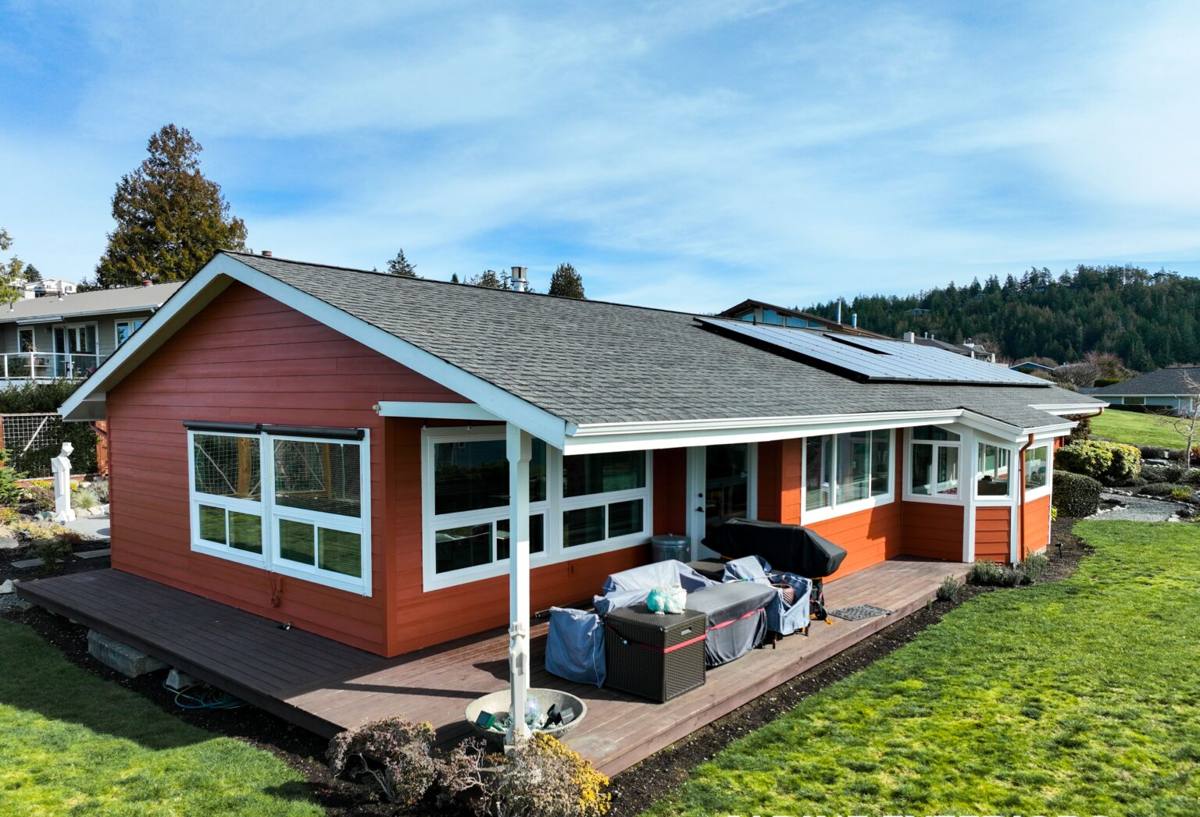
What Bellingham's Climate Actually Does to Siding
Three factors drive most of the siding failures we see in this part of Whatcom County, and York's tree cover and proximity to the water put it squarely in the path of all three:
Salt Air
Homes within a few miles of Bellingham Bay get a steady, low-grade dose of salt-laden air. Over years, that air degrades fasteners, coatings, and any siding material that isn't dimensionally stable — wood swells and contracts, some engineered wood products soften at cut edges, and lower-grade paint finishes chalk and fade faster than they would inland.
Driving Rain
Pacific Northwest rain isn't just frequent — a good portion of it comes in sideways during fall and winter storms, driven by wind off the water. That means siding doesn't just get wet on the surface; wind-driven rain finds its way into laps, seams, and any gap in flashing or caulking that wasn't detailed correctly. Water that gets behind siding and can't dry out is the single biggest cause of rot and hidden structural damage on Bellingham homes.
Moss and Sustained Dampness
York's mature street trees and residential landscaping create a lot of shade, which is great for curb appeal and terrible for keeping siding dry. Shaded, damp surfaces are exactly where moss, algae, and mildew take hold. On wood or wood-composite siding, that organic growth holds moisture against the material continuously, which accelerates rot from the outside in — often long before a homeowner notices anything beyond cosmetic staining.
Why We Standardized on James Hardie for Homes Like These
We install James Hardie fiber cement siding exclusively. We don't install vinyl, LP SmartSide, Cemplank, Allura, primed spruce, or cedar, and that's a deliberate professional standard, not a sales preference. Each of those alternatives has legitimate strengths, but every one of them has a real-world trade-off that shows up in a climate like Bellingham's:
- Vinyl siding is inexpensive and low-maintenance, but it can warp or distort in temperature swings, and it's not repairable in the way fiber cement is — a damaged panel usually means a full replacement of that section.
- LP SmartSide and other engineered wood products perform reasonably well when installation is perfect, but any breach in the factory coating or a poorly sealed cut edge gives moisture a path into the wood substrate, which is a real risk in a rain-heavy, shaded environment like York.
- Cedar and primed spruce are beautiful materials, but they're organic — they need ongoing refinishing, they're a natural food source for moss and mildew, and in a climate with this much sustained dampness, the maintenance schedule to keep them sound is demanding and never really stops.
James Hardie fiber cement is non-combustible, dimensionally stable, and doesn't feed mold or moss the way wood-based products can. It's not maintenance-free — no siding is — but the maintenance it needs is realistic for a normal homeowner's schedule, not a constant battle against the climate.
The Right Hardie Product Line for This Climate
James Hardie engineers its siding by climate zone, and Bellingham falls into the HZ5 category — Hardie's designation for regions with significant moisture exposure and freeze-thaw cycling. HZ5 products are formulated and tested specifically for conditions like the ones York homes face: sustained rain, humidity, and cooler temperatures. This isn't a marketing distinction — the substrate formulation and moisture resistance are genuinely different from Hardie's products made for hot, dry, or coastal-humid climates elsewhere in the country. Installing the correct climate-zone product is one of the simplest ways to make sure a siding job actually performs the way it's supposed to for its full service life.
We also specify ColorPlus Technology finishes on most York projects. ColorPlus is a factory-applied, baked-on finish that resists fading and chipping far better than field-applied paint, and it carries its own finish warranty separate from the substrate warranty. In a shaded, damp neighborhood where surfaces stay wet longer, a finish that resists moss staining and holds its color without repainting is worth the difference over the life of the siding.
What a Correct Installation Actually Involves
Fiber cement siding is only as good as the installation behind it. Most of the "Hardie siding failed" stories we hear trace back to installation shortcuts, not the material itself. On every York project, correct installation means:
- A properly lapped weather-resistive barrier behind the siding, with all seams taped and integrated with window and door flashing
- Correct flashing at every horizontal transition, window head, and roof-to-wall intersection — the places wind-driven rain actually gets in
- Proper fastener placement and type, following Hardie's published fastening schedule for the specific product and climate zone
- Manufacturer-specified gaps and clearances at butt joints, trim, and ground contact points, so the material can handle normal expansion and drainage
- Field-cut edges sealed per Hardie's installation instructions, since an unsealed cut edge is the one place fiber cement can absorb moisture
- Adequate clearance from grade, decks, and roof lines to keep siding out of standing water and prolonged shade-dampness where possible
Every one of those steps is spelled out in Hardie's installation manual, and skipping any of them can void the manufacturer's warranty — which is exactly why installer track record matters as much as the product choice itself.
Comparing Siding Options for a York Property
| Factor | James Hardie Fiber Cement | Vinyl | Wood / Engineered Wood |
|---|---|---|---|
| Moisture resistance in driving rain | High — non-organic, dimensionally stable | Moderate — seams and gaps can allow intrusion | Variable — depends entirely on coating integrity |
| Resistance to moss/algae staining | High, especially with ColorPlus finish | Moderate | Low — organic surface, needs regular treatment |
| Performance in salt air | High — non-corrosive substrate | Moderate — can degrade/discolor over time | Low to moderate — finish breaks down faster |
| Fire resistance | Non-combustible | Combustible | Combustible |
| Maintenance routine | Periodic washing, minimal refinishing | Low, but panels aren't repairable individually | Regular refinishing, moss/mildew treatment |
Our Process for York Siding Projects
Because we work throughout Bellingham and know York's mix of home ages and construction styles, our process is built around what actually needs to happen before, during, and after installation — not a one-size-fits-all script:
Assessment
We start by looking at what's currently on the house, including any hidden moisture or rot damage behind the existing siding, since that has to be addressed before new siding goes up — covering a moisture problem with new material just hides it longer.
Prep and Weather Barrier
We remove old siding down to the sheathing where needed, repair any damaged substrate, and install a code-compliant weather-resistive barrier with properly integrated flashing at every penetration.
Installation
Hardie panels, planks, or shingle siding go up per the manufacturer's fastening and clearance specifications for our HZ5 climate zone, with careful attention to the transitions — corners, window and door trim, roof lines — where most real-world leaks originate.
Final Detailing and Walkthrough
We finish with caulking and trim detail work, clean up the site, and walk the property with the homeowner so everything is visible and understood before we consider the job done.
Why a Crew That Already Works in York Matters
York's housing stock spans a range of ages and construction approaches, which means every project has its own quirks — older wall assemblies, additions built in different eras, or existing moisture issues from decades of shaded exposure. A crew that regularly works this neighborhood and greater Bellingham has already seen those patterns and knows what to check for before a bid ever gets written, rather than discovering surprises mid-project. Local experience also means familiarity with Whatcom County permitting requirements and realistic expectations about scheduling around the region's wet season, so the weather-barrier and flashing work isn't rushed or compromised by timing.
Maintenance Checklist for James Hardie Siding in a York Climate
James Hardie siding is low-maintenance compared to wood or vinyl, but "low" isn't "none" — especially under tree cover near the water. A simple annual routine goes a long way:
- Rinse siding with a garden hose (not a high-pressure washer) once or twice a year to remove salt residue, pollen, and surface grime
- Check shaded and north-facing walls for early moss or algae growth and treat promptly before it spreads
- Inspect caulking at trim, windows, and joints annually and re-caulk any cracked or separated seams
- Keep gutters clear so overflow doesn't run down and stay against the siding surface
- Trim back shrubs and branches that keep siding shaded and damp longer than necessary
- Watch for any soft spots, staining, or paint failure at ground-contact areas, which can signal a drainage issue worth addressing early
If you're weighing siding options for a home in York or elsewhere in Bellingham, we're happy to take a look and talk through what your specific property needs. The estimate is free, there's no pressure, and you'll get a straight answer about what condition your current siding is in and what correct James Hardie installation would involve for your home.