 Bellingham
 Energy-Efficient Windows for York Homes
York is one of Bellingham's established, close-in neighborhoods, and like most older in-city neighborhoods it has a mix of home ages under one roofline pattern: original windows from decades past sitting next to units that were already replaced once, sometimes with materials that weren't a great match for this climate the first time around. When a homeowner in York asks about energy-efficient windows, the conversation usually starts with a heating bill that feels too high for the size of the house, or a room that never quite matches the thermostat setting. Both are common symptoms of windows that have stopped doing their job, whether that's from age, a failed seal, or an installation that was never airtight to begin with.
Energy efficiency in a window comes down to a few measurable things — how well it resists heat transfer, how much air leaks around and through it, and how well the glass manages solar heat. But in Bellingham, none of that happens in isolation from the weather. Salt-tinged marine air, wind-driven rain, and a moss season that runs most of the year all put stress on the same seals, frames, and flashing details that determine whether a window keeps performing efficiently five or fifteen years after installation, not just on the day it goes in.
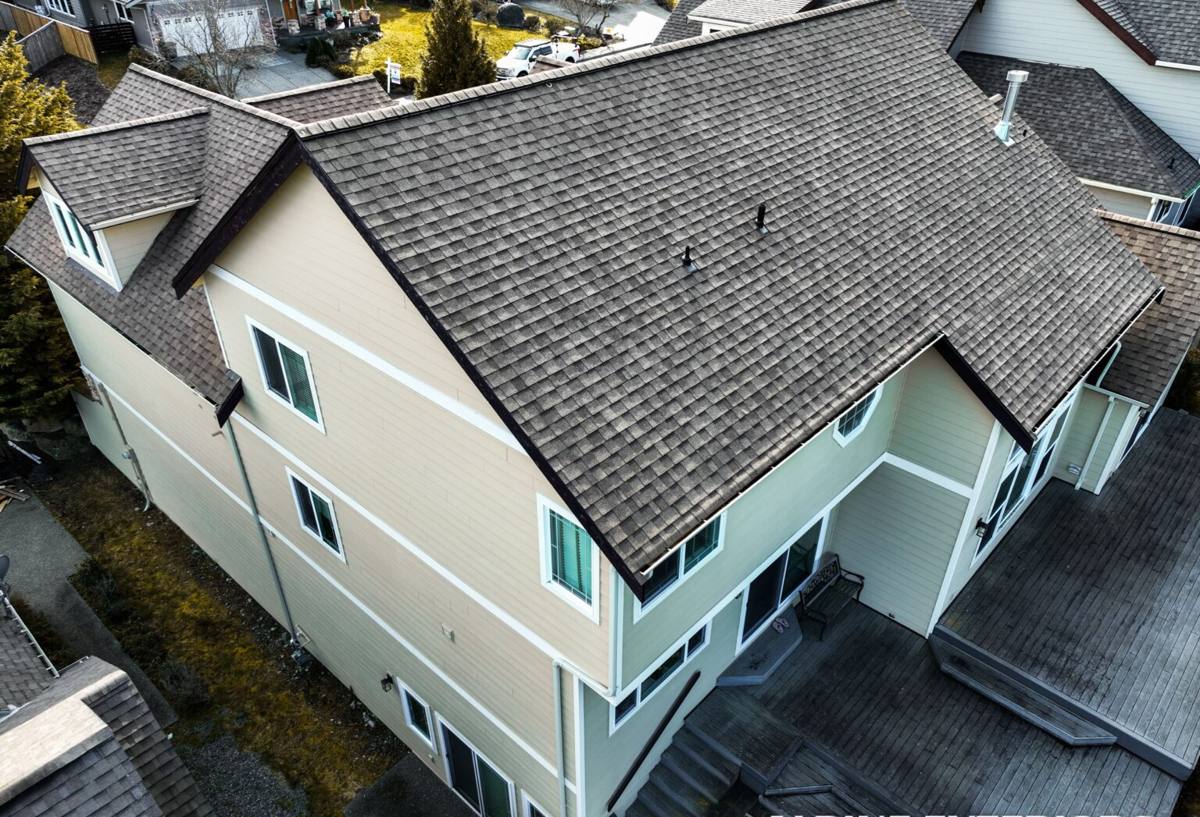
What Bellingham's Climate Means for Window Energy Performance
Salt Air and Seal Degradation
The steady flow of salt-carrying air through this part of Whatcom County is hard on the small components that make a window efficient — weatherstripping, hardware, and the edge seals that hold insulating gas inside a double- or triple-pane unit. Once an edge seal starts to degrade, the window doesn't just fog between the panes; it also loses a meaningful part of its insulating value, because the gas fill that was doing part of the thermal work is gone.
Driving Rain and Hidden Air Leaks
Rain here rarely falls straight down, and wind pushes it sideways into head flashing, jambs, and sills. A window that was flashed correctly sheds that water and stays sealed. One that wasn't often develops a slow air leak at the same gap where water is getting in, which shows up as a draft long before it shows up as a visible leak. In practice, a lot of the "drafty window" complaints we hear in York trace back to installation gaps rather than the window unit itself.
A Long Moss Season and Slow-Building Damage
Shaded walls and window sills that don't drain well stay damp for much of the year in this climate, and that dampness supports moss and mildew growth that slowly works on trim, sills, and — on wood-framed windows — the frame itself. A sill that's holding moisture is also usually a sill that's letting more air move through the wall assembly than it should, so the same conditions that cause cosmetic staining tend to erode energy performance at the same time.
What Actually Makes a Window Energy-Efficient
"Energy-efficient" isn't a single feature — it's a combination of ratings that show up on the manufacturer's label, standardized by the National Fenestration Rating Council (NFRC) and referenced by the ENERGY STAR program. For homes in our Northern climate zone, the numbers that matter most aren't necessarily the ones a sales flyer leads with.
| Rating | What It Measures | What Matters in Bellingham's Climate |
|---|---|---|
| U-Factor | How well the window resists heat loss (lower is better) | The most important number here — our winters are about keeping heat in, not blocking sun |
| Solar Heat Gain Coefficient (SHGC) | How much solar heat passes through the glass (lower blocks more heat) | Less critical than in sunnier climates; a moderate SHGC is usually fine given our cloud cover and mild summers |
| Air Leakage (AL) | How much air passes through the window assembly itself | Matters a lot when paired with wind-driven rain — a leaky window and a leaky flashing detail compound each other |
| Condensation Resistance | How well the window resists interior condensation in cold, damp conditions | Relevant for homes with consistently humid interior air, common in this marine climate |
Glazing package matters as much as the frame. Double-pane with a Low-E coating and an argon gas fill is the standard efficient option for most York homes, and it performs well here. Triple-pane adds another layer of insulating value and can help with condensation on especially cold surfaces, but it costs more, weighs more, and the added benefit is smaller in a climate with our relatively mild winters than it would be somewhere with harsher cold. We'll walk through whether that upgrade is worth it for your specific home rather than defaulting to whichever option costs more.
Frame Material Trade-Offs for Energy Efficiency and Durability Here
Frame material affects both how well a window insulates and how well it holds up to this climate's moisture and salt exposure over time. A frame that degrades early doesn't stay efficient, no matter how good its rating was on installation day.
| Frame Material | Thermal Performance | Behavior in This Climate | Typical Maintenance |
|---|---|---|---|
| Vinyl | Good; multi-chambered profiles insulate well | Won't rot; performance depends heavily on weld and seam quality | Low |
| Fiberglass | Very good; low thermal expansion helps seals last | Dimensionally stable in wet, temperature-swinging conditions | Low |
| Wood, painted or clad | Good natural insulator | Vulnerable at joints and sills without consistent upkeep | Higher; regular finish maintenance |
| Aluminum | Weakest without a thermal break; conducts cold directly | Can corrode over time in salt-influenced air if the finish is thin | Moderate |
For most energy-focused projects in York, vinyl and fiberglass lead the conversation because they combine solid insulating value with low sensitivity to the moisture and salt exposure this area sees. Wood-framed windows can still make sense where the interior look matters most, provided the exterior is well protected and the owner is realistic about upkeep. We'll walk your specific openings and orientation before recommending one over another — a shaded, north-facing wall and a sun-exposed south wall on the same house don't always call for the same answer.
Installation Details That Decide Whether the Rating Holds Up
A window's efficiency rating is measured on the unit alone, in a lab. What you actually get depends on how it's installed. This is where a rushed job quietly erases the performance you paid for:
- Low-expansion foam or properly compressed insulation around the frame, sealing the gap without bowing the frame out of square
- A sill pan pitched to shed water outward instead of letting it pool under the frame, where it can rot the sill and open a path for both water and air
- Head flashing lapped correctly with the house wrap above the window so water sheds down and outward, not behind the siding
- Continuous interior air sealing between the window frame and the rough opening, not just exterior caulk
- Weep holes and drainage paths left open and functional, never sealed shut by accident during installation
- Corrosion-resistant fasteners and hardware sized for sustained damp, salt-influenced conditions
None of this adds meaningfully to the cost of a project relative to the window itself, but skipping any of it is exactly how a window with a strong efficiency rating still leaves a draft you can feel standing next to it, or a heating bill that doesn't drop the way the new label suggested it would.
Signs a York Home's Windows Are Losing Energy
- A noticeable temperature difference or draft near a closed window
- Fogging or visible moisture between panes, which usually means a failed insulating seal
- Interior condensation on the glass or frame during cold, damp stretches
- Heating bills that feel high relative to the size and age of the house
- Rooms near older or original windows that are noticeably harder to keep comfortable than the rest of the house
- Cracked, brittle, or missing weatherstripping around the sash
- Difficulty latching a window fully, which often means it's not sealing when closed
Our Process for an Energy-Efficient Window Project in York
- On-site assessment — we look at each window's condition, orientation, and current performance, not just its age, since a well-maintained older window sometimes has more life left than a newer one that was installed poorly
- Honest recommendation — repair, reseal, insert replacement, or full-frame replacement, along with which glazing package and frame material actually fit your budget and exposure
- Removal and opening prep — the old unit comes out carefully, and any hidden sill or framing damage gets addressed before the new window goes in, not sealed up behind it
- Installation and flashing — set, shimmed, air-sealed, and flashed to a sequence built for this climate's wind-driven rain, not a generic national installation guide
- Final walkthrough — we show you what was done, what to expect from the new windows, and what upkeep, if any, they actually need
Cost Factors for Energy-Efficient Windows in This Area
| Factor | Why It Moves the Price |
|---|---|
| Frame material | Fiberglass generally costs more than vinyl; both outperform uninsulated aluminum |
| Glazing package | Triple-pane and specialty Low-E coatings add cost over standard double-pane with argon fill |
| Insert vs. full-frame replacement | Full-frame costs more but is the honest answer when there's existing sill or jamb damage |
| Number and size of openings | More windows and larger units mean more material and labor |
| Existing condition behind the trim | Moisture damage found once the old window is out needs repair before the new one goes in |
| Access and site conditions | Second-story openings or limited access can add labor time |
We'll walk your specific home and give you real numbers rather than a per-window average — two houses with the same window count can land in very different places depending on how many of these factors apply.
Why Hire a Crew That Already Works in York and Bellingham
Bellingham Roofing installs and replaces windows across Whatcom County alongside our roofing work, and the two aren't as separate as they might seem — the roof and the windows are usually the two biggest sources of comfort and energy complaints in an older home, and a crew that looks at both understands how heat actually moves through a house instead of treating a window as an isolated product swap. A crew that's worked in York and across Bellingham through multiple wet seasons has already seen which orientations lose the most heat because of shade and tree cover, how much sill pitch a given elevation actually needs given the rain this area gets, and which installation shortcuts are the ones that quietly show up as a draft or a fogged pane a couple of winters later. That's the kind of judgment that doesn't show up on a spec sheet, and it's the difference between new windows that keep performing at their rated efficiency for decades and ones that start losing ground within a few years.
If you're weighing energy-efficient windows for a home in York, we're glad to walk the property, look at your specific openings and orientation, and give you a straightforward, no-pressure estimate. There's a form below — reach out and we'll get a time on the schedule.