 Bellingham
 Deck Repair in York: Built for Bellingham's Coastal Climate
The York neighborhood sits close enough to Bellingham Bay that its decks take a different kind of beating than a deck twenty miles inland in Whatcom County. Salt-laden air, long stretches of driving rain, and a moss season that can run from October through May all work on wood, fasteners, and connectors in ways that shorten a deck's useful life if nobody is watching for it. We repair decks in York regularly, and the patterns we see here are consistent enough that we can usually tell a homeowner what we'll find before we even climb underneath.
This page is about deck repair specifically — not a full replacement pitch, not a generic maintenance checklist. It's what a York homeowner actually needs to know: what the climate does to a deck, what a correct repair looks like, and how to tell when repair is still the right call versus when it isn't.
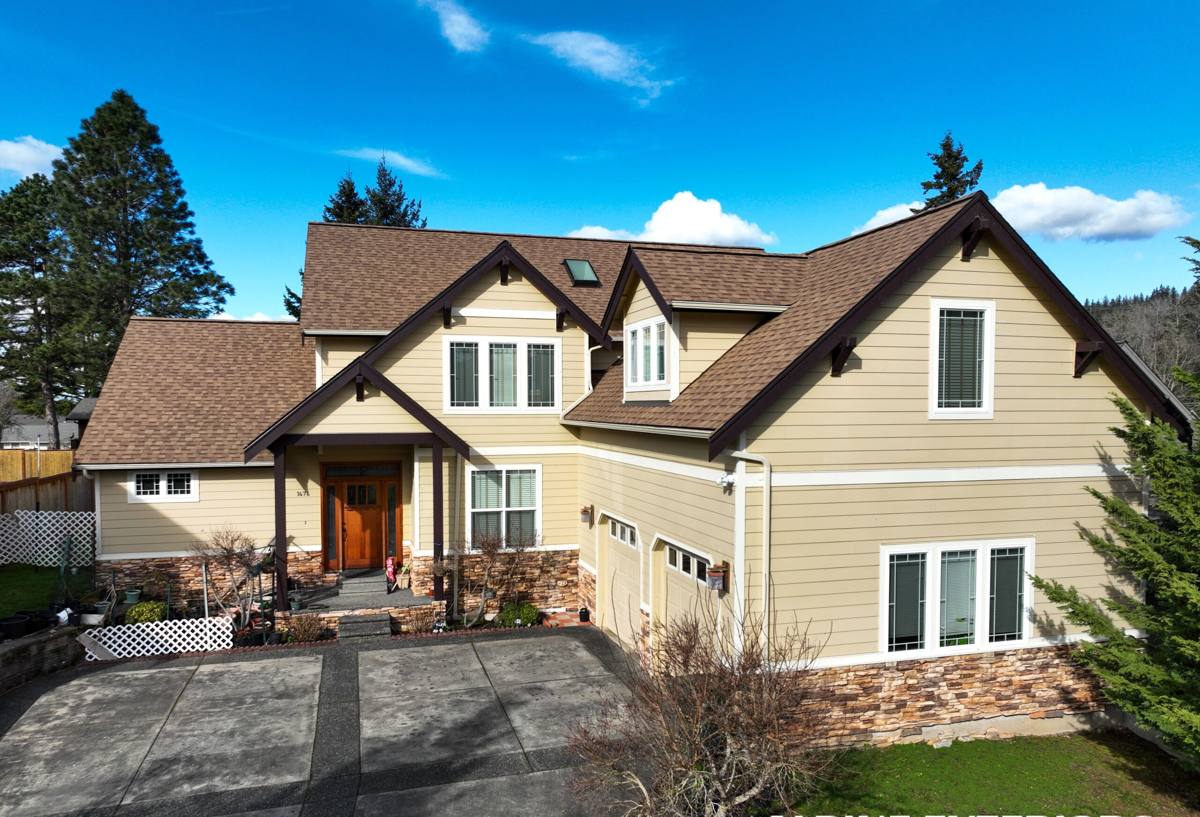
What Salt Air, Rain, and Moss Actually Do to a Deck
Three environmental factors show up over and over in the decks we inspect in and around York:
Salt Air and Metal Corrosion
Airborne salt from the bay accelerates corrosion on anything metal — nails, screws, joist hangers, bolts, and post bases. Standard electro-galvanized fasteners that would last decades inland can start rusting visibly within a few years this close to the water. Once a fastener corrodes, it loses holding strength long before it looks obviously broken, which is part of why deck failures often surprise homeowners.
Driving Rain and Water Intrusion
Bellingham's rain doesn't just fall straight down — wind-driven rain gets pushed sideways into ledger board connections, under railing posts, and into any gap where flashing was skipped or installed poorly. Water that gets behind a ledger board or pools around a post base is doing damage you can't see from the surface until the wood underneath has already gone soft.
Moss and Sustained Moisture
Moss doesn't just make a deck slippery — it holds moisture against the wood surface for months at a time, well past the point where the wood would otherwise have a chance to dry out. On horizontal surfaces with poor drainage or tight board spacing, moss creates a nearly permanent damp layer that speeds up rot underneath a deck board even while the top surface still looks intact.
Signs a York Deck Needs Repair, Not Just Cleaning
Some of these are obvious once you know to look for them; others hide until you know where to check.
- Soft or spongy spots when you walk across the deck, especially near the house or around posts
- Visible rust streaks below fasteners, hangers, or hardware
- Gaps or separation where the deck meets the house (the ledger board connection)
- Railings or posts that flex or wobble when pushed
- Persistent moss or algae in the same spots every year, even after cleaning
- Boards that are cupping, splitting, or have visibly darkened, discolored patches
- A musty smell coming from underneath the deck
- Stair stringers that feel less solid than the deck surface itself
Any one of these can be a minor fix. Two or three together, especially near the ledger board or support posts, usually mean it's worth a full inspection rather than a patch.
What a Correct Deck Repair Actually Involves
A repair that just replaces the boards you can see and leaves the rest alone tends to fail again within a season or two in this climate. A repair done right starts underneath, not on top.
Structural Inspection First
Before any boards come off, we check the ledger board connection, the posts and footings, the joists, and the hardware condition. This is where the real problems usually are — the decking surface is often just the symptom.
Ledger Board and Flashing
If the ledger board (where the deck attaches to the house) has been taking on water, we address the flashing and waterproofing at that connection, not just the wood itself. A deck can look fine and still be pulling away from the house because this connection was never properly flashed.
Framing and Fasteners
Rotted or undersized joists get sistered or replaced. Corroded hardware — hangers, bolts, screws — gets swapped for fasteners rated for the exposure this location actually sees, not just whatever was code-minimum when the deck was first built.
Decking Surface and Railings
Only after the structure underneath is sound do we address the visible decking boards, railings, and stairs. Replacing surface boards over a compromised frame just hides the problem for another year.
Repair or Replace: How We Help You Decide
Not every deck problem in York calls for a full rebuild, and not every deck is worth patching indefinitely. Here's the general framework we use when walking a homeowner through the decision:
| Factor | Repair Usually Makes Sense | Replacement Usually Makes Sense |
|---|---|---|
| Structural framing | Isolated rot in one or two joists, footings still sound | Widespread rot across multiple joists or failed footings |
| Ledger board connection | Localized water damage, house rim joist still solid | Rim joist or band board behind the ledger is compromised |
| Decking boards | Scattered damaged boards, rest of the deck sound | Most boards cupping, splitting, or soft throughout |
| Age of the deck | Under 15-20 years, built to a reasonable original standard | Original construction is older or was never built to current standards |
| Hardware condition | Some corrosion, connections still tight | Widespread rust, loose or failing connections throughout |
We'll tell you honestly which category your deck falls into. If a repair will genuinely hold up, we'll say so. If we think you'd be spending real money to delay an inevitable rebuild, we'll say that too.
Decking Material Choices for a Salt-Air Climate
When boards do need replacing, the material choice matters more here than it would somewhere inland and dry. We generally steer homeowners toward materials that handle sustained moisture and salt exposure well, and we're upfront about the trade-offs of each option rather than pushing one product as a cure-all.
| Material | Advantages Here | Trade-offs |
|---|---|---|
| Pressure-treated lumber | Lower upfront cost, familiar repair process, widely available | Requires regular sealing/staining to manage moisture; more prone to moss buildup if not maintained |
| Composite decking | Resists rot and moss staining better, low ongoing maintenance | Higher upfront cost; some products can be sensitive to how they're fastened and ventilated underneath |
| Cedar | Naturally moisture-resistant, ages well visually | Softer wood, needs consistent finish maintenance to keep that resistance |
For fasteners and hardware, we favor stainless steel or heavy hot-dip galvanized rated for coastal exposure over standard electro-galvanized hardware. It costs a bit more up front, but replacing rusted hangers again in five years costs more than that difference.
How Our Repair Process Works
- Free on-site assessment — we walk the deck, check underneath, and inspect the ledger board and posts
- Honest scope and estimate — we explain what we found, what's actually needed, and what it will cost
- Repair work — framing, flashing, and hardware first, then decking surface, railings, and stairs
- Final walk-through — we show you what was done and what to watch for going forward
We don't upsell repairs a deck doesn't need, and we don't quietly skip structural issues to keep a bid low. Both of those approaches cause problems for homeowners later, and we'd rather have the honest conversation up front.
Why a Crew That Already Works in York Matters
Deck repair isn't identical everywhere in Whatcom County. A crew that regularly works the York area already knows to expect accelerated fastener corrosion, understands which ledger board details tend to fail first in this exposure, and doesn't need to relearn the local moss and moisture patterns on your dime. That familiarity translates into faster, more accurate assessments and repairs that account for the conditions your deck will keep facing after we leave — not just the conditions it was built under.
Maintaining Your Deck Between Repairs
A repaired deck still needs upkeep to get its full life out of it in this climate:
- Clear moss and debris from the surface and between boards at least once a year, ideally before the wet season sets in
- Keep gutters and downspouts near the deck clear so runoff isn't draining onto or under it
- Reseal or restain wood decking on the manufacturer's recommended schedule, not just when it looks worn
- Check visible hardware periodically for early rust and address it before it spreads
- Trim back vegetation that keeps the deck surface shaded and damp longer than it needs to be
If you're noticing soft spots, rust, persistent moss, or a deck that just doesn't feel as solid as it used to, we're happy to take a look. We offer free, no-pressure estimates for York homeowners — use the form below to get one scheduled.