 Bellingham
 Siding in Silver Beach Has to Answer to Bellingham's Weather
Silver Beach is one of Bellingham's older, established neighborhoods, and a lot of the homes here are carrying siding that was never really built for what Whatcom County throws at it year after year. Siding isn't just the color and texture of a house — it's the first line of defense between the framing and a climate that stays damp for most of the year, pushes salt-tinged air in off the Salish Sea, and grows moss on anything that sits still long enough. When siding fails here, it usually isn't dramatic. It's slow: a soft spot behind a downspout, a bowed panel on the north wall, a paint job that needs redoing every few years because the substrate underneath can't hold a finish anymore.
This page is specifically about fiber cement siding for Silver Beach homes — what the climate demands from it, what a correct installation actually looks like, and why the company doing the work matters as much as the material itself.
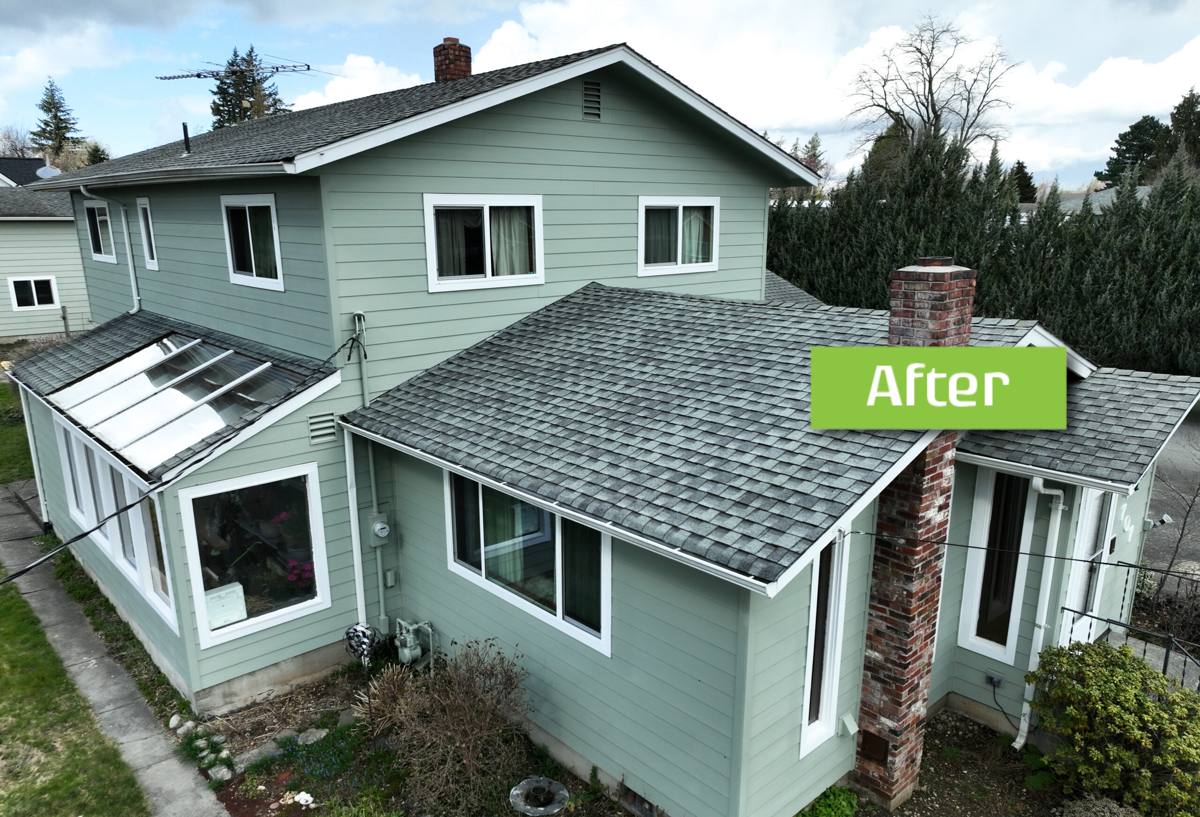
What This Climate Does to Siding Over Time
Moisture That Doesn't Let Up
Bellingham doesn't get flash floods — it gets months of steady, low-intensity rain, which is arguably harder on a building envelope. Siding that can absorb and hold water, even a little, stays damp for days at a time instead of drying out between storms. Over years, that constant low-grade moisture exposure is what causes swelling, delamination, and rot in materials that aren't engineered to handle it.
Moss, Algae, and Shaded Lots
Silver Beach has plenty of mature tree cover and shaded lots, which is part of the neighborhood's character but also exactly the environment moss and algae need to take hold on north- and east-facing walls. Once organic growth establishes itself on a porous or textured surface, it holds moisture against the siding and accelerates whatever deterioration is already happening underneath.
Wind-Driven Rain at Seams and Corners
Storms coming off the water don't just fall straight down — they drive rain sideways into seams, corner boards, and window trim. Any siding system with weak joints, poor flashing, or gaps that open up as the material moves seasonally becomes a direct path for water into the wall assembly. This is where most siding failures actually start, regardless of the material.
Why We Install Only James Hardie Fiber Cement
We've made a deliberate decision as a company: we install James Hardie fiber cement siding, exclusively. We don't install vinyl, LP SmartSide, Cemplank, Allura, or primed wood products like spruce or cedar lap. That's not a marketing line — it's a standard we hold because of what we've seen these products do, and not do, in a climate like this one over the long run.
Vinyl siding is inexpensive and easy to install, and for some budgets and some homes that's a reasonable trade-off. But vinyl is a thin, flexible material that expands and contracts significantly with temperature swings, which opens gaps at seams over time, and it doesn't add any real structural or moisture-buffering value to the wall — it's a cladding, not a system. In a wet, shaded climate like Bellingham's, that matters more than it does somewhere dry.
Engineered wood products like LP SmartSide use a wood-strand substrate with a resin-treated surface. It's a genuine improvement over old-school wood siding, and it has real fans. But it's still wood-based, which means its long-term performance depends heavily on caulking, paint maintenance, and keeping water away from cut edges — maintenance that's easy to fall behind on, especially on a rental or a busy household's to-do list.
Primed wood siding — cedar, spruce, and similar — is the traditional choice and can look excellent, but it asks the most of a homeowner: regular repainting, vigilant caulk maintenance, and real vulnerability to rot anywhere water gets past the finish. In a climate with Bellingham's rain totals and moss pressure, that's a heavy ongoing commitment.
Fiber cement, and James Hardie specifically, gives us a non-combustible material that doesn't swell, rot, or feed organic growth the way wood-based products can, holds paint and factory finish far longer, and is engineered in regional formulations for exactly this kind of wet marine climate. It costs more up front than vinyl. We think the trade-off is worth it on a home that's supposed to last decades, not one siding cycle.
Choosing the Right Hardie Line for a Silver Beach Home
HardiePlank Lap Siding
HardiePlank is the most common choice for Silver Beach homes and works well across the neighborhood's mix of older bungalows and newer builds. It's available in several plank widths and textures, including smooth and traditional woodgrain, and factory-finished with ColorPlus Technology so the color is baked on rather than field-painted — a real advantage in a climate where paint jobs don't hold their finish as long as they would somewhere drier.
HardieShingle Staggered-Edge Panels
For homes going for a more textured, Pacific Northwest cottage look — common on some of the older Silver Beach housing stock — HardieShingle gives that staggered, cedar-shake appearance without the maintenance burden of actual wood shingles or shakes.
Trim, Soffit, and Fascia
We pair the field siding with matching Hardie trim, soffit, and fascia products wherever possible, rather than mixing in wood trim that will weather and need maintenance on a different schedule than the siding around it. Consistent materials mean consistent long-term performance at every joint.
What Correct Installation Actually Involves
The Prep Work Nobody Sees
Most siding failures — on any brand, any material — trace back to what happened before the first plank went up, not the plank itself. That means checking and repairing sheathing, installing a proper weather-resistive barrier, and, on a climate like this one, building in a rainscreen gap so any moisture that does get behind the siding has somewhere to drain and dry instead of sitting against the wall.
Flashing and Water Management
Every window, door, and roofline intersection needs flashing detailed to shed water outward and down, not into the wall cavity. James Hardie publishes specific installation requirements — fastener spacing, minimum gaps at butt joints, clearance above rooflines and decks, caulking at specific locations only — and skipping or shortcutting those details is what turns a premium product into a problem down the road. Correct installation is also what keeps the manufacturer's warranty valid; installed wrong, even the best material won't perform or stay covered the way it's supposed to.
Comparing Siding Materials for a Climate Like Bellingham's
| Factor | Fiber Cement (James Hardie) | Vinyl | Engineered Wood | Primed Wood |
|---|---|---|---|---|
| Moisture resistance | Engineered for wet climates; won't swell or rot | Won't rot, but seams can let water behind panels | Resin-treated but wood-based; vulnerable at cut edges | Most vulnerable to rot without diligent maintenance |
| Moss/algae resistance | Dense, factory-finished surface resists growth | Can host growth in shaded, damp areas | Textured surface can hold moisture and organics | Textured, porous surface is prone to growth |
| Maintenance | Low; ColorPlus finish holds color for years | Low, but can crack, fade, and warp | Moderate; caulk and finish need regular attention | High; repainting and caulking every few years |
| Fire performance | Non-combustible | Combustible | Combustible | Combustible |
| Typical lifespan | Multiple decades when installed to spec | 15-30 years | 20-30 years with maintained finish | Highly maintenance-dependent |
| Relative cost | Higher upfront | Lowest upfront | Mid-range | Mid-range plus ongoing upkeep costs |
Our Process for a Silver Beach Siding Project
- Inspection and assessment — we look at the existing siding, sheathing condition, trim, and any specific trouble spots like north-facing walls or areas under heavy tree cover.
- Product and color selection — choosing the right Hardie plank profile, texture, and ColorPlus color for the home's style and the neighborhood's character.
- Tear-off and prep — removing the old siding, repairing any damaged sheathing, and installing a proper weather barrier and rainscreen where called for.
- Installation to Hardie specifications — correct fastening, gapping, and flashing at every window, door, and transition.
- Final walkthrough — reviewing the finished work with the homeowner and handling manufacturer warranty registration.
Signs Your Siding Is Telling You It's Time
- Soft or spongy spots when you press on the siding, especially near the ground or below windows
- Paint that's peeling, bubbling, or needing touch-ups more often than it used to
- Visible moss or algae staining that comes back soon after cleaning
- Warped, bowed, or separated panels, particularly on north- or shade-facing walls
- Gaps opening up at seams, corners, or trim joints
- Rising energy bills that suggest the wall assembly isn't insulating or sealing the way it should
Why Hire a Crew That Already Works in Silver Beach
A siding job that's correct on paper can still fail if it isn't adapted to the specific conditions of the site — how much shade a wall gets, how exposed it is to wind off the water, what the existing wall assembly looks like on a home of a certain age. Crews with real experience across Silver Beach and the surrounding Bellingham neighborhoods have already seen how these homes hold up, where moisture problems tend to start, and what it takes to install James Hardie siding correctly for this specific stretch of Whatcom County's climate rather than a generic install.
If you're weighing a siding replacement in Silver Beach, we're happy to take a look at your home, walk through what we're seeing, and talk through the right Hardie product for your situation — with a free, no-pressure estimate using the form below.