 Bellingham
 Windows Built for the Way Sudden Valley Actually Weathers
Sudden Valley sits in a pocket of Whatcom County that gets its own version of our regional weather. Homes here tend to be shaded by mature trees, close to the water, and set on lots where humidity lingers longer than it does out on open ground. That combination is hard on windows in ways that a lot of homeowners don't notice until they're dealing with a drafty room, a foggy pane, or trim that's gone soft at the corners.
An energy-efficient window replacement isn't just about lowering a heating bill, although that's a real part of it. In this part of Bellingham, it's about choosing glass, frame materials, and an installation method that can stand up to constant moisture and shade without failing early. We treat those as one project, not two, because in a marine climate they are.
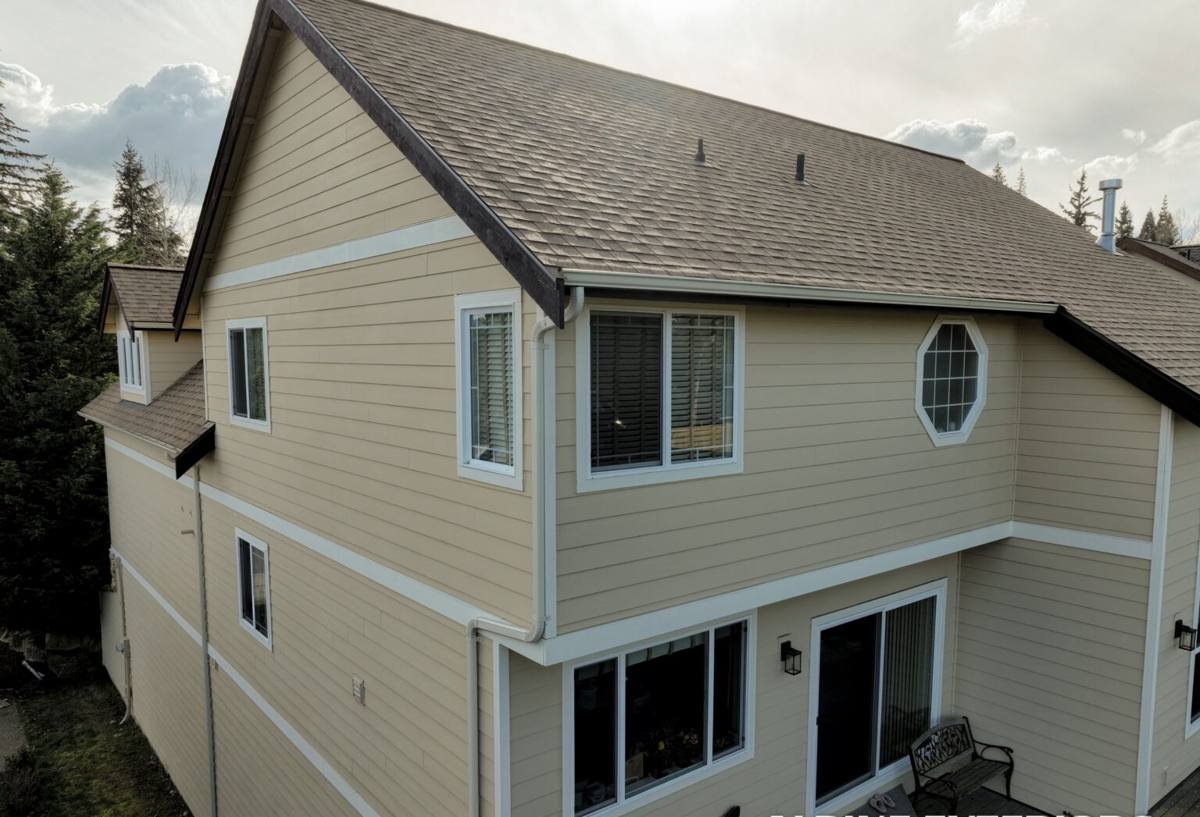
What Whatcom County's Climate Does to Windows Over Time
Bellingham and the surrounding area deal with a long wet season, driving rain that gets pushed sideways by wind off the water, and salt-tinged air that moves inland from Bellingham Bay. Add in a shaded, tree-heavy setting like much of Sudden Valley, and you get a few specific problems that show up in older or poorly installed windows:
- Moss and algae staining around sills and frame edges where shade keeps surfaces damp for days at a time.
- Slow-drying wood trim that swells, cracks, or rots faster than it would in a sunnier, drier location.
- Condensation between panes, a sign the seal has failed and the insulating gas fill is gone.
- Wind-driven rain intrusion at poorly flashed or caulked openings, especially on walls that face open water or a clearing.
- Temperature swings between a cool, lake-influenced morning and a warmer afternoon, which stresses seals and frame joints over years of expansion and contraction.
None of this means Sudden Valley homes need anything exotic. It means the glass package, the frame material, and — more than either of those — the installation detailing all need to account for near-constant moisture exposure rather than assuming a drier climate.
Moss Season Is Longer Here Than Most Homeowners Expect
Because so many lots have significant tree cover, sun exposure on window frames, sills, and the siding around them can be limited for much of the year. That extends what people generally call "moss season" well past the wettest months. Organic growth on and around windows isn't just cosmetic — it holds moisture against the frame and finish, which is exactly the condition that accelerates rot in wood components and finish failure on lower-grade vinyl or clad products.
What "Energy-Efficient" Actually Means
The term gets used loosely, so it's worth being specific. A genuinely efficient window replacement involves several things working together, not just a sticker that says "Low-E."
Glass and Coatings
Double-pane glass with a low-emissivity (Low-E) coating is the baseline for a modern replacement. The coating is a microscopically thin layer that reflects heat back into the room in winter and blocks solar heat gain in summer, without meaningfully changing how much visible light comes through. Triple-pane glass adds a third layer of glass and a second insulating gas space, which improves the U-factor further but adds weight, cost, and thickness to the frame.
Gas Fill
The space between panes is typically filled with argon or krypton gas rather than plain air, since these gases conduct heat more slowly. This only matters if the seal holds — a failed seal that lets gas escape is one of the most common reasons an "efficient" window stops performing within ten or fifteen years.
Frame Material
Frame material affects both energy performance and how well the window tolerates our wet climate. There's no single right answer — it depends on the home, the budget, and how much upkeep the homeowner wants to take on.
| Frame Material | Moisture Resistance | Maintenance | Best Fit |
|---|---|---|---|
| Vinyl | Very good — won't rot, resists swelling | Low — occasional cleaning | Most homes prioritizing value and low upkeep |
| Fiberglass | Excellent — dimensionally stable in wet/dry cycles | Low | Homes with heavy sun/shade swings or larger openings |
| Wood-clad | Good on the exterior clad face, but interior wood needs protection from moisture intrusion | Higher — finish and seal upkeep | Homeowners prioritizing interior wood appearance |
| Aluminum | Fair — conducts heat/cold, prone to condensation without a thermal break | Low | Rarely our first recommendation for efficiency-focused replacements |
For a shaded, moisture-heavy setting like much of Sudden Valley, we lean toward vinyl or fiberglass for most replacements, simply because they don't give moisture anything to work on over time. Wood-clad is still a reasonable choice for homeowners who want that interior look, as long as expectations about upkeep are clear from the start.
Why the Installation Matters More Than the Glass
A high-performance window installed poorly will underperform a mid-grade window installed correctly. This is the part of the job that doesn't show up on a spec sheet, and it's where most of the long-term problems actually start.
Flashing and Water Management
Every window opening needs to be flashed so that any water that gets behind the siding or trim is directed back out, not into the wall cavity. This matters everywhere, but it matters more on walls exposed to driving, wind-pushed rain, which is common around open or lake-facing sides of a property.
Sealing Without Trapping Moisture
Caulk and sealant get used correctly, and incorrectly, in about equal measure. The goal is to seal the window against air and bulk water intrusion while still allowing incidental moisture that gets behind the trim to drain and dry out. Sealing every gap solid, with no path for moisture to escape, is a common shortcut that leads to hidden rot years later — especially in a climate where things rarely get a long dry stretch to fully dry out on their own.
Full-Frame vs. Insert Replacement
An insert (or "pocket") replacement fits a new window into the existing frame and is faster and less invasive, but it only makes sense if that existing frame is still sound and properly flashed. A full-frame replacement removes everything down to the rough opening, which costs more and takes longer, but it's the right call whenever there's evidence of water intrusion, soft wood, or a frame that was never flashed correctly in the first place. Part of a proper estimate is figuring out honestly which situation you're actually in before quoting a price.
Signs Your Current Windows Are Working Against You
- Fog or haze between the panes that won't wipe away — the seal has failed and the insulating gas is gone.
- Visible moss, algae, or dark staining building up on sills or lower frame corners.
- Soft, spongy, or discolored wood trim around the window, inside or out.
- Noticeable drafts near the frame even with the window fully latched.
- Windows that are difficult to open, close, or lock — often a sign the frame has shifted or swollen.
- Rooms near older windows that feel noticeably colder or warmer than the rest of the house.
- A heating bill that's climbed without a clear reason tied to usage.
Any one of these on its own might just mean routine maintenance. Two or three together, especially on a shaded or lake-facing wall, usually means it's time for a real evaluation rather than another round of caulk.
Our Process for a Sudden Valley Window Replacement
1. On-Site Assessment
We look at each window opening individually — not just the glass, but the condition of the trim, sill, and flashing behind it. On homes with heavy tree cover or lake exposure, we pay particular attention to any wall that stays shaded or damp longer than the rest of the house.
2. Product Selection Based on the Home, Not a Default Package
We walk through frame material, glass package, and grille or hardware options based on the specific exposure of each opening, not a one-size answer for the whole house. A window on a sheltered, sunny wall doesn't need the same spec as one facing open water or a damp, shaded side yard.
3. Correct Removal and Prep
Old windows come out carefully so we can inspect the rough opening for hidden rot or past water intrusion before anything new goes in. This step gets skipped by crews trying to move fast — it's also the step that prevents covering up a problem instead of fixing it.
4. Flashing, Installation, and Sealing
New flashing, proper shimming for a square and level fit, and sealing that manages water rather than just blocking it. This is where our attention to the local climate actually shows up in the finished product.
5. Interior and Exterior Finish Work
Trim, caulking lines, and touch-up work get finished cleanly on both sides, and the site gets cleaned up before we call the job done.
What Affects the Cost of a Window Replacement Here
| Factor | Why It Matters |
|---|---|
| Number and size of openings | More or larger windows mean more material and labor, but per-window pricing often improves with volume |
| Frame material | Vinyl is typically the most budget-friendly; fiberglass and wood-clad run higher |
| Glass package | Double-pane Low-E is standard; triple-pane adds cost and works best on especially cold or exposed walls |
| Insert vs. full-frame replacement | Full-frame costs more but is often necessary where there's existing water damage or bad flashing |
| Site access and lot conditions | Sloped lots, tree cover, or gated-community access logistics can affect scheduling and labor time |
| Existing trim and siding condition | Rotted trim or siding discovered during removal adds necessary repair work before install |
We give straightforward, itemized estimates rather than a single vague number, so homeowners can see exactly what's driving the price and where there's room to make choices.
Why It Helps to Hire a Crew That Already Works in Sudden Valley
Sudden Valley has its own rhythms — gated access, a mix of lakefront and wooded interior lots, and homes built across a range of decades with different window standards. A crew that's already worked in the community knows to plan for site access ahead of time, understands that shaded and lake-facing walls often need a different approach than a sunny street-facing wall, and isn't guessing at how the local moisture pattern behaves over a full year.
That familiarity doesn't replace a proper on-site assessment of your specific home, but it does mean fewer surprises during scheduling and a crew that recognizes climate-driven problems — moss staining, soft trim, condensation — for what they actually are instead of treating every home the same way.
After the Install: Keeping Efficient Windows Efficient
New windows still need a bit of attention in this climate to get their full lifespan out of them:
- Rinse off moss, algae, or debris buildup on sills and tracks a couple of times a year, more often on heavily shaded walls.
- Check exterior caulk lines annually for cracking or separation, especially after a hard winter.
- Keep gutters and downspouts clear so water isn't sheeting down over window openings.
- Trim back vegetation that keeps a window frame in constant shade and dampness where practical.
- Operate locking hardware a few times through the year so mechanisms don't seize from disuse.
None of this is heavy maintenance — it's mostly about not letting moisture sit against the frame longer than it has to, which is the same principle that guides how we install the windows in the first place.
If your windows are drafty, fogged, or showing moss and staining that keeps coming back, we're happy to take a look and give you a straightforward, no-pressure estimate. Use the form below to get in touch and we'll schedule a time to walk the property with you.