 Bellingham
 Siding on South Hill Has a Harder Job Than Siding Almost Anywhere Else in Bellingham
South Hill sits up above Bellingham Bay, and that elevation is a mixed blessing. The views are real, but so is the exposure. Homes on the hill catch wind and moisture straight off the water, sit under mature tree canopy that keeps north- and west-facing walls shaded and damp for long stretches of the year, and go through the same wet Pacific Northwest winters as the rest of Whatcom County — just with an extra dose of salt-laden air added in. Siding on a South Hill home isn't decorative. It's the single most important weather barrier the house has, and it needs to be chosen and installed with that in mind, not treated as an afterthought.
We only install James Hardie fiber cement siding. We don't offer vinyl, LP SmartSide, Cemplank, Allura, or wood siding as alternatives, and homeowners on South Hill deserve to know why before they sign a contract with anyone — us included.
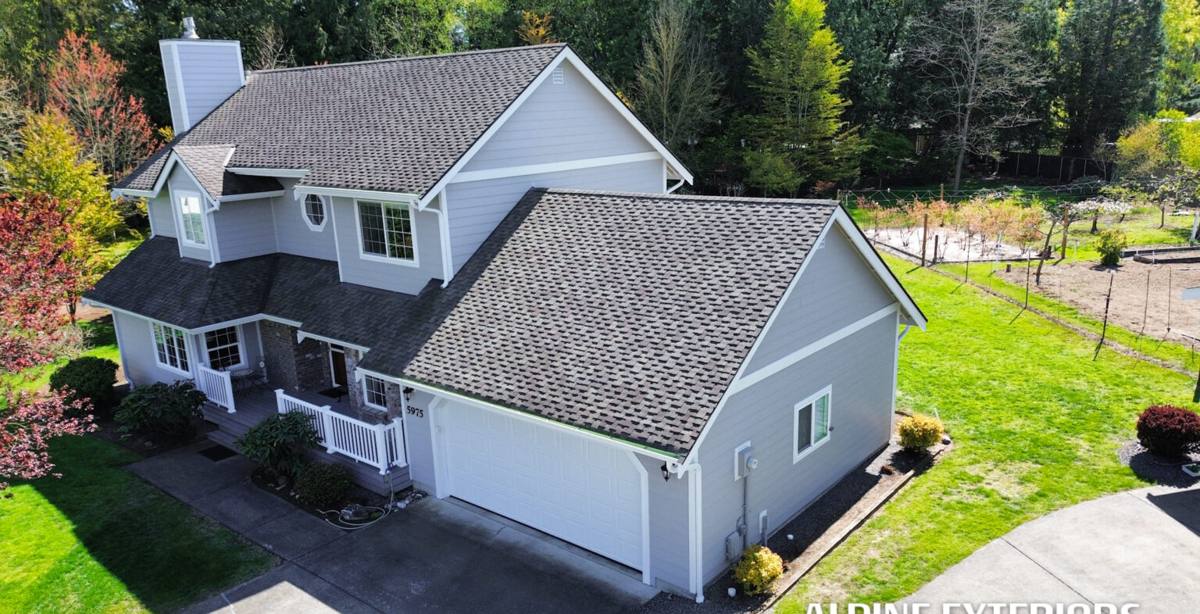
What Salt Air, Driving Rain, and a Long Moss Season Do to a House
Salt Air
Airborne salt from Bellingham Bay settles on exterior surfaces and accelerates corrosion of fasteners, metal flashing, and any siding material that isn't dimensionally stable. It also tends to hold moisture against a wall surface longer than dry inland air would, which matters a lot once you're talking about a material that can absorb water.
Driving Rain
Whatcom County doesn't just get rain — it gets wind-driven rain that hits walls at an angle instead of falling straight down. That means water gets pushed into seams, laps, and fastener penetrations that a calm-weather installation might get away with ignoring. On an elevated, more exposed site like South Hill, wind-driven rain is a bigger factor than it is for a home tucked into a low, sheltered lot.
Moss and Sustained Dampness
Between the tree cover common on the hill and our long wet season, north-facing and shaded walls can stay damp for weeks at a time. That's exactly the environment moss and algae need to take hold. On some siding materials, sustained dampness isn't just cosmetic — it leads to swelling, softening, or paint failure. On others, it's mostly a surface issue that washes off. Knowing which category your siding falls into changes how much maintenance your house actually needs.
Why We Standardized on James Hardie for Homes Like These
James Hardie fiber cement is engineered from cement, sand, and cellulose fiber — it doesn't absorb and swell the way wood-based siding products can, and it isn't a petroleum product that softens or becomes brittle with UV and temperature swings the way vinyl can over decades. For a hillside home taking wind-driven rain and salt air, that dimensional stability matters more than it does on a sheltered inland lot.
Hardie's HZ5 product line is specifically climate-engineered for regions like ours — the Pacific Northwest's moisture-heavy weather pattern is exactly what that engineering targets. The factory-applied ColorPlus finish is baked on under controlled conditions and backed by its own finish warranty, which matters on a house that's going to spend years being rained on sideways. And because the material is non-combustible, it adds a layer of fire resistance that none of the wood-based or vinyl alternatives can offer — a genuine plus for insurance conversations, even in a wet climate where wildfire isn't top of mind.
We're not going to tell you every other siding product is worthless — that wouldn't be honest. Vinyl is inexpensive and low-maintenance in mild climates. Wood has a look some homeowners love. LP SmartSide and similar engineered-wood products have improved a lot over the years. But every one of those materials asks the owner to accept a trade-off — moisture sensitivity, UV degradation, more frequent repainting, or shorter real-world lifespan in a wet coastal climate — that we don't think is a fair trade to make on a South Hill home. That's why we install one product, correctly, rather than several products with an asterisk next to each.
What a Correct Installation Actually Involves
The siding material is only half the story. Most siding failures we get called out to inspect — regardless of brand — trace back to installation shortcuts, not the product itself. On an exposed hillside site, the margin for error is smaller.
- A properly detailed water-resistive barrier (WRB) installed shingle-style so every layer drains outward and down, not into the wall assembly
- Correct flashing at every window, door, and roof-to-wall intersection — the single most common failure point we find on older homes
- Manufacturer-specified fastener type, spacing, and penetration depth, since fastener corrosion in salt-air environments is a real long-term risk if the wrong hardware is used
- Proper clearance between the bottom of the siding and grade, decks, and roof lines so water can't wick up into the material
- Correctly sized gaps at butt joints and trim with the right sealant, so the assembly can handle seasonal movement without opening a water path
- Field-cut edges primed or sealed per Hardie's specification, since factory edges are treated but cut edges aren't automatically
Skipping any one of these doesn't usually cause an immediate problem. It causes a problem in year six or year ten, after moisture has had time to work its way into the wall assembly — which is exactly why installation quality matters as much as the product choice.
How the Job Works, Start to Finish
We walk every South Hill property in person before writing a quote — elevation, sun exposure, tree cover, and prevailing wind direction all affect how a specific wall will hold up, and none of that can be judged from a photo. From there:
- Assessment — we check existing siding, sheathing, and trim condition, and identify any areas with signs of past moisture intrusion that need attention before new siding goes on.
- Plan and quote — we spec the right Hardie product line, profile, and ColorPlus color for the home, and give you a clear, itemized quote.
- Tear-off and prep — old siding comes off, sheathing is inspected and repaired as needed, and the WRB is installed correctly before anything new goes up.
- Installation — siding, trim, and flashing go in to manufacturer spec, not just "close enough."
- Final walkthrough — we go over the finished job with you directly, not just leave a text message and an invoice.
What Affects Cost on a Hillside Property
| Factor | Why It Matters on South Hill |
|---|---|
| Site access and slope | Steep or terraced lots can require staging, extended ladder work, or scaffolding that flatter sites don't |
| Existing wall condition | Older homes may need sheathing repair before new siding can go on — this is common on homes that had inadequate flashing originally |
| Siding profile and trim complexity | Lap siding versus shingle-style panels, plus the amount of trim, window, and gable detail, change labor hours |
| Wall exposure | Heavily shaded, tree-covered walls sometimes need extra prep work if moss or moisture damage is already present |
| Removal and disposal | What's already on the house — and whether it needs special handling — affects tear-off scope |
Every South Hill property is a little different, which is why we give a real, walked, itemized estimate rather than a rough number over the phone.
Why Hiring a Crew That Already Works This Neighborhood Matters
A crew that's already worked on South Hill knows what to look for before they even get on a ladder: which wall orientations tend to hold moisture longest, how tree cover on a given block affects moss growth, and how the hillside wind pattern differs from a sheltered lot a mile away near downtown. That's not something you can fully substitute with general siding experience from a different part of the county. It shows up in small decisions — where extra flashing attention goes, how a north wall gets detailed differently than a south wall — that add up to a siding job that actually holds up to this specific site's weather, not just weather in general.
It also means straightforward communication. You're working with people who understand the neighborhood's housing stock, access challenges, and typical conditions, not learning them for the first time on your project.
Signs Your Current Siding May Already Be Struggling
- Paint that's peeling, bubbling, or needs repainting far more often than it should
- Soft spots, visible swelling, or a spongy feel when you press on siding near the bottom edge or around windows
- Persistent moss or algae growth that comes back quickly after cleaning
- Visible gaps, warping, or separation at seams and corners
- Staining or discoloration that tracks with window and door trim — a common sign of flashing failure
- Rising energy bills that could point to a compromised weather barrier, not just an aging furnace
If any of these sound familiar, it's worth having the siding looked at before the next wet season adds to the damage.
Get a Straight Answer, No Pressure
If you own a home on South Hill and you're wondering whether your current siding is holding up the way it should — or you're planning ahead for a replacement — we're happy to come take a look and give you an honest assessment. There's a form below to request a free estimate. No pressure, no scare tactics, just a clear picture of where your home stands and what correct James Hardie installation would involve.