 Bellingham
 Board & Batten Siding in South Hill
South Hill sits above downtown Bellingham on a wooded slope with some of the oldest housing stock in the city, mixed in with newer infill and remodels that lean into the neighborhood's craftsman and farmhouse character. Board and batten siding — vertical panels with narrow strips covering the seams — shows up a lot here because it suits that architectural mix so well. It reads as traditional on an older Whatcom County home and clean and modern on a newer build, which is part of why we get asked about it more in South Hill than in some of Bellingham's flatter, newer neighborhoods.
But the look is only half the story. South Hill's hillside lots, mature tree canopy, and exposure to weather rolling in off Bellingham Bay put real demands on any vertical siding profile. Get the installation details wrong and board and batten will show problems — streaking, soft spots, failed caulk lines — years before a well-built lap siding job would. This page covers what that means for homes in this specific area, what a correct installation actually involves, and how we handle it.
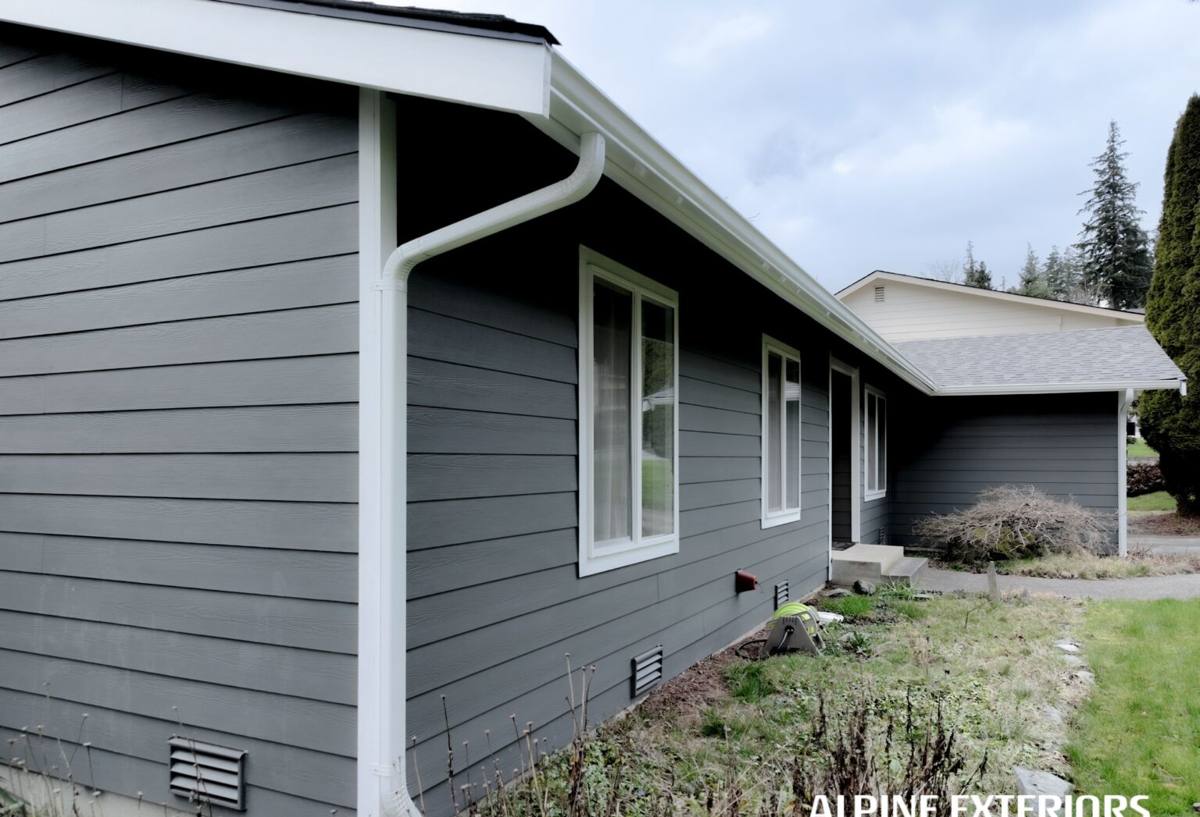
What South Hill's Climate Asks of Vertical Siding
Bellingham's marine climate is damp for most of the year, and South Hill's terrain adds its own wrinkles on top of that.
Moss and Shade
A lot of South Hill's lots carry mature trees — firs, big-leaf maples, cedars — that were there long before board and batten became a popular siding choice. That shade keeps siding wet longer after rain and feeds moss and algae growth, especially on north-facing walls and anywhere battens create a slightly recessed shadow line. Board and batten has more vertical seams than lap siding, and each one is a place moss can get a foothold if the material and caulk underneath it aren't holding up.
Salt Air and Driving Rain
Homes higher on the hill often catch wind and rain moving in off the water with little to break it up. Wind-driven rain doesn't just fall on siding, it gets pushed sideways and upward into laps, seams, and trim edges — exactly the joints board and batten relies on to look clean. Add the salt content that comes with proximity to Bellingham Bay, and you've got a slow, steady process that will find and exploit any gap in the water management behind the siding, not just the finish on top of it.
Sun and Weather Variation Across One Lot
Because South Hill is sloped and tree-covered unevenly, it's common for one side of a house to bake in full sun for part of the day while another stays shaded and damp almost year-round. That means a single home can need its siding to perform two different jobs at once — resisting UV fading on one wall and resisting moss and moisture on another. Whatever material and finish goes up needs to hold color and shed water consistently across both conditions, not just the easier one.
Why Board and Batten Is Less Forgiving to Install Than Lap Siding
Vertical board and batten is a system, not a single product. The panel, the batten, the fasteners, and the water barrier behind all of it have to work together, and the margin for error is smaller than most homeowners expect.
Furring Strips and the Rainscreen Gap
Correctly installed board and batten sits on vertical furring strips over a weather-resistive barrier, creating a drainage gap behind the panel. That gap lets any moisture that gets past the siding drain and dry instead of sitting against the sheathing. Skip the furring or install it inconsistently, and you get a flat, tight installation that traps water — which shows up later as staining, soft trim, or paint failure, usually right where it's hardest to see from the ground.
Batten Placement and Fastening
Battens have to land over the panel seams and be fastened into framing, not just into the panel itself, or they loosen over time and open a path for water. Spacing has to account for the panel's expansion and contraction, and fastener depth matters — overdriven nails crack fiber cement and underdriven ones back out as the wall moves seasonally. None of this is visible once the job is finished and painted, which is exactly why it needs to be right the first time.
Why We Install Only James Hardie for Board and Batten
We install James Hardie fiber cement exclusively — we don't install vinyl board and batten, engineered wood products like LP SmartSide, or cedar board and batten. That's a deliberate standard, not a sales pitch, and it comes down to how each material actually holds up in a climate like South Hill's.
Cedar board and batten looks excellent when it's new, but it's a wood product in a wet, shaded environment — it needs regular refinishing to keep moisture out, and the vertical seams are exactly where rot tends to start first if maintenance slips. Vinyl board and batten resists moisture fine but is a poor match for the driving rain and wind this hill sees; it can distort, gap at the seams under thermal movement, and doesn't hold paint if a homeowner ever wants to change the color. LP SmartSide is an engineered wood product, and like any wood-based siding, its long-term performance depends heavily on caulking and finish maintenance staying ahead of moisture — a tall order on shaded, tree-covered lots that rarely fully dry out.
James Hardie fiber cement is non-combustible, doesn't swell or rot the way wood-based products can, and comes with a factory-applied ColorPlus finish engineered to hold color under UV and moisture exposure without repainting on the same schedule wood or vinyl demands. Hardie's HZ product lines are climate-engineered for regions like ours, and the company backs installations with a strong transferable warranty when the work is done to their specification — which matters most in a spot like South Hill, where a siding failure is expensive to access and repair on a sloped lot.
Comparing Board and Batten Materials for This Climate
| Factor | James Hardie Fiber Cement | Vinyl | Cedar / LP SmartSide |
|---|---|---|---|
| Moisture & rot resistance | High — cement-based, doesn't absorb and swell | Won't rot, but seams can gap under moisture cycling | Vulnerable without consistent finish maintenance |
| Moss/algae resistance on shaded walls | Good with factory finish, cleans up well | Can trap grime in seams | Grows moss readily if finish thins |
| Performance in wind-driven rain | Strong when installed with rainscreen detail | Can flex and gap at seams | Depends heavily on caulk and paint condition |
| Repainting/refinishing needs | Long intervals with ColorPlus finish | Fades, hard to repaint well | Frequent — every few years typically |
| Fire resistance | Non-combustible | Combustible | Combustible |
| Warranty structure | Strong transferable manufacturer warranty when installed to spec | Varies, often prorated | Varies by manufacturer/species |
Our Process for South Hill Board and Batten Projects
Every board and batten job we do in South Hill starts with the same groundwork, adjusted for the site:
- Site and moisture assessment. We check existing siding, trim, and sheathing for hidden moisture damage before pricing anything — common on shaded, older walls in this neighborhood.
- Tear-off and sheathing check. Old siding comes off and we inspect the sheathing underneath for rot or soft spots, which get repaired before anything new goes up.
- Weather-resistive barrier and furring. A new WRB goes on, followed by properly spaced furring strips to create the drainage gap board and batten needs to perform in wind-driven rain.
- Panel and batten installation. Hardie panels go up first, fastened to framing per manufacturer spec, followed by battens set over the seams with correct fastener depth and spacing.
- Flashing and trim detail. Windows, doors, and roof-to-wall transitions get flashed and sealed — the highest-risk points for wind-driven rain intrusion on a hillside home.
- Final finish and cleanup. Caulking, touch-up, and a full site cleanup, with a walkthrough so you know what to watch for going forward.
Maintaining Board and Batten on a South Hill Home
Fiber cement lowers the maintenance burden compared to wood or vinyl, but no siding in this climate is maintenance-free. A short seasonal routine goes a long way:
- Rinse moss and algae off shaded walls before it builds up a heavy layer, especially under tree cover
- Check caulking at trim, corners, and batten joints once a year and re-caulk any cracked or separated lines
- Keep tree branches and shrubs trimmed back from the siding so walls get airflow and dry between rains
- Make sure gutters and downspouts are clear and directing water away from the foundation and lower siding courses
- Look for any paint wear at cut panel edges or fastener heads and address it before bare fiber cement is exposed
- Confirm crawlspace and attic ventilation is working — trapped interior moisture pushes outward through walls over time
Why It Matters Who Installs It
Board and batten hides its installation quality better than lap siding does, for years. A rainscreen gap that's missing, battens fastened into panel instead of framing, or flashing that's slightly off at a window — none of it shows up on day one. It shows up in year three or four, usually as a stain, a soft spot, or a section that needs to come apart to find out what's wrong behind it. On a hillside lot with limited access and mature trees keeping walls wet longer, those mistakes get expensive to fix and easy to miss until they're serious.
A crew that already works in South Hill knows the terrain — the access challenges of steep driveways and tight side yards, how shade patterns from mature trees affect different walls on the same house, and what City of Bellingham and Whatcom County permitting and inspection expects for exterior work in this area. That familiarity shows up in fewer surprises mid-project and a finished job that's built for the specific way this hill handles weather, not a generic install dropped onto a difficult site.
Get a Straight Answer About Your Home
If you're considering board and batten siding for a South Hill home — new construction, a remodel, or replacing siding that's past its useful life — we're happy to take a look and give you a straightforward assessment. There's a form below for a free, no-pressure estimate, and we'll tell you plainly what your home needs and why.