 Bellingham
 Why Siding Choice Matters More in Puget Than Most Places
Homes in the Puget area of Bellingham sit at the intersection of three things that are hard on exterior building materials: salt-laden air off the water, sideways rain that doesn't just fall but drives into wall assemblies, and a long, damp shoulder season that keeps north- and shade-facing walls wet for weeks at a stretch. Any one of those is manageable. Together, over years, they expose the weak points in cheaper or poorly installed siding faster than almost anywhere else in Whatcom County.
This page is about one thing only: what it takes to put James Hardie fiber cement siding on a home in Puget correctly, and why that combination of product and process matters more here than it would in a drier inland town. We are not going to give you a generic siding overview — we install exclusively James Hardie, and this is what that looks like for this specific area.
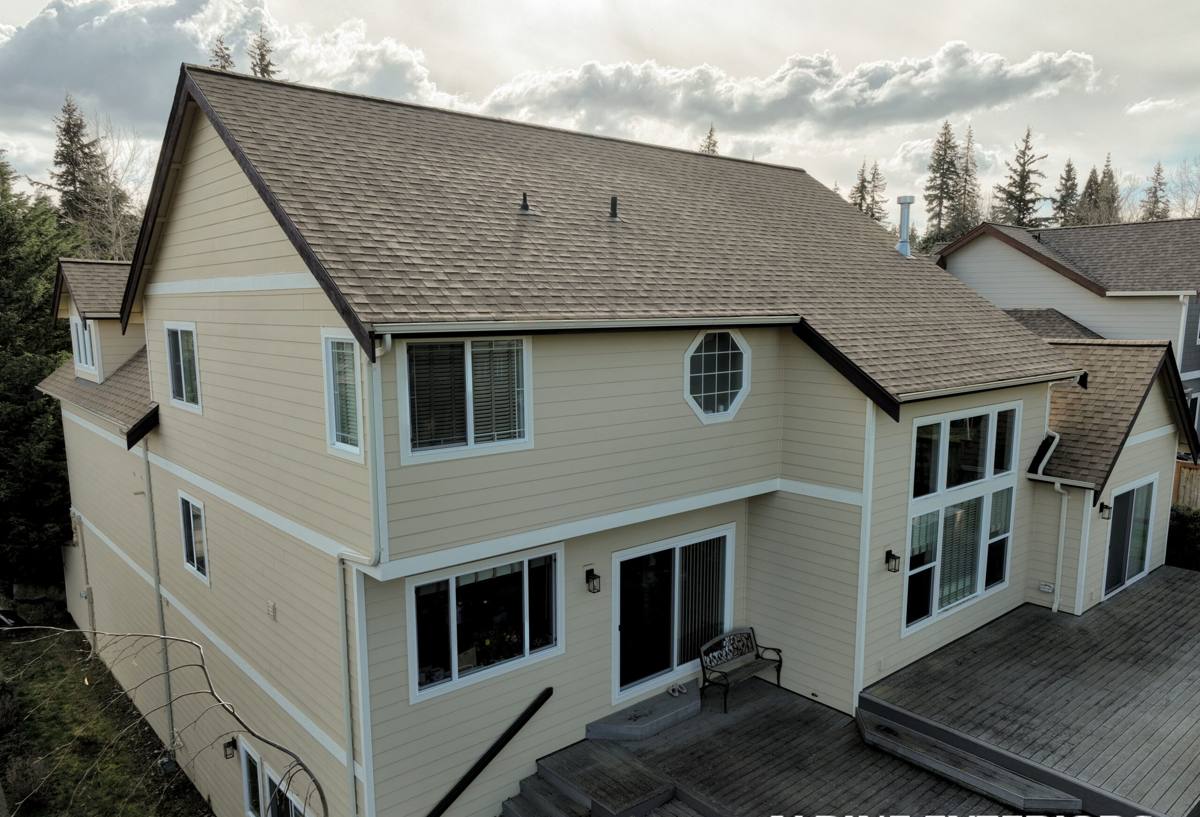
What Puget's Climate Actually Does to Siding
Salt Air and Corrosion
Airborne salt doesn't just affect boats and railings. It settles on fastener heads, trim caps, and any exposed metal flashing, and it accelerates corrosion on materials and hardware that aren't rated for it. Over time this shows up as rust streaking, failed fasteners, and — on the wrong siding products — pitting or discoloration that no amount of washing fixes.
Driving Rain and Wind-Driven Moisture
Bellingham's rain rarely falls straight down for long. Wind off the water pushes it sideways into wall faces, seams, and butt joints. A siding system with poor water management — thin or absent drainage planes, caulk relied on as the primary defense instead of a backup — will eventually let moisture behind the cladding, where it does the real damage: sheathing rot, mold, and framing decay you can't see until it's expensive.
Shade, Moss, and Prolonged Dampness
Many Puget lots sit under mature tree cover or in the shadow of neighboring structures, which keeps certain wall sections wet long after the rest of the house has dried out. That's exactly the environment moss and algae need. Siding materials that absorb moisture or have soft, porous surfaces give moss something to grip and feed on; siding that sheds water and resists organic growth does not.
Why James Hardie Fits This Climate
James Hardie fiber cement is engineered specifically to resist the kind of moisture cycling Puget homes see. It is dimensionally stable when wet or dry, non-combustible, and doesn't swell, delaminate, or rot the way wood-based and some engineered wood products can when a seam fails or a fastener works loose. Hardie's HardieZone system assigns products to climate-specific formulations — HZ5 for wetter, more temperate coastal and Pacific Northwest conditions like ours — engineered around the actual moisture and temperature cycles a home here experiences, not a generic national average.
The factory-applied ColorPlus finish is also relevant to salt air specifically: it's baked on under controlled conditions, which gives it better adhesion and fade resistance than field-applied paint, and it means the color layer isn't relying on a contractor's paint job to hold up against salt exposure over the following decade.
What a Correct Installation Involves Here
Product quality only matters if the installation respects it. On Puget homes, the details that matter most are the ones that manage water before it ever reaches the siding itself.
- A continuous drainage plane (weather-resistive barrier) installed shingle-style so water sheds outward and down, not behind the layers
- A rainscreen gap where wall conditions call for it, so any moisture that does get behind the cladding can drain and the wall can dry
- Corrosion-resistant fasteners driven to Hardie's specification — not just "stainless where visible," but the right fastener for the substrate and exposure
- Proper flashing at every window, door, and horizontal trim transition, lapped correctly so water is directed out and away, not into the seam
- Correct joint treatment at butt seams and panel edges, using the gaps, sealants, and H-channel or shiplap approach Hardie specifies for the product line
- Clearance from grade, decks, and roof lines so siding never sits in standing water or constant splash-back
Skipping any one of these doesn't usually cause a visible problem in year one. It shows up in year five or eight, as a soft spot, a stain, or a section that's failing while the rest of the house looks fine — which is exactly the kind of localized failure we get called out to diagnose on homes where someone installed good material with a shortcut process.
Comparing How Common Siding Options Hold Up in a Coastal, Wet Climate
| Factor | James Hardie Fiber Cement | Vinyl | Wood / Untreated Wood-Composite |
|---|---|---|---|
| Moisture behavior | Dimensionally stable; doesn't swell or rot | Doesn't absorb water, but seams and panels can warp or gap over time | Absorbs moisture; prone to rot and swelling at seams and cuts |
| Salt air exposure | Factory finish resists fading and doesn't corrode | Can chalk and become brittle faster near salt air and UV | Finish breaks down faster; bare wood weathers unevenly |
| Moss / algae resistance | Hard, low-porosity surface resists growth | Smooth surface but seams and J-channels trap debris and moisture | Porous surface holds moisture, feeding moss and mildew |
| Fire resistance | Non-combustible | Combustible; can melt or deform near heat sources | Combustible |
| Ongoing maintenance | Occasional rinse; repaint only if ever desired, decades out | Low, but replacement pieces can fade unevenly from originals | Regular repainting, sealing, and rot inspection required |
None of this means every other product is a bad choice everywhere — it's why we standardized on one system we can install, warranty, and stand behind consistently, instead of stocking five products and hoping each one gets installed to its own spec.
Our Process for a Puget Siding Project
Every project starts with a walk-around of the specific home, not a phone estimate. We look at which walls take the most weather, where moisture is already showing (staining, soft trim, moss buildup), how the current siding is failing if it's being replaced, and what the drainage and flashing situation looks like once we open things up.
From there: we remove the old siding down to the sheathing, inspect and repair any water damage we find before it gets covered up again, install the drainage plane and rainscreen system correctly for the wall assembly, then install the Hardie panels or lap siding per manufacturer spec — fastener pattern, gapping, flashing, and trim all included, not treated as afterthoughts. We walk the finished job with the homeowner before calling it done.
What We Won't Do
We won't quote a job that skips the drainage plane to save a day of labor, and we won't install a product we don't stand behind just because it's cheaper up front. If a home needs structural repair before siding goes on, we'll tell you that before we start, not after.
Maintenance: What Puget Homeowners Should Actually Expect
One of the real advantages of a correctly installed Hardie system in this climate is how little it asks of you afterward. That said, "low maintenance" isn't "no maintenance," especially with moss pressure in shaded areas.
- Rinse siding gently once or twice a year, more often on heavily shaded walls, to keep organic buildup from taking hold
- Avoid pressure washing directly at joints and seams — a garden hose or soft wash setup is enough and won't force water behind panels
- Keep gutters clear so overflow isn't running down wall sections repeatedly
- Trim back vegetation that keeps a wall shaded and damp longer than the rest of the house
- Have caulking and trim checked periodically, since sealant is a secondary defense and does wear over time even on a well-built wall
Why a Crew That Already Works Puget Matters
Whatcom County's permitting requirements, wind exposure ratings, and typical wall assemblies aren't identical to what you'd see on a drier project 50 miles inland. A crew that regularly works the Bellingham area already knows which details need extra attention on a home exposed to the water and which don't, has relationships with local suppliers so material delays don't stall a project mid-tear-off, and understands how the local weather window affects sequencing — you don't want a house opened up to bare sheathing right before a multi-day rain system moves in. That local familiarity is the difference between a project that goes smoothly and one that turns into a series of surprises.
Get a Straightforward Estimate
If your Puget-area home has siding that's staining, holding moss, or simply original and aging out, we're happy to take a look and give you an honest read on condition and options — no pressure, no upsell to a product we don't install. Use the form below to request a free estimate, and we'll walk the exterior with you and explain exactly what we see.