 Bellingham
 Siding Repair in Happy Valley: Getting the Diagnosis Right Before the Fix
Happy Valley is one of Bellingham's established in-town neighborhoods, a mix of older homes and newer infill on hillside streets not far from Western Washington University and the south side of the city. Because so much of the housing stock here has been standing through decades of Whatcom County winters, we get called out to Happy Valley more often for siding repair than for full tear-offs. A section of trim has come loose, a corner board is soft, a patch of siding near a downspout has been staining and re-staining no matter how many times it's been cleaned. Those are repair calls, not replacement calls, and treating them correctly starts with figuring out which one you're actually dealing with.
We install and repair James Hardie fiber cement siding exclusively. That standard doesn't change for a repair job just because the scope is smaller than a full re-side. A repair that's done with the wrong material, or done as a quick cosmetic patch over a moisture problem that's still active underneath, tends to fail again within a season or two in this climate. Our approach on every Happy Valley repair call is the same one we use on a full replacement: figure out what's actually happening behind the wall before deciding what to do about the surface.
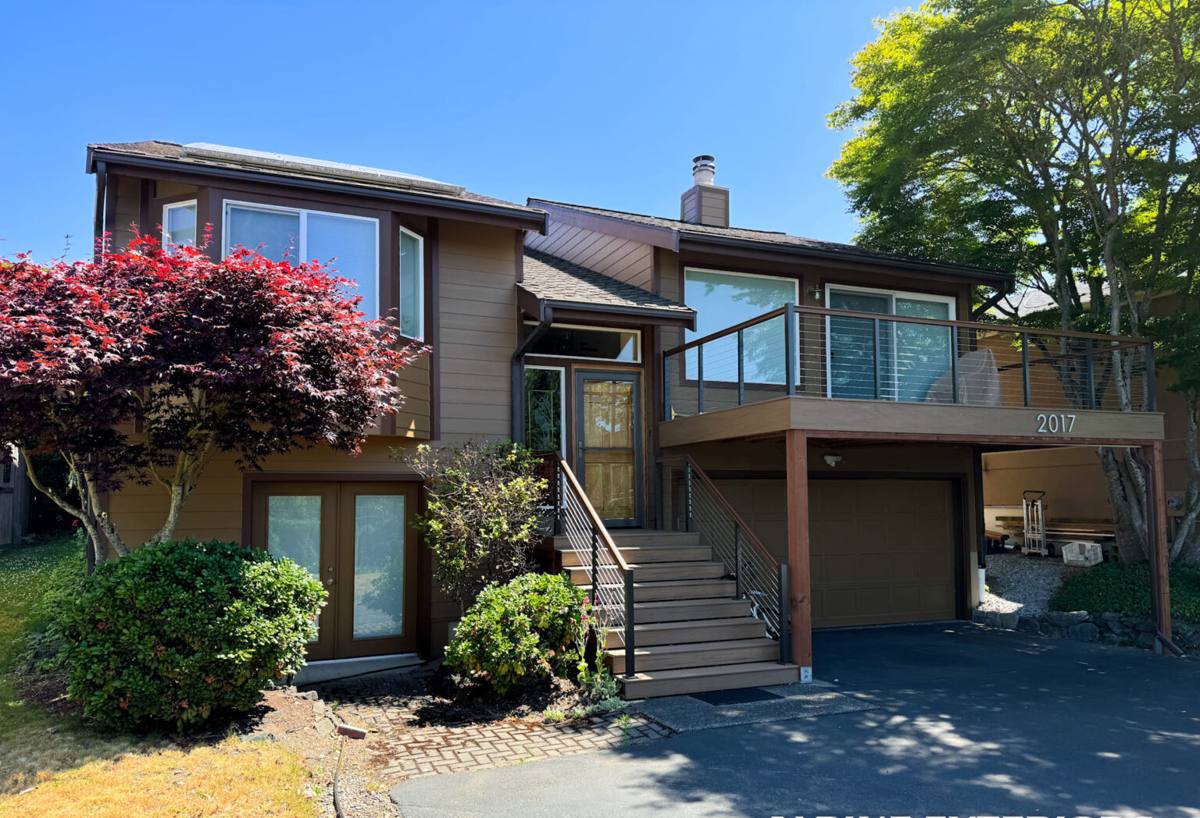
What Bellingham's Climate Does to Siding That Needs Repair
Salt Air and Corrosion at the Repair Point
Bellingham sits close enough to the bay and the Salish Sea that salt-tinged marine air moves through the whole city, Happy Valley included, even on days without an obvious storm. That steady exposure is hard on fasteners, flashing, and any exposed metal, and it's often the reason a small original defect turns into a bigger repair years later. A nail head that starts to corrode, or flashing that was never properly lapped, gives water a path in long before anyone notices a stain on the surface.
Wind-Driven Rain Finding the Weak Spot
Like most of coastal Whatcom County, Bellingham's rain rarely falls straight down. Wind pushes it sideways, and sideways rain finds the one seam, joint, or nail hole that isn't sealed the way it should be. On an older Happy Valley home, that's often a spot where a previous repair or a piece of trim was reworked at some point without matching the original water management detail, which is exactly the kind of thing that looks fine until the next big storm off the water.
A Moss Season That Runs Most of the Year
Mild temperatures, tree cover, and consistent dampness give moss and mildew a long growing season across Bellingham, and Happy Valley's mature street trees and established landscaping add extra shade to plenty of homes here. Any siding surface that holds moisture instead of shedding it becomes a growth surface, and a repair that doesn't address the underlying moisture problem usually just gives the moss a fresh patch of material to colonize.
Repair or Replace? How We Make That Call
Not every siding problem in Happy Valley means a full re-side, and we're not going to tell you it does just to sell a bigger job. Isolated impact damage, a cracked board, trim that's pulled away from the wall, or a section that failed around a single window can usually be repaired and matched into the surrounding siding without touching the rest of the house. What changes that answer is what we find once we open up the area: if moisture has been tracking behind the wall assembly for a while, if the sheathing underneath is soft, or if the existing siding is an older product that's simply reached the end of its service life, a patch just delays a bigger job by a year or two while the damage keeps spreading under the surface. We'll show you what we find and give you a straight answer about which situation you're actually in.
What a Correct Siding Repair Actually Involves
A repair that holds up in this climate is more than swapping a damaged board for a new one. It involves the same attention to water management that a full installation gets, just applied to a smaller section of wall:
- Removing enough surrounding material to see the actual extent of the damage, not just the visible part
- Checking the house wrap or weather-resistive barrier underneath for tears, gaps, or improper lapping
- Inspecting sheathing and framing for soft spots or rot before any new siding goes back on
- Correcting flashing at windows, trim, and penetrations if that's what let water in to begin with
- Fastening new material to Hardie's published spacing and clearance requirements, not just close enough
- Matching ColorPlus finish and profile as closely as the product line allows, so the repair doesn't stand out as an obvious patch
Skip the parts that aren't visible from the driveway and the repair might look fine for a season. The failures that come from cutting corners on a repair, hidden rot, a repeat leak, a patch that fades differently than the surrounding siding, tend to surface after the crew is long gone.
Why We Only Repair With James Hardie Fiber Cement
If your Happy Valley home already has James Hardie siding, repairs are usually the more straightforward case: we can typically match the profile and ColorPlus finish closely enough that a patch blends into the wall instead of standing out as a visible seam. If your home has vinyl, LP SmartSide, cedar, or another product we don't install, we'll still give you an honest read on the repair itself. Sometimes a small, isolated fix using compatible material is a reasonable way to buy time. But if the damage you're seeing is a symptom of that material's known weaknesses in a climate this wet, patching it is usually a short-term fix, and we'd rather tell you that up front than bill you for a repair we don't think will hold.
We don't install or repair-in-kind with LP SmartSide, vinyl siding, Cemplank, Allura, primed spruce, or cedar as a long-term solution. Those are legitimate products, and other contractors work with them well. But after years of tear-offs and repair calls across Bellingham's marine climate, we made a professional decision to stand behind one system completely rather than mix materials or shift long-term maintenance risk back onto the homeowner.
Signs Your Happy Valley Home Needs Siding Repair
- Moss or dark staining that returns quickly after cleaning, especially on shaded or tree-covered walls
- Soft or spongy siding near the base of the wall, around window trim, or below downspouts
- Cracked, chipped, or missing boards after a windstorm or falling debris
- Paint that's peeling, bubbling, or visibly different in color from the surrounding wall
- Gaps opening up at seams, corners, or trim joints where water can track in
- A musty smell or noticeable draft near an exterior wall that wasn't there before
Our Siding Repair Process
Assessment
We start by looking at the damaged area and enough of the surrounding wall to understand whether the problem is isolated or connected to something bigger, like a flashing failure at a window or a roofline that's directing water where it shouldn't go.
Matching and Sourcing
For Hardie siding, we source the closest available match in profile and ColorPlus color. Older color runs sometimes require a slightly different approach to keep the repair from standing out, and we'll walk you through what to expect before any material is ordered.
Repair Execution
We fix what's actually wrong, not just what's visible, correcting flashing or house wrap issues that caused the damage before closing the wall back up with new material fastened to spec.
Final Walkthrough
We walk the completed repair with you, explain what we found and what we fixed, and flag anything else on the wall worth keeping an eye on going forward.
Siding Repair Cost Factors in Happy Valley
| Factor | What It Affects | Why It Matters Here |
|---|---|---|
| Extent of hidden moisture damage | How much material and labor beyond the visible patch | Trapped moisture behind older siding is common on Happy Valley's older housing stock |
| Material match availability | Whether the repair blends in or needs a broader color-matched section | Older ColorPlus color runs aren't always an exact match years later |
| Access and wall height | Labor time and equipment needs | Hillside lots and mature trees common in this neighborhood can add setup time |
| Underlying cause of the damage | Whether flashing, house wrap, or trim also needs correcting | Wind-driven rain off the bay tends to find and exploit the same weak point repeatedly |
| Existing siding material | Whether a like-for-like patch is realistic or replacement makes more sense | Non-Hardie materials common on older homes here don't always take a durable repair |
Real numbers depend on what we find once the damaged section is opened up, which is why we look at the wall in person rather than quoting a repair sight unseen.
Why Hire a Crew That Already Works Happy Valley
A crew that repairs siding across this neighborhood regularly has already seen how salt air, wind-driven rain, and a long moss season play out on the specific mix of older and newer homes here. That shows up in practical judgment on a repair call: which walls tend to hide moisture damage behind an intact-looking surface, where a previous owner's DIY fix is likely the actual source of the leak, and when a small patch is genuinely enough versus when it's postponing a bigger problem. Happy Valley's older housing stock and hillside terrain aren't the same as a newer subdivision on flatter ground, and a crew with hands-on repair experience in this specific neighborhood accounts for that instead of treating every repair call the same way.
If you've got a section of damaged, stained, or failing siding on a Happy Valley home, we're glad to take a look and give you an honest read on what it actually needs. Reach out using the form below to schedule a free, no-pressure estimate.