 Bellingham
 Metal Roofing in Ferndale: Built for the Weather You Actually Get
Ferndale sits close enough to the water and the marine air that moves through Whatcom County that roofing decisions here can't be made from a generic playbook. Between the salt-laden air rolling in off the bay, long stretches of driving rain in the fall and winter, and a moss season that never really seems to end, a roof in Ferndale is working harder than a roof in a drier, inland climate. Metal roofing has become a popular answer for homeowners who are tired of replacing shingles every 15-20 years and want something that handles this specific mix of conditions well.
This page is about metal roofing specifically for Ferndale properties — what the local climate demands, what a correctly installed metal roof actually involves, and why it matters to hire a crew that already knows this area rather than a company passing through from out of town.
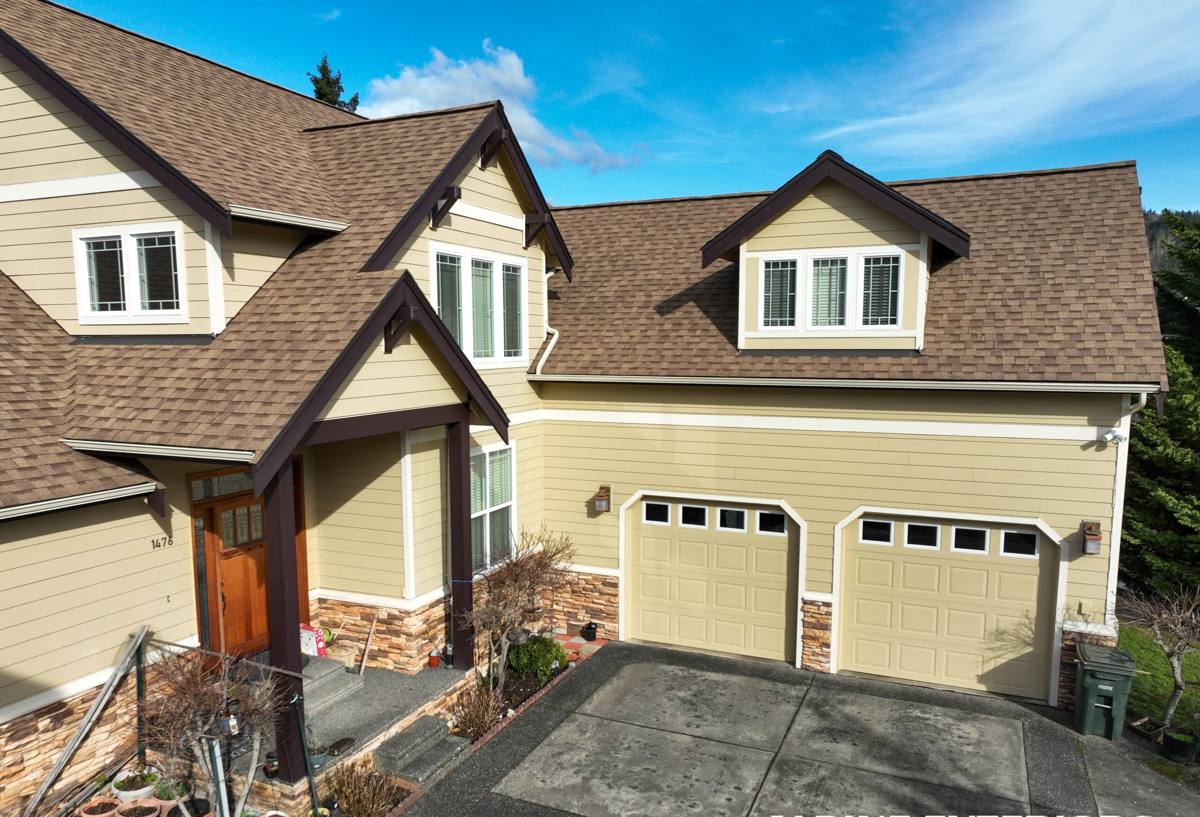
What Ferndale's Climate Does to a Roof
Salt Air and Corrosion
Proximity to Bellingham Bay and the Salish Sea means airborne salt is a real factor for homes throughout this part of Whatcom County, including Ferndale. Salt-laden moisture accelerates corrosion on unprotected or poorly coated metal, which is why not every metal roofing product performs the same way here. Fasteners, flashing, and panel coatings all need to be matched to a coastal-influenced environment, not just picked off a standard supply list.
Driving Rain and Wind-Driven Water
Rain in this region doesn't just fall straight down — wind off the water regularly pushes it sideways into wall-roof transitions, valleys, and penetrations. A roof that only sheds water well in calm conditions isn't enough. Underlayment, seam design, and flashing details all have to account for wind-driven rain finding its way into gaps that a calmer climate would never expose.
Moss Season
Western Washington's moss season is long, and Ferndale gets its full share of it. Moss holds moisture against roofing material, works into seams, and on absorbent surfaces can shorten lifespan considerably. Metal roofing doesn't eliminate moss risk in shaded, damp areas, but its smooth, non-porous surface gives moss far less to grip onto compared to shingles or wood, and it dries out faster between rain events.
Why Metal Roofing Fits This Area Well
Metal roofing isn't the right fit for every home or every budget, and we'll say that plainly. But for Ferndale's specific combination of salt air, wind-driven rain, and moss pressure, it offers real advantages:
- Sheds water fast, reducing the time moisture sits on the surface where moss and algae can establish
- Properly coated panels resist the corrosive effects of salt air far better than unprotected fasteners or bare metal
- Handles wind uplift well when installed with the correct fastening pattern for our regional wind exposure
- Long service life reduces how often the roof is disturbed — every tear-off and reinstall is a chance for a leak to start
- Performs consistently through the wet season without the granule loss or curling that affects some other roofing types over time
What a Correct Metal Roof Installation Involves
Deck Inspection and Prep
Before any panel goes on, the roof deck itself needs to be sound. In a climate this wet, hidden moisture damage under old roofing is common — soft spots, delaminated sheathing, or rot around old penetrations. Skipping this step and roofing over a compromised deck is one of the most common shortcuts that leads to problems years later, and it's not something we're willing to do.
Underlayment Choice
Given how much wind-driven rain this area sees, underlayment matters as much as the metal itself. A high-quality synthetic or self-adhered underlayment at eaves, valleys, and around penetrations gives the roof a real second line of defense if wind ever pushes water past the panel seams.
Fastener and Flashing Compatibility
This is where salt air really matters. Using fasteners, flashing, and trim that aren't rated for the coastal-influenced conditions here can lead to premature corrosion at exactly the points where a roof is most vulnerable — seams, edges, and penetrations. We match fastener and flashing materials to the panel system so the whole assembly ages at the same rate.
Panel Seaming and Fastening Pattern
Standing seam and exposed-fastener systems each have a correct fastening pattern and spacing for wind exposure like Whatcom County gets. Getting this wrong doesn't usually show up as a failure in year one — it shows up as loosened panels or leaks several years down the road, after storms have had time to work on a marginal installation.
Ventilation
Metal roofs perform best with proper attic or roof-deck ventilation. In a moisture-heavy climate, poor ventilation can trap condensation underneath the panels, which undercuts one of the main advantages of switching to metal in the first place. We check ventilation as part of every metal roofing job, not as an afterthought.
Metal Roofing Options: A Quick Comparison
| Panel Type | Best For | Coastal Air Considerations |
|---|---|---|
| Standing seam | Homes wanting a clean, modern look and minimal seam exposure | Concealed fasteners reduce corrosion entry points; premium coating recommended |
| Exposed-fastener panels | Budget-conscious projects, outbuildings, some homes | Fastener quality and gasket seals matter more since fasteners face the weather directly |
| Stone-coated steel | Homeowners wanting a shingle or tile appearance with metal's durability | Coating integrity at cut edges needs careful attention near salt air |
Our Process on a Ferndale Metal Roofing Project
- Free on-site inspection and honest assessment of your current roof, including deck condition where accessible
- Discussion of panel type, coating, and color options suited to your home and budget
- Clear written estimate — no vague allowances, no pressure to decide on the spot
- Deck repair as needed before any panel installation begins
- Installation of underlayment, flashing, and panels matched for coastal wind and moisture exposure
- Final walkthrough so you understand what was done and what maintenance, if any, to expect
We keep this process the same whether it's a full replacement or a metal roof going on new construction. The steps don't change just because a job is smaller or bigger — the details are what protect the home either way.
Maintenance: What Metal Roofing Still Needs
Metal roofing is lower-maintenance than most alternatives, but "low-maintenance" isn't "no-maintenance," especially here. A short annual checklist covers most of what a Ferndale homeowner should watch for:
- Clear debris and organic buildup from valleys and around penetrations before wet season sets in
- Check for moss or algae establishing in shaded areas, particularly under overhanging trees
- Look at fastener heads and flashing edges for early signs of corrosion or loosening
- Confirm gutters and downspouts are clear so water isn't backing up under the roof edge
- Have a professional check sealant at penetrations every few years, since sealant ages faster than the metal itself
Cost Factors Homeowners Should Understand
Metal roofing typically costs more upfront than asphalt shingles, and the final number depends on several factors specific to your property, not just square footage:
| Factor | Why It Affects Cost |
|---|---|
| Panel type and coating grade | Higher-grade coatings resist coastal corrosion longer but cost more per panel |
| Roof complexity | More valleys, dormers, and penetrations mean more flashing work and labor time |
| Deck condition | Rot or delamination found during tear-off adds repair costs before installation can proceed |
| Access and pitch | Steeper or harder-to-access roofs take longer and require more safety setup |
| Ventilation upgrades | Adding or correcting ventilation adds cost but protects the long-term performance of the roof |
We'd rather walk you through these factors honestly during an estimate than quote a number that doesn't hold up once we're actually on the roof.
Why a Local Ferndale Crew Matters
A crew that already works in Ferndale and the surrounding Whatcom County area understands the wind exposure, the moss pressure, and the salt air corrosion patterns specific to this stretch of coastline without having to relearn it on your roof. That local knowledge shows up in small decisions — which flashing detail to use at a particular wall intersection, how much ventilation a given attic really needs, which fastener spec holds up under our conditions — that a crew unfamiliar with the area might get wrong the first time. It also means we're reachable if a question comes up after the job is done, not a phone number that stops answering once the invoice is paid.
If you're weighing metal roofing for a home in Ferndale, we're glad to walk your roof, answer your questions honestly, and put together a free, no-pressure estimate using the form below.