 Bellingham
 Why Fairhaven Siding Takes a Different Kind of Beating
Fairhaven sits close to Bellingham Bay, and that proximity to the water shapes everything about how siding ages here. Marine air carries salt that speeds up corrosion on fasteners and trim, and it breaks down paint and caulk faster than you'd see further inland. Add in wind-driven rain coming off the water and heavy tree canopy on many older streets, and you get siding that rarely gets a real chance to dry out between storms.
Whatcom County's wet season runs long — often from October well into spring — and shaded, north-facing walls can stay damp for days after a storm passes. That constant moisture is what drives the moss and algae growth so many Fairhaven homeowners deal with. Moss isn't just a cosmetic nuisance. Once it takes hold on a siding surface, it holds water against the material, keeps that surface cooler and wetter than the surrounding air, and creates the exact conditions that rot wood-based products and stress paint films over time.
None of this means Fairhaven homes are doomed to constant repair. It means siding here needs to be installed and repaired with this specific climate in mind, not treated the same way you'd treat a house in a drier, sunnier part of the state.
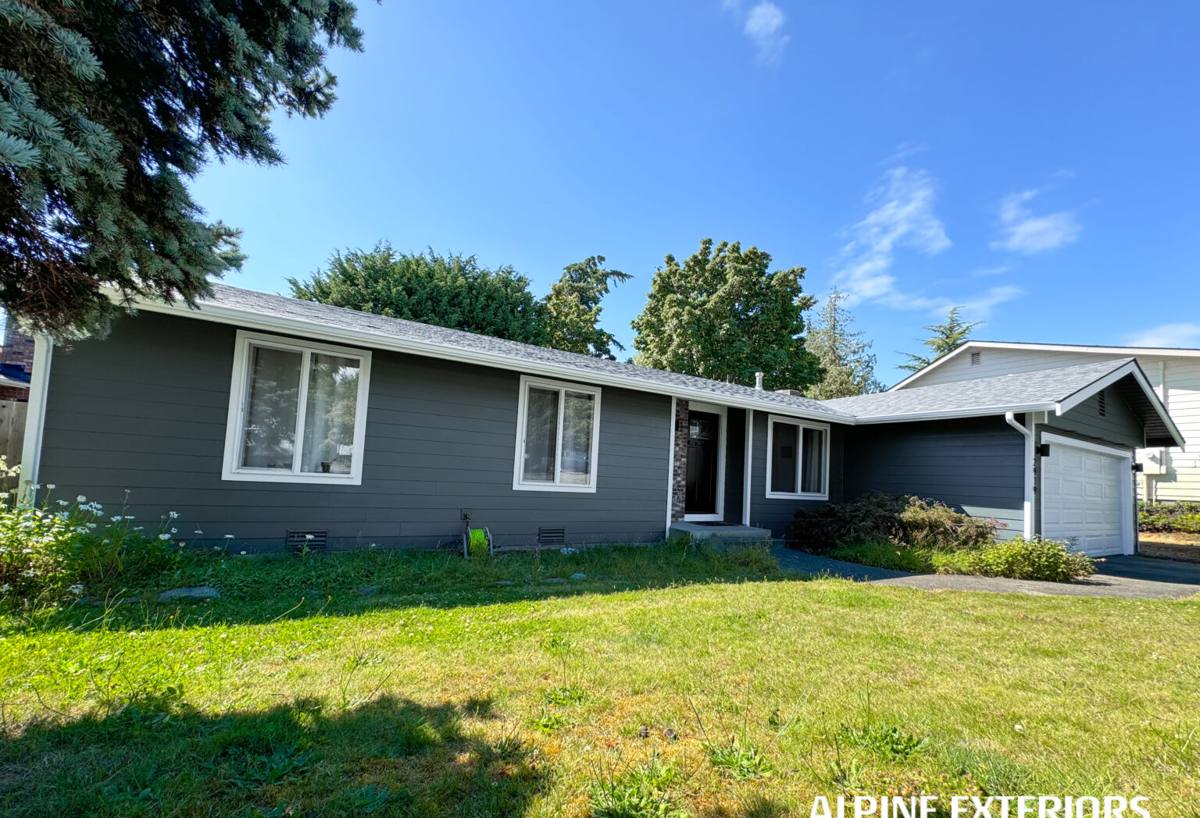
Signs Your Fairhaven Home Needs Siding Repair
Most siding problems don't show up as a sudden failure — they build slowly, and by the time they're obvious from the street, there's often more going on behind the surface than what you can see. Walk your exterior a couple of times a year and look for:
- Soft, spongy, or spongey-feeling spots when you press on a board
- Thick moss or algae buildup on siding faces, especially under trees or on shaded walls
- Paint that's peeling, bubbling, or cracking in localized patches rather than evenly across the whole wall
- Gaps opening up at seams, corners, or where siding meets window and door trim
- Boards that look warped, buckled, or slightly bowed away from the wall
- Dark staining streaks running down from butt joints or beneath window sills
- A noticeable draft near exterior walls, or a jump in heating costs with no other explanation
Any one of these on its own might be minor. Several showing up in the same area of the house usually means water has been getting behind the siding for a while.
What Actually Causes Most Siding Damage We See in This Neighborhood
Understanding the cause matters more than fixing what's visible. A patch over a symptom without addressing what let water in will fail again, usually within a season or two.
| What You See | Likely Root Cause | Typical Fix |
|---|---|---|
| Moss/algae staining on wall surface | Shade, poor airflow, prolonged moisture retention | Clean, treat, and address the trapped moisture — not just power-wash and walk away |
| Soft or delaminating boards near ground level | Splash-back, poor grading, or siding installed too close to soil | Cut back and replace affected sections with proper clearance |
| Staining or rot below window sills | Failed or missing flashing/kick-out flashing | Repair flashing detail first, then replace damaged siding around it |
| Cracked caulk lines and open seams | Original caulk reaching end of service life, or wrong caulk for the joint | Remove and re-seal with a product rated for this climate, after confirming the substrate underneath is sound |
| Widespread paint failure across a wall | Moisture moving through the wall from behind, not just weather exposure | Investigate housewrap/moisture barrier condition before repainting |
Repair or Replace? How We Make That Call
Not every problem area needs a full re-side, and we're not going to tell you it does. The honest answer depends on a few factors we check before recommending anything:
How far the moisture has traveled
If damage is isolated to a section — a corner, a run below a leaking gutter, an area around one window — targeted repair is usually the right call. If moisture testing shows damp readings spreading across multiple wall sections, that points to a systemic issue that repair alone won't solve.
The age and condition of what's already there
Older siding that's already brittle or has been painted over rot multiple times often isn't worth chasing with more patches. Newer siding with an isolated failure point is a good repair candidate.
Whether a clean match is realistic
If your home has an older or discontinued siding product, matching profile, reveal, and texture on a repair section can be difficult. In those cases we'll walk you through the honest trade-offs rather than force a mismatch.
What a Correct Siding Repair Actually Involves
A repair that just covers the visible damage is not a repair — it's a delay. Done right, siding repair on a Fairhaven home involves:
- Removing enough surrounding material to see what's actually happening behind the siding, not just at the surface
- Checking the condition of the housewrap or weather-resistive barrier in that section
- Confirming flashing at windows, doors, and any penetrations is doing its job
- Replacing damaged framing or sheathing if rot has reached that far — not siding over it
- Installing new material with correct fastening, spacing, and clearance from grade and hard surfaces
- Sealing and finishing the repair so it holds up to the same wind-driven rain that caused the original damage
Skipping any of these steps is how a homeowner ends up paying for the same repair twice.
Why We Repair With James Hardie Fiber Cement
We install and repair with James Hardie fiber cement siding exclusively. We don't install LP SmartSide, vinyl, Cemplank, Allura, primed spruce, or cedar, and we're upfront about why: in a climate like Whatcom County's, with salt air, long wet seasons, and heavy moss pressure, the material matters as much as the workmanship.
Hardie fiber cement is non-combustible, doesn't swell or rot the way wood-based products can when moisture gets past the surface, and its HZ5 product line is engineered for climates with exactly this kind of wind and moisture exposure. The factory-applied ColorPlus finish holds color and resists the fading and chalking that repeated repainting cycles cause on other materials — which matters a lot on a house where you might only be repairing one section and want it to blend in rather than stand out.
When we're called out for a repair on a home with a different existing siding product, we'll always do an honest assessment first. Sometimes a like-for-like patch is the practical answer for a small area. But when a section is being opened up anyway, transitioning that portion — or eventually the whole exterior — to Hardie is what we'd put on our own homes, because it holds up to this specific climate better over the long run.
Our Process for Fairhaven Siding Repair Calls
We keep the process straightforward because most homeowners just want to know what's wrong and what it'll take to fix it properly.
- On-site inspection of the affected area and a walk of the full exterior, since related issues often show up in more than one spot
- Moisture readings taken behind the siding where damage is suspected, not just a visual check
- A written scope explaining what we found, what's causing it, and what the repair involves — no surprise add-ons mid-job
- Repair work using James Hardie materials matched as closely as possible to your existing siding's profile and color
- Cleanup and a final walkthrough so you know exactly what was done and why
Why a Local Bellingham Crew Matters for This Kind of Work
Siding repair isn't just carpentry — it's diagnosis. A crew that works Fairhaven and the surrounding Bellingham neighborhoods regularly has already seen how the tree cover on certain streets holds moisture longer, how wind off the bay hits certain wall orientations harder, and how older homes in this area were typically built and sided over the decades. That experience shortens the guesswork on your inspection and shows up in a more accurate diagnosis the first time.
There's also the practical side: a local crew can get to a Fairhaven repair call faster, doesn't tack on travel costs for a job a few miles from our base, and is still around the following season if you have a question about how the repair is holding up. For a repair — where the whole point is stopping a moisture problem before it spreads — that local accountability matters as much as the material we use.
If you're seeing moss buildup, soft spots, or paint failure on your Fairhaven home's siding, we're happy to take a look and give you a straight answer about what's going on and what it would take to fix it. Reach out for a free, no-pressure estimate using the form below.