 Bellingham
 Building Decks for Barkley's Particular Conditions
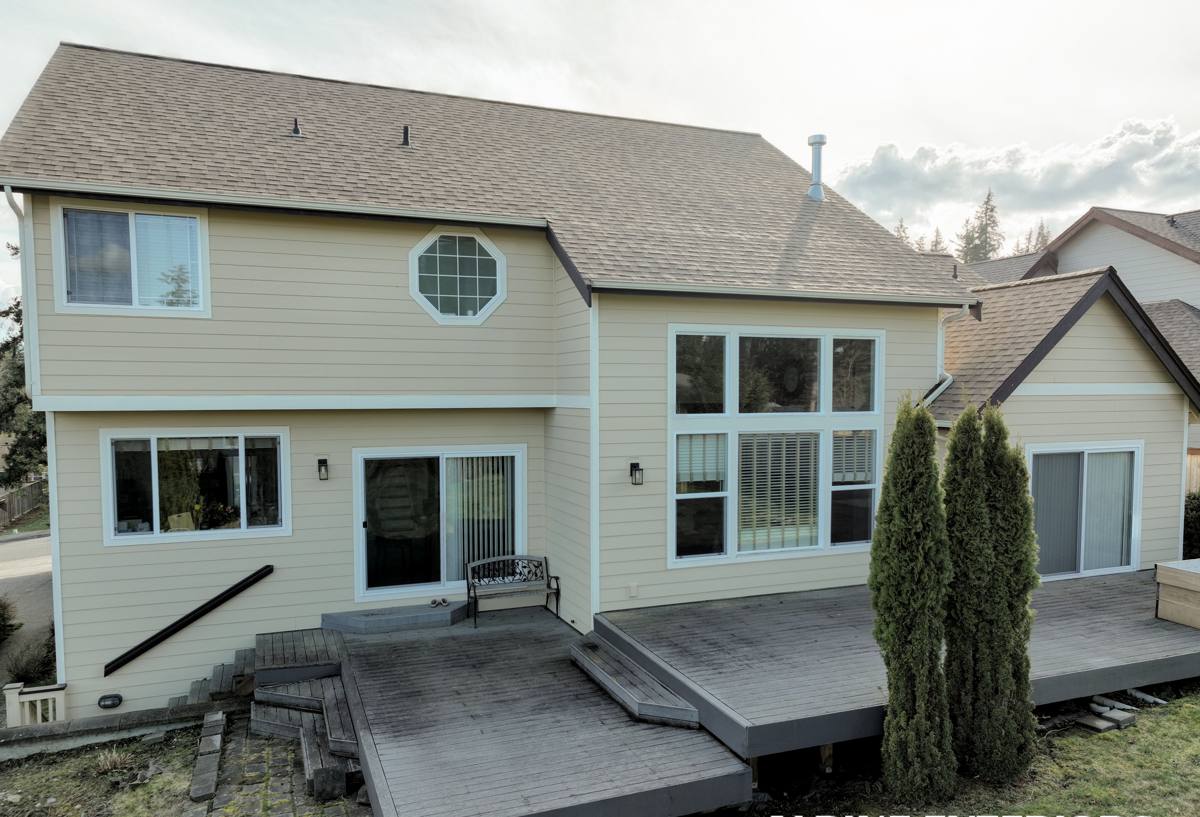
Barkley sits on higher, rolling ground on Bellingham's east side, with a mix of newer construction and established homes shaded by mature trees. That combination matters for deck building. Tree cover means more organic debris landing on deck boards and less direct sun to dry things out between rains. Whatcom County's long wet season, running from fall through late spring, means any deck built here spends months of the year damp, not just occasionally rained on. A deck designed without that in mind will show it within a few seasons — soft spots, moss creep, fastener staining, and boards that cup or crown as they take on and release moisture unevenly.
We've built and repaired decks across Bellingham and Whatcom County long enough to know which details are cosmetic and which ones actually determine how a deck performs ten or fifteen years out. In a neighborhood like Barkley, where lots often have some slope and mature landscaping close to the house, drainage and airflow under the deck deserve as much attention as the decking material itself.
What Bellingham's Climate Actually Does to a Deck
It's not one big storm that damages a deck around here — it's the accumulation. Understanding the specific stresses helps explain why certain construction choices matter more in this region than they would somewhere drier.
Driving rain and standing moisture
Wind-driven rain off the Sound pushes water sideways into fascia boards, stair stringers, and the underside of railings — areas that a lot of deck designs treat as low-exposure. Combined with our low winter sun angle, wet surfaces often don't get a real chance to dry out for days at a time.
Moss and organic buildup
Whatcom County's moss season is long, and Barkley's tree cover adds leaf and needle litter into the mix. Moss and debris that sit on decking hold moisture against the wood or composite surface, which accelerates rot in wood and can stain or degrade the surface layer of composite boards over time.
Salt-tinged air
Bellingham's proximity to the water means fasteners, brackets, and any exposed metal hardware are working against a mildly corrosive environment year-round. Hardware rated for interior or general exterior use corrodes faster here than the same product would inland.
What a Correctly Built Deck Needs in This Environment
A deck that holds up in Barkley isn't about buying the most expensive materials — it's about a handful of construction decisions that address the specific ways moisture and organic material interact with a structure here.
- Stainless steel or heavy-duty coated fasteners and structural hardware, not standard galvanized, given the corrosive coastal air
- Proper flashing where the deck ledger attaches to the house, so water is directed away from the band joist rather than trapped behind it
- Adequate slope and gapping in the decking surface so water sheds instead of pooling between boards
- Enough clearance and airflow underneath the deck to let the framing dry out between rain events
- Joist tape or a comparable protective barrier on framing lumber to slow moisture absorption at the most vulnerable point — the top of the joist
- Material choice that matches how much upkeep the homeowner actually wants to do long-term
Decking Material Choices for Barkley Homes
There's no single right answer here — it depends on budget, how much maintenance you want to take on, and the look you're after. We'll walk through the honest trade-offs rather than pushing one product.
| Material | Upfront Cost | Maintenance in This Climate | Typical Lifespan Here |
|---|---|---|---|
| Pressure-treated wood | Lowest | Annual cleaning and periodic staining/sealing to fight moss and moisture absorption | 10-15 years with consistent upkeep |
| Cedar | Mid-range | Regular cleaning and re-oiling to prevent graying and moss buildup | 15-20 years with upkeep |
| Composite decking | Higher | Periodic washing to prevent surface staining from moss and debris; no staining/sealing | 20-25+ years, backed by manufacturer warranty |
| PVC decking | Highest | Lowest maintenance; resists moisture absorption almost entirely | 25+ years, backed by manufacturer warranty |
For homes in Barkley with significant tree cover, we lean toward recommending composite or PVC for anyone who doesn't want to be out scrubbing moss off boards every spring. But plenty of homeowners are happy with cedar or treated wood as long as they understand the maintenance commitment going in — it's a legitimate choice, not a lesser one.
Framing and Structure: Where Decks Actually Fail
Most deck failures we see in this region aren't surface problems — they're framing problems that took years to show up. The ledger board connection, the posts and footings, and the joists themselves are doing the structural work, and in a wet climate they're also the components most at risk if water gets trapped against them.
Ledger attachment and flashing
Where the deck attaches to the house is the single most common source of hidden rot, because a poorly flashed ledger lets water run behind the board and into the house's band joist. This is worth getting right the first time — it's expensive to fix once it's failed and hidden behind decking.
Footings and posts
Whatcom County's frost depth and drainage-variable soils mean footings need to be sized and set correctly for the site, not just to a generic minimum. On sloped Barkley lots, this sometimes means deeper or additional footings compared to a flat-lot deck of the same size.
Joist protection
Untreated joist tops are one of the first places rot starts on an older deck, simply from rain sitting on the flat top surface under the decking. Protecting that surface during construction is inexpensive compared to what it costs to fix later.
Design Considerations Specific to Barkley Lots
Many Barkley properties have some grade change and mature landscaping close to the house, which shapes how a deck should be laid out.
Working with slope
A sloped backyard often calls for a multi-level deck or one built on taller posts, which changes the engineering requirements for railings, stair runs, and structural bracing compared to a low, single-level deck.
Tree proximity
Building near established trees means accounting for root zones during footing placement and expecting more leaf and needle debris on the finished deck, which should factor into material choice and gap spacing between boards.
Railings and code
Washington building code sets minimum railing heights and baluster spacing for any deck above a certain height, and taller decks on sloped Barkley lots often fall into that requirement. We handle the permitting and inspection side so the finished structure is compliant, not just attractive.
Our Process for a Barkley Deck Project
We keep the process straightforward because most homeowners are doing this once and want to know what to expect.
- On-site visit to assess the lot, existing structure (if replacing a deck), drainage, and access
- Design and material discussion based on your budget, maintenance preference, and how you actually use the space
- A clear written estimate before any work starts, with material and labor broken out
- Permitting where required — we handle the paperwork with the city or county
- Construction, with attention to the flashing, fastener, and drainage details that matter most in this climate
- Final walkthrough so you understand basic care for whatever material you chose
Why a Local Crew Matters for This Kind of Project
Deck building looks similar everywhere on paper, but the details that determine whether a deck lasts are regional. A crew that mainly works drier climates may not default to stainless fasteners, may under-flash a ledger board, or may not think twice about airflow under the structure — none of which shows up as a problem until a few wet seasons in. We work in Bellingham and Whatcom County specifically, which means we're accounting for salt air, driving rain, and moss season as standard practice, not an afterthought. We're also familiar with local permitting requirements and the kind of site conditions common to Barkley's sloped, tree-covered lots, so there are fewer surprises once we start digging footings.
Maintaining Your Deck Once It's Built
Whatever material you choose, a little seasonal attention goes a long way in this climate. Clearing leaves and needles before they compost in place, keeping gutters and downspouts directing water away from the deck area, and giving the surface an occasional wash to knock back moss growth will meaningfully extend the life of any deck material. Wood decks need that plus periodic sealing or staining; composite and PVC decks mostly just need to stay clean.
If you're planning a new deck or replacing an aging one in Barkley, we're happy to come take a look and walk you through honest options for your specific lot and budget. Fill out the form below for a free, no-pressure estimate.