 Bellingham
 Why Composite Decking Makes Sense in Sudden Valley
Sudden Valley sits tucked into the timber above Lake Whatcom, and that setting is exactly what makes deck-building here different from a typical Bellingham lot. Homes back up to mature fir and cedar, get long stretches of filtered shade, and sit close enough to the water that humidity lingers in the air well after a rain has passed. Add in Whatcom County's wet season, which can run from October into May with barely a dry week, and you've got conditions that are hard on any exterior wood surface. Composite decking was built for exactly this kind of environment — it doesn't absorb moisture the way lumber does, it doesn't feed the algae and moss that thrive in shaded, damp corners, and it holds its color and structure through freeze-thaw cycles that crack and cup natural wood over a few seasons.
That doesn't mean composite is maintenance-free or that any composite board will do in this setting. It means the material choice, the substructure underneath it, and the way it's installed all need to account for how much moisture this property is actually dealing with — not just average Bellingham weather, but the specific microclimate of a shaded, tree-lined lakeside lot.
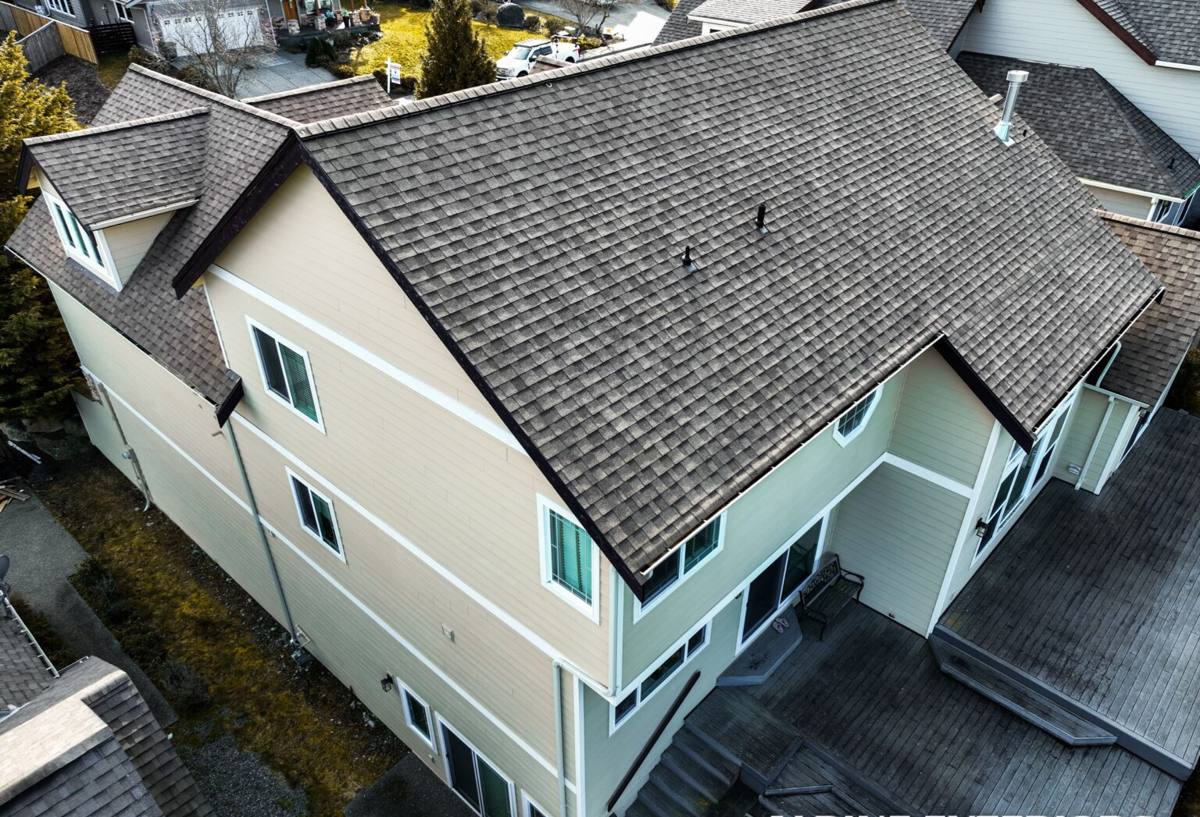
What Shade, Moisture, and Moss Actually Do to a Deck Here
Most deck failures we see in wooded, lake-adjacent neighborhoods aren't dramatic — they're slow. Water gets trapped somewhere it can't dry out, and over a couple of seasons that turns into rot, soft spots, or a slick, moss-covered surface that's a real slip hazard on stairs and landings.
The main culprits
- Filtered sun, not full shade: Trees around Sudden Valley properties block enough direct sun that boards and joists stay damp longer after rain than they would on an open lot, giving moss and algae more time to establish.
- Needle and leaf litter: Debris collects between boards and in corners, holding moisture against the surface and, on wood decks, feeding rot right where you can't see it.
- Driving rain off the lake: Wind-driven rain doesn't just fall straight down — it gets pushed under railings, into ledger connections, and behind fascia boards if flashing and gaps weren't planned for correctly.
- Long stretches without a hard freeze or dry spell: Whatcom County's marine-influenced climate means decks rarely get a long dry-out period, so any design flaw that traps water has months to do damage before it's obvious.
None of this is unique to Sudden Valley, but it's more pronounced on lots with heavy tree cover and proximity to the lake than it is on an open, sun-exposed yard elsewhere in the region.
Composite vs. Wood vs. PVC for This Setting
| Material | How it handles shade & moisture | Maintenance | Typical lifespan here |
|---|---|---|---|
| Pressure-treated wood | Absorbs moisture readily; prone to cupping, splintering, and rot in shaded, damp spots | Annual sealing/staining to have any chance of lasting | 10-15 years, often less in heavy shade |
| Cedar | Naturally rot-resistant but still absorbs water; greys and can develop moss if not maintained | Regular cleaning and periodic sealing | 15-20 years with upkeep |
| Composite (capped) | Non-absorbent surface resists moss and staining; core is protected from standing water | Occasional wash-down, no sealing/staining | 25-30+ years, backed by manufacturer warranty |
| PVC/cellular | Fully moisture-resistant but can feel less natural and shows heat flex in sun-exposed spots | Low, similar to composite | 25-30+ years |
We install capped composite on the large majority of Sudden Valley decks because it gives the moisture resistance homeowners need in this climate without the tradeoffs of an all-plastic product. It's worth noting composite isn't the right call for every project — on a deck with unusual heat exposure or a very tight budget, wood or PVC might make more sense, and we'll tell you that honestly during the estimate rather than push one product for every job.
What a Correct Composite Deck Build Actually Involves
The board itself gets most of the attention, but in a shaded, moisture-heavy setting like Sudden Valley, what's underneath and around the boards matters just as much.
Substructure and drainage
Joists get treated lumber or, on higher-end builds, composite/aluminum joist systems, plus joist tape over any exposed cut ends and fastener points to keep water out of the wood core. Proper spacing beneath the deck and airflow underneath keep the whole structure from becoming a permanently damp cavity — a real risk on lots with limited sun exposure.
Fastening and board gaps
Hidden fastener systems keep the surface clean and reduce the fastener penetrations that can become water entry points. Gapping between boards is set to manufacturer spec so water and debris can actually drain through rather than pool on the surface — too tight a gap in a shaded, leaf-litter-heavy yard is a common mistake that leads to standing moisture.
Flashing and ledger connections
Where the deck ties into the house, correct flashing keeps driving rain from working its way behind the ledger board and into the wall structure — one of the most common sources of hidden water damage on any deck near the water.
Railings and stairs
These take the brunt of wind-driven rain and are also where moss on stair treads becomes a genuine safety issue. We pay particular attention to drainage and surface texture on stairs for that reason.
Our Process for Sudden Valley Projects
- On-site walkthrough: We look at sun exposure, tree cover, existing structure (if it's a rebuild), grading, and how water currently moves across the property.
- Product and layout selection: We walk through composite lines and colors with you, factoring in how much shade the deck actually gets and what that means for board choice and finish.
- Permitting: Deck permits and any Sudden Valley community or setback requirements are handled before work starts, so there are no surprises mid-project.
- Demo and structure: Old decking and, if needed, substructure comes out; framing is inspected or rebuilt to current code, with drainage and ventilation planned in from the start.
- Installation: Composite boards go down with hidden fasteners, correct gapping, and flashing detail at every transition point.
- Final walkthrough: We go over care basics with you — what routine cleaning looks like, what to watch for near heavy shade areas, and what's covered under the manufacturer warranty.
Board Selection and Cost Factors
| Factor | Why it matters in Sudden Valley |
|---|---|
| Board tier (capped composite vs. capped polymer/PVC) | Higher tiers generally offer better fade and stain resistance, useful where moss and organic staining are a bigger risk |
| Deck size and shape | Multiple levels, curves, or built-in seating add labor and material cost beyond a simple rectangle |
| Substructure condition | A full rebuild costs more than resurfacing existing, sound framing — but framing in constant shade often needs replacing anyway |
| Railing system | Composite, cable, or metal railings vary widely in price and in how well they shed water |
| Site access | Sloped, wooded lots common around the lake can add cost for material staging and equipment access |
Composite decking generally costs more upfront than pressure-treated wood, but the difference narrows fast once you account for the sealing, staining, and repair a wood deck needs to survive this climate. We'll give you real numbers for your specific project during the estimate — not a generic per-square-foot figure that ignores your site conditions.
Maintenance Checklist for a Shaded, Lakeside Deck
- Sweep leaves and needles out of board gaps regularly, especially in fall and after windstorms
- Rinse the surface a few times a year with a garden hose or soft-bristle brush and mild soap — avoid pressure washers on composite unless the manufacturer specifically allows it
- Check railing posts and stair connections annually for movement or loosening
- Look underneath the deck once a year for standing water, debris buildup, or signs of moisture where joists meet the ledger
- Treat any moss on stairs or high-traffic areas promptly — a soft brush and composite-safe cleaner is usually enough
- Keep gutters and downspouts near the deck clear so runoff isn't draining directly onto or under it
Why It Matters That We Already Work in Sudden Valley
A deck built without accounting for this specific microclimate — heavy tree cover, lake humidity, and a long wet season — tends to show problems within a few years: moss on the surface, soft spots near the ledger, or a substructure that never fully dries out. We've built and repaired decks for homes throughout Bellingham and Whatcom County, including properties around Lake Whatcom with the same shade and moisture challenges, so the framing, drainage, and fastening decisions on your project aren't guesswork. We also know the practical side of working here — site access on wooded, sloped lots, and getting permitting handled correctly the first time.
Get an Estimate
If you're planning a new composite deck or replacing one that's showing its age, we're happy to come take a look, walk the site with you, and put together a straightforward, no-pressure estimate. Fill out the form below and we'll get in touch to schedule a time that works.