 Bellingham
 Building Decks for Fairhaven's Marine Climate
Fairhaven sits close enough to the water that its homes deal with a version of Pacific Northwest weather that's a notch tougher than what you'll find further inland in Whatcom County. Salt-laden air off Bellingham Bay, driving rain that comes in sideways during fall and winter storms, and a moss season that can stretch from October through May all put extra stress on an outdoor deck. A deck built to a generic spec — the kind you'd see in a catalog cutsheet from a drier climate — will show its age here faster than it should. Fasteners corrode sooner, framing stays damp longer, and moss gets a foothold in shaded corners before most homeowners even notice.
None of that means a deck in Fairhaven can't last decades. It means the build has to account for moisture from day one — in the materials chosen, the way the structure is framed, and the details that either shed water or trap it. That's the difference between a deck that needs real repair work in year six and one that just needs a wash and a re-oil.
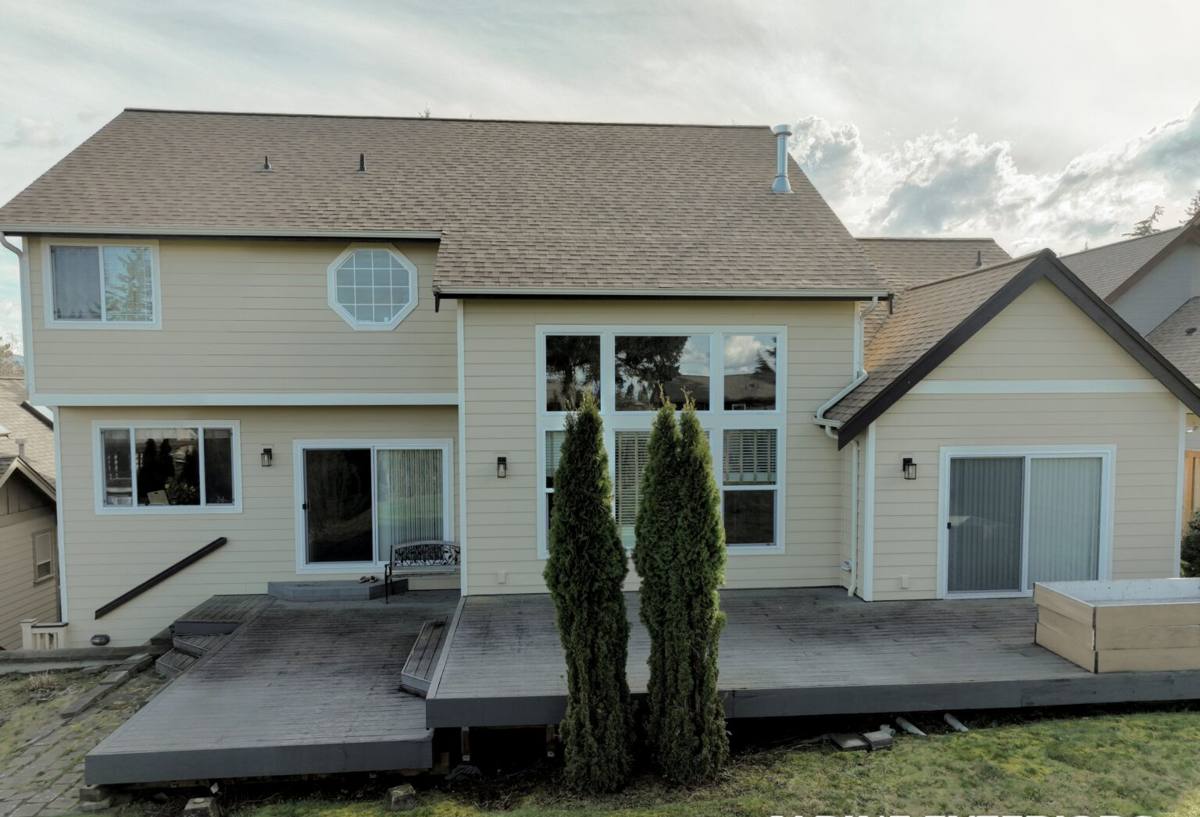
What Fairhaven's Conditions Actually Do to a Deck
Salt Air and Metal Fasteners
Proximity to the bay means airborne salt settles on exposed surfaces, including screws, joist hangers, and structural connectors. Standard electro-galvanized fasteners can start showing rust streaks within a couple of years in this kind of exposure. That staining isn't just cosmetic — it's a sign the coating is breaking down, and once it does, the fastener itself is next.
Driving Rain and End-Grain Absorption
Wind-driven rain doesn't fall straight down — it gets pushed sideways and up under rail caps, into board end cuts, and behind ledger boards. Wood absorbs water fastest through end grain, so any cut end that isn't sealed becomes a wick. Over a wet winter, that unsealed end grain can pull in enough moisture to start rot from the inside out, long before the surface looks bad.
Moss, Algae, and Shaded Decks
Fairhaven's tree cover and marine humidity are a good combination for moss and algae, especially on decks with north-facing exposure or heavy shade. Beyond making a deck slick and dangerous underfoot, moss holds moisture against the wood surface far longer than open air would, which accelerates rot in exactly the boards people walk on most.
What a Deck Built for This Climate Needs
- Corrosion-resistant fasteners and hardware — stainless steel or heavy-duty coated connectors rated for coastal/marine exposure, not the standard-grade hardware sold for inland use
- Sealed or factory-treated end cuts on every board, not just the ones that are visible
- Proper drainage slope away from the house on ledger connections, with flashing that actually sheds water instead of channeling it into the rim joist
- Gapping between deck boards sized to let the structure dry out between rain events, not just for looks
- Ventilation underneath the deck so framing can dry rather than sitting in trapped humidity
- A wood or composite species/finish combination chosen for how it performs wet, not just how it looks dry in a showroom
Decking Material Options for a Fairhaven Property
There's no single "best" decking material — the right call depends on your budget, how much upkeep you want to do, and how exposed the deck is to sun, shade, and rain. Here's how the common options actually perform in this climate:
| Material | Moisture/Moss Behavior | Maintenance | Typical Lifespan Here |
|---|---|---|---|
| Pressure-treated fir/hem-fir | Absorbs water readily; needs sealing to resist moss and rot | Annual cleaning, re-seal every 1-2 years | 15-20 years with upkeep |
| Cedar | Naturally rot-resistant, but still needs finish maintenance in wet exposure | Cleaning and oil/stain every 2-3 years | 20-25 years with upkeep |
| Composite (capped) | Doesn't absorb water or rot; can still get slick with algae film | Periodic wash, no sealing/staining | 25-30+ years, backed by manufacturer warranty |
| Tropical hardwoods (e.g., ipe) | Very dense, naturally moisture- and rot-resistant | Occasional oiling to maintain color; low structural upkeep | 30+ years |
We don't push one product on every job. A shaded, low-traffic deck under mature trees is a different conversation than a full sun deck off a kitchen — the moss risk, the sun exposure, and the maintenance appetite of the homeowner all factor into what we recommend.
A Note on Composite Decking
Capped composite decking has gotten a lot better over the past decade and is a strong fit for Fairhaven's climate because it doesn't absorb moisture the way wood does. That said, it's not maintenance-free — algae and moss can still form a film on the surface in shaded, damp spots, and it needs periodic washing to stay slip-resistant. We install composite when it fits the homeowner's goals, but we're upfront that "no maintenance" isn't quite accurate — it's "different maintenance."
Framing and Structure: Where the Real Work Happens
The decking boards are what you see, but the framing underneath is what determines whether the deck is still solid in fifteen years. In a marine climate, we pay particular attention to a few things that are easy to overlook:
- Ledger attachment and flashing: where the deck ties into the house is the single most common failure point on decks we're asked to repair. Proper flashing keeps water from working its way behind the ledger and into the house's rim joist.
- Post base connections: posts sitting directly on concrete or in standing water rot from the bottom up. Post bases that hold the wood above grade and away from ponding water add years to the structure's life.
- Joist protection: a joist tape or membrane over the top of each joist keeps deck screws from creating an entry point for water into the framing lumber underneath the decking.
- Beam and footing sizing: undersized framing is a code and safety issue that also tends to show up as bounce or sag well before its rated lifespan.
Our Process for a Fairhaven Deck Build
1. On-Site Assessment
We walk the property, look at sun/shade exposure, drainage patterns, and how the new or replacement deck will tie into the house. If we're replacing an existing deck, we check the framing underneath for rot or undersized lumber before quoting anything — you shouldn't build a new deck surface over a compromised structure.
2. Material and Design Conversation
We talk through decking material, railing style, and layout based on your budget and how much upkeep you want going forward. This is where we're honest about trade-offs — a beautiful cedar deck that needs re-oiling every other year isn't the right fit for every homeowner, and that's fine to say up front.
3. Permitting
Most deck builds in Bellingham and unincorporated Whatcom County require a building permit, especially for anything attached to the house or built above a certain height. We handle the permit process as part of the job so it's not something you have to chase down yourself.
4. Demolition (if replacing)
Old decking, and any framing that's compromised, gets removed and hauled off. We inspect ledger and post connections at this stage since that's the only time they're fully exposed.
5. Framing and Structural Work
New or reinforced framing goes in with corrosion-resistant hardware, proper flashing at the ledger, and joist protection. This stage isn't glamorous, but it's the part that determines whether the deck is still sound in twenty years.
6. Decking, Railing, and Finish Work
Decking is installed with correct gapping and sealed end cuts, railing is set to current code height and baluster spacing, and any wood surfaces get their initial finish coat before we walk you through the completed project.
Deck Repair vs. Full Rebuild
Not every deck in Fairhaven needs to be torn out. If the framing is sound and the problems are limited to surface boards, railing, or fastener corrosion, a repair or resurfacing can extend the deck's life at a fraction of rebuild cost. The deciding factor is almost always the framing — if joists, beams, or the ledger connection show rot or have been undersized from the start, patching the surface just delays a bigger problem. We'll tell you honestly which category your deck falls into rather than defaulting to "replace everything."
Signs a Deck Needs More Than Cosmetic Work
- Soft or spongy spots when you walk across the deck
- Visible gaps or rust staining at the ledger-to-house connection
- Noticeable bounce or movement near the middle of the span
- Posts that feel loose or show rot at the base
- Persistent moss or algae that comes back within weeks of cleaning
Why Local Experience Matters for This Job
A deck builder who mostly works drier inland markets can still build a structurally sound deck — but they may not default to marine-grade hardware, proper end-sealing, or the flashing detail that Fairhaven's exposure calls for, simply because it's not a habit they've had to build. Working Whatcom County's coastal neighborhoods regularly means we've seen what actually fails here versus what fails in the general literature, and we spec accordingly rather than treating every deck the same regardless of where it sits relative to the bay.
Local experience also means knowing the practical side — how Bellingham's permitting process works for residential decks, what inspectors here are looking for, and how to sequence a build around this region's wet season rather than fighting it.
Get an Honest Estimate
If you're planning a new deck or need an honest read on whether your current one needs repair or replacement, we're happy to come take a look. The estimate is free, there's no pressure, and we'll tell you straight what your deck actually needs — no more, no less. Fill out the form below to get started.