 Bellingham
 South Hill's Weather Is Harder on a Deck Than It Looks
South Hill sits up in elevation with open exposure on several sides, which means it catches wind-driven rain and salt-laden air off Bellingham Bay more directly than homes tucked into lower, more sheltered parts of town. Add in Whatcom County's long, damp shoulder seasons — where a deck can stay shaded and wet for weeks at a stretch — and you have conditions that punish the wrong decking choice fast. A board that performs fine in a dry inland climate can cup, splinter, or grow a slick moss film within a couple of seasons up here.
That's not a knock on any one product. It's just the reality of building outdoors in this part of Whatcom County. Composite decking, installed correctly, is one of the more forgiving options for this exposure — but "installed correctly" is doing a lot of work in that sentence, and it's worth understanding what that actually means before you commit to a project.
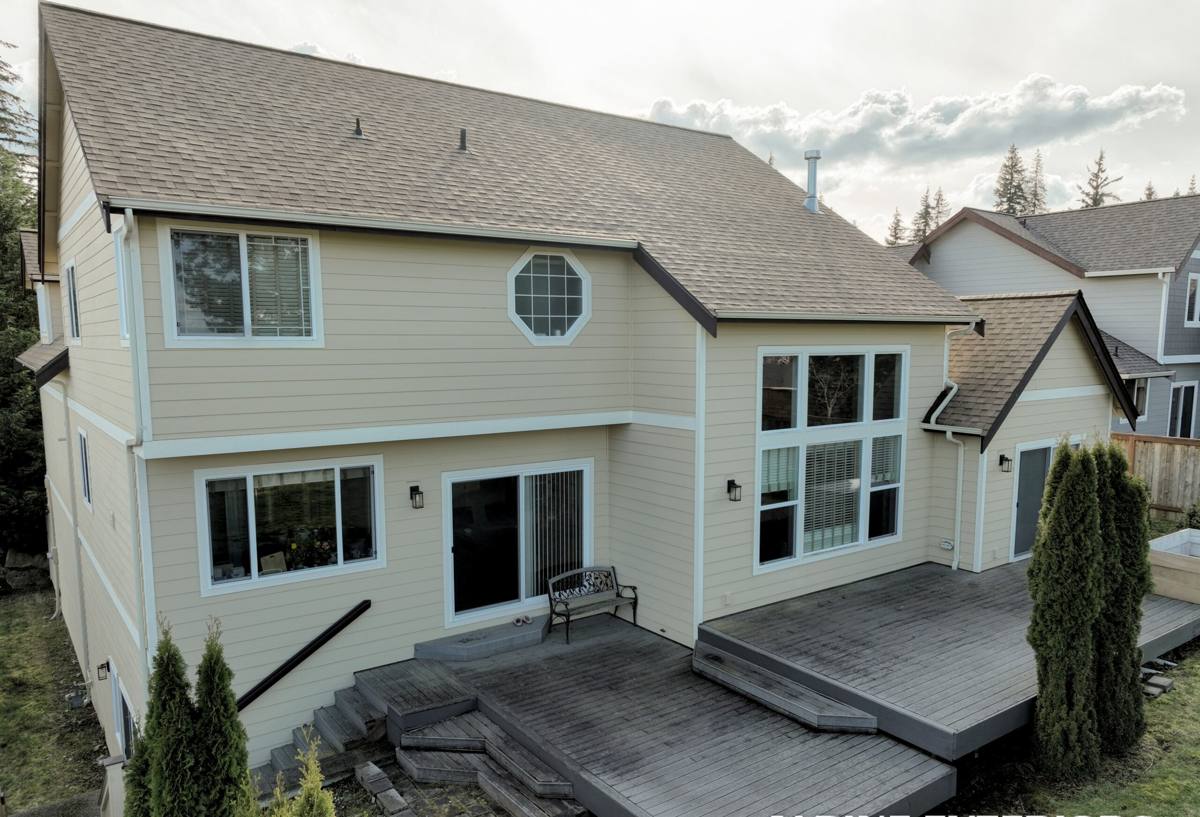
What Salt Air and Driving Rain Actually Do to a Deck
Salt Air and Metal Fasteners
Salt air accelerates corrosion on any exposed metal — screw heads, joist hangers, flashing, railing brackets. On a lot of older decks in this area, the first visible failure isn't the decking boards at all, it's rust streaking down from fasteners that were never rated for coastal exposure. Once a fastener starts corroding, it weakens the connection long before the surface damage is obvious.
Driving Rain and Water Intrusion
Wind-driven rain doesn't just fall straight down — it gets pushed sideways into board gaps, ledger connections, and anywhere decking meets the house. If flashing and drainage details aren't handled properly at the ledger board, water works its way behind the decking and into the rim joist or siding assembly, where it can sit for weeks without anyone noticing until there's rot.
Moss, Shade, and Slope
Between tree cover and Bellingham's cloud cover for a good chunk of the year, moss and algae get a long runway to establish themselves on any deck surface that stays damp. On sloped South Hill lots, that's compounded by drainage — water that doesn't shed properly off the deck surface or out from underneath it just sits, and standing moisture is exactly what moss needs to take hold.
Why Composite Decking Fits This Climate
Composite decking — a blend of wood fiber and plastic, most of it now capped with a protective polymer shell — doesn't absorb water the way solid wood does, so it doesn't swell, cup, or splinter from repeated wet-dry cycles the same way. It also doesn't need the annual sanding, staining, or sealing that wood decking demands to keep moisture out. For a homeowner who doesn't want a yearly maintenance ritual just to keep the deck from degrading, that's the main draw.
It's not maintenance-free, and we won't tell you it is. Capped composite can still develop surface mold or algae film if it stays shaded and wet without ever being cleaned, and lower-end, uncapped composite boards are more porous and more prone to moisture problems over time. The product tier matters as much as the material category — we'll walk you through that honestly rather than upselling the most expensive line by default.
Comparing Your Decking Options for This Exposure
| Material | Moisture Behavior | Moss/Algae Resistance | Maintenance | Typical Lifespan |
|---|---|---|---|---|
| Pressure-treated wood | Absorbs and releases moisture, prone to cupping/splitting | Low — porous surface holds moisture | Annual cleaning, periodic staining/sealing | 10–15 years with upkeep |
| Cedar | Naturally moisture-resistant but still absorbs over time | Moderate | Regular sealing to maintain resistance | 15–20 years with upkeep |
| Uncapped composite | Some water absorption at cut edges and surface | Moderate | Periodic cleaning | 15–20 years |
| Capped composite / PVC | Sheds water at the surface, minimal absorption | Higher — smoother, sealed surface | Occasional washing | 25+ years, most with strong warranties |
For a South Hill lot with real wind and rain exposure, we generally steer clients toward capped composite or PVC boards for the walking surface, reserving lower-tier products only where budget is the deciding factor and expectations are set accordingly.
What a Correct Composite Deck Build Involves
Framing and Substructure
Composite boards are only as good as what's underneath them. We build the substructure to code with proper joist spacing for composite spans — composite typically needs tighter joist spacing than wood decking to avoid deflection over time — and we use corrosion-resistant, coastal-rated fasteners and hardware throughout, not standard interior-grade hardware that will start rusting within a season or two of salt air exposure.
Ledger and Flashing Details
Where the deck attaches to the house is the single most common failure point we see on older decks in this area. We flash that connection properly so driving rain can't work its way behind the ledger board and into the house framing — this is the detail that separates a deck that lasts decades from one that causes hidden rot within a few years.
Drainage and Airflow
We grade and gap the substructure so water sheds away from the house and off the site rather than pooling underneath the deck. Adequate airflow beneath the decking also matters for keeping the underside dry, which limits mold and mildew growth in shaded, low-clearance areas — common on sloped South Hill lots where the downhill side of a deck can sit closer to grade.
Fastening and Board Layout
We use hidden fastener systems where the product allows for a clean surface with no exposed screw heads to corrode, and we follow manufacturer-specified gapping for expansion — composite still moves seasonally with temperature, just less dramatically than wood.
Our Process, Start to Finish
- On-site assessment — we look at your existing deck or build site, exposure, drainage, and any structural issues before quoting anything.
- Honest product walkthrough — we show you real board samples and explain the trade-offs between tiers rather than steering you to whatever has the best margin.
- Written estimate — clear scope, materials, and timeline, no vague allowances.
- Permitting — we handle the permit filing where required so you're not left navigating that process alone.
- Build — substructure first, inspected connections, then decking, railing, and finish details.
- Final walkthrough — we go over care basics for your specific board before we consider the job done.
Living With Composite Through a Long Moss Season
Even the best composite board benefits from basic seasonal care, especially given how long South Hill stays shaded and damp through fall, winter, and spring. None of this is complicated, but skipping it lets moss and algae get a foothold that's harder to remove the longer it sits.
- Sweep debris and fallen leaves off the deck regularly through fall — trapped organic matter holds moisture against the board surface.
- Rinse the deck a few times a year with plain water and a stiff (non-metal) bristle brush to knock back early moss or algae film before it sets in.
- Keep gutters and downspouts near the deck clear so runoff isn't dumping extra water onto the surface.
- Trim back overhanging branches where possible to let more light and airflow reach shaded sections.
- Check railing hardware and fastener points once a year for early rust staining, especially on the side of the deck most exposed to weather.
- Avoid pressure washing at high PSI directly into the board surface — it can degrade the cap layer on some composite products over time; a low-pressure rinse is safer.
Why It Matters That We Already Work South Hill
A crew that only occasionally works this specific area has to relearn the local conditions every time — the wind exposure, the moss timeline, which slopes hold water and which drain clean. We're regularly working on homes in this part of Bellingham, so we already know how South Hill's elevation and exposure behave through a full Whatcom County year, and we build to that reality from the first framing decision rather than adjusting after something goes wrong.
That familiarity also shows up in smaller ways — knowing which fastener grade actually holds up here, which board lines handle the shaded, damp sections well, and how to grade a substructure on a sloped lot so water goes where it's supposed to.
Permits and Practical Considerations
Most new deck construction and many significant deck replacements in Bellingham require a building permit, and requirements can shift depending on deck height, size, and proximity to property lines — details that matter more on some South Hill lots given the slope and lot layout in parts of the neighborhood. We handle the permit process as part of the job so you're not left guessing what's required or filing paperwork yourself.
If your project involves replacing an existing deck, we'll also flag if we find structural issues with the ledger, framing, or footings during the assessment — better to know that upfront than after the new decking is already down.
If you're weighing options for a new or replacement composite deck on South Hill, we're happy to come take a look and walk you through what your specific lot and exposure call for. The estimate is free, there's no pressure, and you'll get a straight answer about what your deck actually needs — just fill out the form below to get started.