 Bellingham
 Why Siding Wears Out Faster in the Columbia Neighborhood
Homes in Columbia sit close enough to Bellingham Bay that salt-laden air is a constant factor in how exterior materials age. Add Whatcom County's long wet season — months of driving rain off the water, followed by cool, shaded stretches where moisture doesn't evaporate quickly — and you get a climate that's genuinely tough on siding. It's not just rain volume. It's rain that comes sideways in wind off the water, combined with humidity and shade from mature trees that keeps north- and west-facing walls damp for days after a storm passes.
That combination is why siding problems in Columbia often show up differently than they would on a home in a drier, more open part of the county. Moss and algae get a foothold faster. Caulk and paint break down sooner near the water. And any siding product that isn't dimensionally stable in swings of moisture will telegraph that instability through cracking, warping, or soft spots within a handful of years, not decades.
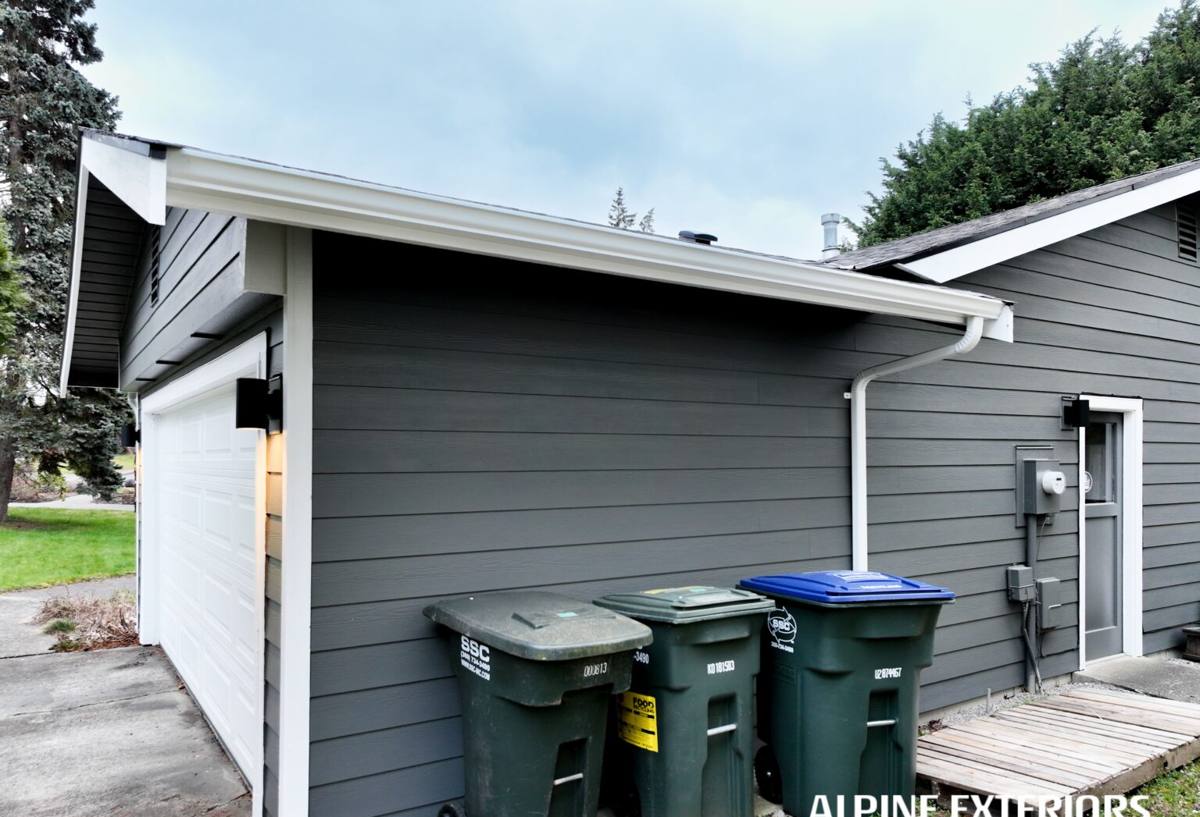
Signs a Columbia Home Needs Siding Replacement, Not Just Repair
Not every siding issue means a full tear-off. But there's a point where patching stops making sense and full replacement is the more honest recommendation. Here's what we look for during an inspection:
- Soft or spongy spots when you press on the siding, especially near the bottom courses and around windows
- Paint that's peeling or bubbling repeatedly in the same spots, even after repainting
- Persistent moss or dark streaking on shaded or bay-facing walls that comes back within a season of cleaning
- Visible gaps, warping, or buckling boards, particularly on walls that catch the most wind-driven rain
- Cracking at butt joints or corners that keeps reopening after caulking
- A musty smell or visible staining on interior walls that back up to exterior siding
Any one of these can sometimes be a localized repair. Several of them together, especially on an older home, usually mean the underlying material or the original installation has reached the end of its useful life and a patch will just be a short delay before the same problem resurfaces somewhere else on the wall.
What a Correct Siding Replacement Actually Involves
Siding replacement isn't just pulling off old boards and nailing up new ones. In a climate like Bellingham's — and especially in a neighborhood exposed to bay winds and rain — what happens underneath the visible siding matters as much as the siding itself.
Tear-Off and Substrate Inspection
Once the old siding is off, we inspect the sheathing underneath for rot, soft spots, or prior water damage. This is often where hidden problems get found — old flashing that was never installed correctly, or sheathing that's been slowly absorbing moisture behind siding that looked fine from the street. Any damaged sheathing gets replaced before anything new goes back up.
Weather-Resistive Barrier and Flashing
A correctly installed weather-resistive barrier (house wrap) and properly lapped flashing around every window, door, and penetration is what actually keeps driving rain out of the wall assembly. Siding sheds most of the water, but flashing and the barrier behind it are the backup system — and in a wet, windy microclimate like this one, that backup system gets tested constantly.
Proper Fastening and Clearances
Manufacturer-specified nailing patterns, correct fastener type, and proper clearance from grade, roof lines, and decks all affect how the siding performs over time. Skipping these details is one of the most common reasons siding fails early, regardless of which product was used.
Why We Install Only James Hardie Fiber Cement
We made a deliberate decision to install James Hardie fiber cement siding exclusively, and we don't install vinyl, LP SmartSide, or other fiber cement brands. That's not a marketing position — it's based on what actually holds up under the conditions Columbia homes deal with year after year.
Fiber cement is non-combustible, which matters increasingly to insurers and homeowners alike. It doesn't warp, rot, or feed insects the way wood-based products can, and it holds paint and factory finish far more consistently than materials that expand and contract more with moisture and temperature swings. James Hardie's ColorPlus factory finish is baked on and warrantied separately from the siding itself, which means the color holds up to UV and salt air exposure better than a field-applied paint job — and it saves homeowners from a repaint cycle that other siding types often need within 7-10 years in a coastal-influenced climate.
We're not going to tell you every other product on the market is worthless — vinyl and engineered wood sidings have real uses and real cost advantages in the right situation. But for the specific combination of salt air, sustained wet weather, and heavy shade that a lot of Columbia lots deal with, we've seen fiber cement outperform the alternatives enough times that we stopped installing anything else.
Choosing the Right Hardie Product Line for This Climate
James Hardie engineers its siding by climate zone, and homes here fall into the HZ5 product line, built specifically for regions with significant moisture exposure. Within that line, homeowners in Columbia typically choose between a few common profiles:
| Product | Look | Best Suited For |
|---|---|---|
| HardiePlank Lap Siding | Traditional horizontal lap, smooth or cedar-textured | Most home styles; the most common choice in this neighborhood |
| HardiePanel Vertical Siding | Clean vertical lines, often paired with lap siding | Accent walls, gables, modern or craftsman-influenced homes |
| HardieShingle Siding | Staggered or straight-edge shingle look | Homes wanting a cottage or historic character without cedar shingle upkeep |
| HardieTrim Boards | Fascia, corner boards, window and door trim | Finishing details on any of the above |
Color selection matters too. Darker ColorPlus finishes hold up well but absorb more heat and can show water spotting differently than lighter tones on shaded, bay-facing walls. We walk through this with homeowners based on which side of the house gets the most weather exposure, not just which color looks best on a sample chip.
Our Siding Replacement Process
Every project follows the same sequence, whether it's a full re-side or a partial replacement on a wall that's taken the worst of the weather:
- On-site inspection and assessment of existing siding, trim, and any visible moisture damage
- Written estimate covering material selection, scope of tear-off, and any substrate repair we anticipate
- Careful removal of old siding and inspection of sheathing before anything is covered back up
- Repair of any damaged sheathing or framing found during tear-off, documented and discussed with the homeowner before proceeding
- Installation of weather-resistive barrier and flashing at all penetrations, windows, and doors
- Installation of James Hardie siding, trim, and accessories to manufacturer specifications
- Final walkthrough and cleanup
We don't skip the sheathing inspection step to save time, even when the old siding looks fine on the surface. In a wet climate, what's happening behind the siding is often more important than what's happening on it.
What Drives the Cost of a Siding Replacement
Every home is different, but the same handful of factors tend to move the price up or down on most Columbia projects:
| Factor | Why It Matters |
|---|---|
| Extent of sheathing repair needed | Older homes with hidden moisture damage often need more substrate work than expected |
| Home size and wall complexity | More corners, gables, and trim details mean more labor and material |
| Siding profile and finish chosen | Lap, panel, and shingle profiles carry different material and install costs |
| Access and site conditions | Tight lots, mature landscaping, or multi-story walls affect staging and labor time |
| Trim and accessory scope | Full trim replacement alongside siding adds cost but gives a more uniform, longer-lasting result |
We give homeowners a real number after a walkthrough, not a rough guess over the phone — too many of these factors only become clear once we can see the walls and, in some cases, get behind the existing siding.
Why Hiring a Crew That Already Works in Columbia Matters
Siding installation techniques that work fine in a drier inland climate can fall short here. Flashing details, caulking choices, and even how tightly siding is fastened all need to account for sustained moisture and salt exposure rather than occasional rain. A crew that regularly works homes near Bellingham Bay has already seen what happens when those details are done wrong — and more importantly, has already adjusted their process to avoid it.
There's also a practical side to local experience: knowing what permitting looks like in this part of Whatcom County, understanding common construction patterns in Columbia's older housing stock, and being able to spot the difference between cosmetic weathering and a real moisture problem without over- or under-selling the scope of work.
Simple Maintenance That Extends the Life of New Siding
Correct installation does most of the work, but a small amount of upkeep keeps James Hardie siding performing at its best for decades in this climate:
- Rinse siding annually, focusing on shaded or bay-facing walls where moss and algae take hold fastest
- Keep gutters clear so overflow doesn't run down and pool against siding at the roofline
- Trim back landscaping and tree limbs that keep walls shaded and damp longer than necessary
- Recaulk around windows, doors, and trim joints if you notice cracking or gaps, rather than waiting
- Watch for any soft spots or discoloration near grade level, where splashback and ground moisture concentrate
If your Columbia home is showing early signs of siding wear, or you're planning ahead before it becomes a bigger repair, we're happy to take a look and walk you through what we find. Reach out for a free, no-pressure estimate — there's no obligation, and no hard sell.