 Bellingham
 Roofing in Columbia Means Building for Bellingham's Climate, Not Just Any Roof
The Columbia neighborhood sits close enough to Bellingham Bay that salt-laden air is a daily fact of life for anything on a roof — nails, flashing, vents, gutters. Add Whatcom County's long, wet fall-through-spring stretch of driving rain off the Strait, and a moss season that can run eight or nine months out of the year in shaded, north-facing yards, and you have a climate that is genuinely harder on roofing than most of the country ever deals with. A roof replacement here isn't just "put new shingles on." It's a chance to correct the ventilation, flashing, and moisture-control shortcuts that got baked into a lot of homes decades ago, before anyone fully understood what this climate does to a roof over 20-30 years.
Columbia has a mix of older, established housing stock and newer infill, which means we see everything from roofs that have been patched three or four times to roofs on homes built in the last decade that are already showing premature wear because the original install didn't account for local conditions. Whatever the age of your home, the goal of a proper replacement is the same: a roof that sheds water fast, breathes correctly, and resists the corrosion and moss pressure that this specific pocket of Whatcom County throws at it.
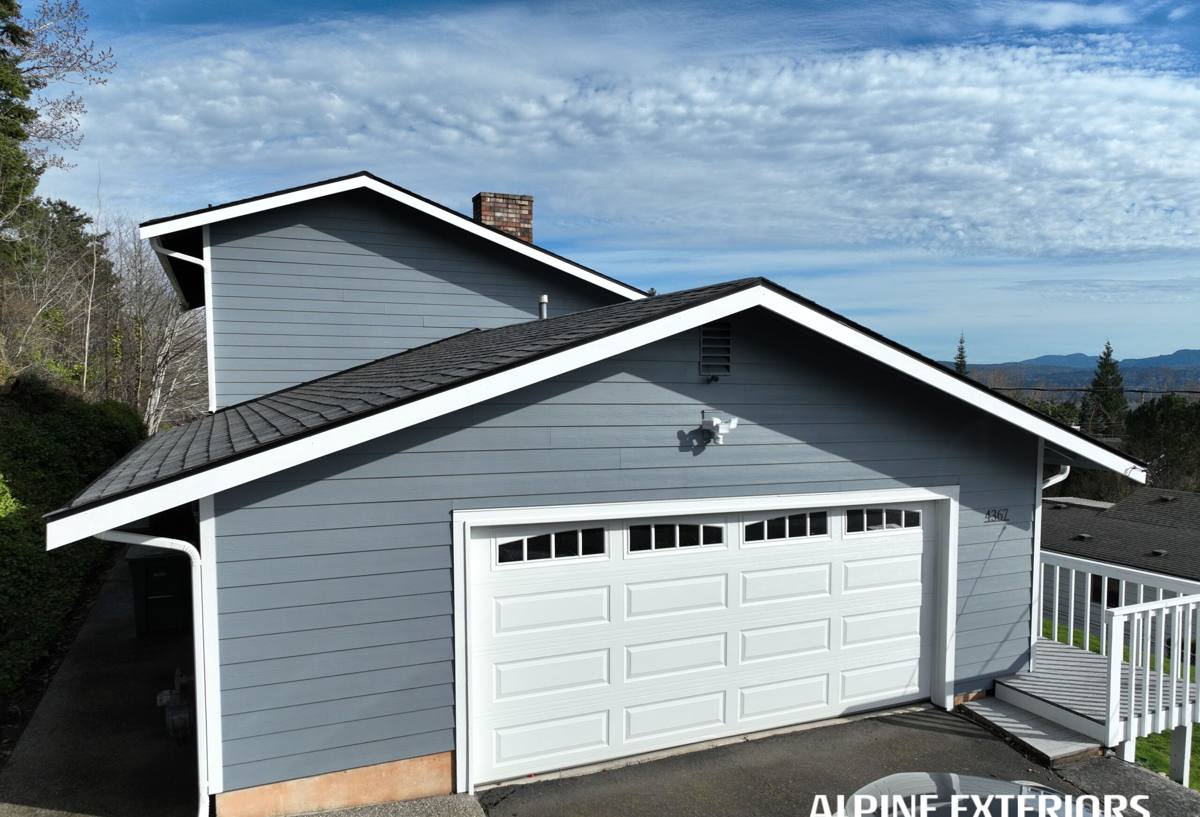
Signs a Columbia Roof Has Reached the End of Its Life
Roofs rarely fail all at once. They give warning signs for months or years before a leak actually shows up inside the house. Because Columbia's mix of salt air and heavy rain accelerates wear on fasteners, flashing, and shingle granules, it's worth being more attentive here than you might be further inland.
- Shingles that are cupping, curling at the edges, or missing granules in patches
- Thick moss mats along the north-facing slopes or in valleys, especially near tree cover
- Rusting or streaking around nail heads, flashing, and vent boots
- Soft or spongy decking felt underfoot in the attic, or daylight visible through the roof deck
- Granules collecting in gutters and downspouts after every rain
- Interior ceiling stains, especially near chimneys, skylights, or where two roof planes meet
- A roof that is 20+ years old and has never had a full tear-off, only repairs
Any one of these on its own might still be a repair. Several together, or a roof already past 20 years, usually means replacement is the more honest recommendation — patching an aging roof in this climate tends to buy a year or two at best, and often costs more over time than doing the job right once.
What a Correct Roof Replacement Actually Involves
Tear-Off, Not Overlay
We remove the old roofing down to the deck rather than layering new shingles over old. Overlaying traps moisture, hides rot, and voids most manufacturer warranties. It's cheaper up front and a poor trade-off almost everywhere, but especially in a climate where trapped moisture under a second layer of shingles has nowhere to dry out during a wet Whatcom County winter.
Deck Inspection and Repair
Once the old roofing is off, we inspect the plywood or board decking underneath for soft spots, delamination, and rot — problems that are invisible from above but common on older Columbia homes where a roof has been leaking slowly for years. Any compromised decking gets replaced before anything new goes down; installing new roofing over a soft deck just guarantees an early failure.
Underlayment and Ice/Water Protection
A synthetic underlayment goes down as the roof's real waterproofing layer — the shingles on top are the first line of defense, but the underlayment is what actually keeps the house dry if wind-driven rain gets under a shingle edge, which happens regularly in coastal storm systems. Self-adhering ice-and-water membrane goes in the vulnerable spots: eaves, valleys, and around penetrations, where driving rain and ponding are most likely.
Flashing at Every Transition
Chimneys, skylights, sidewalls, valleys, and vent penetrations are where the overwhelming majority of roof leaks actually start — not in the open field of shingles. We install new step flashing, counter-flashing, and valley metal at every one of these transitions rather than reusing old flashing, since corroded or improperly lapped flashing is one of the most common causes of the slow, hard-to-trace leaks we get called out for in this area.
Ventilation That Matches the Home
Proper intake at the soffits and exhaust at the ridge keeps the attic temperature and moisture level in balance. Get this wrong and you get condensation, mold, premature shingle aging from the inside, and ice damming risk during cold snaps. We size and balance intake and exhaust to the specific attic, not a one-size-fits-all vent count.
Choosing a Roofing Material for a Columbia Home
There's no single "best" roofing material — the right choice depends on your budget, how long you plan to stay in the home, and how much maintenance you're willing to do. Here's an honest comparison of what we install most often for homes in this area.
| Material | Typical Lifespan | How It Handles Local Climate | Relative Cost |
|---|---|---|---|
| Architectural asphalt shingle | 25-30 years | Good moss resistance with algae-resistant granules; reliable in wind and rain when installed with proper fastening | $ |
| Standing-seam metal | 40-50+ years | Excellent for shedding driving rain and resisting moss; needs coastal-rated fasteners and coatings to manage salt air corrosion | $$$ |
| Synthetic/composite shake | 30-40 years | Good moisture resistance, holds up well to moss compared to real cedar, low maintenance | $$ |
| Natural cedar shake | 20-25 years | Attractive but requires ongoing treatment to resist moss and moisture in a climate this wet; higher maintenance burden | $$-$$$ |
For most Columbia homes, we recommend a quality architectural asphalt shingle as the best balance of cost, durability, and moss resistance, or standing-seam metal for homeowners planning to stay long-term and wanting to minimize future maintenance. We're honest about the trade-offs of natural cedar in this specific climate — it can look great, but the upkeep required to keep it moss-free near the bay is significant, and we'd rather tell you that up front than sell you a product that will frustrate you in year three.
Our Roof Replacement Process, Start to Finish
- On-site inspection and estimate — we walk the roof and attic, document the actual condition, and give you a written scope and price, not a ballpark guess
- Material selection — we go over the trade-offs above based on your budget and timeline
- Scheduling and material delivery — timed around Whatcom County's weather windows, since we don't tear off a roof into a forecasted storm
- Property protection — tarps and plywood over landscaping, siding, and windows before tear-off begins
- Tear-off and deck inspection — old roofing removed, decking checked and repaired as needed
- Underlayment, flashing, and ice/water membrane installation
- New roofing material installed per manufacturer specification, not shortcut fastening patterns
- Ventilation balancing at ridge and soffit
- Full site cleanup, including a magnetic nail sweep of the yard and driveway
- Final walkthrough so you can see the finished work before we consider the job done
Moss, Moisture, and Corrosion: Managing the Local Realities After Installation
Whatcom County's long wet season means moss pressure never really goes away — it just eases up in the dry summer months. A new roof buys you years before moss becomes a real issue, but a few habits extend that window considerably: keeping overhanging branches trimmed back so roof sections get more light and airflow, clearing gutters and valleys of debris before the fall rains start, and having a professional check flashing and vent boots every few years rather than waiting for a leak to show up inside. Homes closer to the water should also expect faster corrosion on exposed metal fasteners and flashing than homes further inland, which is part of why we specify corrosion-resistant hardware on every replacement in this area rather than treating it as an upgrade.
What We Watch For at Follow-Up
- Early moss regrowth in shaded valleys or north-facing slopes
- Sealant failure around penetrations after the first full winter
- Granule loss patterns that might indicate a manufacturing or installation issue versus normal wear
- Gutter and downspout function during heavy rain events
Permits, Timeline, and What to Expect During the Project
Most residential roof replacements in the Bellingham area require a building permit, and we handle that process as part of the job rather than leaving it to the homeowner. A typical single-family roof replacement takes one to three days of active work once materials are on-site, though weather can push that out — we'd rather delay a day than install underlayment or shingles in conditions that compromise the seal. Expect noise and some vibration through the house during tear-off, and plan for your driveway and yard perimeter to be staged with material and equipment for the duration of the project. We keep you informed of the schedule as it firms up rather than leaving you guessing.
Why It Matters to Hire a Crew That Already Works in Columbia
A roofing crew that regularly works Columbia and the surrounding Bellingham neighborhoods already understands the specific failure patterns this climate produces — which flashing details tend to fail first, how aggressive the moss pressure is on shaded lots near the creek and greenbelt areas, and what corrosion-resistant hardware actually holds up near the bay versus what's rated for a drier climate. That local pattern recognition shows up in the estimate itself: we're not guessing at what your roof needs, we're applying what we've already seen fail and succeed on homes like yours in this same neighborhood. It also means faster response if something needs attention after the install, since we're not driving in from out of the area.
Get a Straightforward Estimate for Your Columbia Roof
If your roof is showing its age, dealing with persistent moss, or you just want an honest opinion on repair versus replacement, we're happy to take a look. The estimate is free, there's no pressure to commit on the spot, and you'll get a clear, written scope of what your roof actually needs — use the form below to get started.