 Bellingham
 Building New in Blaine Means Building for the Water
Blaine sits right on Semiahmoo Bay, close enough to the Strait of Georgia that salt-laden air and wind-driven rain are simply part of daily weather, not an occasional event. For a new-construction project, that matters more than most homeowners and even some builders realize. A window that goes into a brand-new rough opening isn't just a product choice — it's a system of flashing, sealant, and frame material that has to work with the house's water-resistive barrier for decades before anyone ever thinks about it again. Get that system wrong on a new build, and the mistake gets buried behind siding and trim, where it can leak quietly for years before anyone notices water damage or rot in the framing.
We install new-construction windows on homes throughout Whatcom County, and Blaine's coastal exposure is one of the more demanding environments we work in. Between salt air accelerating corrosion on hardware and fasteners, driving rain testing every flashing lap, and a moss season that keeps roofs, siding, and window sills damp for months at a stretch, a new build here needs a window package and installation method suited to the location — not just whatever's standard in a builder's spec book.
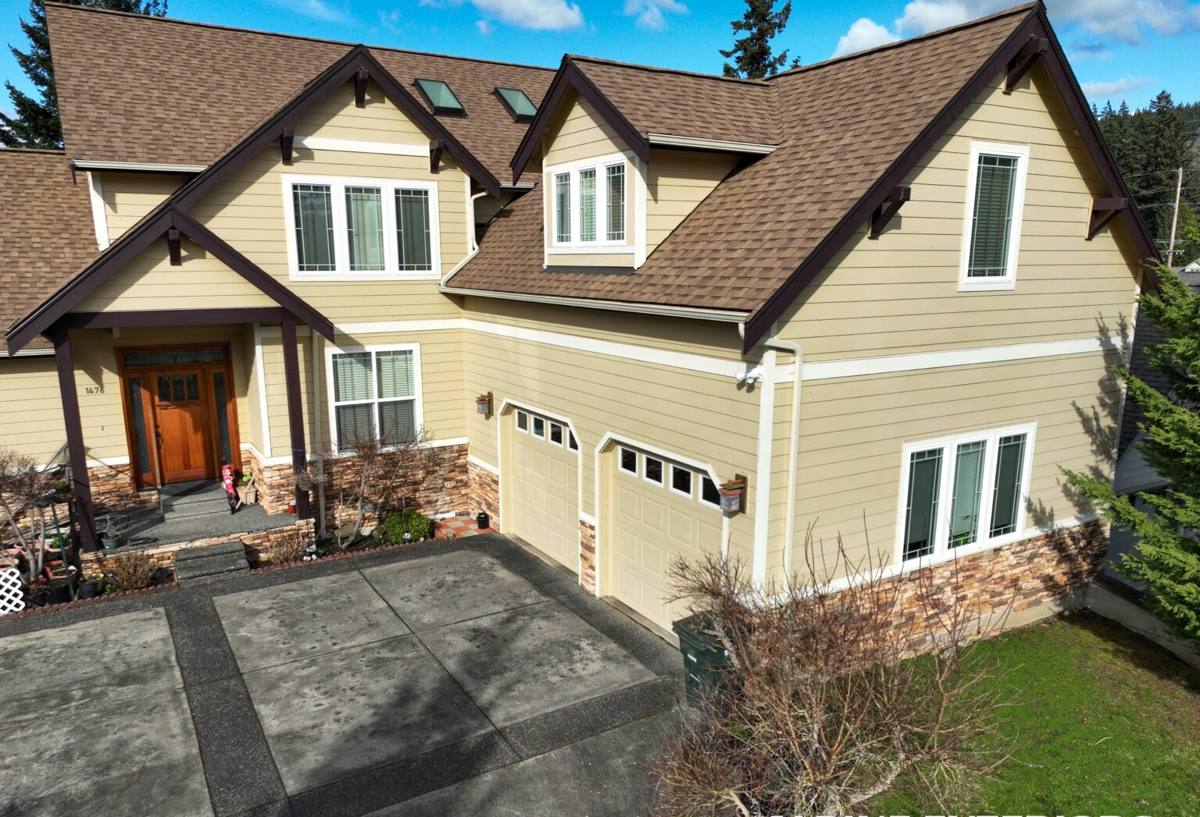
New-Construction vs. Replacement Windows — Why the Method Matters
Homeowners searching for window help often don't realize there are two fundamentally different ways windows get installed, and they are not interchangeable. New-construction windows have a nailing fin (also called a flange) around the perimeter of the frame, which gets integrated directly into the wall's water-resistive barrier before siding goes on. Replacement windows are designed to fit into an existing finished opening without disturbing the exterior siding or trim. Using the wrong method — or using new-construction technique carelessly — is one of the most common sources of hidden water intrusion in new homes.
| Factor | New-Construction Window | Replacement (Insert) Window |
|---|---|---|
| Best used when | Framing is open, siding and WRB not yet installed | Existing wall and exterior finish stay intact |
| Water management | Nailing fin integrates into house wrap and flashing tape | Relies on sealant and existing wall flashing |
| Long-term coastal performance | Strongest option when flashing is done correctly | Adequate for retrofits, not ideal for new coastal builds |
| Inspection visibility | Flashing can be verified before siding covers it | Flashing details are largely hidden from day one |
For a new build in Blaine, new-construction windows with properly integrated flashing are the right call almost every time — the open framing stage is the one chance to get the water management right before it's covered up for the life of the house.
What This Climate Demands from the Window Package
Frame Material
Salt air is hard on metal components and can dull or pit some finishes faster than in drier inland climates. Vinyl and fiberglass frames tend to hold up well because they don't corrode, though the hardware — hinges, locks, cranks — still matters and should carry a finish rated for coastal or marine-grade exposure. Wood-clad windows can look excellent but ask more of ongoing maintenance in a wet climate, since any breach in the cladding exposes wood to moisture that doesn't dry out quickly here.
Glass and Weatherstripping
Double-pane, low-E glass is standard under Washington's energy code, and it also helps cut down on condensation, which is a real issue in a marine climate with big daily humidity swings. Weatherstripping and compression seals need to be rated for the wind-driven rain this area sees — a window that's fine in a sheltered inland lot can still leak on a more exposed Blaine site if the seal isn't up to the job.
Wind and Water Rating
Windows carry independent performance ratings for air infiltration, water penetration, and structural wind load (often shown as AAMA or NFRC-adjacent labels). On exposed lots — open to the bay, on a rise, or without much windbreak — we pay closer attention to the water penetration and wind load ratings than we would on a sheltered, tree-lined interior lot.
The Envelope Details That Make or Break a New Build
The window unit itself is only part of the equation. Most leaks in new construction trace back to the details around the window, not the window itself. On every install we handle, several things happen in order, and skipping any of them is where problems start:
- Sill pan flashing — a shaped, sloped pan installed at the bottom of the rough opening that catches any water that gets past the window and directs it back outside instead of into the wall cavity.
- Water-resistive barrier integration — house wrap or building paper is lapped and taped in the correct shingle-style order (bottom to top) so water always sheds downward and outward, never into a seam.
- Flashing tape at the jambs and head — self-adhered flashing tape seals the nailing fin to the WRB on the sides and top, with the head flashing lapped over the side flashing, not under it.
- Head flashing or drip cap — extra protection above the window that sheds rain away from the top of the frame, especially valuable given how often this area sees sustained rain rather than brief showers.
- Backer rod and sealant at the interior and exterior trim lines — sized and installed correctly so the joint can flex without failing as the house settles and the seasons change.
Any one of these done out of order or skipped to save time can undo the benefit of an otherwise good window. This is also why we don't treat new-construction window installation as a quick nail-it-in job — the sequence matters as much as the product.
Our New-Construction Window Process
We work directly with builders, general contractors, and owner-builders on new Blaine homes, and our process is built around fitting into a construction schedule without becoming the bottleneck.
- Plan review and product selection. We go through the house plans, egress requirements, and energy code targets, then help select window sizes, frame material, and glass packages that fit the budget and the site's exposure.
- Rough opening verification. Before a single window arrives, we confirm rough openings are framed square, level, and sized correctly. Catching a framing error at this stage is far cheaper than after windows are ordered.
- Sill pan and flashing installation. Every opening gets sill pan flashing and a documented flashing sequence before the window goes in, matched to whatever WRB the builder is using.
- Window setting and fastening. Units are set plumb, level, and square, shimmed correctly to avoid frame distortion, and fastened per the manufacturer's schedule — over-driving or under-driving fasteners is a common cause of premature seal failure.
- Flashing tape and WRB lap-in. Jamb and head flashing tape ties the window into the wall's water-resistive barrier in the correct shingle-lap order.
- Final seal and walkthrough. Interior and exterior sealant joints are finished, operation is tested on every unit, and we walk the job with the builder or homeowner before it's covered by siding.
Energy Code and Egress Requirements in Whatcom County
New construction in Washington State has to meet the Washington State Energy Code, which sets minimum performance requirements for window U-factor and solar heat gain, and Whatcom County permitting follows those same standards. Bedroom windows also have to meet egress requirements — minimum opening size and sill height — so occupants can get out and emergency responders can get in. These aren't optional upgrades; they're baseline requirements that have to be designed into the window schedule from the start, and getting the sizing wrong after windows are ordered can mean a costly reorder. We check egress and energy code compliance during the plan review stage specifically to avoid that.
Choosing the Right Window for a Blaine Build — Quick Checklist
- Frame material rated for coastal or marine exposure, with corrosion-resistant hardware
- Water penetration and wind load ratings appropriate to how exposed the lot is
- Low-E glass meeting current Washington State Energy Code U-factor targets
- Correct egress sizing confirmed for every bedroom opening before ordering
- A documented sill pan and flashing plan matched to the home's WRB system
- Manufacturer warranty terms that stay valid with the specific install method used
Why Hire a Crew That Already Works in Blaine
New-construction window work rewards local experience in ways that aren't always obvious. A crew that's worked Blaine's building sites knows which lots take the brunt of the wind off the bay and which are more sheltered, which affects how much we lean on higher water and wind ratings versus standard packages. We're also familiar with how local building departments in Whatcom County expect flashing and energy code documentation presented at inspection, which keeps a new build moving instead of stalling on a callback. And because we do this work regularly in this specific climate, we've built habits — like never skipping a sill pan, never lapping flashing tape backward — that come from understanding exactly what driving coastal rain does to a wall assembly that isn't sealed right the first time.
Moss season is part of that picture too. Extended damp periods mean any weak point in a window's seal or flashing stays wet longer than it would in a drier climate, giving rot and mold more time to take hold before it's ever visible from inside the house. Getting the install right during construction is far less expensive than diagnosing a hidden leak in a finished wall two or three years later.
What This Means for Your Project
Whether you're an owner-builder managing your own new home in Blaine or a general contractor looking for a window subcontractor who understands coastal envelope details, the goal is the same: windows that are sized right, sealed right, and installed in the correct sequence so they perform for the life of the house. That's a straightforward standard to state, but it only holds up if every opening gets the same careful treatment — not just the ones that are easy to reach or convenient to schedule.
If you're planning a new build in Blaine and want to talk through window selection, flashing details, or scheduling around your construction timeline, reach out for a free, no-pressure estimate using the form below.