 Bellingham
 Composite Decking Built for Birchwood's Conditions
A deck in Birchwood works harder than most homeowners realize. Salt-tinged marine air drifts in off the water and settles on fasteners, brackets, and hardware year-round, not just during storms. Rain here doesn't just fall straight down — it gets driven sideways and forced up under boards and railing during the region's wetter stretches, finding gaps that straight-down rain never would. And on shaded lots or north-facing decks, a long moss season sets in and holds on for months, turning any surface that stays damp into a slip hazard and a maintenance headache. None of that rules out composite decking for a Birchwood home. It just means the deck has to be built by someone who's planning for those specific stresses from the first framing member down, not treating the job like it's going in on a dry, sheltered inland lot.
This page covers what a correct composite deck build actually looks like for a home in Birchwood — what the local climate demands, where the real risk points are, and how we run the job from the first site visit to the final walkthrough.
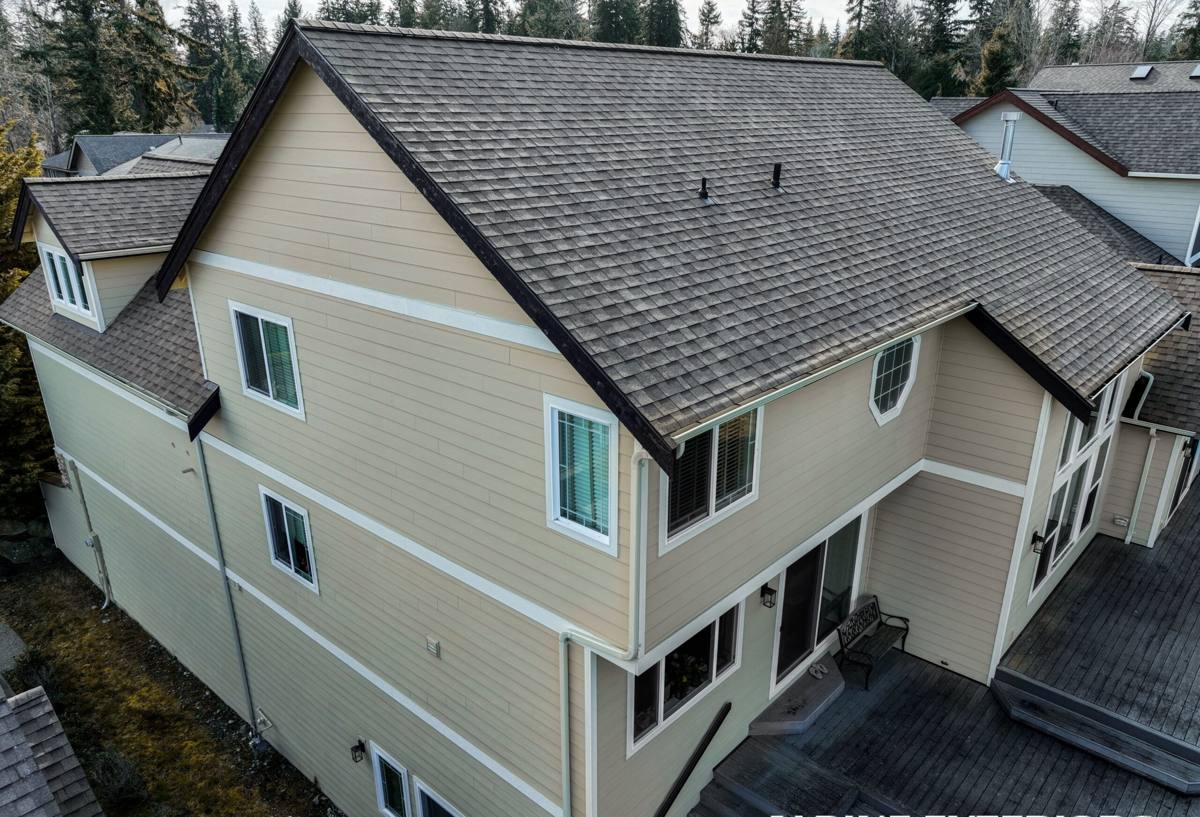
What Birchwood's Climate Actually Does to a Deck
Salt Air and Corrosion
Fasteners, brackets, and railing hardware are usually the first things to show wear on a Birchwood deck, long before the decking boards themselves look tired. Salt-laden air speeds up corrosion on lower-grade metal, and a fastener that's quietly rusting loses holding strength well before it looks obviously bad. It's a slow process, which is exactly why it's easy to overlook at the design stage and expensive to fix once it's already underway.
Driving Rain and Moisture at the Structure
Composite boards themselves handle moisture on the surface reasonably well. The bigger risk in this climate is what's happening underneath — the ledger connection to the house, the framing, and any spot where wind-driven rain gets pushed up and under the decking instead of running off the top. A deck that looks dry on the surface can still have water working on the substructure if drainage, flashing, and gapping weren't handled correctly when it was built.
A Long Moss Season
Shaded decks, north-facing decks, and decks tucked under tree cover in Birchwood hold moisture long enough for moss and algae to take hold and stay established for a good part of the year. On a wood deck that means regular scrubbing and re-staining. On composite, the right board and the right gapping and airflow underneath go a long way toward keeping moss from getting a foothold in the first place, but no composite product is fully immune to it if water is allowed to sit and shade never lets the surface dry out.
What "Composite Decking" Actually Means
Composite decking is generally a blend of wood fiber and plastic, but the ratio, the plastic type, and how the board is finished vary widely between manufacturers. Two distinctions matter most for a Birchwood installation.
Capped vs. Uncapped
Capped composite boards have a plastic shell wrapped around a wood-plastic core, which resists moisture absorption, staining, and the kind of surface degradation that gives moss and algae something to grip onto. Uncapped composite is the older style of the product, exposed on all sides, which means it absorbs more moisture and is more prone to mold, staining, and surface wear over time. In a damp, moss-prone climate like this one, that difference shows up faster than it would somewhere drier, which is why we standardize on capped composite for decks going in around Birchwood.
PVC as an Alternative
Some manufacturers also make fully cellular PVC decking with no wood fiber at all. It resists moisture completely and some lines are less prone to holding surface grime, but it can flex more under heavy point loads and typically costs more than capped composite. We'll walk through whether capped composite or PVC makes more sense for a given deck based on sun exposure, budget, and how the space gets used — there isn't one universal right answer.
What a Correct Composite Deck Build Involves Here
The visible decking gets most of the attention, but on a Birchwood lot, the substructure and drainage details underneath are what actually decide whether the deck holds up over the long run. A build done right for this climate includes:
- Pressure-treated framing rated for ground contact and sustained moisture exposure, sized and spaced for the specific composite product's span rating
- Stainless steel or coated corrosion-resistant fasteners throughout, not standard-grade hardware that gives out early in salt air
- Hidden fastener systems on the walking surface where the product allows, reducing exposed metal and giving water fewer places to collect
- Correct board gapping for both drainage and the expansion and contraction composite goes through with temperature swings
- Proper ledger board flashing where the deck ties into the house — a common leak and rot point if it's rushed or skipped
- Ventilation and airflow underneath the deck so moisture doesn't sit against the framing and feed moss growth from below
- Railing and post attachment built to hold up under wind exposure on open or elevated lots
Skip any one of these and the deck usually still looks fine on day one. The consequences show up two, five, or ten years later — a soft spot in the framing, a loosening railing post, or streaking and moss that keeps coming back no matter how often the surface gets cleaned.
Comparing Decking Materials for a Birchwood Home
| Material | How It Handles Salt Air, Rain & Moss | Maintenance | Typical Lifespan Here |
|---|---|---|---|
| Capped composite | Strong — cap layer resists moisture absorption and gives moss less to grip | Periodic washing; no sealing or staining | Long-term, backed by manufacturer warranty |
| Cellular PVC | Excellent — no wood fiber to absorb moisture at all | Periodic washing; no sealing or staining | Long-term, generally at a higher upfront cost |
| Uncapped composite | Moderate — absorbs some moisture, more prone to mold and staining in shade | More frequent cleaning to manage mold and moss | Shorter than capped products in this climate |
| Pressure-treated wood | Weak against sustained moisture and moss over time | Regular sealing, staining, and scrubbing | Shortest, with the most ongoing upkeep |
For most Birchwood homes, capped composite is the practical middle ground — meaningfully lower maintenance than wood, without the added cost of full PVC. Shaded, north-facing, or tree-covered lots are where it's worth talking through PVC or a premium capped line more seriously, since those spots hold moisture and moss longest.
Cost Factors Worth Understanding
Two bids for what looks like the same deck can land thousands of dollars apart, and the gap is almost always real scope rather than one contractor padding the number. Knowing what drives cost makes it easier to compare estimates that don't look alike on paper.
| Factor | What It Affects |
|---|---|
| Framing material and fastener grade | How well the substructure resists moisture and corrosion over the deck's life |
| Decking product tier | Cap quality, color retention, and resistance to mold and moss in shaded areas |
| Substructure condition (replacements) | Whether hidden rot or damage gets found and repaired before new decking goes down |
| Railing system and hardware | Long-term corrosion resistance and how the railing holds up structurally |
| Deck size, height, and access | Labor time, staging, and any structural engineering needed for elevated decks |
| Ledger and flashing detail | How well the connection to the house resists water intrusion long-term |
A written estimate that itemizes these pieces separately tells you far more than a single bottom-line number. It's worth asking any contractor to walk through exactly what's included before comparing two prices side by side.
How Our Process Works
We keep the process straightforward, because a deck is a structural project on your home, not something to gloss over with a rough verbal quote.
- Site visit: We look at existing framing condition on replacements, drainage and grade around the deck footprint, sun and shade exposure through the day, and how sheltered or exposed the lot is.
- Written estimate: You get an itemized bid covering framing, fasteners, decking product, railing, and cleanup — not one vague line item.
- Product selection: We talk through capped composite and PVC options based on budget, how the space will be used, and how much shade the deck actually gets.
- Permitting: We handle permitting requirements as part of the job rather than leaving that step to you.
- Build: Substructure first, with framing and fasteners matched to this climate's demands, then decking, railing, and any trim work.
- Final walkthrough: We go over the finished deck with you and explain the maintenance the specific product you chose actually needs.
What Composite Decking Still Needs From You
Composite decking is low-maintenance compared to wood, not maintenance-free, especially with a moss season this long. A little routine care keeps it looking and performing the way it should:
- Sweep or rinse the surface periodically, especially on shaded sections, so organic buildup doesn't get a chance to settle into the cap layer
- Keep gaps between boards clear of leaves and debris so water and airflow can move through as designed
- Trim back overhanging branches or plantings that keep sections of the deck shaded and damp longer than necessary
- Check railing hardware annually for early signs of corrosion or loosening
- Address any soft framing or standing water underneath the deck right away — that's a structural issue, not a cosmetic one
Why Hiring a Crew That Already Works in Birchwood Matters
A crew that regularly builds decks in and around Birchwood has already seen how salt air works on underspecified hardware, which lots hold moss the longest through the wet season, and where wind-driven rain actually gets into a deck that looks fine from a distance. That's practical knowledge that shows up in dozens of small decisions over a job — decisions a crew without that local track record might not think to make.
It also matters once the job is finished. A workmanship warranty is only as good as the company standing behind it, and a contractor with an ongoing local presence is one you can actually reach if a question comes up years down the road.
A Practical Checklist Before You Choose a Decking Contractor
- Do they spec corrosion-resistant fasteners and hardware by name, not just "quality materials"?
- Does the estimate specify capped composite or PVC and the specific product line, not just "composite decking"?
- Is ledger flashing and framing detail explicitly written into the bid?
- Do they carry current WA contractor licensing, liability insurance, and workers' compensation?
- Can they point to recent, real deck work in or near Birchwood?
- Does the bid separate the manufacturer's material warranty from their own workmanship warranty?
If you'd like an honest, no-pressure look at your deck project and a written estimate you can compare against anything else you've received, we're glad to come take a look. Use the form below to request a free estimate.