 Bellingham
 Siding Repair for Barkley Homes
Barkley is one of Bellingham's newer planned neighborhoods, which means the housing stock here is a mix of homes built over the last two to three decades rather than the older bungalows and farmhouses found closer to downtown or in the county's older rural pockets. That mix matters for siding repair. A home built in the late 1990s is likely due for its first serious siding intervention right about now, while newer construction in Barkley may just be dealing with isolated damage — a cracked panel from a fallen branch, a soft spot where a gutter has been overflowing, or caulking that's given up around a window. Whatever the cause, siding repair in this part of Bellingham is rarely a cosmetic job. It's almost always tied to moisture management, and getting it right requires understanding both the specific damage in front of you and the climate that caused it.
We work on homes throughout Bellingham and Whatcom County, and Barkley's repair calls tend to follow a pattern: homeowners notice a visible problem — a warped board, a stain, a section that looks different after a hard winter — and want to know whether it's a quick fix or a sign of something bigger happening behind the wall. That's the right question to ask, and it's the first thing we look at on every visit.
What Bellingham's Climate Does to Siding Over Time
Whatcom County sits in a marine climate that's tough on exterior building materials in ways that aren't always obvious from the street. Salt-laden air off Bellingham Bay travels further inland than people expect, accelerating corrosion on fasteners, flashing, and any metal trim components tied into a siding system. Driving rain — wind-driven and often coming in sideways during fall and winter storms — pushes water into joints and laps that would stay dry in a calmer climate. And our long moss season, which can stretch from early fall through late spring, keeps north-facing and shaded wall sections damp for months at a time.
None of this is unique to Barkley, but it's worth naming specifically because it changes how we diagnose repairs. A stain on a south-facing wall usually means something different than the same stain on a north-facing wall in a shaded side yard. A fastener that's rusted through in year eight tells us something about the original installation, not just about the weather. We factor all of this into every repair, not just the visible damage.
Why Moss and Moisture Are the Real Enemy
Moss itself doesn't destroy siding, but it holds moisture against the surface for extended periods, and that sustained dampness is what causes problems — swelling in wood-based products, corrosion on fasteners, and slow degradation of caulking and sealants. In a region with our rainfall pattern, siding that can't dry out between storms is siding that's aging faster than it should.
Signs Your Barkley Home Needs Siding Repair
Most homeowners can spot the obvious problems — a cracked panel, an impact hole, a section that's visibly separated from the wall. But some of the more important warning signs are easy to miss during a quick walk-around. We recommend checking for the following, especially before winter storm season:
- Soft or spongy areas when you press on the siding, particularly near the bottom courses and around window and door trim
- Dark staining or streaking that reappears shortly after cleaning
- Bubbling, peeling, or chalky paint in one localized area rather than across the whole wall
- Gaps or separation at seams, corners, or where siding meets trim, flashing, or the foundation
- Persistent moss or algae growth concentrated in one section, which often points to a drainage or shading issue rather than just general weathering
- Visible rust streaks below fasteners or trim pieces
- Warping, cupping, or buckling panels, especially on walls that get the most weather exposure
If you're seeing more than one or two of these in the same area, that's usually a sign of an underlying moisture path rather than surface wear, and it's worth having someone look at it before it spreads.
What a Correct Siding Repair Actually Involves
A siding repair that only addresses what's visible from the driveway is a repair that's likely to fail again within a few years. Doing it correctly means treating every repair as an opportunity to check — and if necessary, correct — what's happening behind the surface.
Diagnosing the Real Problem First
Before we replace a single board, we look at why that section failed. Was it a flashing detail that was never installed correctly? A caulk joint that dried out and cracked, letting water track behind the siding? A gutter or downspout dumping water where it shouldn't? Repairing the siding without fixing the underlying cause just buys a few more years before the same spot fails again.
Checking the Water-Resistive Barrier and Flashing
Once damaged siding is removed, we inspect the house wrap or building paper underneath, along with any flashing around windows, doors, and penetrations. This layer is what actually keeps water out of the wall assembly — the siding is the first line of defense, but the barrier behind it is what matters most. If it's torn, missing, or was installed with gaps, we correct it before anything new goes back on.
Matching Materials and Finish
Repairs need to match the existing siding in profile, exposure, and color, or the patch will stand out and can create its own water-management issues if the reveal doesn't line up correctly. For homes with factory-finished siding, matching the existing color is far more reliable than repainting after the fact, which is one of the practical advantages of factory-applied finishes over field-painted materials.
Fastening and Sealant Details
Corrosion-resistant fasteners, correctly spaced and set to the manufacturer's specifications, and the right sealant at the right joints — these small details are what separate a repair that lasts fifteen years from one that fails in three. Given how much salt air and rain this region sees, we don't cut corners here.
Repair vs. Replacement: How We Decide
Not every damaged section needs a full re-side, and we won't tell you it does. But there's a point where patching stops making financial sense. Here's how we generally think about it:
| Factor | Repair Usually Makes Sense | Full Replacement Usually Makes Sense |
|---|---|---|
| Extent of damage | Isolated to one or two wall sections | Recurring issues across multiple walls |
| Age of siding | Under 15-20 years, otherwise sound | Near or past expected service life |
| Cause of failure | One-time event (impact, isolated leak) | Systemic moisture or installation issue |
| Material availability | Matching product still accessible | Discontinued profile or color, poor match likely |
| Underlying wall condition | Sheathing and barrier intact | Rot or barrier failure found during inspection |
We'll always give you an honest read on which category your home falls into. Sometimes that means a straightforward repair; sometimes it means telling you that spending money on a patch isn't the best use of your budget.
Why We Repair With James Hardie Fiber Cement
We install and repair only James Hardie fiber cement siding — we don't install vinyl, LP SmartSide, or other fiber cement alternatives. That standard applies to repair work too, and it's worth explaining why. Fiber cement doesn't absorb moisture and swell the way engineered wood products can, and it doesn't expand and contract with temperature the way vinyl does, which matters when you're trying to make a repaired section sit flush and tight against existing courses for the long haul.
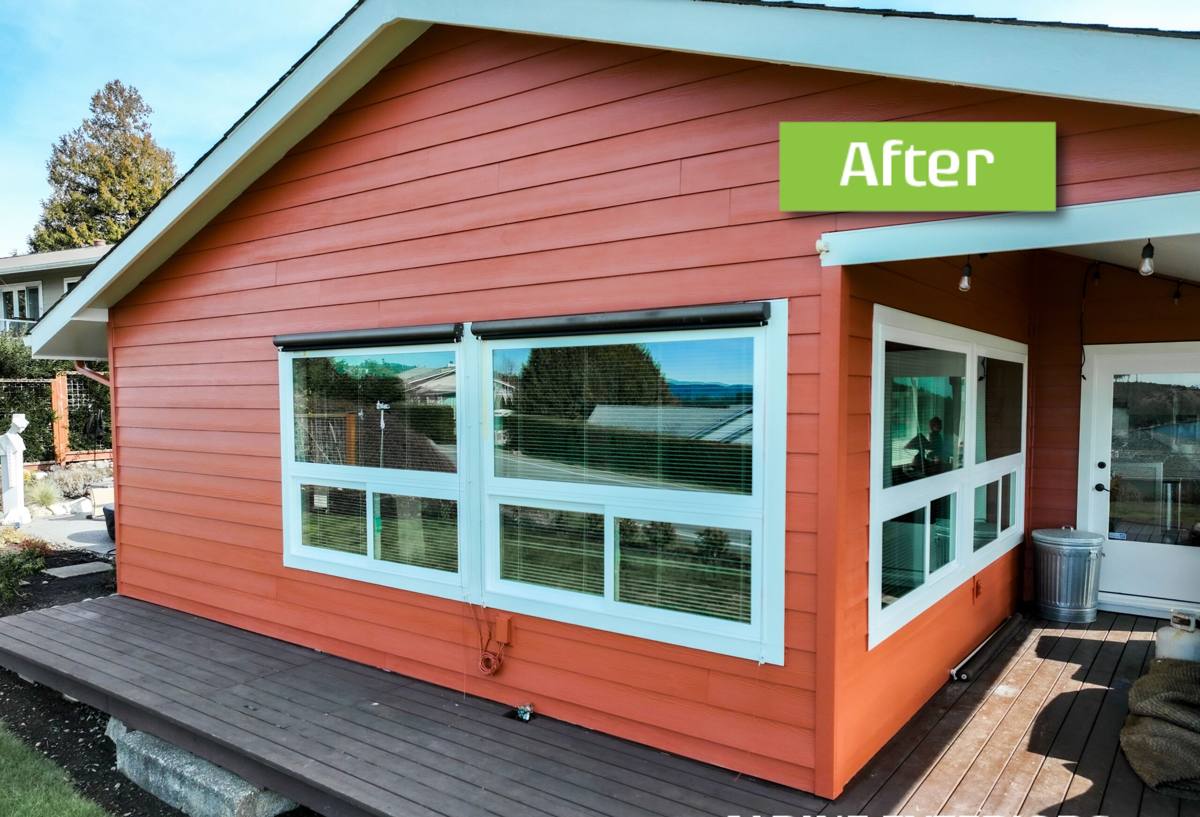
Hardie's factory-applied ColorPlus finish also means a repaired section can be matched without a repaint, and it carries its own warranty coverage against fading and peeling that field-applied paint can't match. For a region with our salt air and rain exposure, that finish durability isn't a minor perk — it's a meaningful part of how long a repair actually holds up. Hardie's HZ5 product line, engineered specifically for climates with significant moisture exposure, is what we use for repairs and full installs alike in Whatcom County.
Our Process for a Barkley Siding Repair
- On-site inspection: We look at the damaged area and the surrounding wall assembly, not just the spot you called about.
- Honest assessment: We tell you whether it's a repair, a partial re-side, or something bigger — and why.
- Written scope and estimate: No vague verbal quotes. You get a clear breakdown before any work starts.
- Removal and inspection behind the siding: We check sheathing, barrier, and flashing before closing anything back up.
- Correct repair: Matched material, proper fastening, correct flashing and sealant details.
- Final walkthrough: We review the completed work with you before we consider the job done.
Why a Crew That Already Works in Barkley Matters
Siding repair isn't just about technique — it's about knowing what's typical for the neighborhood you're working in. A crew that regularly works in Barkley and the surrounding Bellingham area has already seen how homes of this vintage were originally built, what installation shortcuts were common in a given era, and which wall orientations tend to take the worst weather exposure locally. That familiarity shortens the diagnostic process and reduces the chance of missing something that a crew unfamiliar with the area might overlook.
It also means faster response and better accountability. A local crew isn't driving in from out of the county for a callback, and they have a reputation in the community worth protecting. When you're trusting someone to open up your walls, that local track record is worth something.
A Quick Checklist Before You Call
- Note where the damage is (which wall, which direction it faces) and how long you've noticed it
- Check nearby gutters and downspouts for overflow or misdirected water
- Look for soft spots by pressing gently on the siding near the damaged area
- Take a few photos in daylight if you can, especially of any staining patterns
- Have your home's approximate age and any past siding work on hand if you know it
If you're seeing damage on your Barkley home and want a straight answer on what it needs, we're happy to come take a look. We offer a free, no-pressure estimate — no obligation, just an honest assessment of what's going on and what it would take to fix it right. The form below is the easiest way to get started.