 Bellingham
 Deck Repair for Barkley Homes in Bellingham's Wet Climate
Barkley is one of the more established residential pockets on Bellingham's east side, and like every neighborhood in Whatcom County, its decks take a beating from weather most of the country doesn't deal with. Long stretches of steady rain, moisture-laden air moving in off Bellingham Bay and the Salish Sea, and a moss season that can run from fall through spring all work against exposed wood and fasteners. A deck that would last decades in a dry climate can develop soft spots, rusted hardware, and slick surfaces here in half that time if it isn't built and maintained with our conditions in mind.
We repair decks throughout Bellingham, and Barkley properties tend to show a fairly consistent pattern of wear: shaded areas that never fully dry out, north-facing sections that grow moss fastest, and ledger boards or stair stringers that take the brunt of splash-back from gutters and downspouts. None of that is unusual, and most of it is fixable without a full rebuild if it's caught before rot spreads into the framing.
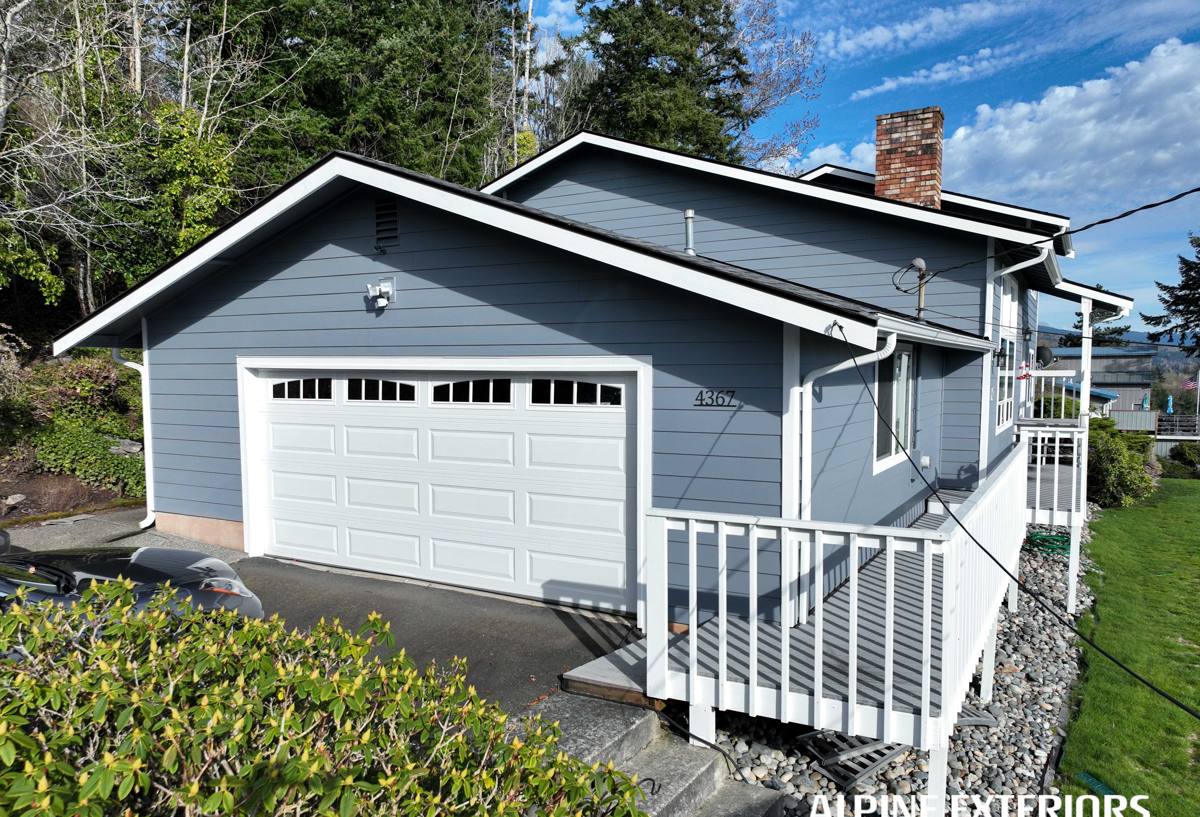
Signs Your Deck Needs Repair, Not Just a Wash
Homeowners often mistake early deck damage for cosmetic wear and reach for a pressure washer when the problem is already structural. A few minutes of inspection can tell you which situation you're actually in.
- Boards that feel spongy, springy, or noticeably softer underfoot than the rest of the deck
- Green or black staining that keeps coming back within weeks of cleaning
- Nails or screw heads that have popped up or left dark rust streaks down the board
- Gaps opening up around the ledger board where the deck meets the house
- Railings or stair rails that wiggle more than they used to
- A musty smell coming from underneath the deck, especially after rain
- Visible daylight or water pooling between boards that used to shed water cleanly
Any one of these on its own might be minor. Two or three together, especially near the ledger or support posts, usually means water has been getting into places it shouldn't for a while.
What's Actually Causing the Damage
Moss and Sustained Moisture
Whatcom County's moss season isn't just an aesthetic annoyance. Moss holds water against the wood surface long after the rest of the deck has dried, and that constant dampness is exactly what wood-decay fungi need to get established. Shaded and north-facing sections of a Barkley deck are usually the first to show it, and if it's left untreated, the moisture problem migrates from the surface coating down into the wood fiber itself.
Driving Rain and Wind-Driven Wetting
Bellingham's storms don't just fall straight down — wind pushes rain sideways into vertical surfaces, railings, and the gap where the deck meets the house siding. That's why ledger boards and the tops of posts fail before open, flat decking usually does. Water finds the seams.
Salt Air and Metal Fasteners
Proximity to Bellingham Bay means the air here carries more salt and moisture than an inland climate would. Over years, that accelerates corrosion in lower-grade nails, screws, and joist hardware. Once a fastener rusts and loses its grip, the board around it starts to move, and movement opens the wood up to more water intrusion — it compounds.
Freeze and Thaw Cycling
We don't get the deep freezes some regions do, but Whatcom County still sees enough freeze-thaw swings each winter to widen cracks that already have water sitting in them. A small split in a board that's ignored in October can be a real problem by March.
What a Correct Deck Repair Involves
A repair that only addresses what's visible from the top often misses the real damage. We approach every deck repair the same way regardless of how small the visible problem looks.
Structural Framing First
Before touching decking boards, we check the joists, beams, and support posts underneath. Surface rot is a symptom; if the framing underneath is compromised, replacing boards on top of it just hides the problem for another season.
Ledger Board and Flashing
The ledger board — where the deck attaches to the house — is the single most common failure point we find on older decks in this area. Proper flashing directs water away from this connection instead of letting it pool where the deck meets the siding. If flashing is missing, damaged, or was never installed correctly, we address that as part of the repair, not as an afterthought.
Decking Boards and Fasteners
We replace boards that are soft, split, or cupped, and we don't reuse corroded fasteners just to save a step. Matching new boards to existing decking as closely as possible keeps the repair from looking like a patch job.
Railings, Stairs, and Guard Posts
Loose railings and stair stringers are a safety issue, not just a cosmetic one. We check post attachment points and stringer connections during every repair visit, even if that wasn't the original complaint.
Repair or Replace? How We Help You Decide
Not every deck problem calls for a full rebuild, and not every repair is worth doing if the underlying structure is too far gone. We walk you through the honest trade-offs rather than defaulting to the bigger job.
| Factor | Favors Repair | Favors Replacement |
|---|---|---|
| Framing condition | Joists and posts are solid, damage is isolated | Rot has spread through multiple structural members |
| Age of deck | Under 15-20 years, built to a reasonable standard | Older deck nearing the end of its practical service life |
| Ledger connection | Flashing is intact or easily corrected | Ledger board itself is compromised |
| Scope of damage | A handful of boards or a single section | Damage spread across most of the deck surface |
| Budget goals | Lower upfront cost, extend current deck's life | Willing to invest once for a longer-term solution |
We'll always tell you if a repair is realistically a short-term fix versus a durable solution, so you can make that call with real information instead of guessing.
Our Deck Repair Process
- On-site inspection. We check the deck from underneath as well as the surface, testing framing, ledger attachment, and fastener condition, not just the boards you can see.
- Honest assessment. We explain what's actually wrong, what's driving it, and whether repair or replacement makes more sense for your situation and budget.
- Written estimate. You get a clear scope of work before anything starts — no surprise add-ons mid-project.
- Repair work. We address structural issues first, then decking, railings, and finish details, using fasteners and flashing rated for our climate.
- Final walkthrough. We check the repaired sections with you and point out any maintenance steps that will extend the life of the work.
Material Choices and What They Mean Long-Term
When boards need replacing, homeowners usually choose between pressure-treated wood, cedar, and composite decking. Each has real trade-offs in this climate — we won't tell you one is universally "better," because the right choice depends on your budget, your maintenance appetite, and how the rest of your deck is built.
| Material | Upfront Cost | Maintenance in Our Climate | Considerations |
|---|---|---|---|
| Pressure-treated wood | Lowest | Needs regular cleaning and periodic sealing to resist moss and moisture | Matches most existing Barkley decks; easiest to repair in sections |
| Cedar | Moderate | Naturally moisture-resistant but still benefits from sealing and moss treatment | Good appearance match for older, higher-end decks |
| Composite | Highest | Low maintenance, but still needs cleaning to prevent moss buildup on the surface | Harder to spot-repair invisibly; best considered at full replacement, not patch repair |
For spot repairs on an existing wood deck, we generally recommend matching the existing material so the repair blends in and behaves the same way as the surrounding boards. Composite is worth discussing when you're looking at a fuller rebuild rather than a patch.
Why a Crew That Already Works in Barkley Makes a Difference
Deck problems in this neighborhood tend to follow patterns tied to how homes here were built and how the local weather interacts with them — shaded northern exposures, splash-back near downspouts, and ledger connections that were flashed to a lower standard than we'd use today. A crew that's already worked on decks in this part of Bellingham knows what to check first instead of guessing. That local familiarity also means realistic timelines around our wet season, and repair techniques and fastener choices that are chosen for Whatcom County weather rather than a generic national standard.
Keeping a Repaired Deck in Good Shape
A repair holds up longer when a few basic habits go along with it.
- Clean moss and debris off the deck surface at least once or twice a year, especially before and after the wet season
- Keep gutters and downspouts clear so runoff doesn't splash directly onto the deck or ledger area
- Check railings and stair connections periodically for looseness rather than waiting for a visible problem
- Reapply sealant or stain on wood decking on the schedule appropriate for the product you used
- Trim back vegetation that's shading the deck and keeping it from drying out between rains
If you're noticing soft boards, moss that won't quit, or a deck that just doesn't feel as solid as it used to, we're happy to come take an honest look. We offer free, no-pressure estimates for deck repair in Barkley and the surrounding Bellingham area — fill out the form below and we'll get back to you.