 Bellingham
 Why Window Replacement Looks Different in York
York sits close enough to the water and tree cover that its homes take on a specific kind of weather load: salt-tinged air drifting in off Bellingham Bay, long stretches of driving rain through fall and winter, and a moss season that runs longer here than in drier parts of Whatcom County. None of that is unusual for this part of Washington, but it changes what "correct" window replacement means. A window that would be fine in a dry inland climate can fail early here if it's installed without the right flashing detail, the right frame material, or the right attention to how water actually moves across a wall.
We treat window replacement in York as a weatherproofing job first and a glass-and-frame upgrade second. Get the water management wrong and even an expensive window will leak, rot, or fog within a few years. Get it right and a well-chosen window can outlast the siding around it.
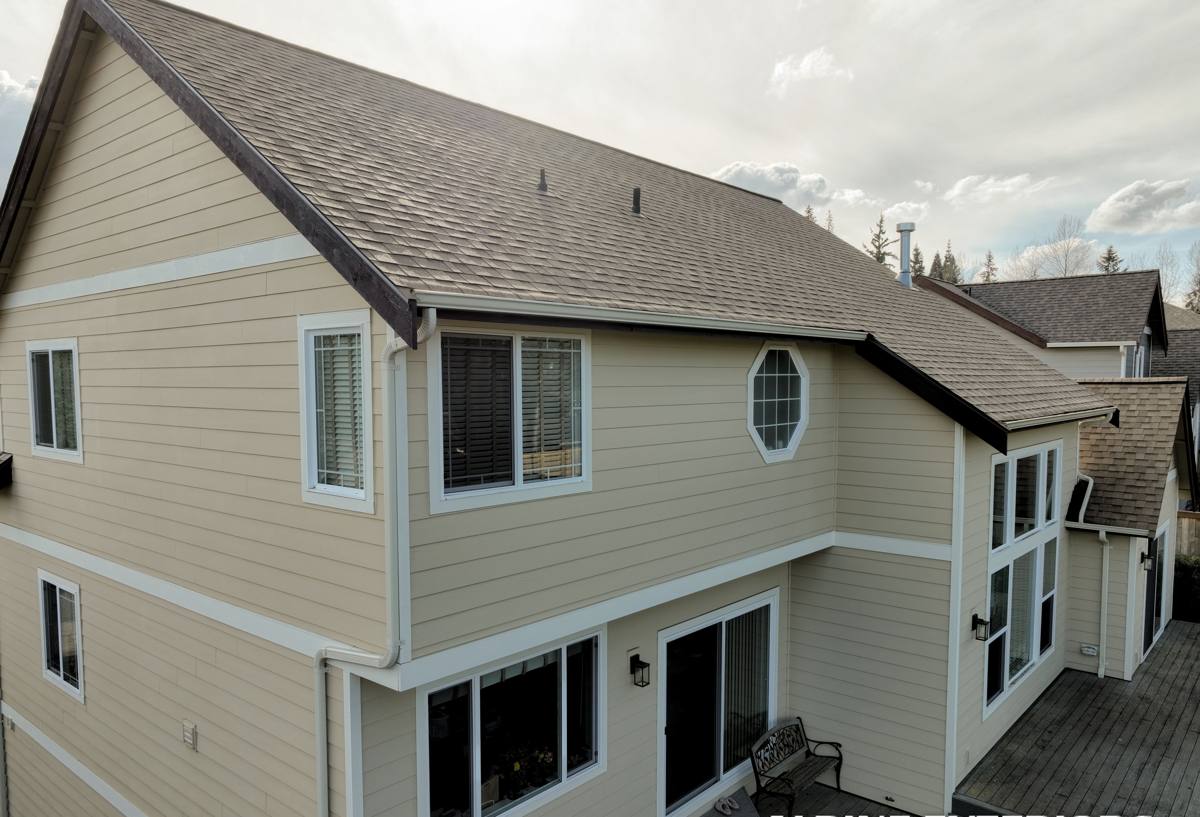
Signs Your York Home's Windows Need Replacing, Not Just Repair
Not every drafty or sticky window needs full replacement — sometimes new weatherstripping or a re-glaze solves it. But certain symptoms point to the window itself having failed, usually because moisture has gotten past the seals or into the frame.
- Fogging, haze, or moisture trapped between the panes of a double-pane window (the seal has broken)
- Soft, spongy, or discolored wood at the sill or lower frame corners
- A draft you can feel with your hand near the frame, even with the window fully latched
- Windows that stick, won't stay open, or need force to close because the frame has swollen or warped
- Visible daylight or gaps between the frame and the surrounding trim
- Heating bills that have crept up without an obvious cause elsewhere in the house
- Moss, algae, or black mildew building up on the exterior frame or sill, faster than it should for the surface material
- Original single-pane glass still in place on an older home
If you're seeing two or more of these on the same window, replacement is usually the more honest recommendation than another repair.
What a Correct Window Replacement Job Actually Involves
Tear-Out and Structural Check
Once the old window is out, we check the rough opening — the framing, sheathing, and sill — for rot or soft spots before anything new goes in. In a wetter, mossier climate this step matters more than it does elsewhere, because water that got behind an old, failed window can sit against the framing for years without being obvious from inside the house. Installing a new window over a compromised opening just hides the problem behind new trim.
Flashing and Weatherproofing
This is the step that decides whether a window replacement holds up to driving rain. Proper flashing tape and a sloped sill pan direct any water that gets past the exterior cladding back out and away from the framing, rather than letting it pool at the sill. Skipping or shortcutting flashing is one of the most common causes of window leaks we're called out to fix — and it's invisible until the damage shows up years later as rot or interior staining.
Installation, Shimming, and Insulation
The window gets set plumb, level, and square, shimmed evenly so it isn't under stress that will eventually crack the frame or bind the sash. Gaps around the frame get filled with low-expansion foam or backer rod and sealant — not stuffed with fiberglass insulation alone, which does nothing to stop air and moisture movement.
Sealing and Trim
Exterior caulking, trim, and any cladding disturbed during the swap gets sealed and finished to match. A window installed correctly on the inside but left with a gapped or poorly caulked exterior joint will still let salt-laden, wind-driven rain find its way in over time.
Choosing Window Materials That Hold Up Near the Water
Material choice matters more here than in a dry inland climate, because salt air and near-constant moisture will find the weak point in a frame faster than they would elsewhere. Here's how the common options compare for a York home:
| Material | Salt Air & Moisture Resistance | Maintenance | Typical Lifespan | Best Fit |
|---|---|---|---|---|
| Vinyl | Good — won't rot or corrode, seams are the main watch point | Low | 20–30 years | Most homes; best value for the climate |
| Fiberglass | Very good — dimensionally stable, resists warping in wet/dry cycles | Low | 30–40 years | Larger openings, homes with more direct water exposure |
| Wood-clad | Fair — the clad exterior helps, but any breach exposes wood to rot | Moderate to high | 20–30 years with upkeep | Homes prioritizing a traditional wood interior look |
| Aluminum | Poor to fair — prone to corrosion and condensation in salt air | Moderate | 15–25 years | Rarely our first recommendation this close to the water |
We don't push any one brand or material on every job — the right call depends on the window's exposure, the home's style, and the owner's budget. But we'll tell you plainly when a material is a poor match for a York home's exposure rather than sell you something that looks good on a showroom sample.
Glass and Glazing Choices for This Climate
Beyond the frame, the glass package does a lot of the work against condensation, heat loss, and noise. Double-pane windows with a Low-E coating and an argon or krypton gas fill are the standard baseline for Whatcom County homes today, and they handle the region's damp winters well. Triple-pane glass adds another layer of insulation and can be worth it for north- or west-facing rooms that take the brunt of driving rain and wind, but it adds weight and cost that isn't always justified on every opening. A tighter seal and correct installation usually do more to prevent condensation and fogging than glass upgrades alone — a poorly sealed triple-pane window will still fail before a well-installed double-pane one.
Our Window Replacement Process
Free On-Site Estimate
We walk the home, look at each window's condition and exposure, and talk through material and glass options that fit the budget — no pressure, no upsell script.
Measuring and Ordering
Once you approve a plan, we take precise measurements for each opening and order to spec, since older York homes often have openings that don't match modern standard sizes exactly.
Installation Day
We protect flooring, landscaping, and surrounding surfaces, remove old windows one at a time to keep the home weathertight through the job, and install with proper flashing, shimming, and sealing at every opening.
Final Walkthrough and Cleanup
Every window gets operated, checked for square, and inspected for a clean seal before we call the job done. Old windows and debris leave with us — you're not left storing them.
What Window Replacement Costs in York — and What Drives the Price
Costs vary enough by home that we'd rather give you an honest number after seeing the openings than a figure that doesn't hold up. In general terms, a straightforward vinyl window replacement in a standard opening runs toward the lower end of the market, while larger, custom, or fiberglass windows push toward the higher end. The main things that move the price:
- Number of windows being replaced at once (per-window cost drops with volume)
- Window size and style — a large picture window or bay window costs more than a standard double-hung
- Material choice — vinyl, fiberglass, and wood-clad sit at different price points
- Whether the old opening has hidden rot or structural repair needed once the old window comes out
- Access — second-story or hard-to-reach openings take more time and equipment
Why Hire a Crew That Already Works in York
A contractor who's replaced windows across this neighborhood before knows what tends to show up once the old window comes out — where moisture damage typically hides, how exposed a given elevation is to the prevailing wind and rain, and how the local permitting process with the city works so the job isn't held up on paperwork. That familiarity means fewer surprises mid-project and a crew that already stocks materials suited to a marine climate rather than ordering generic parts and hoping they hold up.
It also means accountability. A crew that plans to keep working in York has every reason to do the flashing and sealing right the first time, because a callback for a leak a year later costs them their name in a neighborhood where word travels.
Ready for an Honest Look at Your Windows?
If your windows are fogging, drafting, sticking, or just past their working life, we'll come take a look and give you a straight assessment — no pressure, no obligation. Use the form below to request a free estimate for your York home.