 Bellingham
 Why Sudden Valley Siding Is a Different Job Than Most of Bellingham
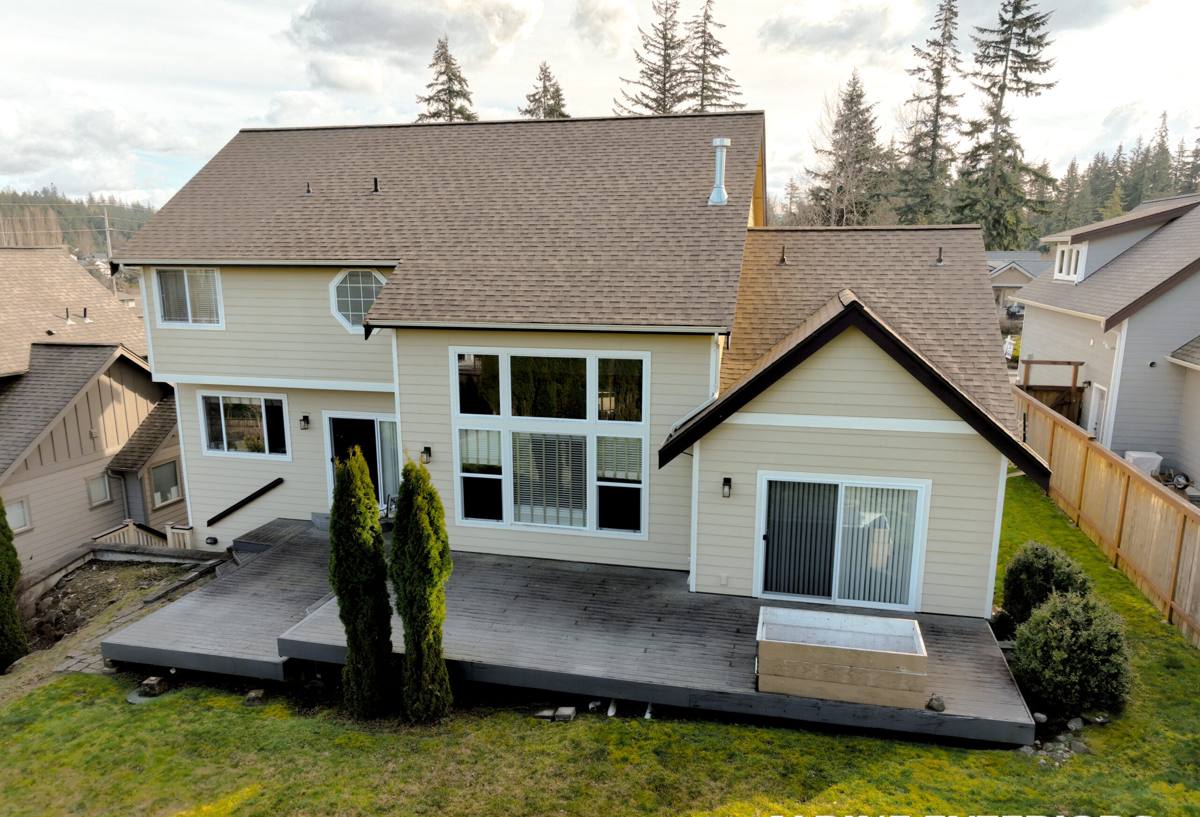
Sudden Valley sits in a wooded, lake-adjacent setting on the south side of Bellingham, and that setting changes what a house needs from its siding. Heavy tree cover means more shade, slower drying times after rain, and more organic debris landing on walls and in gutters. Proximity to Lake Whatcom means ambient humidity stays higher for longer stretches than it does on an open, sun-exposed lot. Add in Whatcom County's long wet season and it's a combination that's hard on any exterior material that isn't built to handle sustained moisture exposure.
None of this makes Sudden Valley a bad place to build or maintain a home — it's one of the reasons people choose to live there. But it does mean the siding decision matters more here than it would on a dry, open lot across town. Homes tucked under a tree canopy see less direct sun on at least one elevation year-round, and that elevation is almost always the first place moss, mildew, and soft or swelling siding show up.
What the Local Climate Actually Does to Siding
Whatcom County's exterior climate story is pretty consistent: salt-tinged marine air pushing in off Bellingham Bay, driving rain that comes in sideways during winter storms, and a moss season that can run eight months or more in shaded spots. On a wooded lot like the ones common in Sudden Valley, add reduced airflow and slower evaporation, and you get walls that stay damp longer after every rain event.
What That Means in Practical Terms
- Moss and algae take hold fastest on north- and east-facing walls that get the least sun and the most shade from trees.
- Wood-based siding products absorb moisture at cut edges, seams, and fastener points, which is where rot typically starts.
- Paint and factory finishes on lower-grade products break down faster under repeated wet-dry cycling than they would in a drier climate.
- Gutters and downspouts near tree canopy clog more often, and overflow water runs directly down the siding face.
- Ground-level splash-back is worse on shaded, moss-covered walkways and planting beds that never fully dry out.
Why We Only Install James Hardie Fiber Cement
We standardized on James Hardie siding for every job we do, including work in Sudden Valley, and we don't install vinyl, LP SmartSide, Cemplank, Allura, or primed wood species like cedar or spruce. That's not a marketing position — it's a professional standard based on how these products actually perform over a decade or two of real Pacific Northwest weather.
Fiber cement is non-combustible, which matters given how many Sudden Valley properties sit close to tree lines and wooded common areas. It doesn't absorb water and swell the way wood-based composite products can at cut edges and seams. James Hardie's ColorPlus factory finish is baked on and warrantied against cracking, peeling, and fading in a way that field-applied paint on wood siding simply can't match — an important detail on shaded walls where a finish gets more time wet and less UV exposure to help it cure and hold up between recoats.
James Hardie also engineers its product lines by climate zone. The HZ5 formulation used in the Pacific Northwest is built specifically to resist moisture intrusion and freeze-thaw stress in wet regions like ours, rather than using a one-size-fits-all formula. Combined with a transferable limited warranty, that's the combination we're willing to put our name behind — and it's why we don't offer alternatives that ask a homeowner to accept more maintenance or more risk for a lower upfront price.
How the Main Siding Options Actually Compare in This Climate
| Material | Moisture behavior in shade/high humidity | Moss/mildew resistance | Maintenance burden | Fire resistance |
|---|---|---|---|---|
| James Hardie fiber cement | Does not absorb and swell; stable in sustained damp conditions | Factory finish resists organic growth better than field-painted surfaces | Occasional wash; no repainting cycle with ColorPlus finish | Non-combustible |
| Vinyl siding | Doesn't rot, but can warp and trap moisture behind panels | Moss and algae grow readily on the surface, especially in shade | Regular washing; panels can crack in cold snaps | Combustible, can melt/deform |
| LP SmartSide / wood composite | Engineered wood strand product; vulnerable at cut edges and seams if not perfectly sealed | Susceptible if finish is compromised | Field-applied finish needs monitoring and recoating | Combustible |
| Cedar / primed spruce | Natural wood absorbs moisture readily; shade slows drying | High susceptibility without diligent upkeep | Regular staining/painting and caulk maintenance | Combustible |
What a Correct Installation Involves Here
Product quality only pays off if the installation is done right, and shaded, wooded lots leave less room for shortcuts than open, sunny ones do. On every Sudden Valley job we treat the following as non-negotiable:
Drainage and Ventilation Behind the Siding
Proper installation includes a drainage plane and the manufacturer-specified clearances behind the siding so any moisture that does get past the surface has somewhere to go and can dry out. On shaded walls where drying is naturally slower, getting this rainscreen detail right is more important than it is on a sun-exposed elevation — it's the difference between moisture that passes through harmlessly and moisture that sits against the sheathing.
Flashing and Trim Details
Windows, doors, roof-to-wall transitions, and deck ledger connections are where water intrusion actually starts on most homes. We flash these correctly per Hardie's installation specifications, not just caulk over gaps, because caulk is a maintenance item and flashing is a permanent water management detail.
Fastening and Clearances
Correct nail placement, board overlap, and ground/roof clearances all affect how the siding sheds water. On lots with mulch beds, retaining walls, or landscaping close to the foundation — common on wooded properties — we hold to the minimum clearances Hardie specifies so splash-back and moisture wicking don't undermine the bottom courses over time.
Product Selection for Shaded Elevations
We select siding profiles and factory finishes with an eye toward how each elevation of the house actually performs — a shaded north wall and a sun-exposed south wall don't age the same way, and the color and finish choice should account for that rather than treating all four sides identically.
Our Process on a Sudden Valley Job
- Walk the property and assess every elevation — noting shade patterns, existing moss or moisture damage, tree proximity, and any soft spots in the current siding or sheathing.
- Check for hidden damage behind the existing siding, since wooded, shaded lots are more likely to have moisture that's been trapped without visible surface signs.
- Recommend the right James Hardie product line, profile, and finish for the home's exposure, architecture, and the homeowner's preferences.
- Install to manufacturer specification — drainage plane, flashing, fastening, and clearances — with attention to the shaded and high-moisture areas identified in the walkthrough.
- Clean up thoroughly, including removing old siding material and job debris, which matters more on wooded lots where debris can settle into landscaping and be harder to fully clear.
Why Local Experience in Sudden Valley Matters
A crew that's already worked in Sudden Valley understands the practical realities of the area before they show up: narrower, tree-lined access roads that affect how materials and equipment get staged, lots where drainage and grading are shaped by the surrounding terrain, and the general expectation among neighbors that work gets done cleanly and doesn't leave a mess behind. If your property is part of a community with its own design or exterior color guidelines, we're used to working within those constraints rather than treating every job like a blank slate.
Experience in this specific setting also means fewer surprises mid-project. Crews unfamiliar with heavily wooded, shaded lots sometimes underestimate how much slower things dry, how much more debris accumulates during a job, or how much more careful flashing work is needed around features like decks and lakeside-facing additions. That's the kind of thing you only get right consistently by having done it before, in this exact kind of setting.
Signs Your Sudden Valley Home May Need New Siding
- Persistent moss or dark streaking on one or more walls that comes back shortly after cleaning.
- Soft, spongy, or bubbling spots when you press on the siding, especially near the bottom courses or around windows.
- Paint that's peeling, bubbling, or chalking faster than it should, particularly on shaded elevations.
- Visible gaps, warping, or separation at seams and corners.
- A musty smell near exterior walls or noticeably higher indoor humidity in rooms along a shaded elevation.
- Siding that's original to a home built more than 20-25 years ago, especially if it's a wood-based product.
Maintaining Hardie Siding on a Wooded Lot
James Hardie siding is low-maintenance compared to wood or vinyl, but "low-maintenance" isn't "no-maintenance," especially with tree cover overhead. A periodic gentle wash to keep organic growth from building up, keeping gutters clear so overflow doesn't run down the wall face, and trimming back branches or foliage that's crowding the siding all go a long way toward keeping a shaded elevation looking and performing like the sunny side of the house. None of this is difficult work, but it matters more here than it would on an open lot, simply because the drying time between rain events is longer.
Cost Factors Specific to This Kind of Project
| Factor | Why it affects a Sudden Valley job |
|---|---|
| Existing damage behind old siding | Wooded, shaded walls are more likely to need sheathing repair discovered during removal |
| Site access | Tree-lined lots and narrower roads can affect staging and material delivery |
| Elevation-specific product choices | Shaded vs. sun-exposed walls may call for different finish considerations |
| Trim and flashing complexity | Homes with decks, dormers, or multiple rooflines near tree cover need more detail work |
| Debris removal | Old siding and job debris require careful cleanup on lots with landscaping and tree litter |
We walk every property and price it based on what's actually there rather than a flat per-square-foot number, because the factors above can shift scope meaningfully from one Sudden Valley lot to the next.
If you're weighing a siding project on a shaded or wooded lot in Sudden Valley, we're happy to take a look and give you a straightforward, no-pressure estimate — including an honest read on whether your current siding still has useful life left or whether it's time to replace it. Use the form below to get started.