 Bellingham
 Why Storm Damage Hits Silver Beach Roofs Differently
Silver Beach is a heavily treed, established part of Bellingham, and that combination — mature conifers overhead and Whatcom County's marine weather underneath — puts extra stress on a roof that a lot of drier inland climates never deal with. The salt-tinged air moving in off the water corrodes exposed metal faster than most homeowners expect: nail heads, flashing edges, and vent caps that would last decades elsewhere can start showing rust and pinholes years ahead of schedule here. Add driving, wind-blown rain that comes in sideways during a real Pacific storm, and water finds its way into laps and seams that would stay dry in a straight-down rain.
Then there's moss. Bellingham's moss season runs long — realistically most of the fall through spring — and on the shaded, tree-covered lots common in Silver Beach it barely lets up even in summer. Moss doesn't just look bad; it holds moisture against the roofing material and works its way under shingle tabs and shake edges, which is exactly the kind of chronic dampness that turns a small storm-caused opening into a much bigger leak once the next system rolls through.
None of this means every roof in the neighborhood is in trouble. It means storm damage repair here has to account for what the roof was already dealing with before the wind and rain hit it, not just patch the obvious spot and move on.
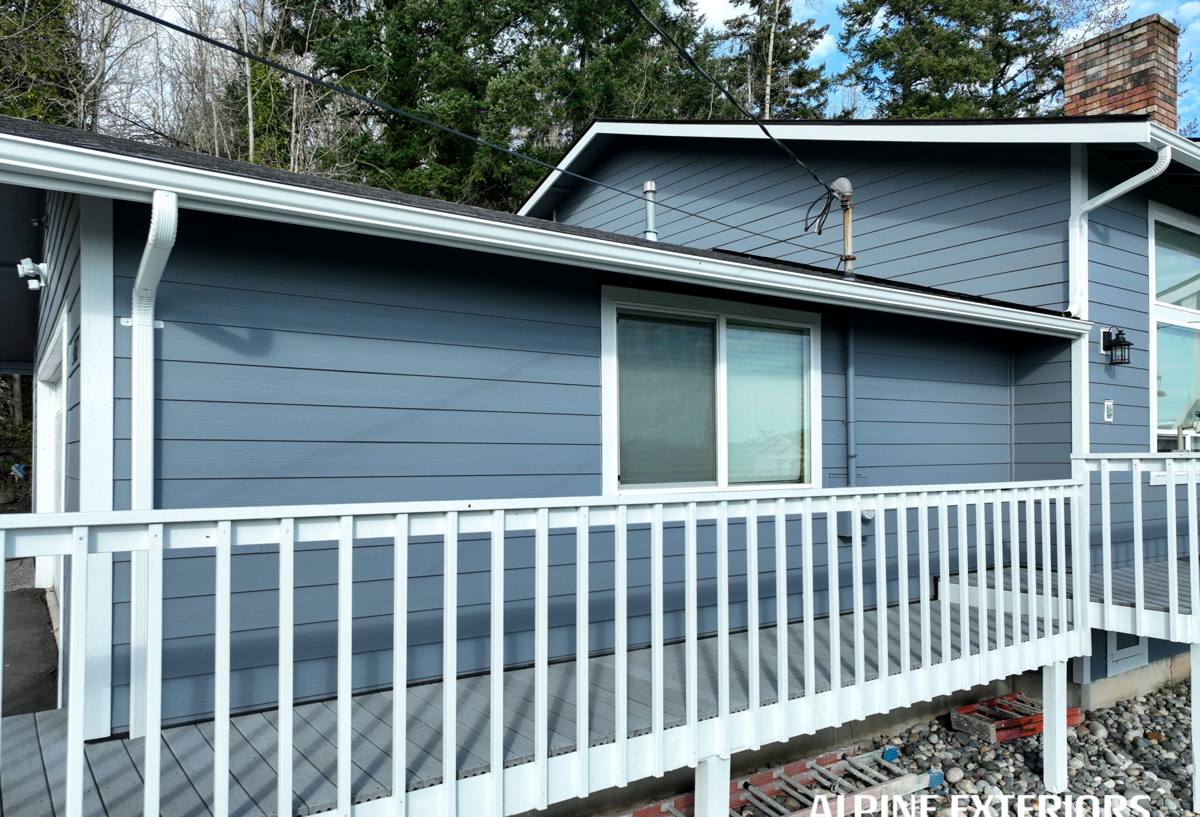
Signs Your Silver Beach Roof May Have Storm Damage
What you can spot from the ground or a ladder
After a windstorm or a heavy rain event, it's worth a quick look before assuming everything's fine. Storm damage is often more visible than people expect once they know what to look for.
- Shingles or shakes that are cracked, curled, lifted at the edge, or missing outright
- Granules collecting in gutters or at downspout outlets — a sign of impact or wind abrasion
- Bent, creased, or torn ridge caps and hip caps
- Flashing pulled away from chimneys, skylights, or sidewalls
- Dented or displaced gutters, especially after a hail or debris event
- Broken tree limbs or heavy branch debris resting on or near the roof plane
- Visible sagging along a slope, which can mean water-soaked decking underneath
What shows up inside first
A lot of storm damage announces itself indoors before it's obvious outside. Watch for new water stains or discoloration on ceilings, damp or musty smells in the attic, daylight visible through the roof deck from inside the attic, and insulation that's wet or matted down in one spot. Any of these after a storm is worth a same-week inspection rather than a "wait and see" approach — water that's already inside tends to keep moving.
What a Correct Storm Damage Repair Actually Involves
Looking at the whole roof, not just the obvious spot
The visible damage — a torn-back section of shingles, a dented vent cap — is rarely the whole story. Wind that's strong enough to tear one section loose has usually stressed the fasteners and seals across the rest of that slope too. A repair that's done right starts with checking the full roof plane the damage occurred on, not just patching the hole that's leaking.
Matching material and technique to what's already there
Composition shingle, cedar shake, and metal roofing all fail differently in a storm and all repair differently. A shake roof that's lost pieces needs replacement shakes woven into the existing courses at the right exposure, not just nailed flat over the gap. A shingle roof needs the new course properly laced into the surrounding shingles so water still sheds correctly, not caulked over as a stopgap. Getting this wrong is one of the most common reasons a "repaired" roof leaks again at the first real storm.
The parts nobody sees
Flashing, underlayment, and decking are where most storm repairs actually succeed or fail. If wind-driven rain got past the surface layer, the underlayment and decking underneath need to be checked for saturation and rot before anything new goes back on top. Reflashing around penetrations — chimneys, plumbing vents, skylights — after storm movement is often the difference between a repair that holds for years and one that reopens the same leak next winter.
Our Storm Damage Repair Process
- Inspection. We walk the roof (or use a camera where pitch or access makes that unsafe) and document every area of damage, not just the spot that's leaking.
- Documentation. Photos and a written scope of the damage, useful whether you're paying out of pocket or filing an insurance claim.
- Temporary protection. If the roof is actively leaking or exposed, we get it weathertight — tarping or a temporary patch — before the next system moves through.
- Scope and estimate. A clear breakdown of what needs to be repaired versus what's cosmetic, so you're not paying to replace more than the storm actually damaged.
- Repair. Matching materials, proper flashing and underlayment work, and decking replacement where water got underneath.
- Cleanup and check. Debris hauled off, gutters cleared of anything the storm knocked loose, and a final look to confirm the repair is sound.
What Drives the Cost of a Storm Damage Repair
There's no single "storm repair price" — a lifted ridge cap and a section of rotted decking under a torn-open valley are very different jobs. Simple, accessible repairs are often a few hundred to low four figures; damage that involves decking replacement, multiple slopes, or a full section of roofing can run into several thousand dollars or more. The factors below are what actually move the number.
| Factor | Why it matters |
|---|---|
| Extent of damage | One dislodged section is a patch job; damage spread across a slope may need a larger tear-off and reroof of that area |
| Roofing material | Cedar shake and standing-seam metal repairs generally take more time and skilled labor than composition shingle |
| Decking condition | Rotted or saturated sheathing under the damaged area has to be replaced before new roofing goes down — this is the most common cost surprise |
| Roof pitch and access | Steep slopes, multiple stories, or limited ladder access on a tight lot add labor and safety-equipment time |
| Flashing and penetrations | Damage near chimneys, skylights, or valleys usually costs more to fix correctly than open field damage |
| Age and condition of the rest of the roof | An older roof near the end of its life may make a full replacement more cost-effective than a repair |
Storm Damage and Homeowners Insurance
Good documentation matters more than people think
Most homeowners insurance policies in Washington cover sudden storm and wind damage, though every policy is different and coverage details, deductibles, and depreciation schedules vary. What consistently helps a claim go smoothly is thorough documentation — dated photos of the damage, a clear written description of what happened and when, and an inspection done close to the storm event rather than weeks later after moss and moisture have made it harder to tell what the storm caused versus what was pre-existing wear.
We work for you, not the insurance company
Our job on an insurance-related repair is to give you an honest, accurate scope of the actual damage — not to inflate it, and not to leave things off the list because they're less visible. That written estimate and photo documentation is meant to support whatever conversation you have with your adjuster, not replace it.
Why a Crew That Already Works Silver Beach Matters
A roof in Silver Beach is dealing with a specific combination of tree cover, marine-air corrosion, and a long moss season — and a repair crew that works this neighborhood regularly recognizes those patterns quickly instead of treating every job like a blank slate. That familiarity shows up in small but real ways: knowing to check for moss-related rot around a damaged area even when the storm damage itself looks contained, or having a realistic sense of how tight some of the lots and tree canopies are before showing up with equipment.
It also matters after the repair is done. Storm damage tends to come in waves through a Whatcom County winter, and a local crew that's easy to reach for a follow-up check — rather than a call center for a company that was in the area once — is worth something when you're trying to get ahead of the next system instead of reacting to it.
Preventing the Next Storm From Doing the Same Damage
You can't control the weather coming off the water, but you can reduce how much damage it does. A few things make a real difference on Silver Beach's tree-heavy, moss-prone lots:
- Keep gutters and downspouts clear so wind-driven rain has somewhere to go instead of backing up under the edge of the roof
- Have overhanging branches trimmed back before storm season, since falling limbs are one of the most common causes of impact damage here
- Treat moss buildup before it spreads under shingle or shake edges, especially on shaded north-facing slopes
- Get flashing and seals checked after any major wind event, even if nothing looks obviously wrong from the ground
- Schedule a roof inspection at least once a year, ideally before the wet season ramps up in the fall
If a recent storm has you wondering whether your roof took damage, or you've already found a leak, we're happy to take a look and give you a straight answer — no pressure, no inflated scope. Fill out the form below for a free estimate.