 Bellingham
 Blaine's Coastal Climate Puts Real Stress on Siding
Blaine sits right on the water at the northwest corner of Whatcom County, close enough to the Canadian border and Semiahmoo Bay that the marine air is a daily fact of life, not an occasional weather event. That proximity to salt water changes what siding has to survive here compared to homes even a few miles inland. Salt-laden air accelerates corrosion on fasteners and metal trim, breaks down cheap coatings faster, and works its way into any gap in the weather barrier. Add in the long stretch of driving rain that blows in off the water most of the fall and winter, and siding on a Blaine home is doing more defensive work than most homeowners realize.
Then there's moss. Whatcom County's mild, wet climate gives moss and algae a season that runs most of the year on shaded, north-facing, or tree-covered walls. Moss holds moisture against the surface of siding long after the rain stops, and that constant dampness is what actually causes rot, delamination, and paint failure — the moss itself is just the visible symptom. Homes near the water in Blaine often get a double dose: salt air weakening the material's surface defenses, and moss keeping it wet for weeks at a stretch.
Signs a Blaine Home Needs Siding Repair, Not Just Cleaning
A lot of siding problems in this area get treated as cosmetic when they're actually structural warnings. Knowing the difference saves homeowners from a repair that looks fine for a season and fails again by next winter.
- Soft or spongy spots when you press on siding near the bottom courses, around windows, or under downspouts
- Persistent moss or black streaking that comes back within weeks of cleaning
- Visible gaps, cracks, or buckling at panel seams and corner boards
- Paint that's bubbling, peeling, or chalking well before the rest of the wall
- Staining on interior walls or ceilings near exterior corners, which often points to a siding or flashing failure, not just a roof issue
- Fastener heads that have rusted, popped, or streaked the siding with orange staining
- Warping or cupping on horizontal boards, especially on the west and north exposures that catch the most driving rain
Any one of these can be an isolated repair. Several of them together, especially on the same elevation, usually mean water has been getting behind the siding for a while and the damage extends further than what's visible on the surface.
What a Correct Siding Repair Actually Involves
Start with the water management, not the cosmetics
The single biggest mistake in siding repair is treating it as a surface fix — caulk the crack, paint over the stain, call it done. A correct repair starts by figuring out how water got in and where it went. That means pulling back the damaged section to inspect the weather-resistive barrier, flashing at windows and penetrations, and the framing underneath. If the sheathing or framing is wet or soft, that gets addressed before any new siding goes up. Skipping this step is why so many "repaired" walls fail again within a year or two.
Match the product, not just the color
Siding repair only looks right if the replacement piece matches the existing material's profile, exposure, and finish. Mismatched reveal widths or a slightly different plank profile are obvious from the street, even after painting. On Blaine homes where the existing siding is aging fiber cement, matching the product line and factory finish matters for both appearance and long-term performance.
Detail the flashing and joints for driving rain
Because Blaine takes rain coming off the water at an angle for much of the year, repairs need careful attention to flashing above windows, doors, and any horizontal trim, plus proper caulking at vertical joints only — never sealing a horizontal seam that's designed to shed water by lapping. Sealing the wrong joint traps moisture instead of releasing it, which is a common cause of repeat failures.
Patch Repair vs. Section Replacement vs. Full Re-Side
Not every problem calls for the same scope of work. Part of an honest assessment is telling a homeowner when a targeted repair is enough, and when it isn't.
| Approach | Best For | What to Watch For |
|---|---|---|
| Spot patch (single board or panel) | Isolated impact damage, one cracked board, a small area with no hidden moisture | Only works if the surrounding wall is dry and sound; matching old material can be difficult |
| Section replacement (one elevation or wall) | Moss-heavy or storm-exposed sides with repeated damage, aging material on one wall | Good opportunity to upgrade water management details on that wall even if the rest waits |
| Full re-side | Siding at or past its service life, widespread moisture damage, or repeated repairs across multiple elevations | Often more cost-effective long-term than chasing recurring repairs house by house |
We'll tell you honestly which category a job falls into. A house that needs a full re-side doesn't get talked into "just one more patch," and a house with one damaged board doesn't get oversold on a bigger job than it needs.
Why We Repair Exclusively With James Hardie Fiber Cement
We install and repair with James Hardie siding only. We don't carry vinyl, LP SmartSide, Cemplank, Allura, or unprimed wood siding, and that's a deliberate standard, not an oversight. In a climate like Blaine's — salt air, sustained rain exposure, a long moss season — the material matters as much as the workmanship.
Vinyl can warp and gap in temperature swings and doesn't hold paint if a color match is ever needed for a repair. Wood species like cedar or primed spruce need consistent maintenance to resist the rot that this area's damp conditions actively encourage. LP SmartSide and other engineered wood products perform reasonably when the coating and edge-sealing stay intact, but any breach lets moisture into the wood-based core, and that failure mode is hard to catch early. James Hardie's fiber cement is non-combustible, doesn't support rot the way wood-based products can, and its ColorPlus factory finish is baked on and warranted against fading and peeling — which matters when we're matching finish on a repair years after the original install. Hardie's HZ5 product line is specifically engineered for climates like ours, with moisture and freeze-thaw performance built into the formulation rather than added on.
For repair work specifically, this consistency means we can source matching profiles and finishes reliably, because Hardie's product lines are standardized and widely stocked in this region — not a discontinued vinyl profile or a hard-to-match custom wood order.
James Hardie Product Lines Used for Repair Matching
| Product | Common Use | Repair Notes |
|---|---|---|
| HardiePlank lap siding | Most common wall siding on existing homes | Multiple profiles and exposures exist; matching the existing reveal is essential |
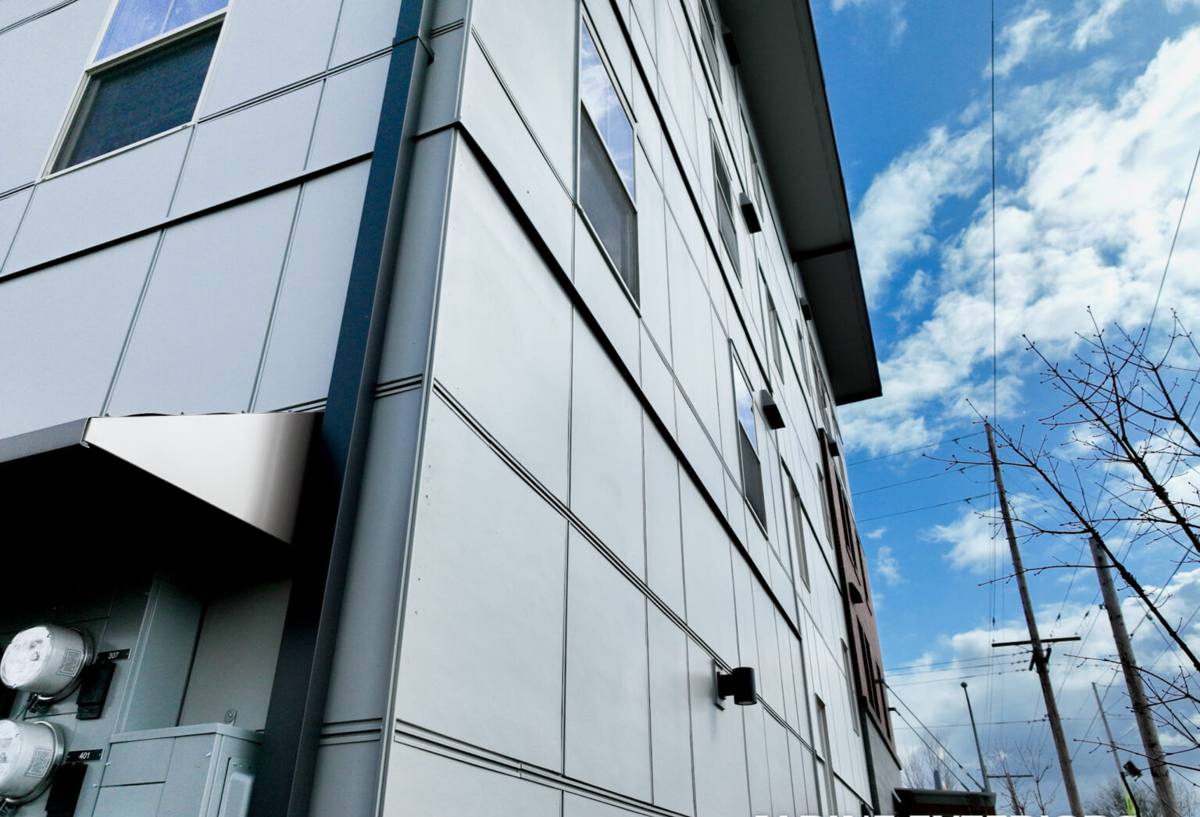
| HardiePanel vertical siding | Accent walls, gables, modern facades | Joint treatment must match existing batten or trim detail |
| HardieTrim boards | Corner boards, window and door trim | Often damaged alongside siding and replaced in the same repair |
Our Process for a Blaine Siding Repair Call
- On-site inspection: We look beyond the visible damage to check moisture levels, flashing condition, and the state of the sheathing behind the siding.
- Honest scope recommendation: You get a clear explanation of whether this is a patch, a section replacement, or something bigger — with the reasoning, not just a quote.
- Material matching: We identify the existing Hardie product line and ColorPlus finish, or discuss options if the original material is discontinued or was a different brand entirely.
- Repair and water-detailing: Damaged material comes out, any wet framing or barrier is addressed, and new flashing and joints are installed to shed Blaine's driving rain correctly.
- Final walkthrough: We check the finished repair against the surrounding wall for fit, finish, and water management before calling the job done.
Common Repair Mistakes We See Around Blaine
A fair number of the repair calls we get in this area are fixing a previous repair, not an original installation. The recurring issues are consistent enough to call out:
- Caulk used as a substitute for proper flashing, which fails within a season or two in this much rain
- Horizontal seams sealed shut, trapping moisture that the lap design was supposed to release
- Patch material that doesn't match the profile or finish of the original siding, creating a new weak point at the transition
- Fasteners driven into damaged or softened framing without addressing the underlying rot
- Moss cleaned off the surface without ever identifying or fixing what's keeping that section of wall wet
Why a Crew That Already Works Blaine Matters
Siding repair done right depends on recognizing patterns specific to a location, and Whatcom County's coastal edge behaves differently than siding in a drier inland climate. A crew that regularly works homes in Blaine already knows which elevations tend to take the worst of the driving rain, where moss problems tend to concentrate, and how salt exposure near the water changes the pace of wear on fasteners and finishes. That local pattern recognition shortens the diagnostic part of the job and reduces the odds of missing a related problem nearby.
There's also a practical side: warranty and follow-up work are far more reliable when the company doing the repair is genuinely local to the area, not making a one-time trip. If a question comes up six months after a repair, a crew already working in Blaine and the surrounding Whatcom County communities can get back out to the property without it being a special trip.
What Siding Repair Typically Costs
Every repair is different, but the factors that drive cost are consistent enough to plan around.
| Factor | Why It Matters |
|---|---|
| Extent of hidden moisture damage | Wet sheathing or framing adds labor and material beyond the visible siding |
| Number of elevations affected | Repairs concentrated on one wall cost less than damage spread across the house |
| Material availability for matching | Discontinued profiles or finishes may require a wider color-match approach |
| Access and height | Second-story or hard-to-reach sections take more time and equipment |
| Trim and flashing scope | Corner boards, window trim, and flashing often need replacing alongside the siding itself |
We give a firm, written estimate after the inspection, not a phone-quote guess, because the moisture check is what actually determines the real scope.
If you're seeing soft spots, recurring moss, or paint failure on your Blaine home's siding, it's worth having it looked at before another wet season adds to the damage. We offer free, no-pressure estimates — use the form below to get one scheduled.