 Bellingham
 Roofing in Birchwood: A Different Set of Conditions
Birchwood homes sit inside one of the more demanding roofing climates in the country, even by Pacific Northwest standards. The combination of salt-laden air drifting in off the water, long stretches of driving rain, and a moss season that can run most of the year puts steady, compounding stress on a roof system. None of these factors are dramatic on their own, but together they explain why roofs in this part of Bellingham age differently than roofs installed in drier, inland climates using the same materials and the same basic techniques.
A new roof installation here isn't just about laying down shingles or panels. It's about choosing materials and installation details that account for moisture that doesn't fully dry out between storms, wind-driven rain that finds its way under poorly lapped flashing, and organic growth that thrives in shaded, damp roof sections. Get those details right the first time, and a Birchwood roof can perform well for decades. Get them wrong, and you're looking at premature granule loss, soft decking, and leaks well before the material's rated lifespan is up.
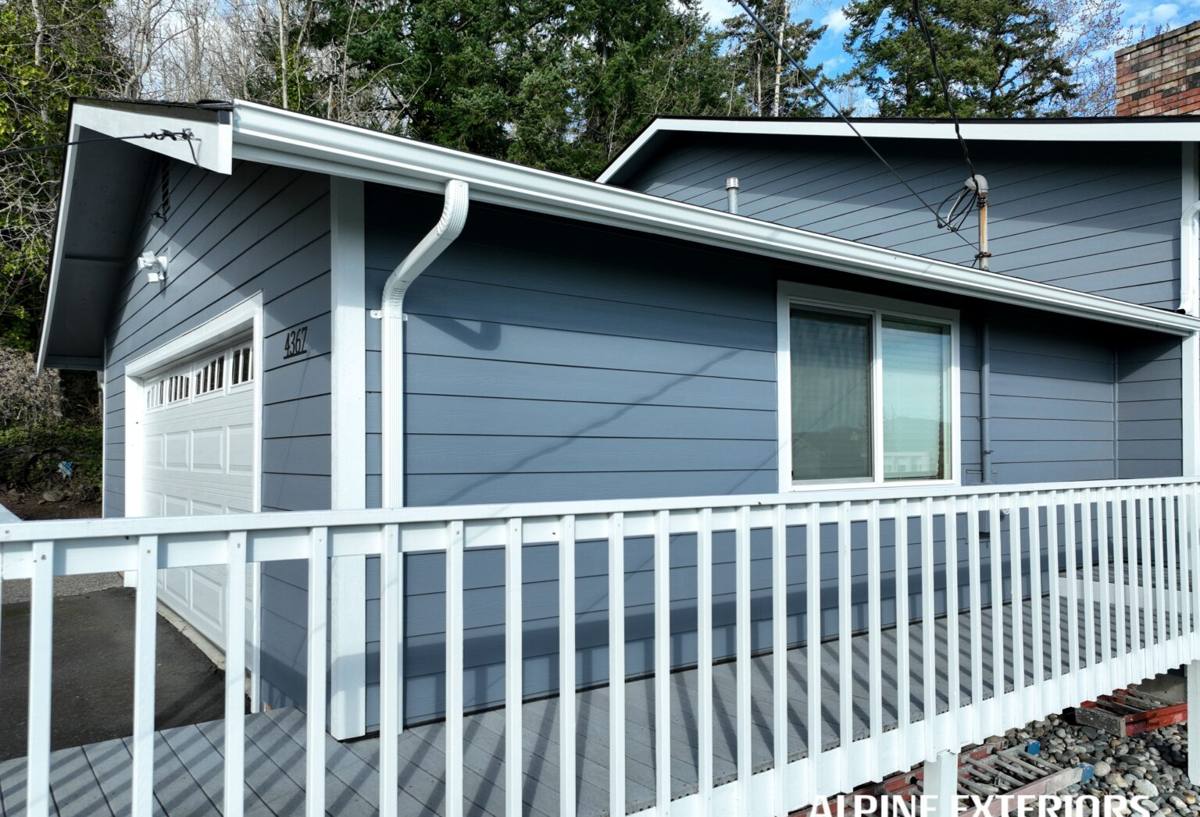
What Bellingham's Climate Actually Does to a Roof
Salt Air and Metal Fatigue
Whatcom County's proximity to the water means airborne salt is a constant, low-level presence, even at a modest distance from the shoreline. Salt air accelerates corrosion on exposed metal — flashing, fasteners, vents, and gutter hardware — faster than it would inland. This doesn't rule out metal roofing or metal components, but it does change what grade of metal, coating, and fastener type belongs on a roof that's going to sit exposed to this air for 30-plus years.
Driving Rain and Wind-Driven Moisture
Rain here rarely falls straight down. Wind off the water pushes it sideways into roof valleys, under shingle edges, and against vertical transitions like walls and chimneys. A roof detail that would hold up fine in a calmer climate — a slightly short flashing lap, a valley without enough underlayment protection — becomes a real vulnerability when rain is being driven horizontally into it several times a month.
Moss Season
Shaded, north-facing, and low-slope sections of roof in this area can stay damp for weeks at a stretch, which is exactly what moss needs to establish. Once moss takes hold, it doesn't just sit on the surface — it works into shingle laps and granule surfaces, holding moisture against the roofing material and, over time, lifting shingle edges. A roof installed without moss-resistant details or adequate airflow is fighting an uphill battle from day one.
What a Correct New Roof Installation Involves
A roof is a system, not a single layer of material. Skipping or shortcutting any one part of that system is usually where premature failures start. For a Birchwood home, the parts that matter most include:
- Full tear-off and decking inspection — old material comes off, and the deck underneath is checked for soft spots, rot, or delamination before anything new goes down.
- Ice and water shield in vulnerable zones — valleys, eaves, and roof-to-wall transitions get a self-adhering waterproof membrane, not just standard felt, because these are the areas wind-driven rain targets first.
- Synthetic underlayment across the field — a durable, water-resistant layer under the primary roofing material that buys protection if wind or wear ever compromises the top layer.
- Corrosion-resistant flashing and fasteners — appropriate metal grades and coatings for a salt-air environment, installed with correct laps and sealant, not just tucked into place.
- Balanced attic ventilation — intake at the eaves and exhaust at the ridge, sized to the attic volume, so moisture doesn't get trapped against the underside of the deck.
- Proper starter course and nailing pattern — details that matter more in high-wind, wet climates than they do elsewhere, since they determine how well the roof resists uplift and wind-driven water intrusion.
Any one of these done wrong can undercut an otherwise good roofing material. A premium shingle over inadequate ventilation, or a well-installed metal panel with the wrong fastener, will still develop problems — just on a different timeline than a cheaper, correctly installed system.
Choosing Materials for a Birchwood Home
There's no single "best" roofing material for this climate — the right choice depends on the home's roof pitch, budget, architectural style, and how much shade and moss exposure the roof actually gets. Here's how the common options compare for a home in this specific environment:
| Material | Moss & Moisture Resistance | Salt Air Durability | Typical Lifespan Here |
|---|---|---|---|
| Architectural asphalt shingle | Good, with algae-resistant granules and adequate ventilation | Good — minimal exposed metal to corrode | 20–30 years |
| Standing seam metal | Excellent — smooth surface sheds moss and debris | Good to excellent with marine-grade coatings | 40–50+ years |
| Synthetic composite shingle/shake | Very good — engineered to resist moisture absorption | Good | 30–50 years |
| Cedar shake (natural) | Requires diligent maintenance to resist moss and rot | Fair — needs regular treatment | 15–25 years without upkeep |
Asphalt shingles remain the most common and cost-effective choice for Birchwood homes, and modern architectural shingles with algae-resistant granules hold up well when paired with correct ventilation. Metal is worth serious consideration on steeper roofs or homes with heavy shade exposure, since moss and standing moisture struggle to get a foothold on a smooth, sloped metal surface. We'll walk through the honest trade-offs of each option for your specific roof — there's rarely a wrong answer, just different maintenance commitments and upfront costs.
Our Installation Process
1. On-Site Assessment
We walk the roof and attic, check the decking condition, evaluate existing ventilation, and look at how sun and shade fall across different sections of the roof — that shade pattern tells us a lot about where moss will try to grow back.
2. Material and Scope Recommendation
Based on that assessment, we recommend a material and installation approach suited to your roof's pitch, exposure, and your budget — with a clear explanation of why, not just a product pitch.
3. Written, Itemized Estimate
You get a detailed scope of work in writing: tear-off, decking repairs (if needed), underlayment type, flashing details, ventilation changes, and material — no vague line items.
4. Tear-Off and Deck Inspection
Old roofing comes off down to the deck, and we inspect and repair any compromised sheathing before anything new is installed. This step is where hidden moisture damage from a prior roof usually gets found.
5. Waterproofing and Material Installation
Ice and water shield goes into the vulnerable zones first, followed by underlayment, then the primary roofing material, flashing, and ventilation components — installed in the sequence and laps that keep water moving out, not in.
6. Final Walkthrough
We walk the finished roof with you, confirm the site is cleaned up, and go over basic care and what to watch for going forward.
What Drives the Cost of a New Roof
Every roof is different, and we won't quote a number without seeing yours, but these are the main variables that determine where a project lands:
| Factor | Why It Matters |
|---|---|
| Roof size and complexity | More valleys, dormers, and penetrations mean more flashing work and labor time |
| Pitch and access | Steeper or harder-to-access roofs require more safety setup and slower, more careful work |
| Number of existing layers | Multiple layers of old roofing add tear-off time and disposal cost |
| Decking condition | Rotted or soft sheathing found during tear-off needs replacement before installation continues |
| Material selection | Asphalt, metal, and composite options carry different material and installation costs |
| Ventilation upgrades | Adding or correcting intake and exhaust venting adds scope but pays off in roof longevity |
We'll walk through which of these apply to your roof during the estimate, so you understand exactly what you're paying for rather than getting a single lump number with no explanation behind it.
Why a Crew That Already Works Birchwood Matters
Roofing technique that works in a dry climate doesn't automatically translate to Whatcom County. A crew that installs roofs across a wide range of climates may default to standard details that meet code but don't account for the specific combination of salt air, driving rain, and prolonged damp shade this area sees. A crew that works Birchwood and the surrounding Bellingham neighborhoods regularly knows:
- Which roof orientations and roof sections in this area tend to hold moisture and need extra ventilation or moss-resistant detailing
- What flashing and fastener grades actually hold up under sustained salt air exposure, rather than just meeting minimum code
- How local building department requirements and permitting apply to reroofing projects in the area
- What realistic install windows look like given the region's rain patterns, so scheduling doesn't turn into guesswork
That local familiarity shows up in the details — the extra ice and water shield in a valley that doesn't strictly need it by code but clearly needs it given how the roof sheds water, or the recommendation to add a vent that a generic crew might skip. It's the difference between a roof that meets minimum standard and one that's actually built for where it sits.
Keeping a New Roof Performing After Installation
A correctly installed roof still benefits from basic upkeep, especially in a climate this wet and shaded. A few habits go a long way toward protecting the investment:
- Keep gutters and downspouts clear so water isn't backing up under roof edges
- Trim back overhanging branches to reduce shade and debris buildup on the roof surface
- Have moss growth addressed early, before it works into shingle laps or lifts edges
- Schedule a visual roof check after major storms, particularly ones with high wind
- Watch for granule buildup in gutters, which can signal accelerated shingle wear
- Confirm attic ventilation stays unblocked by insulation or stored items
None of this requires a maintenance contract or constant attention — just periodic checks that catch small issues before they become roof-replacement issues again in half the expected lifespan.
Ready to Talk Through Your Roof
If your roof in Birchwood is showing its age, or you'd rather plan a replacement on your own timeline instead of waiting for a leak to force the decision, we're happy to take a look and walk you through honest options for your specific home and budget. Use the form below to request a free, no-pressure estimate — we'll assess the roof, explain what we find, and give you a straightforward recommendation with no obligation to move forward.