 Bellingham
 Siding Repair Built for Lynden's Climate
Lynden sits inland in the Nooksack River valley, part of the farmland belt that stretches across Whatcom County toward the Canadian border. Homes here don't take the direct salt spray that properties closer to Bellingham Bay contend with, but they get the rest of the regional climate in full measure: long stretches of driving rain moving in off the Pacific, valley humidity that lingers well past the growing season, and a moss season that can run most of the year. Siding in Lynden works hard to shed water and resist organic growth, no matter what it's made of.
That combination of rain and humidity is why siding problems here tend to show up as slow, hidden damage rather than sudden failure. A board can look fine from the driveway for years while moisture works behind it, unseen. Repair work that only addresses the visible surface, without checking what's happening underneath, tends to fail again within a season or two — and often costs more the second time around.
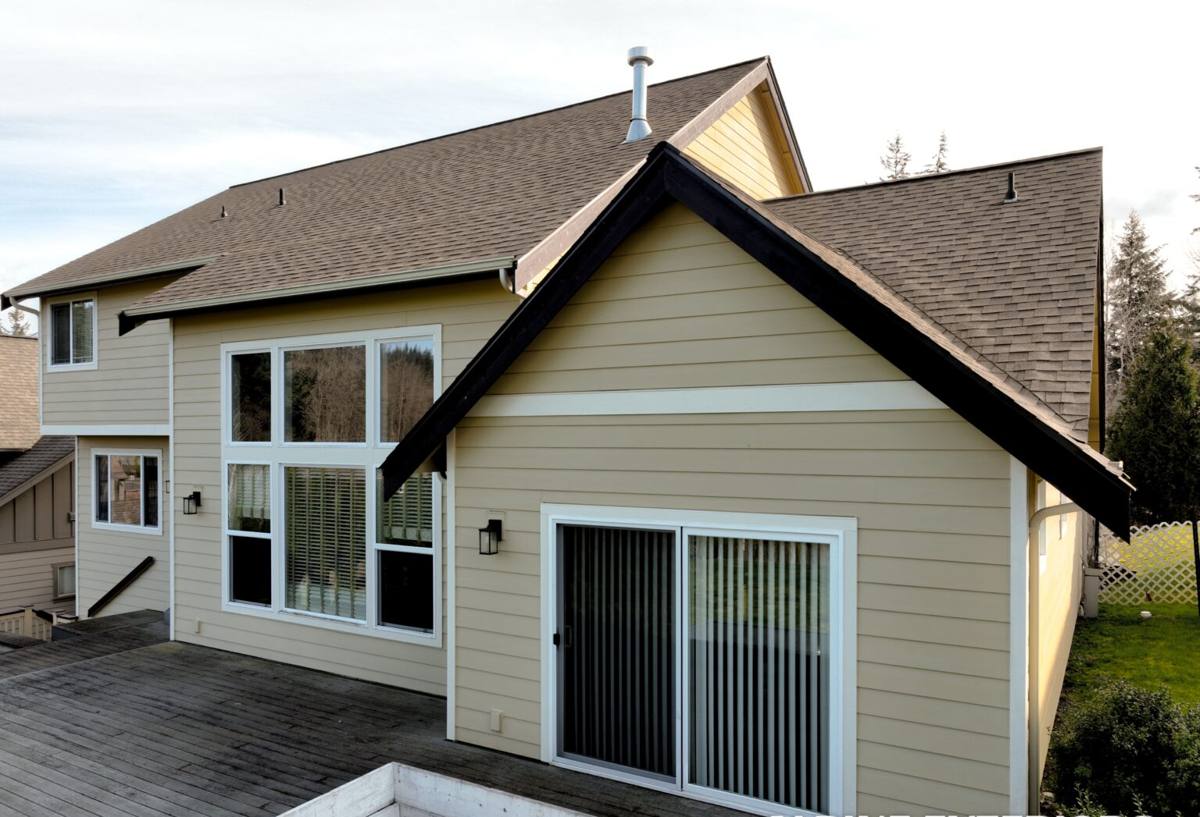
What Constant Moisture Does to Siding Over Time
Moss, Algae, and Trapped Water
Moss and algae don't just look bad — they hold moisture directly against the siding surface for days after a storm has passed, long after the rest of the wall has dried out. On horizontal lap siding, that trapped moisture finds its way into seams, fastener holes, and butt joints. Over several wet seasons, that's enough to soften wood-based products, corrode fasteners, and break down caulking at the joints where two pieces of siding meet.
Wind-Driven Rain
Storms moving through Whatcom County don't always rain straight down — wind pushes water sideways into laps, corners, and trim intersections that weren't designed to handle direct horizontal pressure. Flashing and caulking details that were installed correctly the first time hold up fine. Details that were rushed, undersized, or skipped during the original install are almost always where repair calls start.
Freeze-Thaw Cycling
Whatcom County doesn't see the deep freezes of the mountain passes, but Lynden's valley location does mean cold snaps that follow wet stretches. Water that's already worked into a seam or a soft spot expands when it freezes, widening the damage a little more each time. It's a slow process, which is exactly why it's easy to miss until a repair has turned into something bigger.
Signs Your Lynden Home's Siding Needs Repair
Most siding repair calls we get start with one or two visible symptoms. Catching them early is the difference between a targeted repair and a much larger project once water has fully worked its way behind the wall assembly.
- Soft or spongy spots when you press on a board, especially near the bottom courses
- Paint that's bubbling, peeling, or flaking in patches rather than evenly across a wall
- Dark staining or streaking below seams, nail heads, or trim joints
- Visible gaps opening up at corner boards, window trim, or butt joints
- Moss or algae holding steady on siding that stays shaded most of the day
- Boards that are cracked, buckled, or visibly pulling away from the wall
- A musty smell or visible mold on the interior wall directly opposite a suspect section of siding
Any one of these on its own might be minor and easy to fix. Several together, especially concentrated on the same wall or elevation, usually mean water has been finding its way in longer than the outside appearance suggests.
What an Actual Siding Repair Involves
A correct repair starts with figuring out why the siding failed, not just patching the spot that's visible from the ground. That means pulling the damaged section, checking the house wrap or building paper behind it, checking flashing at windows, doors, and butt joints, and confirming the framing underneath hasn't taken on rot. Skipping that step and simply caulking over a crack or nailing a new board over old damage buys a homeowner a year or two before the same repair call comes back — usually worse than the first time.
Matching matters too. On lap siding, a mismatched board thickness, profile, or reveal is obvious from the street, and it also creates a new place for water to collect at the seam. Getting the repair to sit flush and shed water the way the original installation was designed to is as much a part of the job as the patch itself. A repair that looks right but doesn't shed water correctly is just a delayed version of the same problem.
Why We Repair and Replace with James Hardie Fiber Cement Only
We install and repair siding using James Hardie fiber cement exclusively. We don't install or patch with vinyl, LP SmartSide, Cemplank, Allura, primed spruce, or cedar. That's a standard we hold to because of what we've seen play out on homes across this climate over years of repair work, not because those products are without any merit at all.
Fiber cement doesn't absorb water the way wood-based siding does, so it doesn't swell, delaminate, or feed rot the same way once moisture gets past a seam. It's non-combustible, which matters more each year as wildfire smoke and ember exposure become a broader regional concern even on the west side of the Cascades. James Hardie's HZ5 product line is engineered specifically for climates like this one — sustained damp, freeze-thaw cycling, and heavy, wind-driven rain exposure. The ColorPlus factory finish is baked on under controlled conditions, so it holds color and resists fading and chipping in a way field-applied paint on other materials struggles to match over time. That also means a properly matched repair can blend into the existing wall rather than standing out as an obvious patch.
When we're called out to look at a home that currently has a different siding material, we're honest about what we find. Sometimes a targeted repair in a compatible material is the right, affordable answer for now. Other times the damage pattern tells us the wall's underlying moisture problem isn't going away on its own, and the more honest recommendation is a conversation about replacement rather than another short-term patch.
Repair Approaches: What Fits Your Situation
| Situation | What We Typically Recommend | Why |
|---|---|---|
| Isolated impact damage or a single cracked board | Board-for-board replacement matching profile and reveal | Contains the repair to the affected area without disturbing sound siding around it |
| Moss staining with no soft spots or gaps | Cleaning, inspection, and monitoring rather than replacement | Cosmetic buildup alone doesn't always mean the wall assembly has failed |
| Recurring staining or soft spots at the same wall | Full section repair including a house wrap and flashing check | Surface symptoms usually point to a moisture path that needs correcting, not just covering over |
| Widespread failure on old wood or engineered wood siding | Replacement with James Hardie fiber cement | Patchwork on siding that's failing broadly rarely holds up through another wet season |
Our Siding Repair Process in Lynden
- On-site inspection of the affected siding and a check of the surrounding wall for related damage
- Moisture check behind suspect areas before any repair plan gets finalized
- A clear, written explanation of what we found and what it will actually take to fix it
- Repair or targeted replacement, matched to the existing siding profile wherever possible
- Flashing, sealant, and finish work brought back to a weathertight standard, not just patched over
- A final walkthrough so you know exactly what was done and what to keep an eye on going forward
We don't sell a whole-house replacement to a homeowner who needs a repair, and we don't recommend a patch when the underlying problem is only going to resurface. The estimate reflects what the siding actually needs, not the largest job we could sell.
What Affects the Cost of a Siding Repair
| Cost Factor | What to Expect |
|---|---|
| Extent of visible damage | A single board is a small job; damage spread across a wall costs more to diagnose and repair properly |
| Hidden water or rot damage | If sheathing or framing behind the siding needs repair, that adds labor and materials beyond the siding itself |
| Access and height | Second-story sections, steep grades, or areas close to landscaping take longer to reach and stage safely |
| Matching the existing finish | Blending new material into ColorPlus-finished siding or older paint takes more care than a bare patch |
| Trim and flashing involved | Repairs at windows, doors, and corners usually involve more than just the siding panel itself |
We give a firm number after we've actually looked at the damage in person, not a phone estimate. The difference between a surface patch and a repair that includes hidden water damage is usually only visible once a board comes off the wall.
Why Hire a Crew That Already Works in Lynden
Whatcom County's siding problems aren't uniform across the county. A crew that mostly works closer to the water gets used to salt exposure and coastal wind patterns; a crew that spends real time out in the valley around Lynden gets used to sustained ground-level humidity, moss that holds on through most of the year, and the specific wear pattern that comes with it. Knowing what's typical for this part of the county means less time spent guessing at the diagnosis and more time spent actually fixing the problem.
It also means straightforward scheduling and follow-up. A contractor who's already familiar with the area isn't learning local weather patterns and access considerations for the first time on your project — that groundwork is already done, which keeps the repair itself the focus instead of a learning curve.
If you're seeing staining, soft spots, moss buildup, or gaps in your siding, we're happy to come take a look and give you an honest read on what it actually needs — a targeted repair, or something bigger. Reach out for a free, no-pressure estimate; there's a form below to get started.