 Bellingham
 Fairhaven's Coastal Climate Is Hard on Exterior Walls
Fairhaven sits close to Bellingham Bay, and that proximity to saltwater shapes what happens to a home's exterior year after year. Salt-laden air carries fine mineral particles that settle on siding, trim, and fasteners, accelerating corrosion on anything not built to handle it. Add in Whatcom County's driving rain — the kind that comes in sideways off the water during winter storms — and siding here has to shed water at the wall, not just the surface, or moisture finds its way behind the cladding and into the sheathing.
Then there's moss. Many Fairhaven lots sit under mature tree canopy or on shaded, north-facing slopes, and the combination of shade and near-constant dampness from fall through spring means moss and algae have months to establish themselves on any surface that holds moisture. On wood-based siding, that biological growth isn't just cosmetic — it holds water against the substrate and speeds up rot. On the wrong siding product, that cycle repeats every year regardless of how well the house was painted or maintained.
None of this is unique to any one street or block in Fairhaven — it's the general reality of a coastal, tree-covered Pacific Northwest neighborhood. But it does mean the siding choice and the installation details matter more here than they would in a drier, sunnier climate.
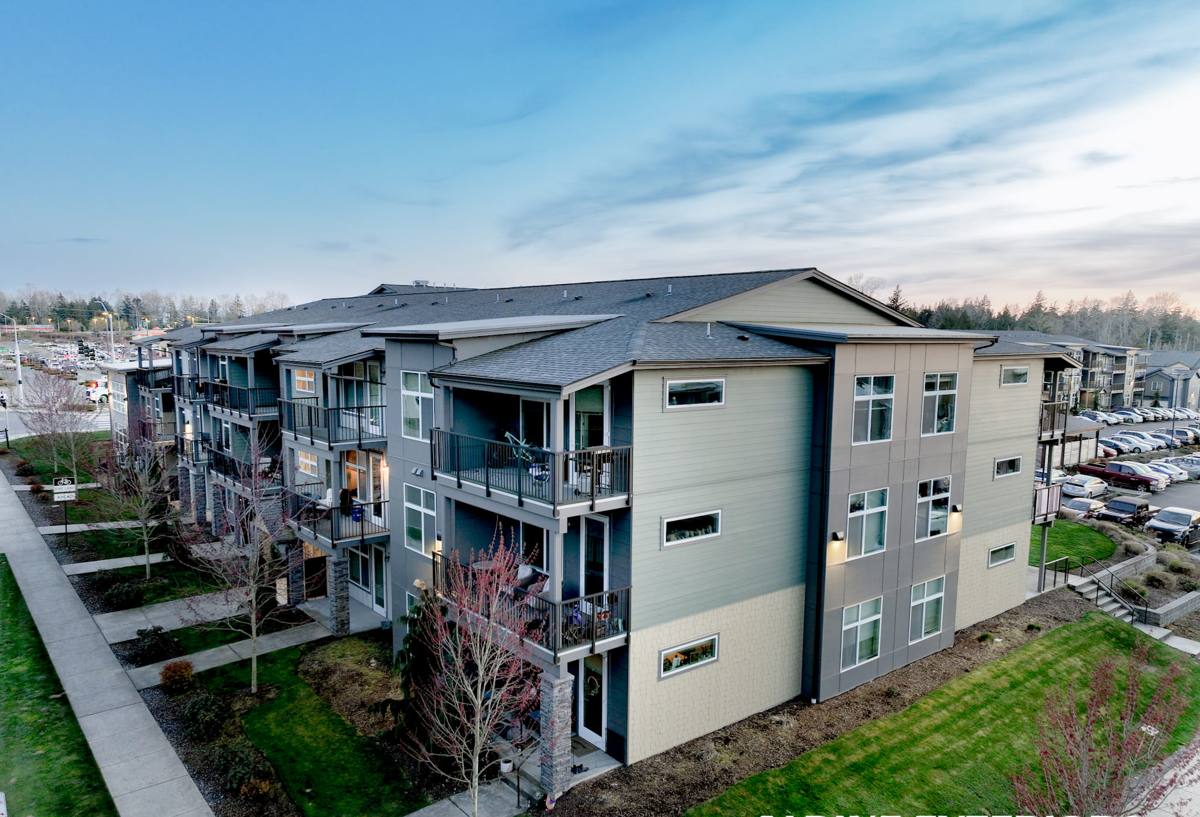
Why We Only Install James Hardie in This Neighborhood
We install James Hardie fiber cement siding exclusively. We don't install vinyl, LP SmartSide, primed wood, or cedar, and that's a deliberate standard, not a limitation of what we're capable of installing. In a climate like Fairhaven's, the material has to resist moisture-driven damage, hold its finish without repainting, and stand up to salt exposure without corroding or degrading — and Hardie's fiber cement formulation is engineered specifically around those pressures.
The HZ10 Climate Engineering
James Hardie makes climate-specific formulations for different regions of the country, and the HZ10 line is engineered for areas like ours — cool, wet, and humid for large parts of the year. It's built to resist moisture absorption and the freeze-thaw and wet-dry cycling that causes wood products to swell, cup, and eventually crack. Fiber cement doesn't feed mold or rot the way wood-based siding can, which matters directly in a neighborhood where shade and dampness combine for months at a stretch.
ColorPlus Factory Finish
Hardie's ColorPlus finish is baked on in a controlled factory environment rather than applied on-site, which gives it better adhesion and fade resistance than field-applied paint. For a coastal home, that means the finish holds up against salt air and UV exposure without the chalking and peeling that field-painted products are prone to near the water. It also means far less repainting over the life of the siding — a real cost and hassle savings for a Fairhaven homeowner.
What a Correct Installation Actually Involves
Fiber cement siding fails for one of two reasons: the product itself, or the installation. In our experience, installation is the more common culprit, and it's also the part a homeowner has the most control over when choosing a contractor. James Hardie publishes detailed installation requirements, and skipping steps to save time is where most of the problems we get called out to fix originate.
- Minimum clearance maintained between siding and grade, decks, roofing, and other flatwork so water doesn't wick up into the board
- A drainage plane or rainscreen gap behind the siding so any moisture that gets past the cladding can drain and dry out instead of sitting against the sheathing
- Proper flashing integrated at every window, door, and horizontal trim intersection, installed in the correct shingle-lap order
- Factory-cut edges and field cuts sealed and primed before installation, since a raw cut edge is where a board is most vulnerable to moisture intake
- Fastener type, spacing, and placement matched to Hardie's specifications, not just whatever happens to be on the truck
- Caulking limited to the joints Hardie actually specifies — over-caulking traps moisture just as reliably as skipping it does
Every one of these steps takes more time than the shortcut version. On a coastal property that spends half the year damp, skipping any of them shortens the life of the siding regardless of how good the product is.
Problems We Commonly Find on Older Fairhaven Homes
Fairhaven has a lot of older, character-driven homes, and when we're called out to look at existing siding, a handful of issues show up again and again. Shaded, moss-covered siding on the north and east-facing walls is the most common — years of biological growth holding moisture against the wall behind it. We also frequently find previous siding or trim that was face-nailed directly over old material without a drainage gap, which traps condensation and accelerates rot at the bottom courses and around window sills. Ground-contact rot at the base of walls near grade, planters, or downspouts that discharge too close to the foundation is another recurring pattern. None of these are exotic problems — they're the predictable result of driving rain, shade, and time acting on a wall system that wasn't detailed to manage moisture.
Choosing Colors and Board Style for a Character Neighborhood
A lot of Fairhaven's charm comes from its older, more traditional home styles, and siding replacement is a chance to either preserve that character or update it deliberately. James Hardie's lap siding comes in smooth and cedarmill (woodgrain) textures, and the ColorPlus palette includes both traditional, muted tones that read well on craftsman and bungalow-style homes and richer, more contemporary colors for homes that are being modernized. Trim boards, soffit, and fascia are available to match, so the whole exterior system comes from one manufacturer with one warranty rather than mixing products with different expansion rates and finish lifespans.
We walk homeowners through board width, texture, and color samples in person, because siding color reads very differently under Fairhaven's overcast, diffused light than it does on a sunny sample board.
Our Process, Start to Finish
- Inspection and moisture check — we look at the existing siding, trim, and where accessible, the sheathing underneath, so surprises get caught before the crew shows up, not after the old siding is off the wall
- Scope and estimate — a written estimate covering material, tear-off (if applicable), flashing and trim work, and timeline, with no vague allowances hiding extra cost later
- Prep and tear-off — removal of failing material, repair of any rotted sheathing or framing found underneath, and correction of drainage details before the new siding goes up
- Installation to Hardie spec — rainscreen, flashing, fastening, and caulking done per manufacturer requirements, not shortcuts
- Final walkthrough — we go over the finished job with the homeowner and register the material and installation warranty
What It Costs and What Drives the Price
Every home is different, but the same handful of factors move the price up or down on most Fairhaven jobs. We give exact numbers only after a walk-through, but this is generally what to expect going in.
| Cost Factor | Why It Matters |
|---|---|
| Tear-off vs. new construction | Removing and disposing of old siding, plus any rot repair underneath, adds labor beyond a straightforward re-side |
| Home size and number of stories | More square footage and taller walls mean more material and more time on ladders or lifts |
| Trim and detail complexity | Homes with more windows, dormers, and architectural trim take longer to flash and finish correctly |
| Site access | Hillside or tightly landscaped lots, common in parts of Fairhaven, can slow material staging and setup |
| Board style and color line | Textures and some ColorPlus color options carry a modest premium over base products |
Maintenance to Expect Living This Close to the Water
James Hardie siding installed correctly is genuinely low-maintenance, but "low" isn't "none" — especially in a coastal, tree-covered setting like Fairhaven.
- Rinse the siding down annually to clear salt residue and airborne debris before it builds up
- Watch shaded, north- and east-facing walls for early moss or algae growth and treat it before it spreads
- Keep gutters clear and downspouts directed away from the foundation so runoff doesn't sit against the base of the wall
- Have caulked joints and trim intersections checked every few years, since caulk is the one component with a shorter service life than the siding itself
- Trim back vegetation that keeps a wall constantly shaded and damp where practical
Why Hiring a Crew That Already Works Fairhaven Matters
A contractor who works this neighborhood regularly already knows which walls take the worst weather, how to sequence a tear-off around Bellingham's rain patterns, and what the City of Bellingham's permitting and inspection process expects. That familiarity shows up in the details — where the drainage gap gets prioritized, where flashing gets extra attention, which colors actually read well under our typically overcast skies. It also means a shorter list of surprises once the old siding comes off the wall.
If your Fairhaven home is due for new siding, or you're dealing with moss, rot, or a finish that's failing years ahead of schedule, we're happy to take a look and walk you through what correct James Hardie installation would involve for your specific home. Reach out for a free, no-pressure estimate using the form below.