 Bellingham
 Asphalt Shingle Roofing Built for Happy Valley's Coastal Climate
Happy Valley sits close enough to Bellingham Bay and the surrounding tree cover that its roofs work harder than most people realize. Salt-laden air moving in off the water, long stretches of driving rain through fall and winter, and a moss season that can run eight months or more all chip away at a roof that wasn't built or installed with those specific conditions in mind. Asphalt shingle roofing remains the most practical choice for the majority of homes in this part of Whatcom County — it's durable, repairable, and reasonably priced — but only when the installation accounts for how wet this area actually stays.
This page focuses specifically on asphalt shingle roofing for Happy Valley homes: what the climate demands, what a correct installation looks like, and how our process is built around the realities of this neighborhood rather than a generic checklist.
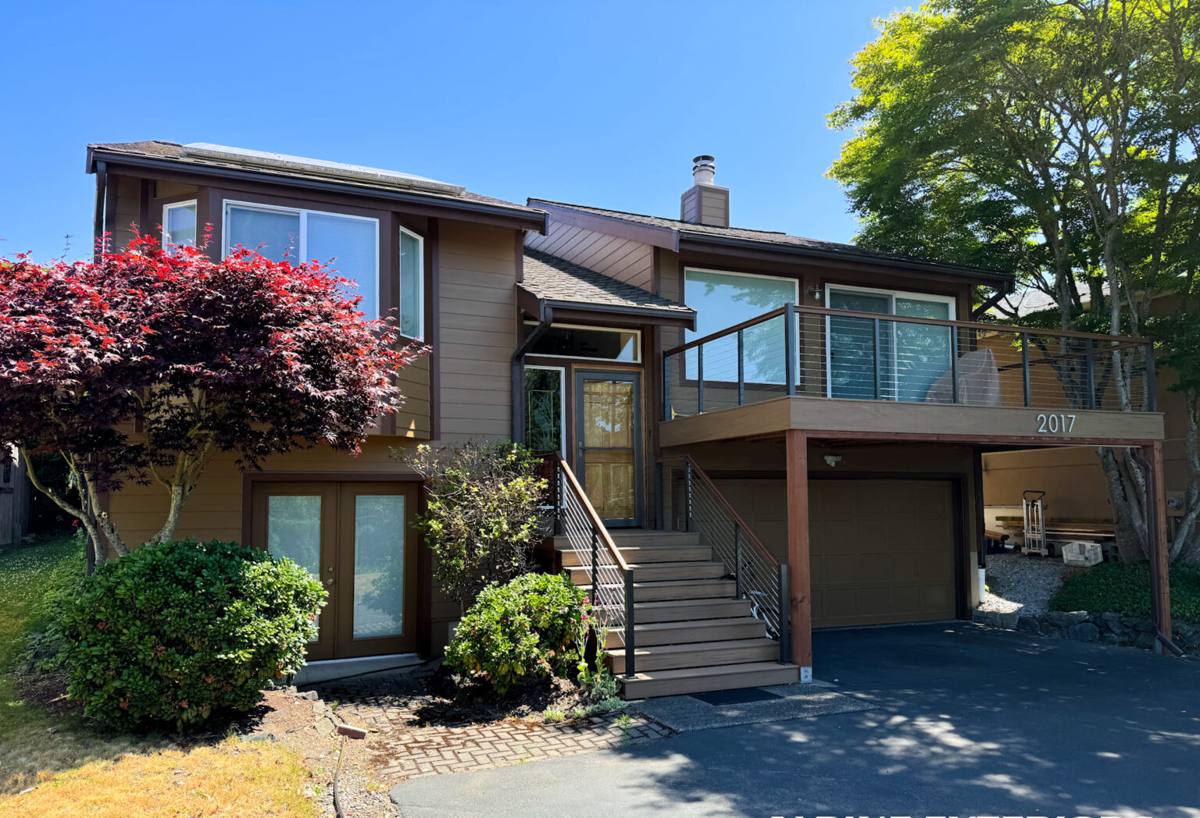
What Happy Valley Homes Need From a Shingle Roof
Tree Cover and Moss Season
Many streets in and around Happy Valley have mature trees close to the roofline. That shade is nice in August and a problem the rest of the year. Shaded, north-facing roof sections stay damp longer after every rain, which is exactly the environment moss and algae need to get established. Once moss takes hold under shingle tabs, it lifts them slightly and lets water track backward instead of shedding forward — that's how a moss problem quietly becomes a leak.
Wind and Driving Rain off the Water
Storms coming off the Salish Sea don't just bring volume, they bring wind-driven rain that hits shingles at an angle instead of straight down. A roof system that's only designed for vertical rainfall — thin underlayment, minimal flashing, standard nailing — will eventually let water find its way sideways under the shingle course. The fix isn't a different shingle brand; it's a more complete underlayment and flashing system underneath whatever shingle you choose.
What a Correct Asphalt Shingle Installation Actually Involves
A shingle roof is only as good as the layers homeowners never see. Here's what we consider non-negotiable on a Happy Valley re-roof.
Tear-Off and Deck Inspection
We remove the old roofing down to the deck rather than layering over it. This lets us check the sheathing for soft spots, rot, or delamination — common where a slow leak or moss dam has been sitting unnoticed for a season or two. Any damaged decking gets replaced before anything new goes down; installing new shingles over a compromised deck just hides the problem.
Ice-and-Water Shield and Underlayment
Given how much rain this area sees, we treat self-adhering ice-and-water membrane as standard at eaves, valleys, and roof penetrations — not an upgrade. The rest of the deck gets a synthetic underlayment as a second line of defense in case wind ever drives water past the shingle surface itself.
Flashing Details
Step flashing at walls and chimneys, proper valley metal, and correctly lapped flashing around vents and skylights matter more to long-term performance than the shingle brand on the package. Most of the leaks we get called out to inspect on older homes trace back to flashing that was reused, undersized, or installed out of sequence — not shingle failure.
Ventilation
A shingle roof needs balanced intake and exhaust ventilation to let the attic breathe. Without it, moisture from the living space condenses on the underside of the deck, which shortens the life of the roof from the inside out and can encourage mold in the attic space. We check existing ventilation on every re-roof and correct it when it's inadequate.
Nailing Pattern and Shingle Selection
Manufacturer nailing patterns exist for a reason — they're rated to specific wind speeds, and shortcuts here are one of the most common causes of blow-off in a coastal wind event. We follow manufacturer specs exactly, which also keeps the shingle warranty intact if you ever need to use it.
Comparing Shingle Options for Happy Valley
Not every shingle line performs the same way in a wet, shaded, coastal environment. The table below reflects general trade-offs we walk homeowners through during an estimate.
| Shingle Type | Typical Lifespan | Moss/Algae Resistance | Relative Cost |
|---|---|---|---|
| Standard 3-tab | 15-20 years | Low — no built-in resistance | $ |
| Architectural / laminate | 25-30 years | Moderate, better in algae-resistant lines | $$ |
| Premium algae-resistant laminate | 30+ years | Higher — copper or zinc granules deter growth | $$$ |
For most Happy Valley homes with meaningful tree cover, we lean toward recommending an algae-resistant architectural shingle. It costs more up front than standard 3-tab, but in a moss-prone microclimate the maintenance savings and extended service life usually justify the difference. We'll always give you the honest trade-offs rather than steering you toward the highest-margin option.
Our Process for a Happy Valley Re-Roof
- On-site inspection — we walk the roof (weather permitting) and check the attic from inside, not just a drive-by look from the ground.
- Written estimate — a clear scope covering tear-off, decking allowance, underlayment, flashing, and shingle options, with no vague line items.
- Scheduling around weather — we plan tear-off days around dry windows whenever possible, since an open deck sitting under Bellingham rain is exactly what we're trying to avoid.
- Tear-off and deck repair — old roofing removed, deck inspected and repaired as needed before anything new is installed.
- Underlayment, flashing, and shingle installation — installed to manufacturer spec, including proper ventilation corrections.
- Cleanup and magnetic sweep — job site and yard cleared of debris and nails.
- Final walkthrough — we review the finished roof with you and explain the warranty coverage in plain terms.
Moss, Algae, and Salt Air: What Ongoing Maintenance Looks Like
Even a well-installed roof benefits from basic seasonal attention in this climate. A little maintenance goes a long way toward getting the full lifespan out of your shingles.
- Keep gutters and valleys clear of needles and leaf debris, especially under overhanging trees — clogged valleys hold water against shingles longer than they should sit wet.
- Have moss growth removed gently (no aggressive pressure washing, which strips granules) rather than left to spread across a shaded slope.
- Trim back branches that keep a section of roof in near-constant shade — more sun exposure means faster drying after rain.
- Watch for granules collecting in gutters, which can signal a shingle surface starting to wear.
- Schedule a roof check after any major windstorm off the water, even if nothing looks obviously wrong from the ground.
Why a Crew That Already Works Happy Valley Matters
Roofing crews that mostly work drier inland climates sometimes under-build for what Whatcom County actually throws at a roof. A crew that regularly works Happy Valley and the surrounding Bellingham neighborhoods knows which streets have heavier tree cover, which orientations catch the worst of the wind-driven rain off the bay, and where moss tends to establish first on a given roof shape. That local pattern recognition shows up in small decisions — where to add extra underlayment, which valleys need wider metal, how much ventilation an older attic actually needs — that a one-size-fits-all installation would miss.
It also matters for warranty follow-through. A local crew is still around and reachable if a flashing detail needs a second look two years down the road, not just for the initial install.
Repair or Replace? Signs to Watch For
Not every roof problem in Happy Valley means a full replacement. Here's a general guide to what each situation usually points toward.
| What You're Seeing | Usually Means |
|---|---|
| A few cracked or lifted shingles in one area | Localized repair |
| Granule loss concentrated near roof age 20+ years | Shingles nearing end of service life — plan for replacement |
| Moss established across large sections, tabs lifting | Cleaning plus inspection; replacement if underlayment is compromised |
| Staining on interior ceilings or attic sheathing | Active leak — needs prompt inspection regardless of shingle age |
| Widespread curling, brittleness, or missing shingles after a storm | Full replacement likely more cost-effective than repeated repairs |
When in doubt, an honest inspection is worth more than guessing from the ground. We'll tell you plainly if a repair is enough — a full replacement isn't always the right call, even though it's the bigger job.
Ready for an Honest Look at Your Roof?
If you're weighing a repair, planning ahead for a replacement, or just want a clear read on where your roof stands after another wet Bellingham winter, we're happy to take a look. Request a free, no-pressure estimate using the form below and we'll walk you through what we find and what your realistic options are.